
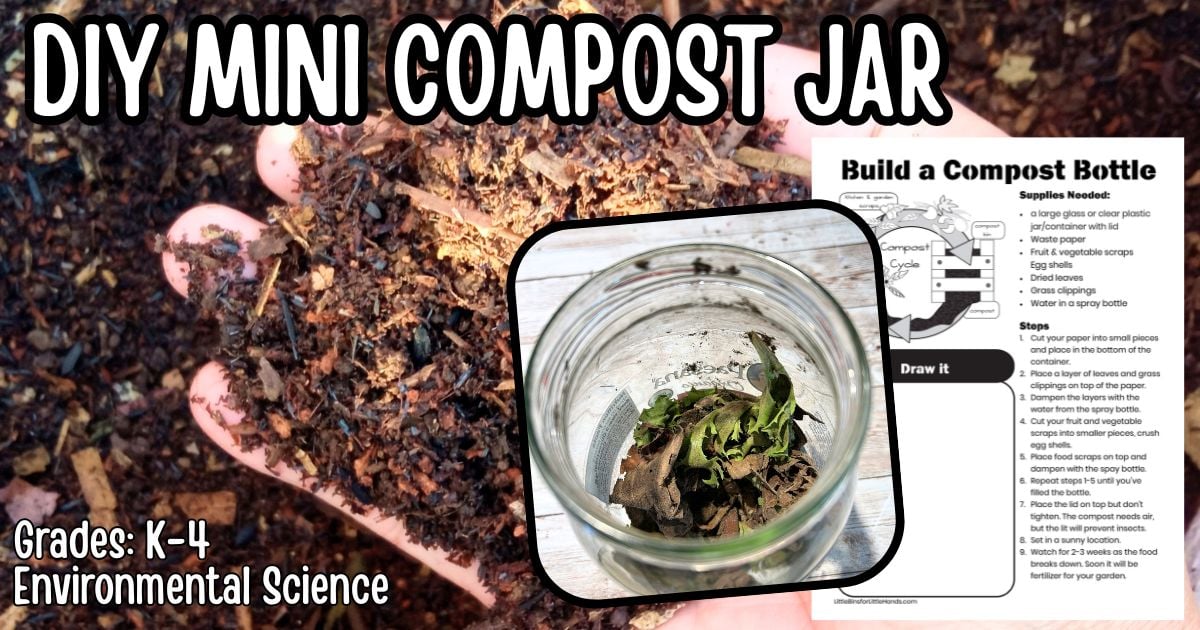
What if you could turn food scraps into soil right on your kitchen counter or in the classroom?
This mini compost bin for kids is a simple, hands-on way to explore how food waste breaks down and becomes nutrient-rich soil. Using just a small container or jar, kids can watch decomposition happen in real time while learning how composting helps reduce land pollution.
It’s easy to set up, low-prep, and perfect for connecting science concepts to real-world environmental action.
👉 Looking for more environmental science activities? Explore:
Compost Bin Science
Field: Earth Science—Environmental Science
Grades: K–4
Concepts Explored: Decomposition, composting, biodegradable materials, nutrient cycling, land pollution
Composting is a natural process where living organisms break down organic materials into nutrient-rich soil.
Food scraps and plant materials decompose with the help of bacteria, fungi, and other decomposers. This process returns nutrients to the soil and helps reduce the amount of waste sent to landfills.
👉 Explore all of our environmental science activities here
Supplies Needed
- Clear plastic container or jar with lid
- Soil
- Food scraps (banana peel, apple core, lettuce)
- Dry materials (shredded paper, leaves, twigs)
- Spray bottle with water
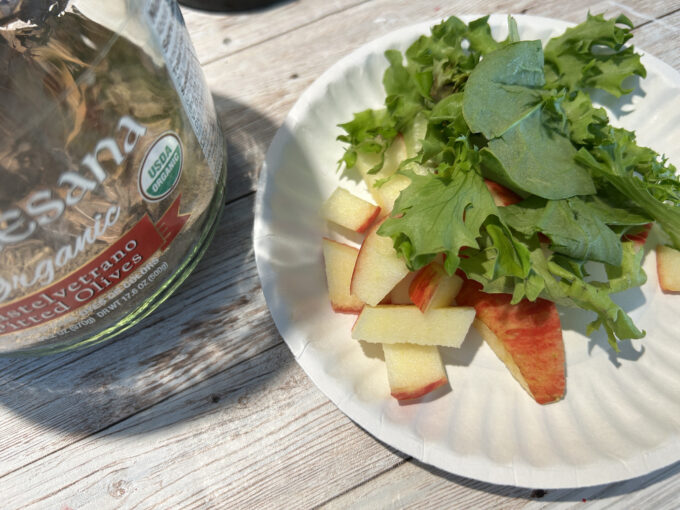
How To Make a Mini Compost Jar
Step 1: Add Soil
Add 1–2 inches of soil to the bottom of your container.
Step 2: Layer Materials
Alternate layers of:
- Food scraps (greens)
- Dry materials like leaves or paper (browns)
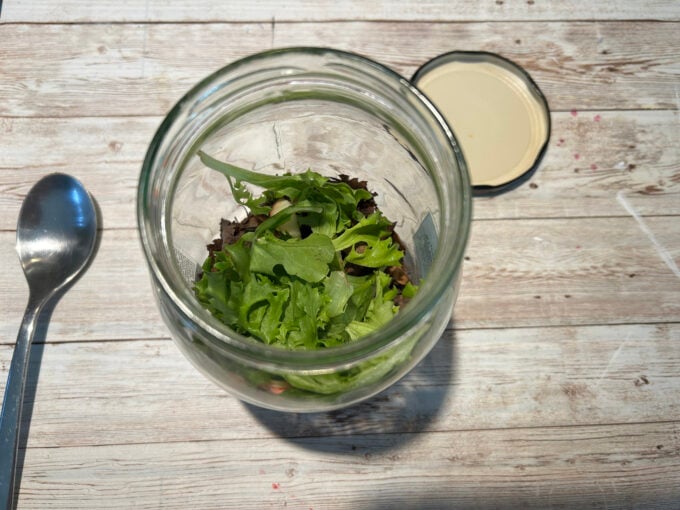
Step 3: Add Moisture
Lightly spray with water. The compost should feel damp, not soaking wet.
Step 4: Allow Airflow
Place the lid loosely on top or poke small holes for airflow.
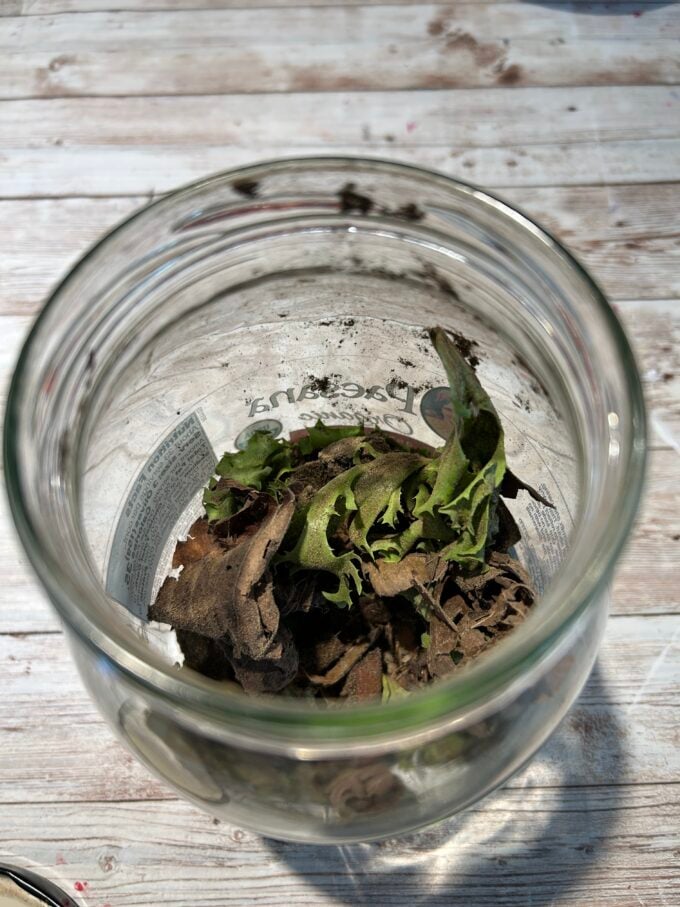
Step 5: Observe Over Time
Check your compost each week and look for changes:
- What is breaking down?
- Do you notice any new smells?
- How is the texture changing?
- Are there signs of mold or insects?
Composting Science Information
Composting works because decomposers break down organic materials into simpler substances.
- Greens (food scraps) provide nitrogen
- Browns (dry materials) provide carbon
- Decomposers (bacteria and fungi) do the work
This process is part of the carbon cycle, in which materials are broken down and recycled in the environment.
👉 Learn more about the carbon cycle for kids.
Unlike plastic and other non-biodegradable materials, organic waste can return to the soil rather than build up as pollution.
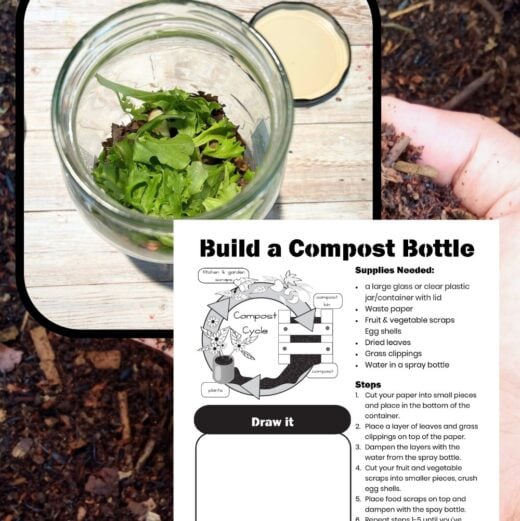
Grab Your Free Compost Jar Project
Make it easy to get started with a ready-to-use project sheet.
👉 Grab your free Mini Compost Bottle Printable here
More Composting Facts for Kids
- Composting helps reduce landfill waste
- Healthy compost smells earthy, not rotten
- Too much water can slow down decomposition
- Mixing materials helps the compost break down faster
Extension Activities
- Compare compost vs regular trash over time
- Add different types of food scraps and observe changes
- Test moisture levels (dry vs damp compost)
- Draw or write weekly observations
Related Science Activities
- Decomposition experiment for kids
- Recycling sort challenge
- Land pollution activities for kids
- Pollution activities hub (in progress!)
Why Composting Matters
Composting helps reduce land pollution by keeping food waste out of landfills.
When organic materials break down naturally, they return nutrients to the soil instead of contributing to waste buildup.
👉 Try this activity alongside a decomposition experiment to see how materials break down in different environments.
Composting FAQ
What is composting?
Composting is the process of breaking down organic materials into soil using natural decomposers.
What can you put in a compost bin?
Fruit and vegetable scraps, leaves, paper, and other natural materials.
What should not go in compost?
Meat, dairy, and oily foods.
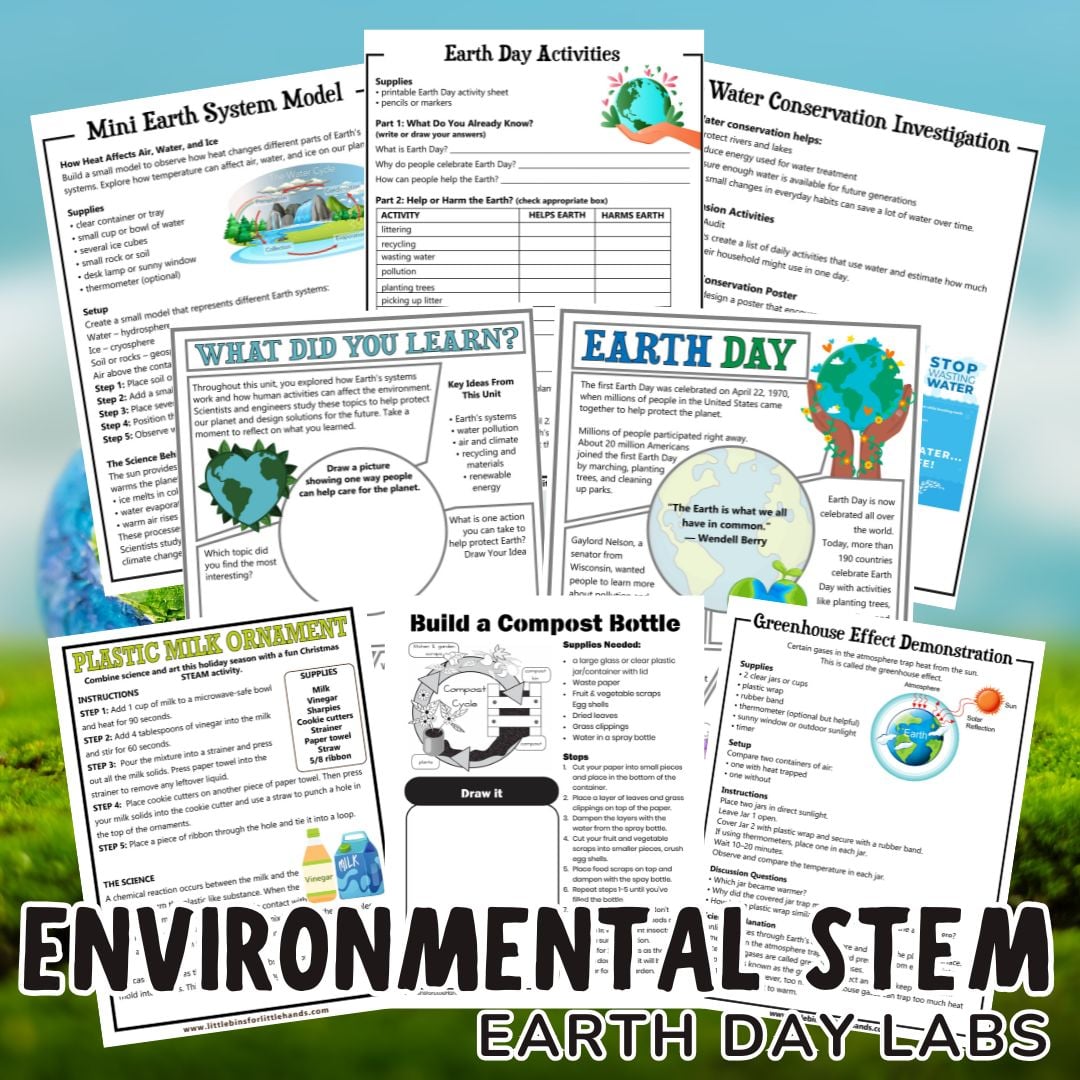
Want Everything Organized for You?
Planning Environmental or Earth Day lessons doesn’t have to mean jumping between 20 different tabs. Our Environmental STEM Printable Pack brings everything together in one ready-to-use resource, with vocab, NGSS questions, and quick-start tips.