
This Kandinsky Winter Art Project is a fun and creative way to introduce kids to abstract art and celebrate the winter season. It’s an engaging artist project that blends art history with hands-on fun, perfect for classroom use, art clubs, or at-home art days!

Winter Art for Kids
Winter landscapes are magical—icy blues, crisp whites, and shimmering silvers. This project combines seasonal themes and Kandinsky’s bold abstract style, inspiring kids to create vibrant winter scenes using concentric circles and snowy effects.
💡Create a variety of winter art projects [here], including process art techniques and famous artist-inspired styles.
This mixed-media project uses oil pastels, watercolor paint, and optional salt to achieve a layered and textured winter look. Learn more about the 7 Elements of Art that add to this winter art project below.
Grade Level Recommendation: Grades K–4. Adjust the detail level based on your kids’ age and skill level.
🌀TIP: Art is all about creativity and self-expression, so feel free to use the supplies you already have! Whether it’s crayons, markers, paint, construction paper (collage), or even colored pencils, this project works with any medium. The instructions are a loose guideline—encourage kids to take the idea and make it their own!
Supplies
- Cardstock or heavyweight paper (watercolor paper)
- Oil pastels or colored pencils
- Watercolor paints (blues, purples, whites, and silvers)
- Paintbrushes
- Water cup
- Salt (optional)
Kandinsky Winter Art Project Instructions
Step 1: Lightly sketch several overlapping or side-by-side circles on the paper. These circles will serve as the foundation of the composition.

Step 2: Use oil pastels or colored pencils to fill each circle with layers of concentric color. For a frosty theme, focus on cool, wintry hues like blues, purples, whites, and silvers.

Step 3: Paint the background around the circles using watercolor paints in cool tones. Blend the colors softly to create a frosty winter sky effect.

Step 4: While the background paint is still wet, sprinkle a small amount of salt over the paper to create a snowy texture. Allow the artwork to dry completely, then gently brush off the salt.
Optional: Add tiny snowflakes or star details within or around the circles for an extra wintery feel.

Tips and Tricks
- Encourage students to layer colors for richer circles.
- Use smaller circles for younger students or simpler compositions.
- Demonstrate how salt creates texture to engage curiosity.
- For extra shimmer, consider using metallic oil pastels or paints.
💡 Learn more about various watercolor techniques here, including salt, plastic wrap, crayon resist, and more ideas!
Who is Kandinsky?
Wassily Kandinsky (1866–1944) was a Russian painter and pioneer of abstract art. Known for his bold use of colors and geometric shapes, Kandinsky believed that art could evoke emotions through the arrangement of form and color. His famous Squares with Concentric Circles inspires this project, showcasing his love for vibrant compositions.
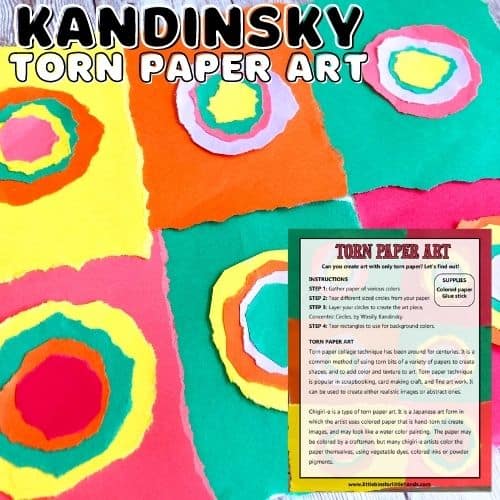
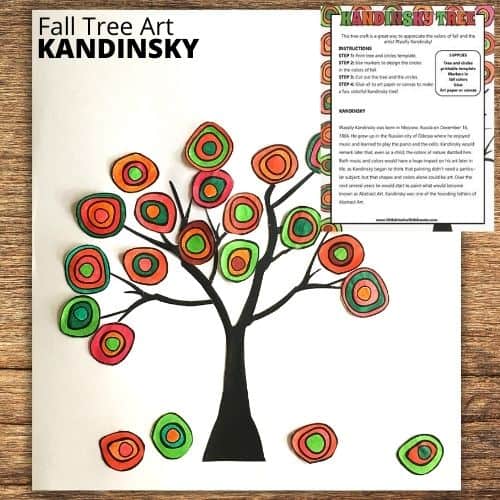
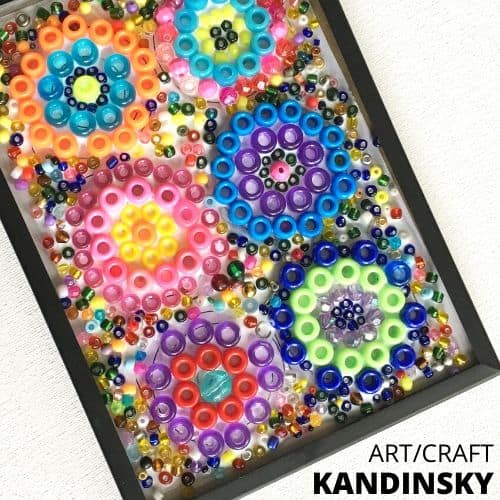
💡 Try out these Kandinsky projects, too. Kandinsky Torn Paper Art, Kandinsky Trees (use for any season), Kandinsky Circle Art Mosaic
Connecting Kandinsky’s Winter Circles to the 7 Elements of Art
This Kandinsky Winter Circles project is a perfect opportunity to explore the 7 elements of art in a hands-on and engaging way. Each element plays a key role in this project, making it a fantastic choice for both art lessons and creative exploration:
- Line: Students use lines to sketch the outlines of their circles and create snowflake or star details. Lines also appear naturally in the overlapping circles, adding structure to the composition.
- Shape: The concentric circles are the primary shapes in this project, highlighting geometric forms and teaching students about the power of abstraction.
- Color: This project emphasizes color theory, focusing on cool tones like blues, purples, and whites to create a frosty, wintery feel. Students can experiment with blending and layering colors for vibrant, eye-catching effects.
- Texture: The optional salt technique adds texture to the background, mimicking the look of snowflakes and giving the artwork a tactile, visual quality. The contrast between the smooth watercolor background and the bold oil pastel circles enhances this textural element.
- Value: Students explore light and dark variations within their circles and the background, creating depth and dimension. Blending lighter and darker shades shows how value can enhance a composition.
- Space: Overlapping circles teach students how to use space effectively, creating layers and a sense of depth. The empty background highlights negative space, drawing attention to the bold shapes.
- Form: While primarily a 2D project, the concentric circles and use of value create an illusion of form, making the artwork appear dynamic and dimensional.
Related Winter Art Projects
Expand your winter art activities with these complementary projects:
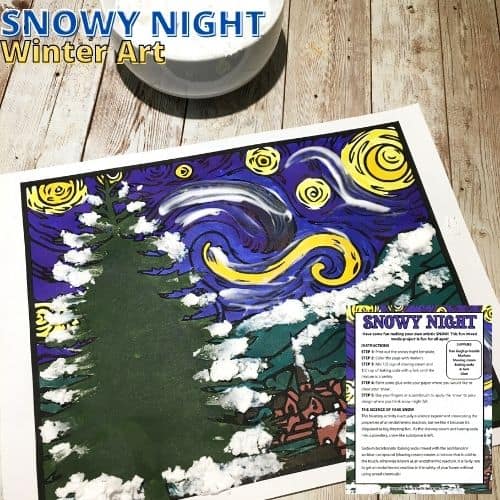
- Van Gogh’s Snowy Night: Recreate the magic of swirling snow using Van Gogh’s famous brushstroke techniques.
- Matisse Winter Birds: Create layered paper collages inspired by Matisse’s vibrant style.
- Seurat Winter Dot Art: Use pointillism to craft snowy winter scenes.
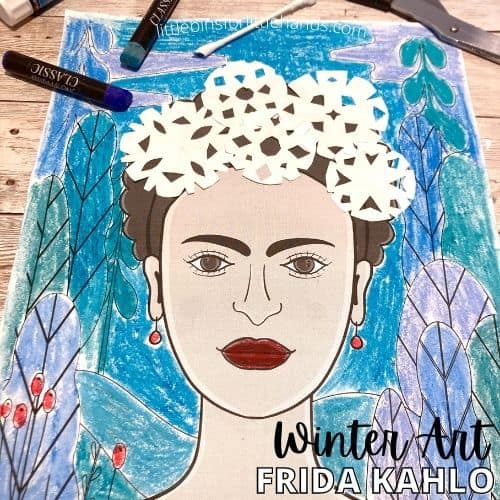
- Winter Frida: Make winter-themed self-portraits inspired by Frida Kahlo.
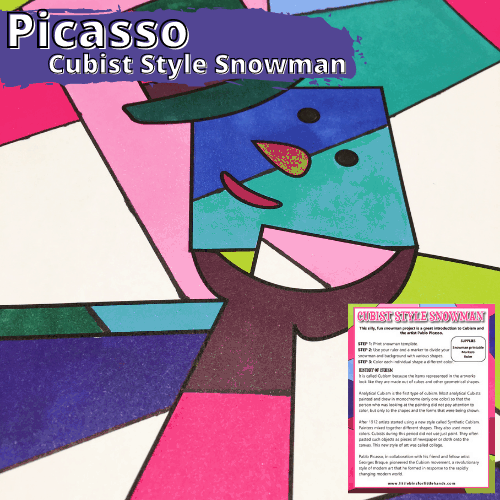
- Cubism Snowman: Design geometric snowmen using bold, Picasso-inspired shapes.
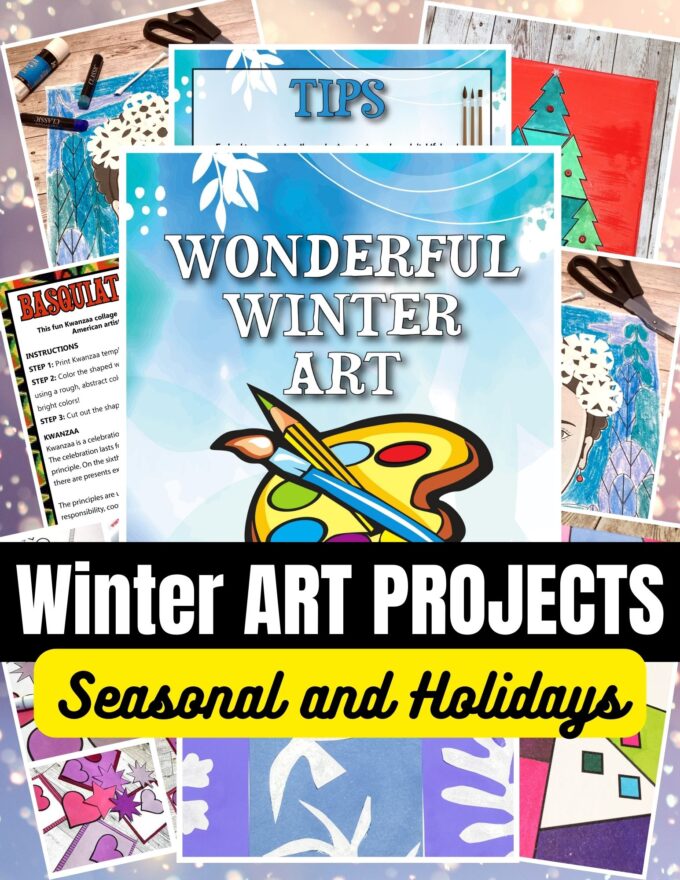
Printable Winter Art Projects Pack
Celebrate the Winter season with winter themed art!
Everything you need is included. Just add art supplies! Perfect for kids of all ages to enjoy with a variety of techniques. Whether in the classroom, at home, or with groups, there is a fantastic variety of art activities to try!
Find all the instructions and templates necessary for over 40 art projects this Winter.
Snowflakes, Solstice, Christmas, Hanukkah, Kwanzaa, Lunar New Year, and Valentine’s Day
Explore process art, STEAM, and even famous artists with these very doable art activities that won’t break the budget or the time you have available!