
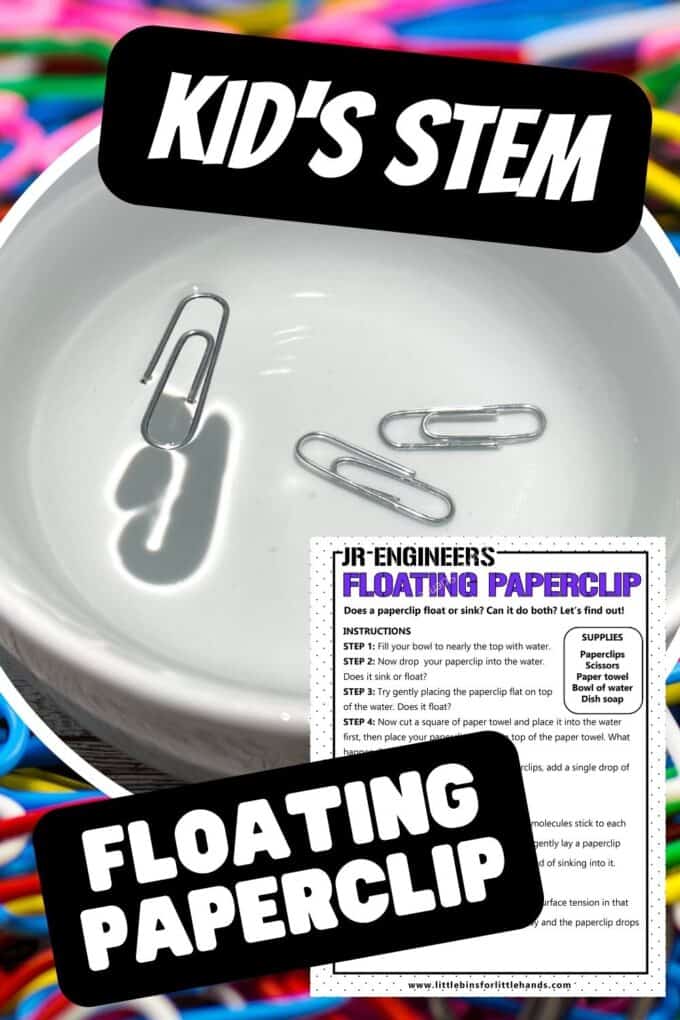
Can you make a paperclip float on the surface of the water? It may seem impossible, but with some science, you can! This fun science experiment is an excellent way for kids to explore the surface tension of water and how scientists study liquids and their properties.
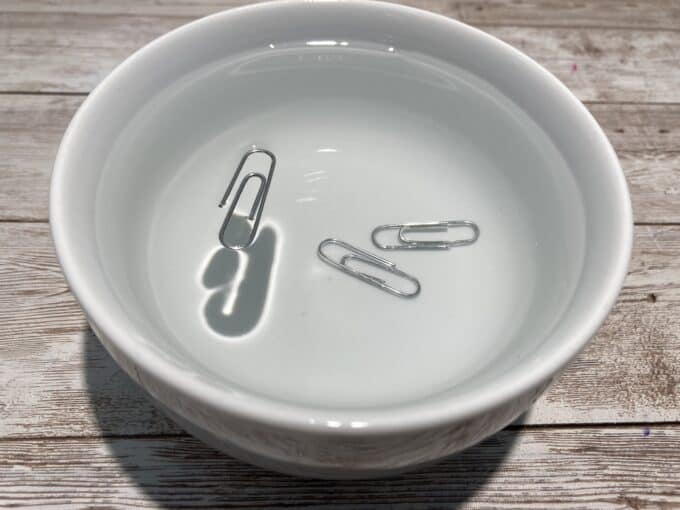
How to Make a Paper Clip Float
This simple science experiment is an exciting way to learn about water molecules and their ability to create a sort of skin on the water’s surface. You’ll only need a few everyday materials to test this fantastic effect! Let’s dive in and discover why a floating paper clip is possible and what happens when you add soap!
💡Explore more with surface tension experiments here.
Recommended Grade Level: Grades 2-6
Supplies Needed:
✅ Paperclips
✅ Scissors
✅ Piece of paper towel
✅ Bowl of water
✅ Dishsoap
✅ Eraser end of a pencil (to help place the paperclip)
Sink or Float Paperclip Set Up
🔎 Have leftover paper clips? Try our fun paper clip STEM challenge or paper clip surface tension experiment.
Step 1: Fill the Bowl with Water
Pour water into a bowl of water until it’s nearly full. Observe how the water’s surface stays level.
Step 2: Drop a Paperclip into the Water
Drop a paperclip into the liquid’s surface. What happens? It sinks!
Step 3: Try to Make a Paperclip Float
Carefully place a dry paper clip flat on the top of the water. Does it float? If it sinks, try again using a steadier hand.
Step 4: Use a Paper Towel for Help
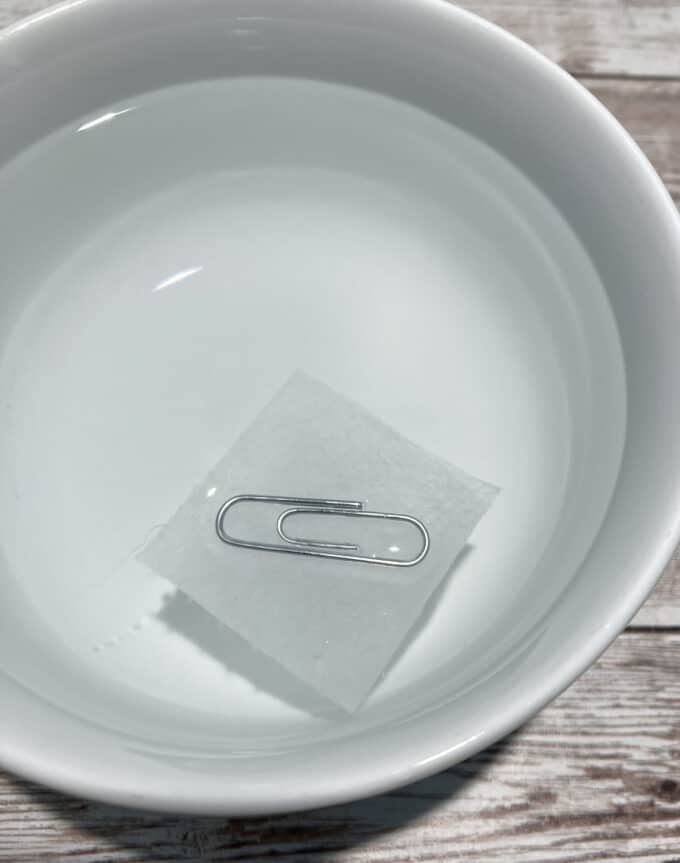
Cut a piece of tissue paper and place it on the surface of the water. Gently lay a dry paper clip on top. Wait a few moments and then use the eraser end of a pencil to carefully push the tissue down. What happens? The tissue sinks, but the floating paper clip remains!
Step 5: Add Soap and Observe!
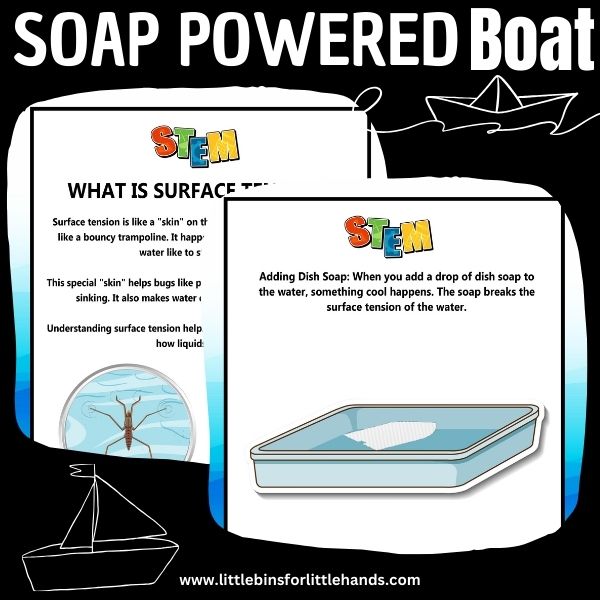
Add a drop of soap or detergent near the floating paper clip. Watch what happens! The paperclip sinks immediately because the surface tension of water has been broken.

Why Does a Paperclip Float?
A paperclip is made of metal and is much denser than water. Usually, it sinks right away. However, the strongest surface tension occurs when water molecules bond, creating an invisible layer on the surface. This surface tension hold allows the floating paper clip to stay up.
But what happens when you add soap? The soap particles weaken the surface tension of the water, causing the weight of the paper clips to overcome the bond between the water molecules, and they sink.
This is the same reason water striders, special insects, can walk on water without sinking!
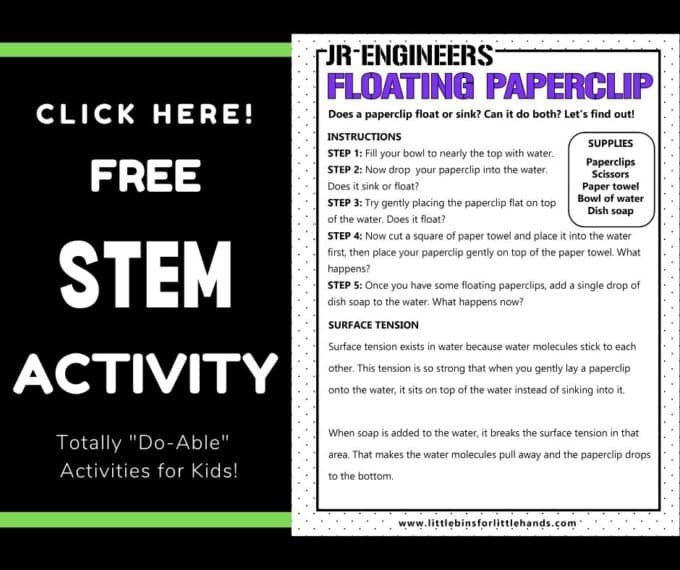
FREE PRINTABLE PAPERCLIP EXPERIMENT!
More Science Fun with Surface Tension and Liquids!
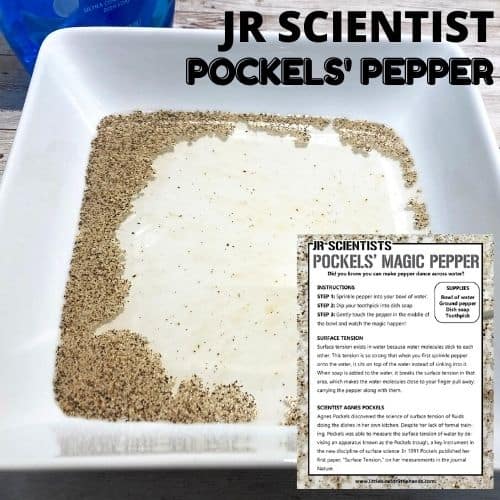
Soap and Pepper Experiment – Sprinkle pepper on the surface of the water, then add soap. Watch how the soap breaks the surface tension and makes the pepper scatter!
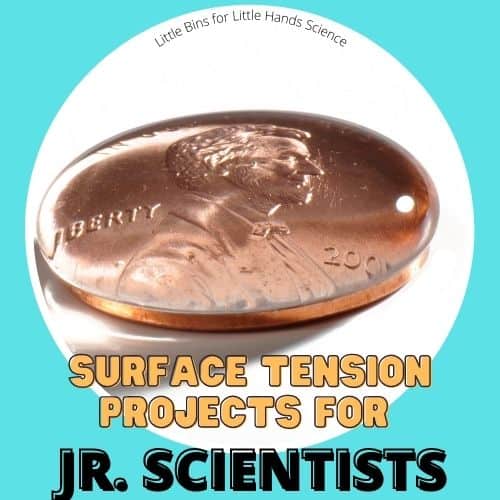
Drops on a Penny Challenge – How many drops of water can you fit on a penny before it spills over? The water molecules bond together to create a dome of water!
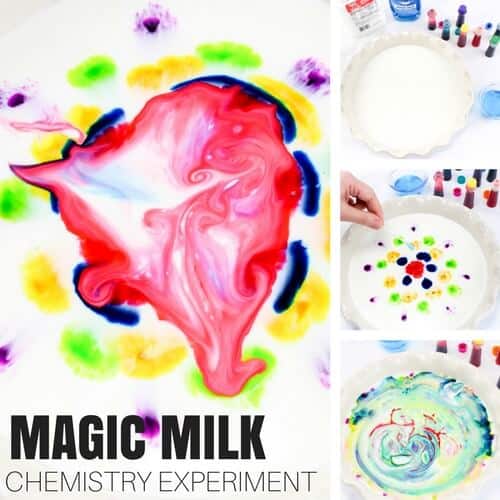
Magic Milk Experiment – Add drops of food coloring to milk, then touch it with soap! The soap particles break the liquid’s surface, making the colors swirl in a fun way.
Dancing Colors with Skittles – Arrange Skittles in a circle on a plate, then slowly add water. The candy coating dissolves and creates a rainbow of colors!
Walking Water Experiment – Use paper towels to connect cups of colored water. Watch how the water molecules move through the paper towel in a capillary action!
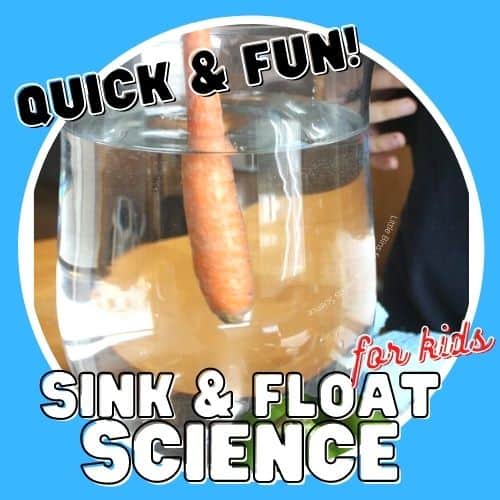
Sink or Float Challenge – Test different small objects (pennies, erasers, buttons) in a bowl of water to predict what will sink or stay on the water’s surface!
Water Strider Trick – Build a small model of a water strider insect using thin wire or paper to see how surface tension holds it up!
DIY Paper Boat Races – Cut small paper boats and place them on water. Add soap behind them and watch it break the surface tension, pushing the boats forward!