
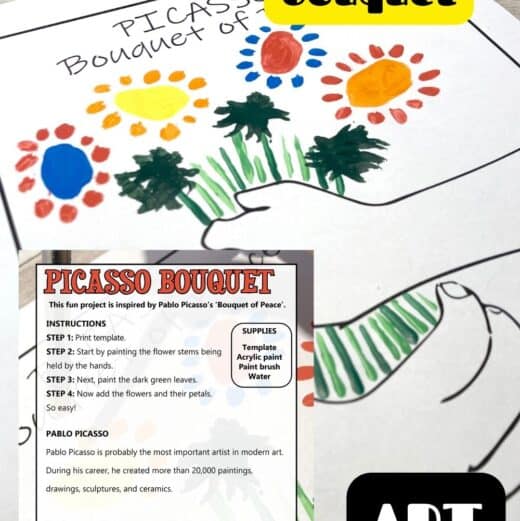
Create a colorful flower bouquet inspired by Pablo Picasso’s Bouquet of Peace! This easy Picasso flowers art project uses a printable hand-and-flower template, paint, and bright colors to help kids explore famous artist-inspired art in a simple, hands-on way.
👉 This project works well for a spring art lesson, a flower unit, a peace-themed activity, or a famous artist study. For more artist-inspired ideas, explore our Picasso art projects for kids.
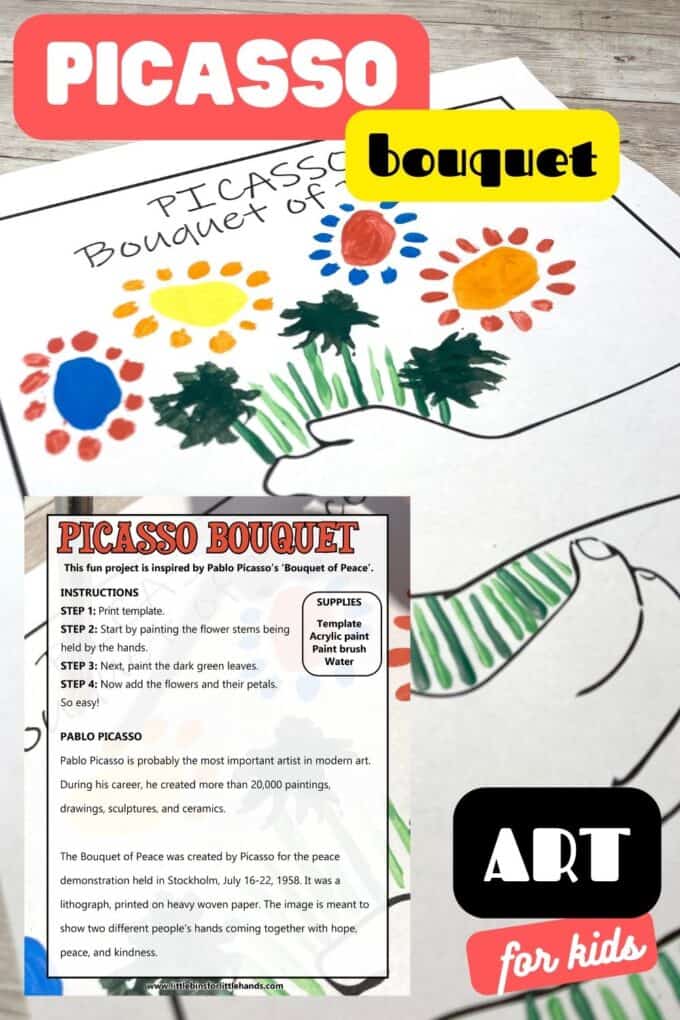
Picasso Bouquet Of Peace Art Project
Pablo Picasso’s Bouquet of Peace shows two hands holding a simple bouquet of flowers. In this kid-friendly version, kids can paint their own colorful flowers while learning how artists can use simple images to share a message.
The hands are already included on the printable template, so kids can focus on painting stems, leaves, flower centers, petals, and colorful details.
This is a simple elementary art project that combines art history, flower shapes, color exploration, fine motor skills, and a message of peace.
Supplies Needed
Picasso Bouquet of Peace printable below
Acrylic paint or washable paint
Paintbrushes
Small cup of water
Paper towel
Crayons, markers, or oil pastels, optional
Want to make your own washable paint? Try our easy flour paint recipe.
How To Make Picasso Flowers Art
Step 1: Print the Picasso flower template on white paper or cardstock. Cardstock works best when using paint.
Step 2: Start by painting green lines from the hands upward to create the flower stems.
Step 3: Next, add leaves along the stems. Kids can paint simple oval leaves, pointed leaves, or any leaf shape they like.
Step 4: Paint colorful circles at the top of the stems to make the centers of the flowers.
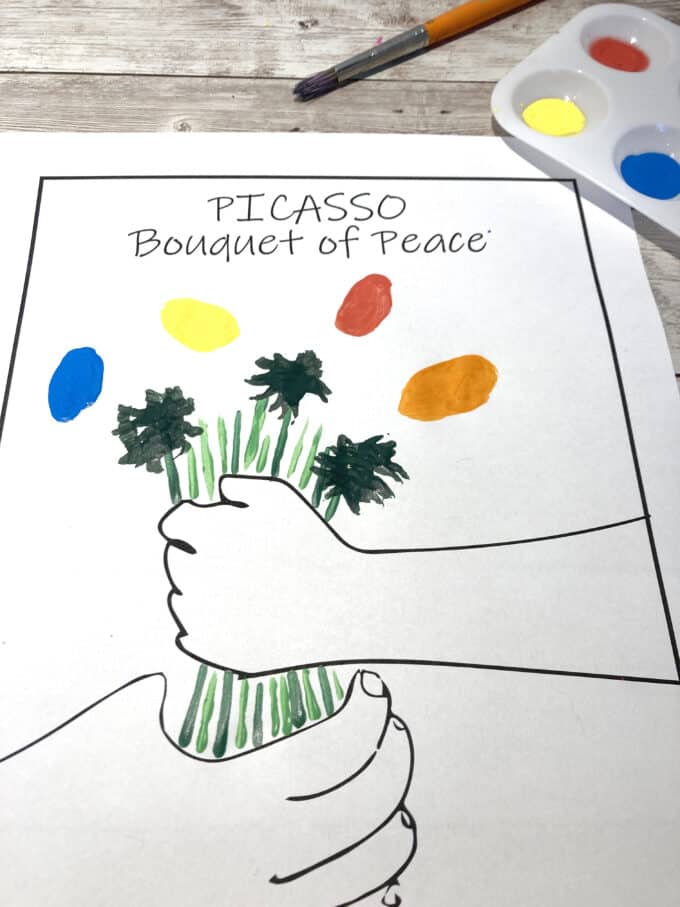
Step 5: Add petals around each flower center. Kids can make round petals, pointed petals, long petals, or a mix of different flower shapes.
💡 Tip: Let the painting dry completely. Then, add extra details with markers, crayons, or oil pastels if desired.
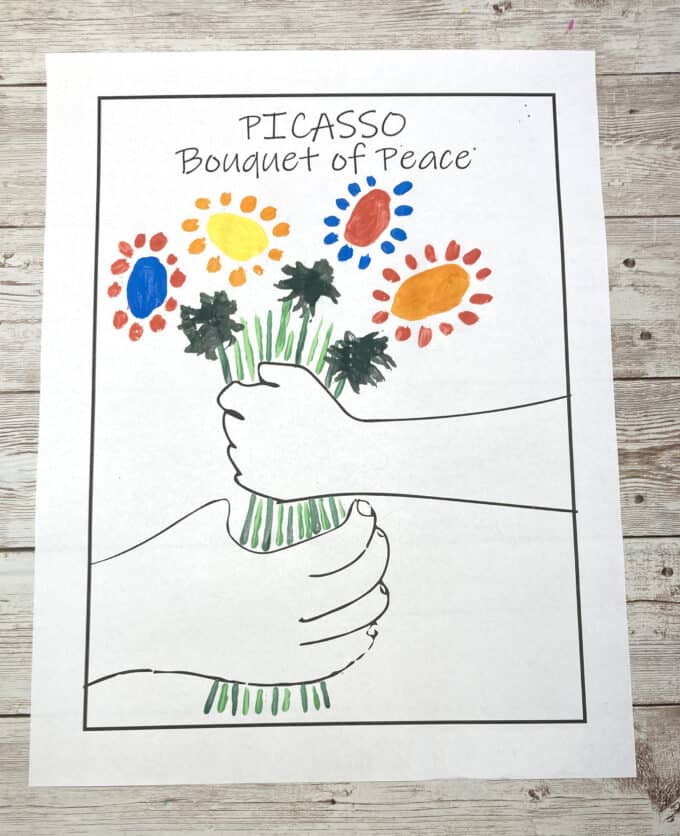
Free Picasso Flower Art Project Template
Grab the free Picasso flower template and instructions here.
What Kids Learn From This Picasso Flower Project
This Picasso-inspired art activity introduces kids to the idea that art can communicate a message. In Bouquet of Peace, the flowers and hands work together to show friendship, kindness, and hope.
Kids can also notice how simple shapes can create a complete picture. Lines become stems, circles become flower centers, and repeated petal shapes turn into a bouquet.
For younger kids, keep the focus on color, shapes, and painting. For older kids, add a brief discussion of symbols in art and how artists use imagery to convey ideas.
About Picasso’s Bouquet Of Peace
Pablo Picasso created Bouquet of Peace in 1958. The artwork shows two hands holding a bouquet of flowers and is often connected with peace, friendship, hope, and kindness.
The image is simple, but the message is powerful. Flowers often symbolize peace and kindness. The hands holding the bouquet can also help kids think about giving, sharing, and working together.
That makes this Picasso flower painting a meaningful art project for spring, friendship lessons, peace themes, or famous artist studies.
Who Was Pablo Picasso?
Pablo Picasso was an artist born in Málaga, Spain, in 1881. He spent much of his adult life creating art in France and died in 1973.
Picasso worked as a painter, sculptor, printmaker, and ceramic artist. He created thousands of works of art during his lifetime and became one of the most well-known modern artists.
He is especially known for helping develop Cubism, a style of art that breaks people, objects, and scenes into shapes and angles. Picasso also explored collage, line drawing, sculpture, ceramics, and many different painting styles.
While Picasso is often known for bold and unusual portraits, he also created simple images with strong messages. Bouquet of Peace is one example. The hands and flowers create a peaceful image that kids can understand and recreate in their own way.
Easy Ways To Extend This Picasso Art Lesson
Try one of these simple variations to make the project fit your class, season, or available art supplies.
Make it a mixed media bouquet: Paint the stems and leaves, then use construction paper, tissue paper, or scrapbook paper for the flower petals.
Try watercolor flowers: Use watercolor paint for a softer spring look. Kids can outline the flowers with a black crayon or oil pastel before painting.
Add patterns: Encourage kids to add dots, stripes, zigzags, or swirls inside the flowers.
Write a peace message: Add a short sentence under the artwork, such as “Peace begins with kindness” or “Flowers for peace.”
Turn it into a classroom display: Hang all the finished bouquets together for a spring bulletin board or peace-themed art wall.
👉 Want to build this into a full flower theme? Try more flower art activities for kids.
Teacher Tips For This Flower Art Project
For younger kids, pre-print the template and place paint colors in small trays or cups.
For older kids, show them Picasso’s Bouquet of Peace before they begin. Ask what they notice first, what the hands might represent, and why flowers might be used as a symbol of peace.
Tip: Older kids can draw hands, and younger kids can trace around their hands for an even more creative take on the project.
💡 You can also let students choose their own flower colors based on a feeling or message. For example, yellow might represent happiness, blue might represent calm, and pink might represent kindness.
👉 This also works well as part of your spring art activities because it connects flowers, color, and a simple seasonal display.
More Famous Artist Art For Kids
For more art history lessons, visit our famous artists for kids collection. Try another artist-inspired project next:
Printable Famous Artist Pack
Want more famous artist projects in one place?
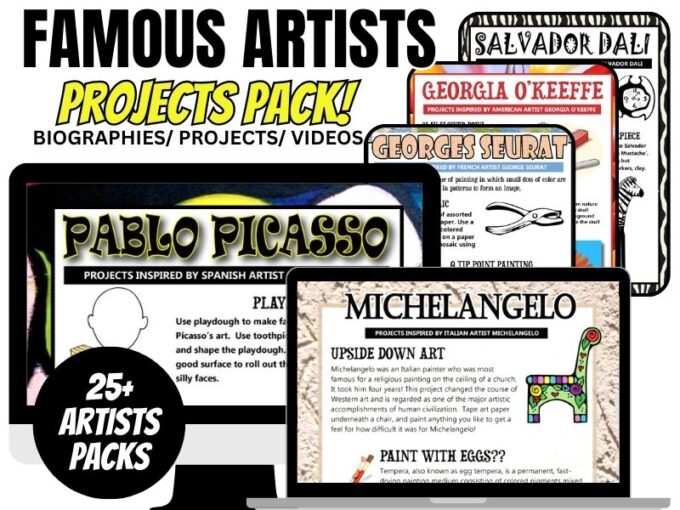
You’ll find Picasso and many other artists inside our Printable Famous Artist Pack. It includes 25+ famous artists and growing, with unique art projects not available on the website, plus a bonus Andy Warhol coloring book.
This Famous Artists Project Pack 👇 is a great way to build easy art lessons around famous artists, art history, and hands-on creativity.