
Planning a summer science camp does not have to be complicated! You can create a fun hands-on camp week with simple supplies, daily themes, and a mix of experiments, STEM challenges, science journals, games, snacks, and take-home projects.
Use this guide to plan a science camp at home, in the classroom, for summer school, at a library program, or with a small group of kids who love to explore.
👉 Looking for individual activities instead of a full camp plan? You can also browse our summer science experiments or our broader summer camp activities guides for kids.
Science Camp At A Glance
Field: General Science—STEM, Chemistry, Physics, Earth Science, Life Science
Grades: PreK–5, with simple options for younger kids and extensions for older kids
Concepts Explored: Observation, asking questions, testing ideas, chemical reactions, force and motion, simple machines, water science, engineering design, measurement, nature science, and creative problem-solving.
Want The Science Camp Week Planned For You?
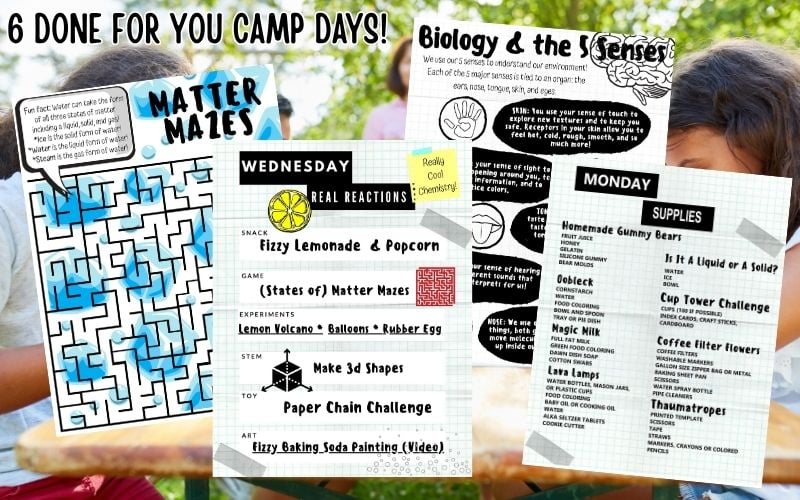
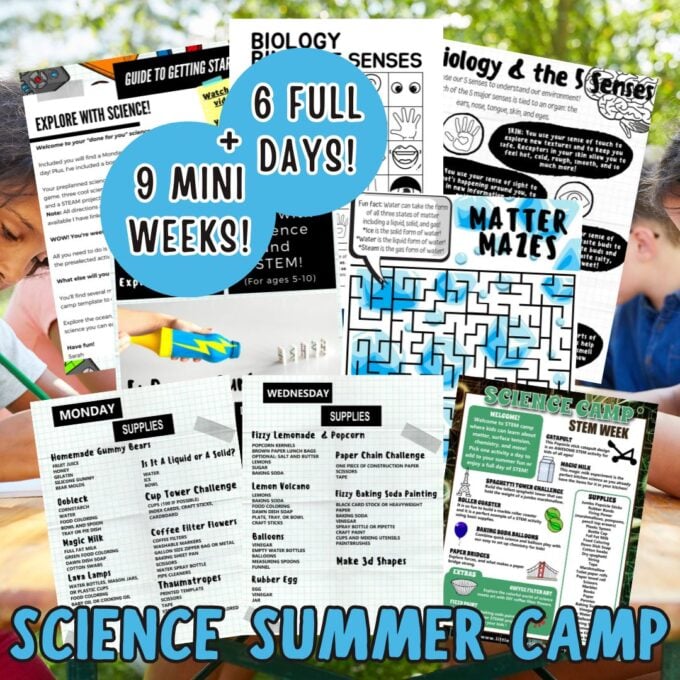
If you want the activities organized and ready to use, the Summer Science Camp Pack gives you complete camp plans with daily themes, supply lists, printable pages, experiments, STEM challenges, science snacks, games, and take-home projects.
💡 Start with the full science camp week, then use the extra mini camp weeks for more themes like kitchen science, outdoor science, chemistry, physics, candy science, and STEM.
Use it for summer camp at home, summer school, library programs, homeschool, daycare, or screen-free summer afternoons.
👉 Take a peek inside the Summer Science Camp Pack here. Already have the All Access Pass? This resource is included.
How To Plan A Summer Science Camp
A simple science camp works best when each day has a clear theme. You do not need to plan every minute. Instead, choose a daily focus and repeat a simple rhythm.
Try this structure:
- Start with a science question or observation.
- Try one main science experiment.
- Add one STEM challenge or building activity.
- Use a science journal page.
- Finish with a snack, game, or take-home project.
This gives the day enough structure without making it feel too much like school. Kids still get to explore, build, test, observe, and create.
💡 You can also adjust the plan based on your setting. A home camp might use one activity per day. A classroom, library, or summer program might include a main activity, a station, a journal page, and a group challenge.
Grab The Free Science Camp Starter Pack
Want a simple way to plan your first camp day?
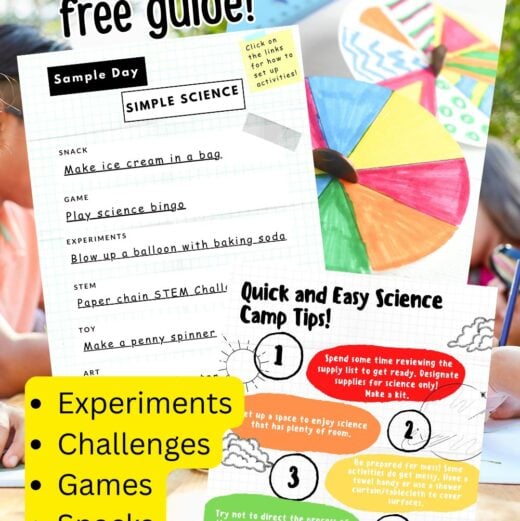
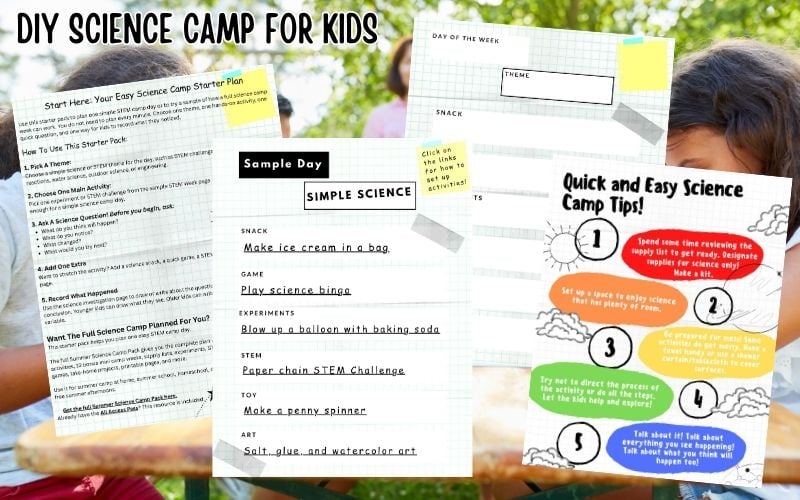
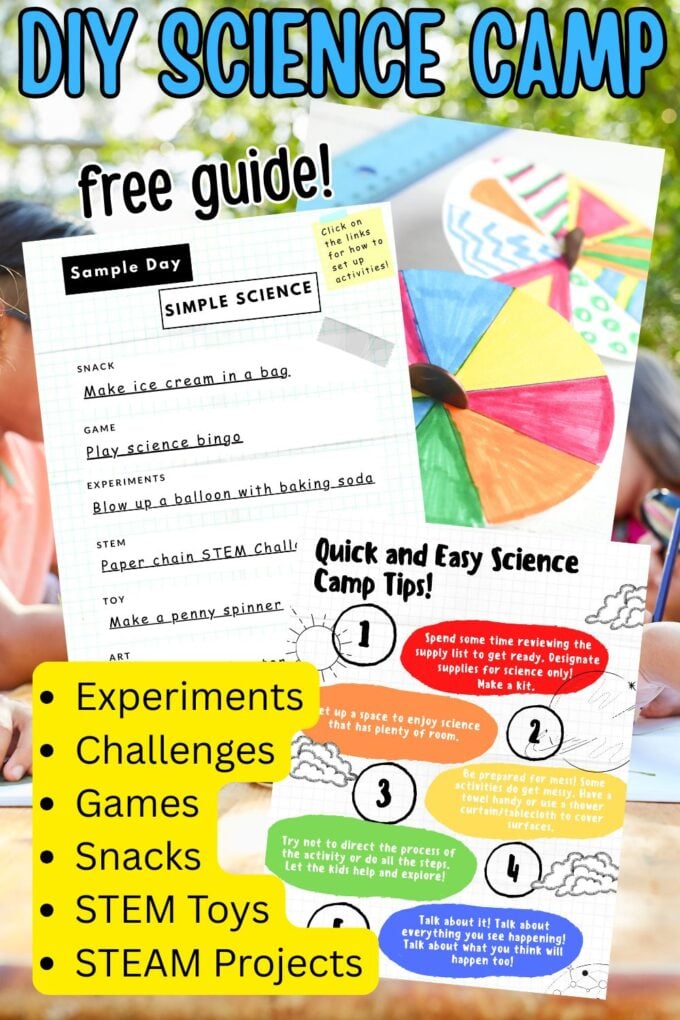
Grab the free Science Camp Starter Pack with a start-here page, quick camp tips, a sample camp day, a blank planning page, and a science investigation sheet.
Use it to plan one easy STEM camp day at home, in the classroom, or with a small group.
👉 Get The Free Science Camp Starter Pack
Start With A Homemade Science Kit
Kick off your science camp by giving each child a simple science kit. This makes the week feel special and gives kids tools they can use for observations, experiments, and field notes.
Add a few supplies to a small bag, box, or caddy:
- Protective glasses
- Magnifying glass
- Eye dropper
- Tweezers
- Ruler and colored pencils
- Composition notebook or science journal pages
- Small measuring cups or spoons
You can also use an oversized button-down shirt as a simple lab coat. Check thrift stores, dollar stores, or your own closet for supplies before buying anything new.
For each activity, check the individual supply list before you begin so you can prep trays, towels, outdoor space, and safety materials.
👉 Review our list of Best Science Tools and Supplies here
Use A Science Journal
A science journal helps kids slow down and notice what is happening. Younger kids can draw what they see, while older kids can write observations, make predictions, measure results, or compare changes.
Use simple prompts such as:
- What do you notice?
- What do you think will happen?
- What changed?
- What stayed the same?
- What surprised you?
- What would you try next?
This is an easy way to add writing, drawing, and science thinking to your camp week without needing complicated worksheets.
For older kids, you can also add a simple data table, a variable to test, or a short explanation of the results.
👉 Grab free printable science journal pages and more here.
5-Day Summer Science Camp Plan
Use this simple 5-day plan as a starting point. Each day includes a theme, a big idea, one main activity, an extension, and a journal prompt.
You can keep the activities simple for younger kids or add measuring, comparing, and variables for older kids.
Day 1: Water Science
Water science is a great first day because kids can pour, test, build, and observe with simple supplies. It also works well outdoors, which makes cleanup easier.
- 💡 Big Idea: Water can move, dissolve materials, change states, and help us test sinking and floating.
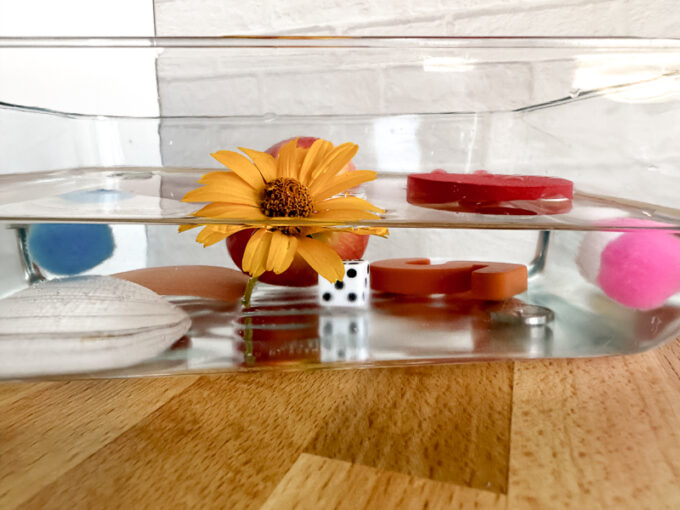
- 🔎 Main Activity: Try a penny boat challenge. Kids build a small boat from foil and test how many pennies it can hold before sinking.
- Add A STEM Challenge: Build a second boat and change one part of the design. Kids can change the shape, size, sides, or base of the boat.
- Journal Prompt: What boat design held the most pennies? What do you think made it work better?
- Optional Extra: Add a water cycle in a bag or a sink/float experiment
👉 Browse more water science experiments here.
Day 2: Chemical Reactions
Chemical reactions make science camp exciting because kids can see fizzing, bubbling, expanding, and erupting right away.
- 💡 Big Idea: A chemical reaction happens when materials combine and create something new. Bubbles can be a clue that a gas is forming.
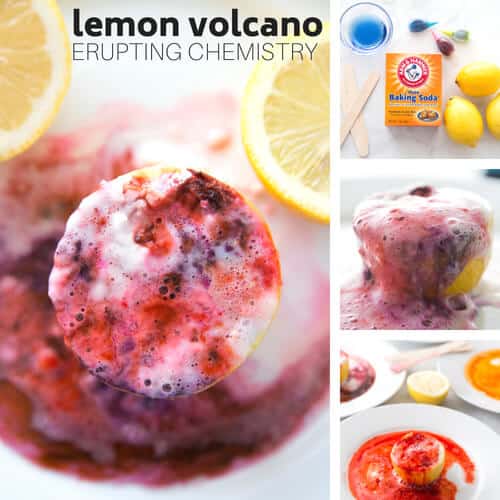
- 🔎 Main Activity: Set up a sandbox volcano or lemon volcano outdoors. Kids can observe how baking soda and vinegar react.
- Add A STEM Challenge: Change one variable. Try more baking soda, more vinegar, or a different container shape. Compare the reaction.
- Journal Prompt: What clues showed that a chemical reaction happened?
- Optional Extra: Try an Alka-Seltzer rocket or a homemade lava lamp.
👉 Explore more fizzy baking soda reactions or Alka-Seltzer experiments here

Day 3: Simple Machines And Engineering
Engineering day gives kids a chance to build, test, fix, and improve their designs.
- 💡Big Idea: Simple machines help us move objects, lift loads, change direction, or make work easier.
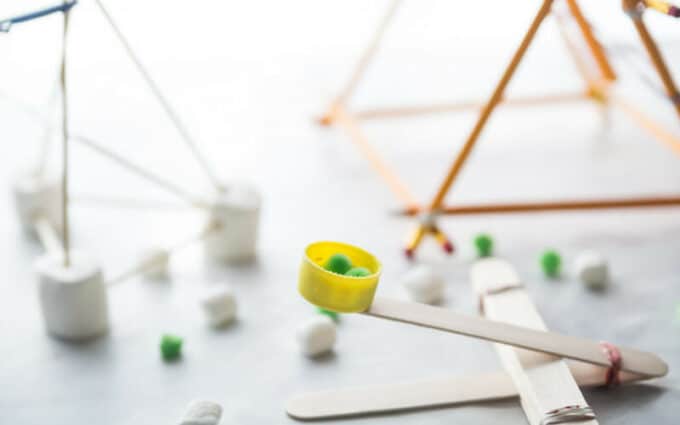
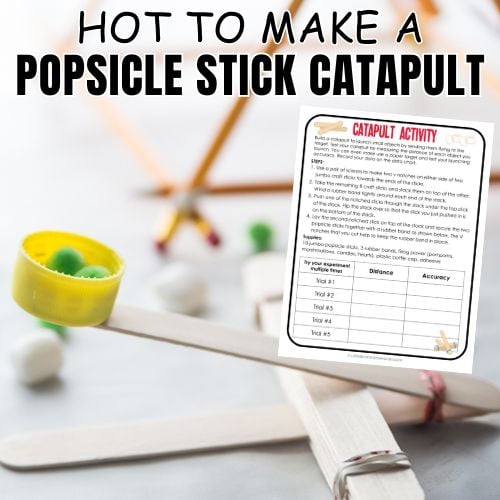
- 🔎 Main Activity: Build a popsicle stick catapult and test how far it can launch a small object.
- Add A STEM Challenge: Change one part of the catapult, such as the number of sticks, the rubber band placement, or the launch object. Measure and compare the results.
- Journal Prompt: What changed when you redesigned your catapult?
- Optional Extra: Build a pulley, a toy zip line, a cardboard marble run, or a ramp system.
👉 Look through our simple machines projects here
Day 4: Classic Summer STEM
Classic summer STEM activities are perfect for camp because they feel playful but still include real science.
- 💡 Big Idea: STEM activities use science, engineering, and math to test ideas, solve problems, and compare results.
- 🔎 Main Activity: Make oobleck and explore how it acts like both a solid and a liquid.
- Add A STEM Challenge: Test how Oobleck changes when you add more water or more cornstarch.
- Journal Prompt: What words would you use to describe Oobleck? When did it act more like a solid? When did it act more like a liquid?
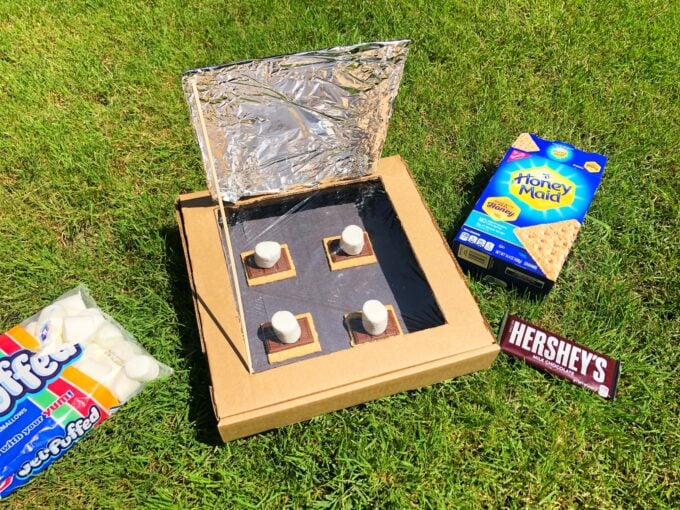
- Optional Extra: Try magic milk, bouncing bubbles, or a pizza box solar oven.
👉 Explore more summer science activities or outdoor summer STEM projects
Day 5: Discovery Stations
Discovery stations let kids explore, invent, and observe at their own pace. This is a great way to end a camp week.
💡 Big Idea: Scientists and engineers use tools, observations, models, and tests to learn more about the world.
Set up 2 or 3 stations and let kids rotate through them.
Nature Station
Collect or set out leaves, rocks, shells, seeds, magnifying glasses, tweezers, mirrors, and drawing supplies.
Kids can:
- Sort objects by texture, color, size, or shape.
- Draw one object with as much detail as possible.
- Use contact paper to make a nature collage.
- Build a mini habitat model.
Invention Station
Collect cardboard, boxes, tubes, tape, string, craft sticks, egg cartons, and recycled containers.
Kids can:
- Invent something that moves.
- Build a tool that solves a problem.
- Create a model of a machine.
- Design a new science toy.
Ramps And Measurement Station
Use cardboard ramps, rain gutters, toy cars, balls, blocks, books, and a tape measure.
Kids can:
- Test how far different objects roll.
- Change the ramp height and compare the results.
- Measure the distance traveled.
- Predict which object will go the farthest.
Journal Prompt: What did you test, build, or observe today? What would you try next?
Easy Science Camp Activity Planner
Use this simple table to plan your week without feeling overwhelmed.
💡 You can swap any activity for another project you have already prepared. The structure matters more than the exact activity.
| Camp Day | Main Theme | Main Activity | Extension Idea |
|---|---|---|---|
| Day 1 | Water Science | Penny boat challenge | Water cycle in a bag |
| Day 2 | Chemical Reactions | Sand volcano | Alka-Seltzer rocket |
| Day 3 | Engineering | Popsicle stick catapult | Toy zip line |
| Day 4 | Classic STEM | Oobleck | Magic milk |
| Day 5 | Discovery Stations | Nature station | Invention station |
👉 Want a printable starter plan? Grab the free Science Camp Starter Pack and plan your first camp day.
Science Snacks For Camp
Science snacks make camp extra fun and help kids see that science happens in the kitchen too. Choose one snack for the week or add one at the end of each camp day.
Good science snack ideas include:
- Ice Cream In A Bag for freezing point science
- Bread In A Bag for yeast and rising dough
- Fizzy lemonade for bubbles and gas
- Make butter for physical changes
- Rock cycle bars for layers and earth science
- Slushie science for freezing and temperature changes
💡 Keep snack activities simple and always check for allergies before serving food.
👉 Look through our edible science activities and pick one that works for you!
Science Camp Games
Add a quick game when kids need a break or a transition between activities.
- Mystery Object Bags: Place various objects in paper lunch bags. Without looking, kids feel each object and draw or write what they think it is.
- Nature Scavenger Hunt: Ask kids to find something rough, smooth, green, tiny, soft, bumpy, or hard. (Includes two printable styles of nature hunts)
- Cup Tower Challenge: Give kids a stack of 100 plastic cups and challenge them to build the tallest tower.
- Science Bingo: Use the free printable for a rainy day activity.
Make-And-Take Science Projects
A take-home project gives kids something to share after camp. It also helps them explain what they learned to someone else.
Try one of these make-and-take ideas:
💡 To make these projects more meaningful, ask kids to share one sentence about the science behind what they made.
👉 Pick one of these cool DIY STEM toys

More Science Camp Theme Ideas
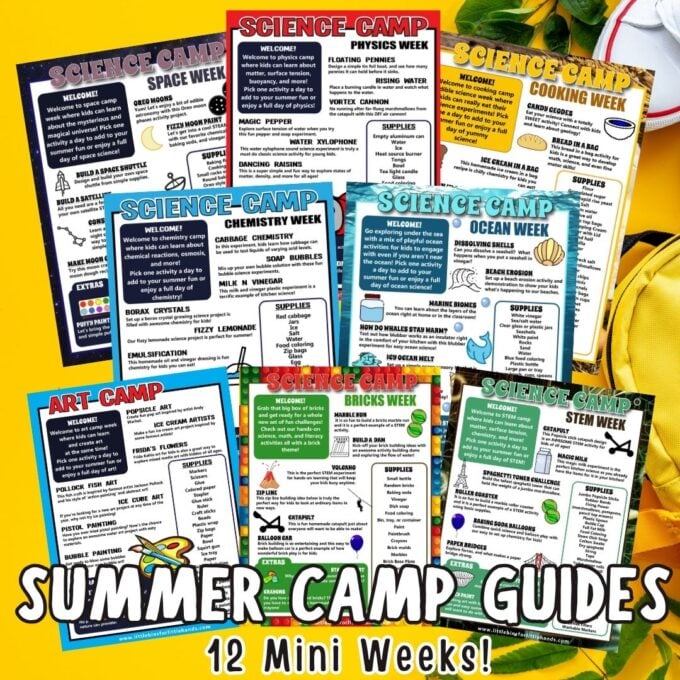
Once you have one camp week planned, you can repeat the same structure with a new science theme. Try one of these science camp themes:
- Kitchen Science Camp
- Chemistry Camp
- Physics Camp
- Nature Science Camp
- Ocean Science Camp
- Space Science Camp
💡 For each theme, choose one main experiment, one STEM challenge, one journal prompt, and one snack, game, or take-home project.
- A space science camp could include a moon phase activity, a galaxy jar, a straw rocket, and a constellation journal page.
- A kitchen science camp could include ice cream in a bag, bread in a bag, fizzy lemonade, and a simple states-of-matter activity.
- A physics camp could include catapults, ramps, balloon rockets, paper helicopters, and a measuring challenge.
👉 Browse the full collection of summer camp theme weeks here.
How To Adapt Science Camp For Different Ages
Science camp activities can work for a wide range of ages when you adjust the expectations.
Science Camp Safety Tips
Science camp should be fun, but it should also be safe and manageable.
Keep these tips in mind:
- Use protective eyewear for fizzy, flying, or messy experiments.
- Supervise all chemical reactions.
- Do outdoor experiments when possible.
- Avoid tasting science materials unless the activity is specifically edible.
- Keep towels, trays, and water nearby for cleanup.
- Test rockets, geysers, and bursting bags away from faces and windows.
- Choose age-appropriate tools and materials.
👉 Print out our Free Science Safety Rules for Kids guide here
Get The Done-For-You Science Camp Pack
Want the full science camp planned for you?
The Summer Science Camp Pack includes 6 full days of done-for-you science plus 12 mini camp weeks for extra themes. It is designed to help you keep hands-on learning going all summer without starting from scratch.
Inside, you’ll find:
- 6 Daily science camp plans
- Full experiment instructions and supply lists
- Science snacks and games
- STEM challenges
- STEAM projects
- Homemade science toys
- Printable pages
- DIY blank camp planning template
- 9 Bonus mini camp weeks
👉 Get the Summer Science Camp Pack here.
FAQs About Science Camp Activities
What are good science camp activities for kids?
Good science camp activities include water science, chemical reactions, simple machines, STEM challenges, kitchen science, nature observations, discovery stations, and make-and-take projects. Choose activities that let kids observe, build, test, compare, and explain what happened.
How do you plan a summer science camp?
Start with a theme for each day. Then choose one main experiment, one STEM challenge, one journal prompt, and one snack, game, or take-home project. Repeat the same daily rhythm all week so kids know what to expect.
What age is best for science camp?
Science camp can work for preschool through upper elementary students. Younger kids can focus on exploring and drawing observations, while older kids can measure, compare, test variables, and write explanations.
What should kids learn at science camp?
Kids can learn how to ask questions, make observations, test ideas, build models, measure results, and explain changes. They can also explore chemistry, physics, engineering, water science, nature science, and STEM problem-solving.
Can I use these science camp ideas at home?
Yes! These science camp activities work well for summer camp at home, homeschool, summer school, library programs, tutoring, daycare, or screen-free summer afternoons.
Do I need special supplies for science camp?
No. Many science camp activities use simple supplies such as baking soda, vinegar, balloons, straws, foil, cups, cardboard, craft sticks, water, and food coloring. A basic science kit with safety glasses, a magnifying glass, droppers, tweezers, and a science journal is a great place to start.
How long should a science camp day be?
A home science camp day can be as short as 45–60 minutes. A classroom, library, or camp program can stretch the theme into several hours by adding journals, stations, games, snacks, and take-home projects.

Well explained . This is a great post to learn about science. Really helpful for kids to understand basic concepts as well as they will have fun and really enjoy it. Very helpful for kids. Thanks for compiling list
Really awesome ideas for science activities. My kids are going to love this
What great ideas for my little mad scientists! They will love this summer theme.
Your ideas are fantastic! I just finished planning my own science camp. If only I had discovered your resource a few weeks ago. I am also doing dissecting during our week together. I will certainly save your plans for the future.
Blessings!