
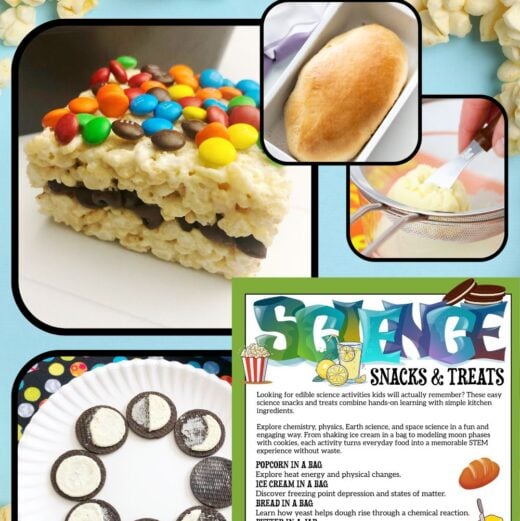
Looking for science snacks kids will actually remember? These edible STEM activities use simple kitchen ingredients to explore chemistry, physics, Earth science, biology, and space science in a fun hands-on way.
From popcorn in a bag and fizzy lemonade to Oreo moon phases and candy DNA, these easy science snack ideas help kids see real scientific concepts in action while making something they can actually eat.
Perfect for classrooms, homeschool, summer camp, and kitchen science at home.
Science Snacks At a Glance
Field: Chemistry, Physics, Earth Science, Biology, Space Science
Grades: K–5
Concepts Explored: Chemical reactions, heat energy, physical changes, freezing point depression, moon phases, Earth systems, DNA models, states of matter, mixtures, and solutions.
👉 Want the printable version plus observation pages, science journals, teacher tips, and visual supports? Grab the Science Snack Labs printable pack here.
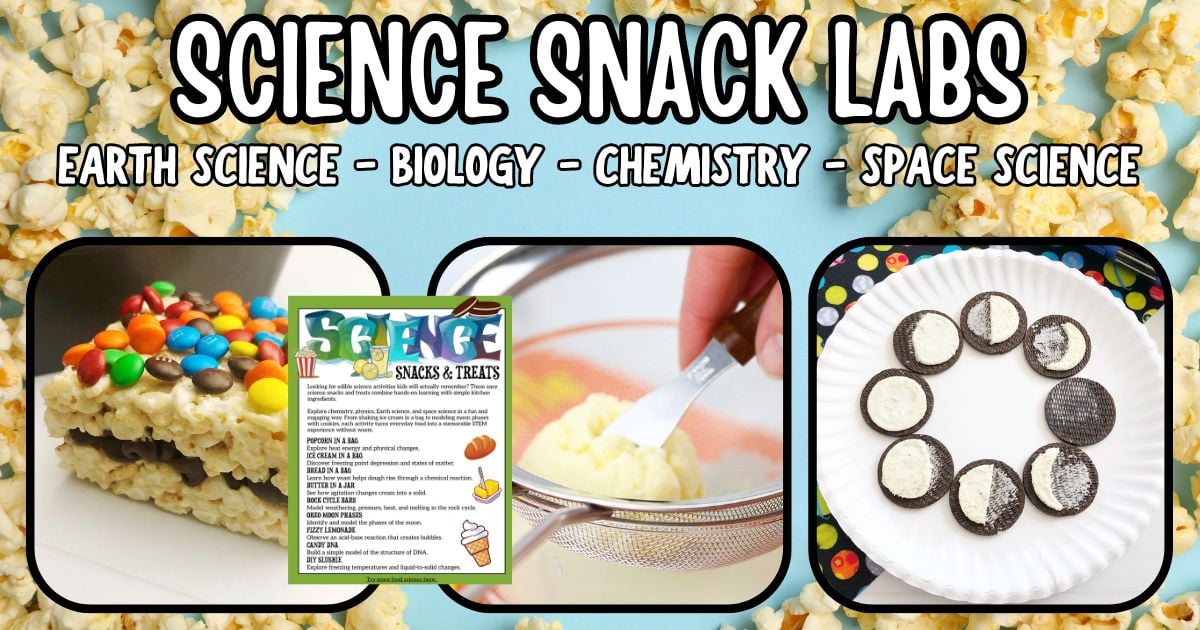
Popcorn in a Bag
Explore heat energy and physical changes with this easy popcorn science activity.
The kernel explodes and changes shape because steam pressure builds up inside. It becomes fluffy popcorn, but it’s still the same material — so popping popcorn is mostly a physical change.
Science Concepts
- heat energy
- pressure
- physical changes
- states of matter
What Kids Observe
- kernels suddenly expand
- steam creates pressure
- texture and shape change
👉 Try popcorn in a bag here.
Ice Cream in a Bag
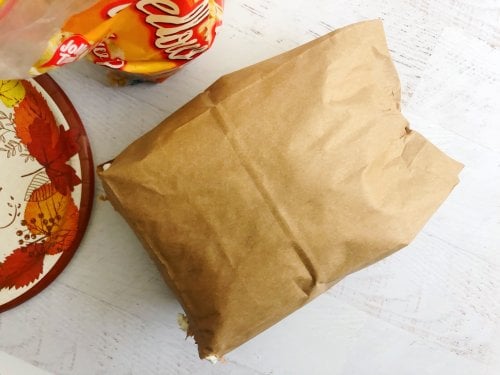
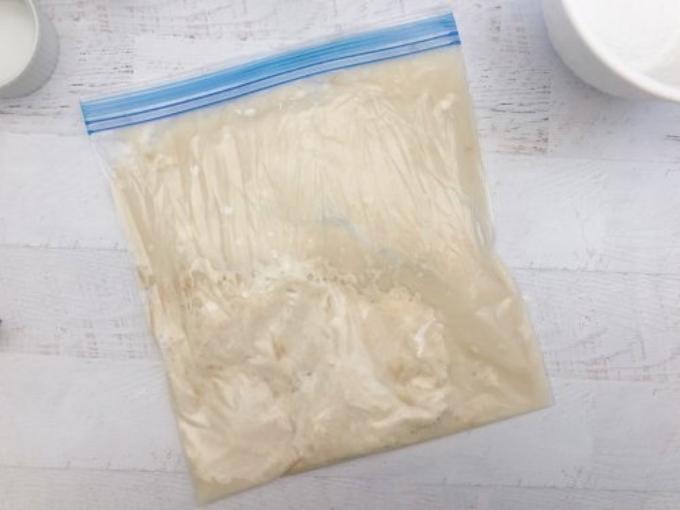
Make homemade ice cream while learning about freezing point depression. Salt lowers the freezing temperature of ice, allowing the cream mixture to freeze while kids shake the bag.
Science Concepts
- freezing point depression
- states of matter
- temperature transfer
- mixtures
What Kids Observe
- liquid changes into a solid
- ice melts while the mixture freezes
- salt affects temperature
This activity is always a favorite during summer STEM lessons, but make sure to use winter gloves!
👉 Try ice cream in a bag here.

Bread in a Bag
Mix homemade bread in a bag while exploring how yeast creates gas through a chemical reaction. As the yeast feeds on sugar, it releases carbon dioxide gas that helps the dough rise.
Science Concepts
- chemical reactions
- fermentation
- gas production
- biology and chemistry
What Kids Observe
- dough expands over time
- bubbles form in the dough
- texture changes as it rises
This activity connects science to real-world baking.
👉 Make bread in a bag here.
Butter in a Jar
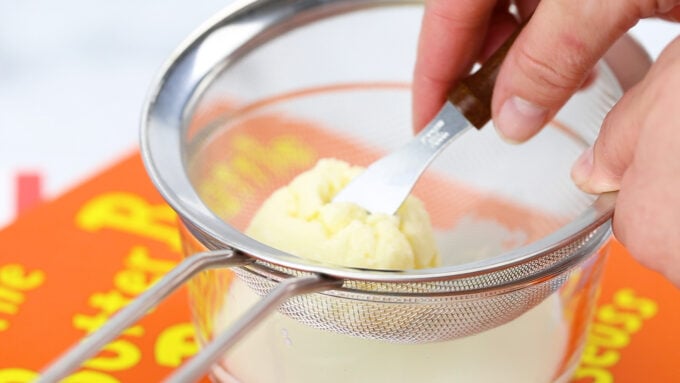
Turn heavy cream into butter by shaking it in a jar. The movement breaks apart fat molecules, separating the liquid from the solid butter.
Science Concepts
- physical changes
- emulsions
- agitation
- states of matter
What Kids Observe
- cream thickens
- solids begin to separate
- butter and buttermilk form
Kids love seeing a liquid transform into a spreadable solid.
👉 Shake up butter in a jar here.
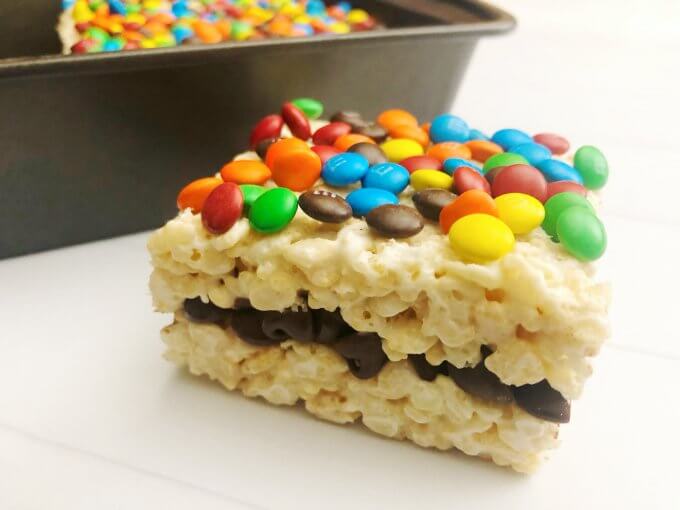
Rock Cycle Bars
Model the rock cycle using edible ingredients. Kids use layers, pressure, melting, and cooling to demonstrate how rocks change over time.
Science Concepts
- rock cycle
- weathering
- heat and pressure
- Earth systems
What Kids Observe
- layers compress together
- heat changes textures
- melted ingredients harden again
This is one of the easiest ways to make geology hands-on for kids.
👉 Make tasty rock cycle bars here.
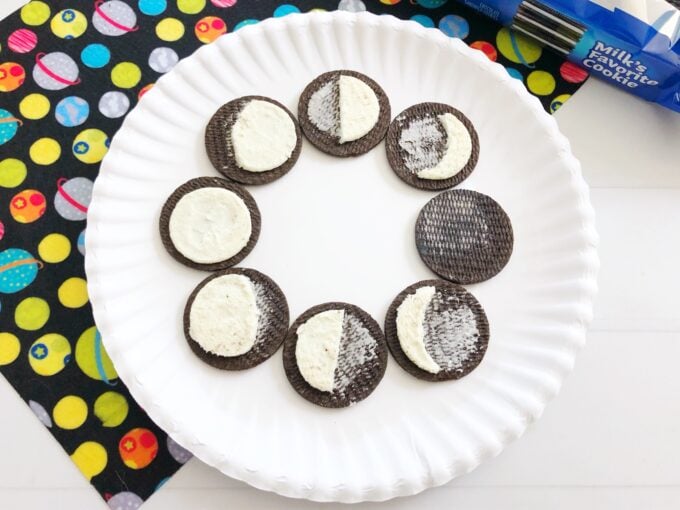
Oreo Moon Phases
Use Oreo cookies to model the phases of the moon. Kids scrape away frosting to create each phase while learning how the moon appears to change shape during the month.
Science Concepts
- moon phases
- astronomy
- space science
- observation skills
What Kids Observe
- phases follow a repeating pattern
- moon shapes gradually change
- sunlight affects what we see
A simple edible space science activity that kids will always remember.
👉 Create oreo moon phases here.
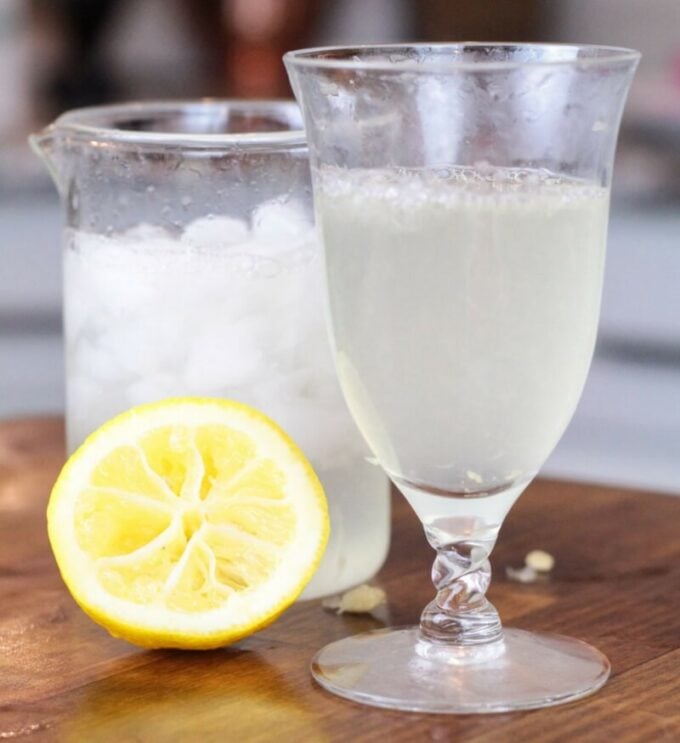
Fizzy Lemonade
Create bubbling lemonade with a simple acid-base reaction. This edible chemistry activity produces visible fizzing that kids can immediately observe.
Science Concepts
- acids and bases
- chemical reactions
- gas formation
- mixtures
What Kids Observe
- bubbles form rapidly
- gas escapes from the liquid
- the texture changes
Fast reactions make this one especially engaging for younger learners.
👉 Mix up fizzy lemonade here.
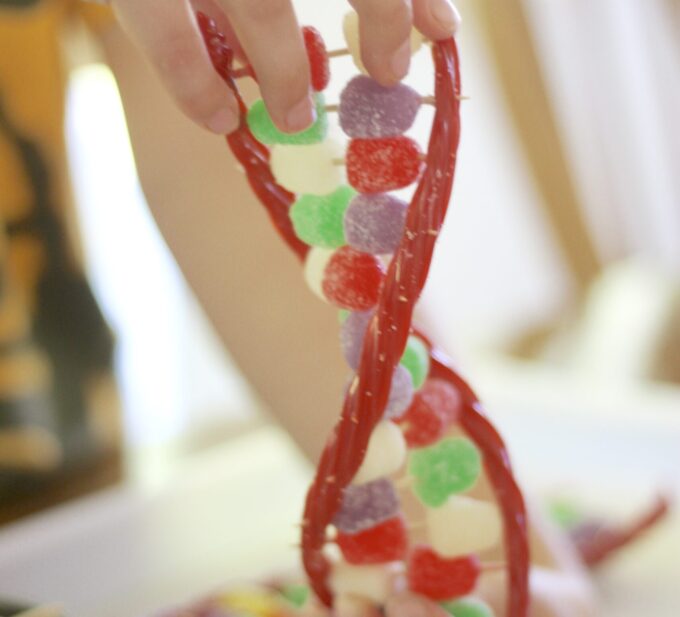
Candy DNA
Build a candy DNA model while exploring the structure of DNA. This edible STEM activity helps kids visualize how DNA forms repeating patterns and twists together.
Science Concepts
- DNA structure
- biology
- scientific models
- patterns
What Kids Observe
- repeating structures form
- the model twists like DNA
- patterns organize in specific ways
This is an excellent life science activity for upper elementary students.
👉 Build candy DNA models here.
DIY Slushie
Turn juice into a slushie while exploring freezing temperatures and phase changes. Salt and ice work together to cool the liquid rapidly and partially freeze it.
Science Concepts
- freezing
- temperature transfer
- states of matter
- mixtures
What Kids Observe
- liquid partially freezes
- texture changes quickly
- salt affects how ice behaves
Perfect for warm-weather kitchen science.
👉 Try DIY slushie in a bag science here.

Simple Questions to Ask During Science Snacks
Encourage scientific thinking by asking:
- What changed?
- What stayed the same?
- What caused the reaction?
- What do you predict will happen next?
- How could we test this differently?
These types of observation questions help turn simple activities into meaningful science investigations.
More Food Science Activities Kids Love
If your kids enjoyed these science snacks, try these next:
- edible science experiments
- candy science activities
- kitchen science experiments
- chemistry activities for kids
- science camp cooking activities guide
Grab the Free Science Snacks Printable
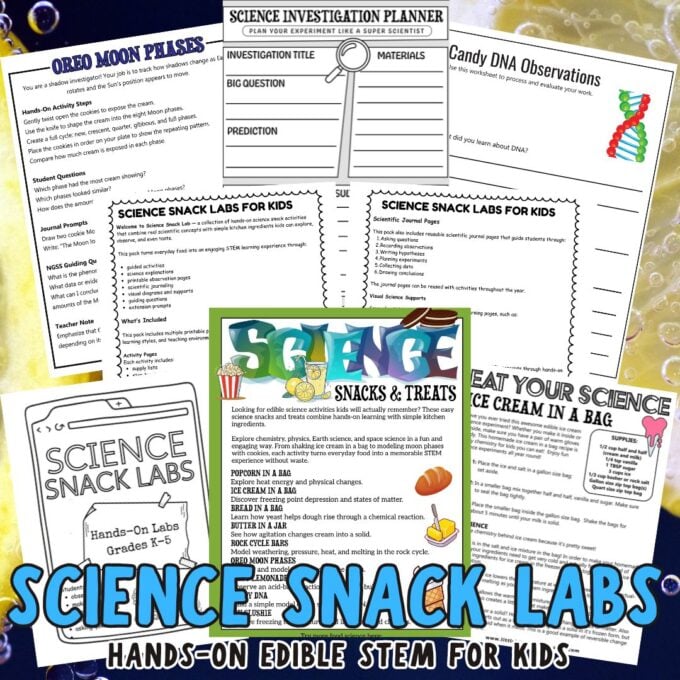
Want an easy way to use these science snack ideas at home or in the classroom? Download the free Science Snack Lab printable guide with an easy-to-use investigation page.
Want The Printable Science Snack Lab Pack?
Skip the prep and grab the complete Science Snack Labs printable pack featuring:
- 9 edible STEM activities
- reusable science journal pages
- observation worksheets
- visual science supports
- kid-friendly science explanations
- easy print-and-go setup
Perfect for grades K–5 in the classroom or at home.
👉 Shop Science Snack Labs Here
Science Snacks FAQ
What are science snacks?
Science snacks are edible STEM activities that use food to demonstrate scientific concepts like chemical reactions, states of matter, heat transfer, and physical changes.
What age group are science snacks best for?
Most science snack activities work well for preschool through upper elementary students with adult supervision.
Are science snacks good for classrooms?
Yes. Science snacks use inexpensive ingredients, quick setup, and highly visual reactions that work well for classroom science activities.
Do science snacks teach real science?
Absolutely. Kids explore chemistry, physics, biology, Earth science, and space science concepts through hands-on observation and experimentation.