
Make your own tasty edible rocks to explore geology! Go ahead and try this rock cycle model that is sure to please because it’s edible! Explore different types including sedimentary and igneous rocks and the rock cycle with this super easy to make, sedimentary rock bar snack.
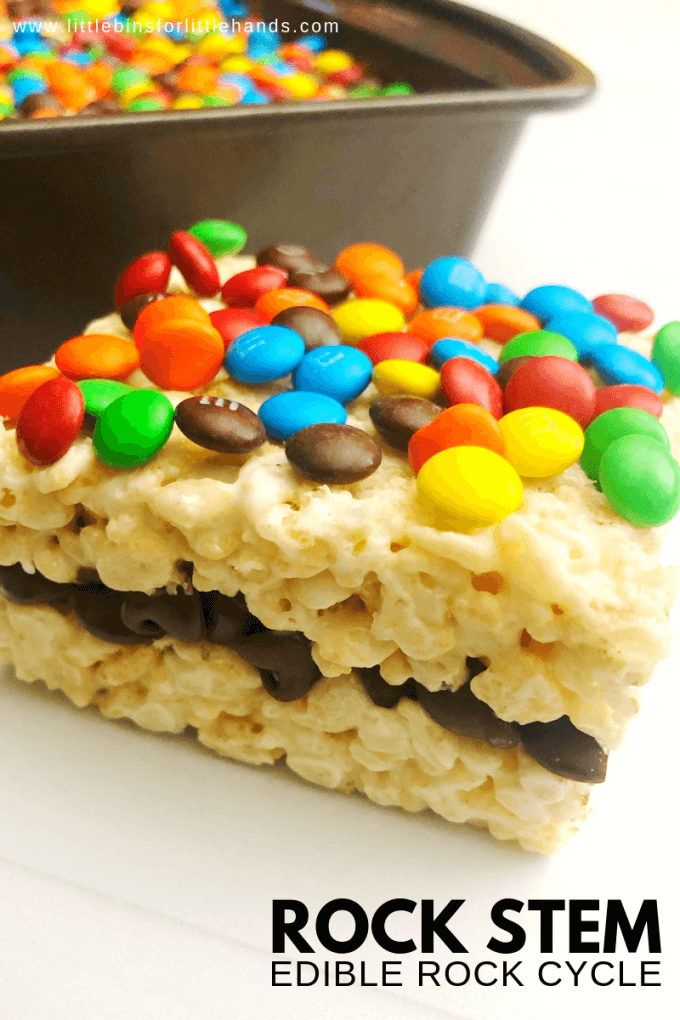
Explore The Rock Cycle With Edible Rock
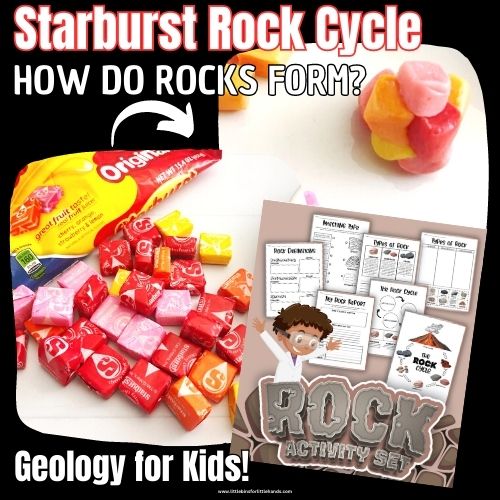
Use rice Krispies cereal and melted marshmallows to make a model of sedimentary rock, one of the main types of rock in the rock cycle. If you want to make a rock cycle model that explores all 3 types of rock, check out our starburst rock cycle or crayon rock cycle.
Edible Sedimentary Rock Model
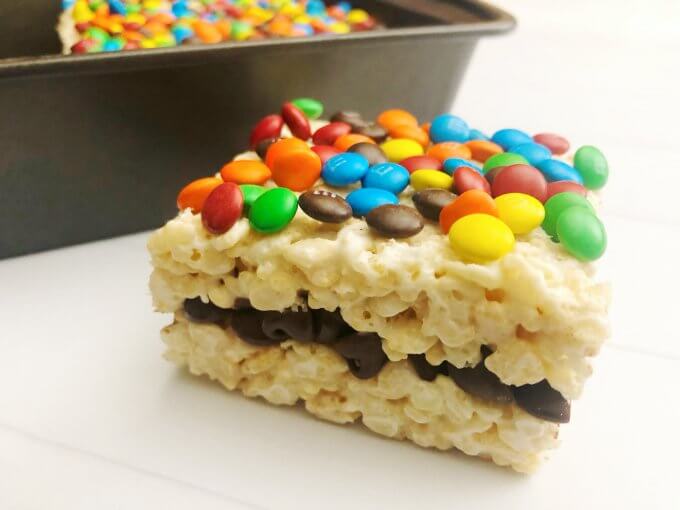
Let’s get learning with edible science the kids love! Sedimentary rocks are layered with different pieces represented by the ingredients below. The layers are pressed together but not too tightly.
Layers of sand, mud, and rock or pebbles are compressed over a long period of time. However, our edible sedimentary rock doesn’t take years to form!
Sedimentary Rock Supplies:
- 10 oz bag miniature marshmallows
- 3 tablespoons butter, softened
- 1 cup of chocolate chips
- 1 cup M&M’s minis
- Rice Krispies
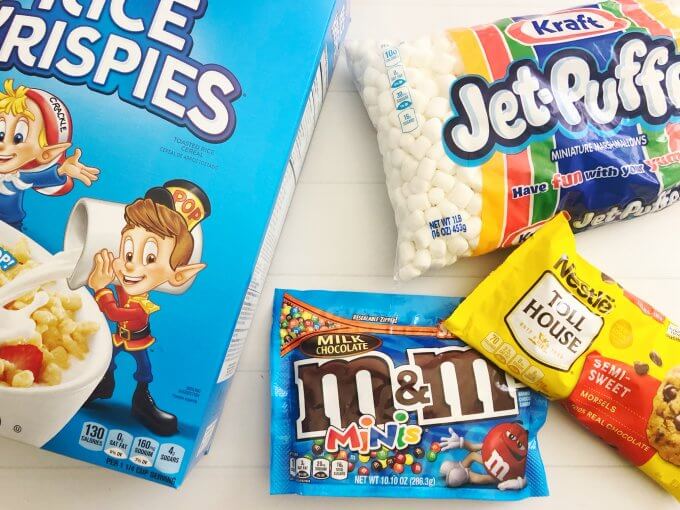
Make Edible Rocks:
STEP 1. Grease an 8×8” baking pan
STEP 2. In a large microwave-safe bowl, heat the marshmallows and butter for 1-2 minutes and stir.
Get Your Free Printable How Do Rocks Form Pack
Learning about the rock cycle with this edible rock cycle! Grab the free printable rock cycle pack below.
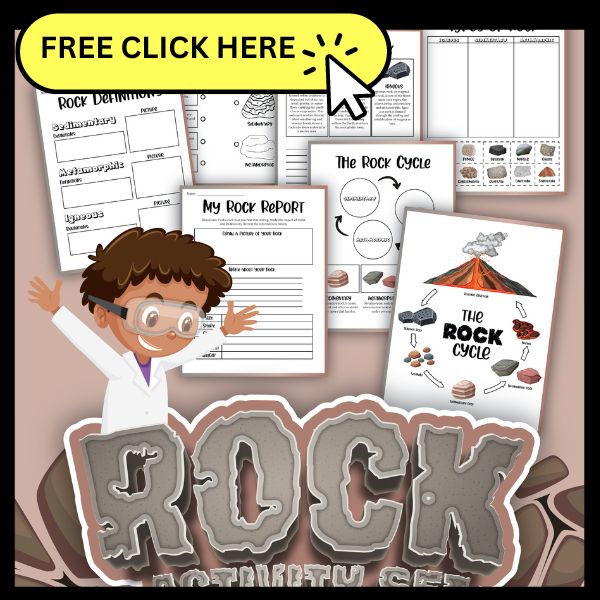
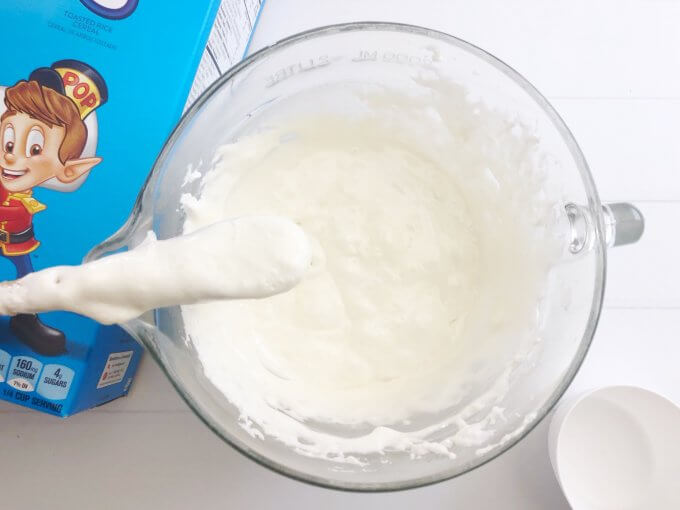
STEP 3. Mix in the Rice Krispies cereal half at a time.
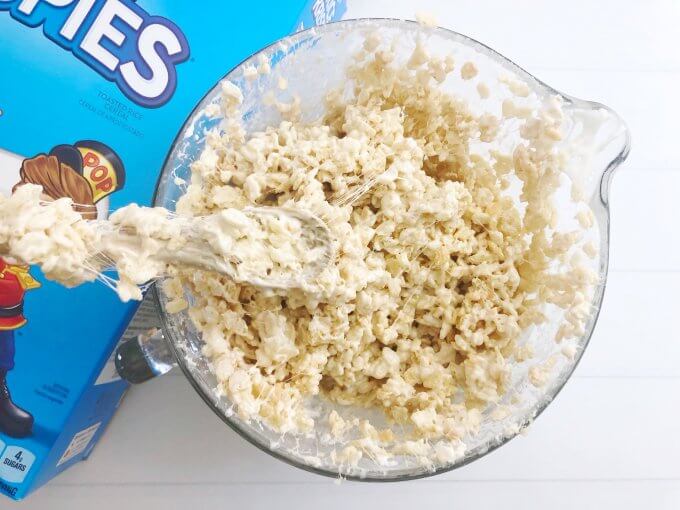
STEP 4. Scoop half your Rice Krispies mixture into the bottom of your greased baking pan and press firmly.
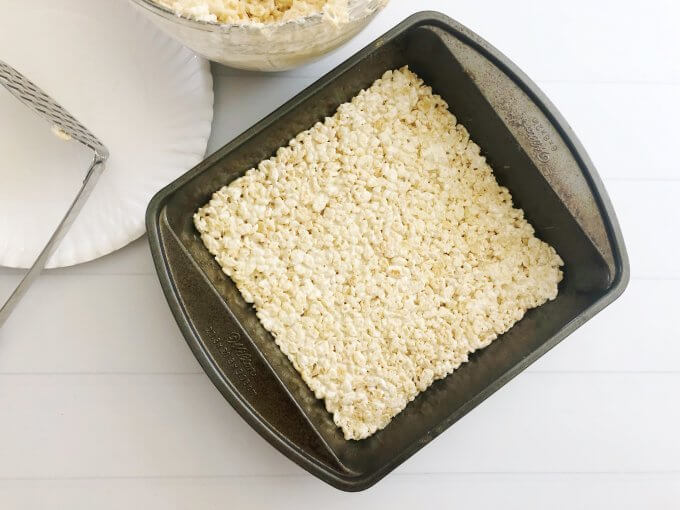
STEP 5. Spread out the chocolate chips and add another layer of Rice Krispies.
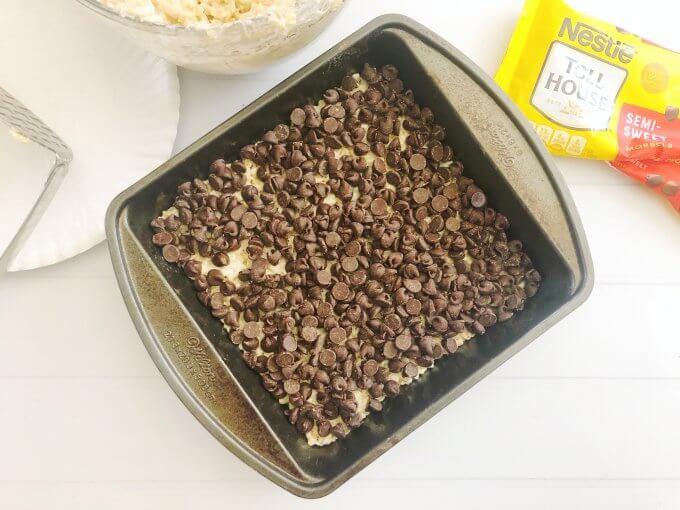
STEP 6. Lightly press the Rice Krispies mixture onto the chocolate chips.
STEP 7. Spread the M&M mini’s onto the top layer of Rice Krispies and carefully press them down to stick onto the layer of Rice Krispies.
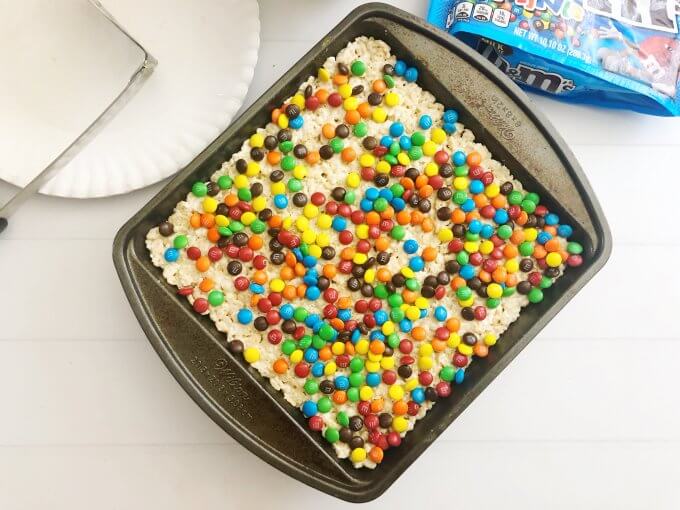
STEP 8. Let sit for an hour and slice into bars.
Rock Cycle Facts
Beneath the Earth’s surface lie layers of rock that change over time. When rocks heat up and melt into lava, they cool to form igneous rocks. Weathering and erosion can break rocks into smaller particles, which settle and harden into sedimentary rocks. This process of rock transformation is called the Rock Cycle.
Types of Rock
There are three main types of rocks: igneous, sedimentary, and metamorphic.
Sedimentary Rock
Formed from broken-down particles of other rocks that settle and harden, sedimentary rocks often have layers and are commonly found on the Earth’s surface.
Examples: sandstone, coal, limestone, shale
Metamorphic Rock
Formed when existing rocks are changed by heat, pressure, or both, metamorphic rocks transform from their original state.
Examples: marble, granulite, soapstone
Igneous Rock
Created when molten rock cools and solidifies, either below the surface (intrusive, with large crystals) or above (extrusive, with small crystals).
Examples: basalt, pumice, granite, obsidian
More Fun Earth Science Activities
When you finish this edible rock cycle activity, why not explore more earth science with one of these ideas below. You can find all our geology activities for kids here!
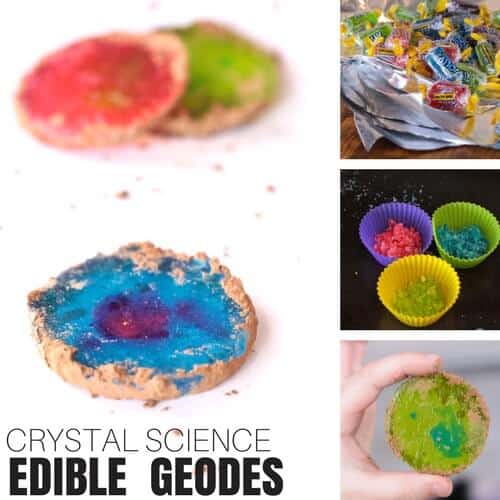
Why not grow sugar crystals or make edible geodes!
Explore the layers of soil with simple LEGO bricks and with an edible soil layers model.
See tectonic plates in action with this hands-on project.
Grab some colored sand and glue for this fun layers of the earth activity.
Learn all about volcanos with these volcano facts, and even make your own volcano.
Learn how fossils are formed.
Make this paper Earth layers model.

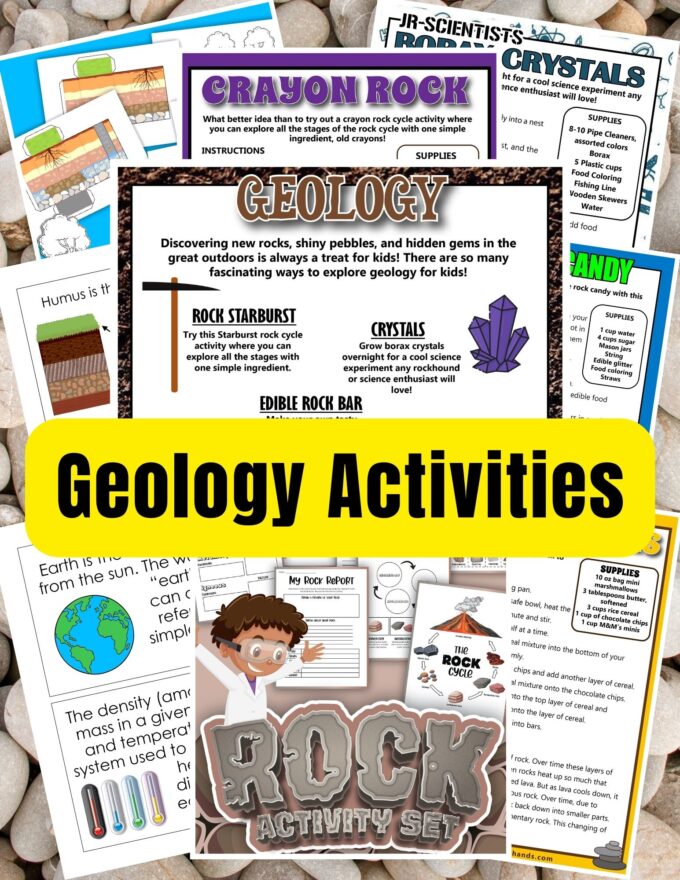
Printable Geology Pack
Kids love rocks, and this 100+ page Geology Pack is a fantastic way to encourage their passion for exploring, learning, and collecting!
- 8+ Hands-On Learning Activities exploring crystals, rocks, and volcanos
- Additional mini-packs include materials to learn about soil layers, layers of the earth, and the rock cycle!
- Extras include vocabulary words, fun games, and projects.
- Be a Collector Pack: start a rock collection like a geologist
- 3 Dioramas: Build 3 models including rock cycle, soil layers, and layers of the earth