
Explore the planets with these solar system coloring pages! This free PDF file is perfect for kids, preschoolers, and homeschoolers! Easily integrate astronomy and space activities into your Earth science lessons.

Free Solar System Coloring Pages for Kids
Whether studying Earth sciences or planning a solar system unit, these planet coloring pages offer a fun, hands-on way to learn about space.
💡Explore all of our space activities for kids here.
Grade-Level Recommendations:
- Preschool – Kindergarten: Introduce basic planet names, colors, and shapes.
- 1st – 3rd Grade: Incorporate fun facts about the solar system, including the sun, moons, and dwarf planets.
- 4th—5th Grade: Expand learning by exploring the Milky Way, Jupiter’s atmosphere, and Venus and Mercury’s toxic atmospheres.
Supplies Needed
- Crayons, markers, and colored pencils for vibrant coloring
- Printable solar system coloring sheets (download the PDF file below)
- Scissors, glue, and cardboard for craft ideas like a solar system diorama
- Dark paint and glow-in-the-dark paint to create a night sky effect
How to Use These Planet Coloring Pages
- Mars is called the Red Planet because of its iron-rich soil.
- Jupiter has the Great Red Spot, a huge storm larger than Earth.
- Saturn is known for its stunning hydrogen, helium, and ice rings.
Size in Order of the Planets
Here is the list of planets in our solar system ordered by size (diameter from largest to smallest):
- Jupiter – 139,820 km (86,881 miles)
- Saturn – 116,460 km (72,366 miles)
- Uranus – 50,724 km (31,518 miles)
- Neptune – 49,244 km (30,598 miles)
- Earth – 12,742 km (7,918 miles)
- Venus – 12,104 km (7,521 miles)
- Mars – 6,779 km (4,212 miles)
- Mercury – 4,880 km (3,032 miles)
Planet Fun Facts for Kids
Checkout these fun facts about the planets listed below. Also note this is the order of the planets from the sun.
💡 You can use the fun mnemonic: My Very Educated Mother Just Served Us Nachos! to remembers the planets order from the sun. ☀️
1. Mercury
- It is the smallest planet in the solar system.
- The closest planet to the Sun, but not the hottest.
- It has no atmosphere, leading to extreme temperatures.
- A Mercury day lasts 176 Earth days.
2. Venus
- It is the hottest planet due to its thick, toxic atmosphere trapping heat.
- Spins backward compared to most planets.
- A day on Venus is longer than a year.
- Covered in volcanoes and sulfuric acid clouds.
3. Earth
- The only known planet with life.
- 70% of Earth’s surface is covered in water.
- It has a protective atmosphere that supports life.
- Rotates once every 24 hours, creating day and night.
4. Mars
- It is known as the Red Planet due to the iron oxide (rust) on its surface.
- Has the largest volcano in the solar system, Olympus Mons.
- Evidence suggests water once flowed on Mars.
- Two small moons, Phobos and Deimos.
5. Jupiter
- The largest planet in the solar system.
- It is famous for its Great Red Spot, a huge storm lasting centuries.
- Made mostly of hydrogen and helium.
- Has at least 92 moons, including Ganymede, the largest moon in the solar system.
6. Saturn
- It is known for its beautiful rings made of ice and rock.
- The second-largest planet in the solar system.
- It has at least 83 moons, with Titan being the largest.
- It is less dense than water, meaning it could float in a giant ocean.
7. Uranus
- Rotates on its side, possibly due to a massive collision.
- Has a blue-green color due to methane gas in its atmosphere.
- It is the coldest planet in the solar system.
- It has dark rings that are hard to see.
8. Neptune
- The windiest planet, with storms stronger than any on Earth.
- Appears deep blue due to methane in its atmosphere.
- Has 14 known moons, the largest is Triton.
- Its Great Dark Spot was a storm similar to Jupiter’s Great Red Spot.
Free Planet Coloring Pages for Kids

More Space Activities for Kids!
💡Explore all of our space activities for kids here.
Fizzy Planets – A science craft where kids mix baking soda, vinegar, and food coloring to create planet-like reactions.
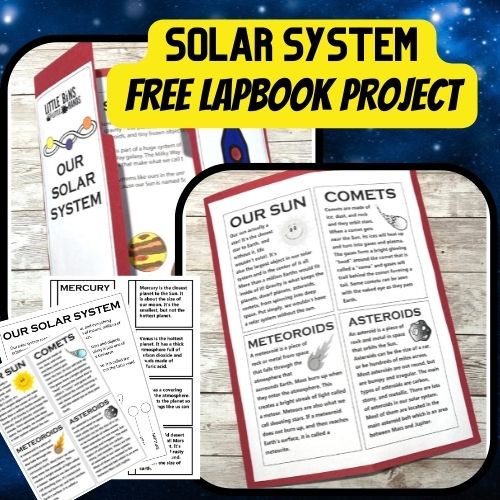
Solar System Lapbook – Organize solar system facts in a hands-on project.
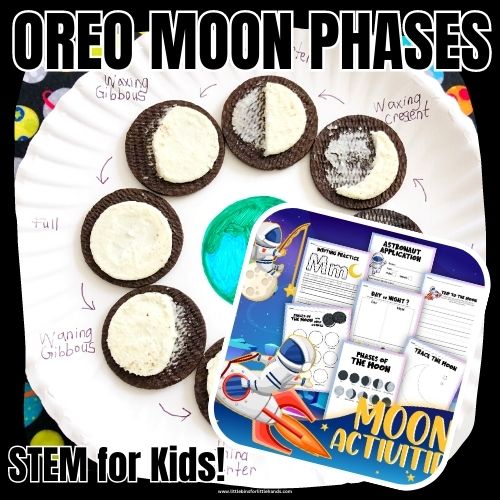
Phases of the Moon Activity – Explore how the moons of Earth change throughout the month with a fun craft activity.
Space Sensory Bin – A tactile experience for young space explorers.
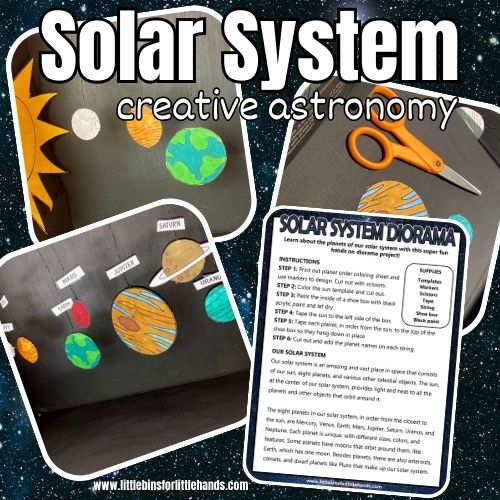
Solar System Diorama – Use our free printables to create a space-themed display with cut-out planets and a painted night sky.
Solar System Planets Guide – Take a deep dive into each planet and learn a bit more about the solar system with fun facts.
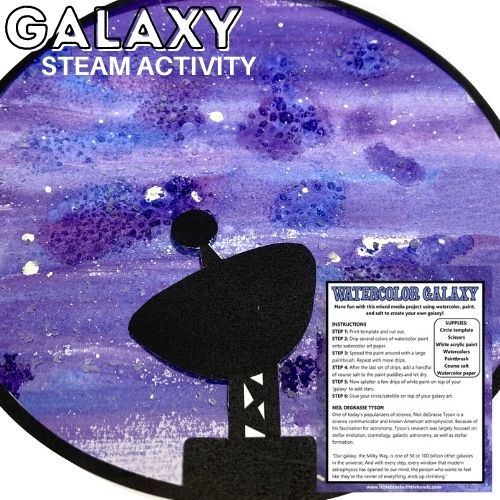
Watercolor Galaxy or Fizzy Galaxy Art: Add STEAM to your solar system lesson with two art projects that explore the galaxy.


Printable Space Projects Pack
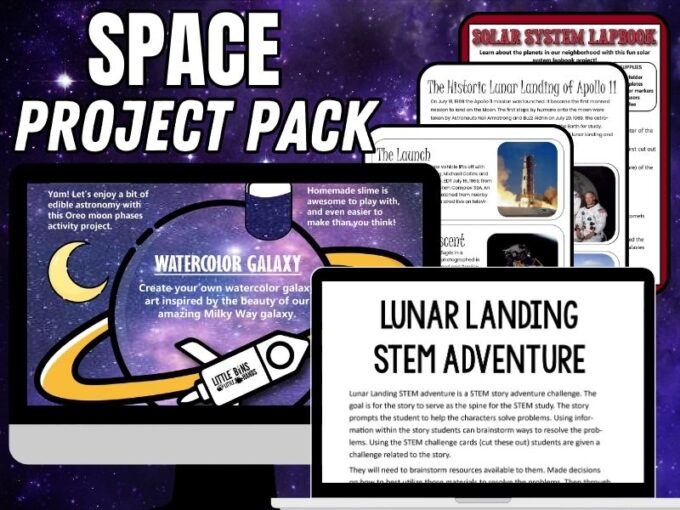
With 250+ pages of hands-on fun space themed fun, you can easily explore classic space themes with your kiddos including moon phases, constellations, the solar system, and of course the 1969 Apollo 11 lunar landing with Neil Armstrong.
⭐️ Activities include supply lists, instructions, and step-by-step pictures. Also Includes FULL Space Camp Week. ⭐️