
Earth science helps kids make sense of the world around them, from the rocks under their feet to the weather overhead and the oceans and planets beyond.
These Earth science activities for kids cover geology, weather, oceans, space, erosion, landforms, Earth’s layers, the water cycle, and more. Many use simple materials and work well for elementary classrooms, homeschool, science centers, and longer-term observation projects.
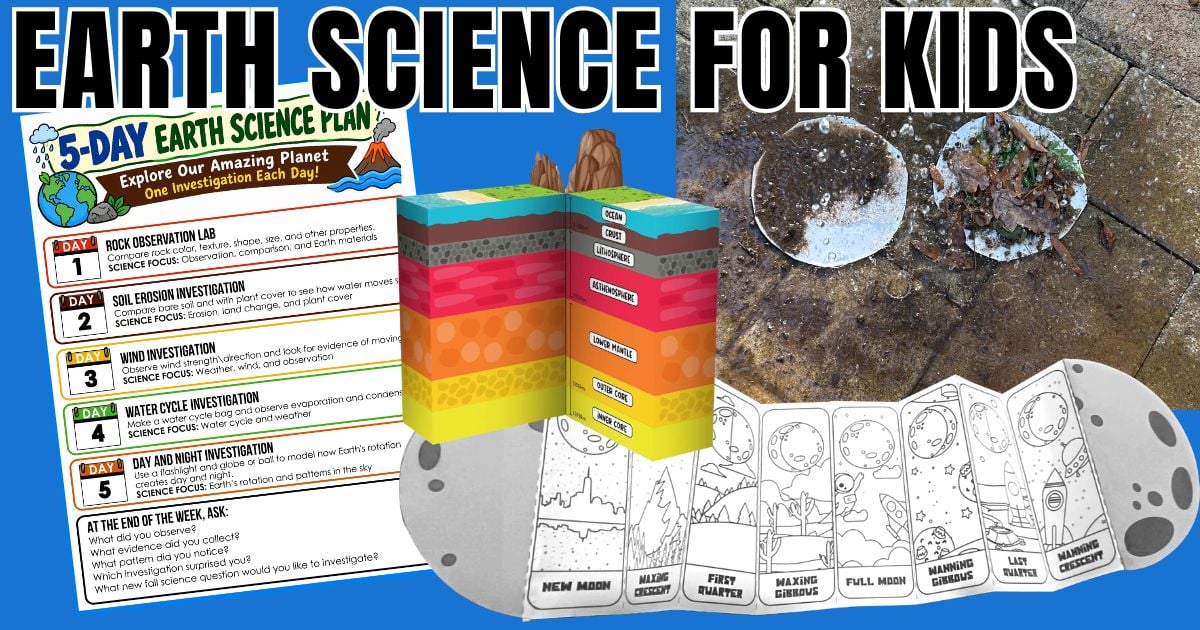
Field: Earth Science
Grades: K–6
Concepts: Geology, weather, oceans, astronomy, rocks, soil, erosion, landforms, Earth’s layers, water cycle, weather patterns, scientific models
Earth Science Topics
Earth science is commonly divided into four major areas:
- Geology – rocks, minerals, soil, landforms, Earth’s layers, volcanoes, earthquakes, and changes to Earth’s surface
- Meteorology – weather, wind, clouds, temperature, precipitation, and the atmosphere
- Oceanography – oceans, waves, currents, coastal erosion, ocean layers, and the seafloor
- Astronomy – the Sun, Moon, stars, planets, space, and patterns in the sky
💡 Start with the area that best matches what your students are already noticing or asking about.
Featured Earth Science Activities
These are good places to begin if you want a mix of hands-on investigations and models.
- Soil Erosion Investigation – Compare how water moves soil and how plant cover can help slow erosion.
- Rock Cycle Activity – Model how rocks can change from one type to another over time.
- Layers of the Earth Model – Build a simple model of the crust, mantle, outer core, and inner core.
- Water Cycle Activity – Explore evaporation, condensation, precipitation, and collection.
- Fall Wind Investigation – Track wind strength and direction over several days or weeks.
- Coastal Erosion Experiment – Observe how moving water can change a shoreline.
- Ocean Currents Activity – Model how water movement helps create currents.
- Day and Night Activities – Introduce Earth’s rotation and patterns in the sky for younger students.
Free Earth Science Starter Guide
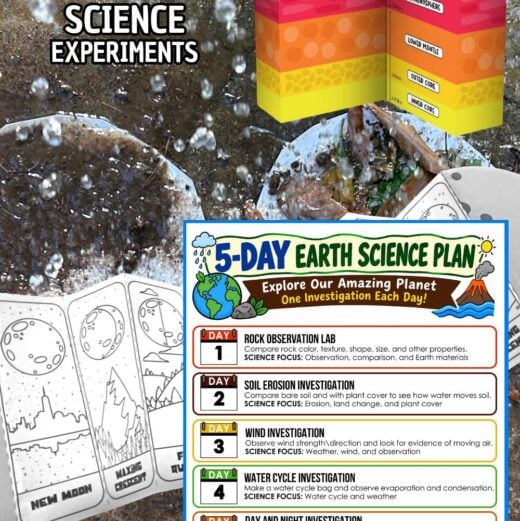
Want an easy place to start? Grab the free Earth Science Starter Guide with a 5-day Earth science plan, hands-on investigation ideas, a reusable science investigation planner, and printable Earth and soil layer activities.
GET THE FREE EARTH SCIENCE STARTER GUIDE →
Geology Activities for Kids
Geology helps kids explore the materials that make up Earth and the processes that shape its surface. Start with rocks and soil, then move into erosion, landforms, Earth’s layers, volcanoes, and earthquakes.
👉 Explore our Geology for Kids collection for more ideas.
Rocks and minerals: Start a rock collection, compare color and texture, test hardness, or explore how rocks form and change. Try our Rock Cycle Activities, Rock Observation Activities, fossils, crystals, and geodes.
Erosion: Our Soil Erosion Investigation gives kids a clear way to compare how moving water affects bare soil and soil with plant cover. You can also explore Stormwater Runoff and Coastal Erosion to see how water changes land in different settings.
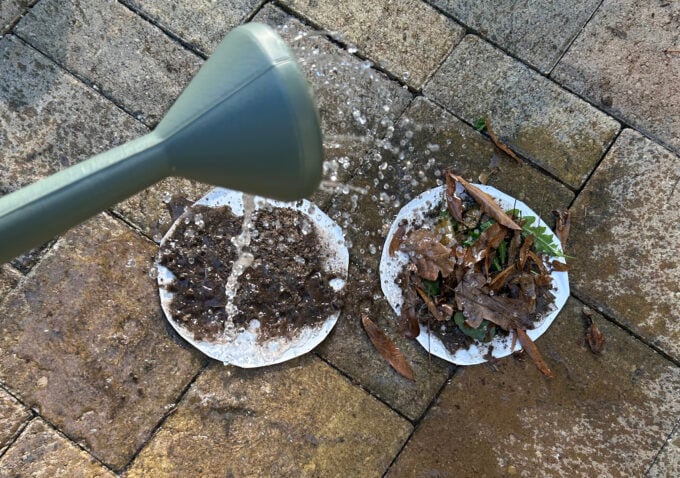
Soil: Compare soil, sand, and clay, investigate soil layers, or use a simple model to see how water moves through different Earth materials. Try a soil science investigation to get started.
Landforms: Use maps, printables, and simple models to explore mountains, valleys, rivers, plains, islands, canyons, and other landforms. (Coming September 2026)
Earth’s layers: Build a playdough or paper model of the crust, mantle, outer core, and inner core.
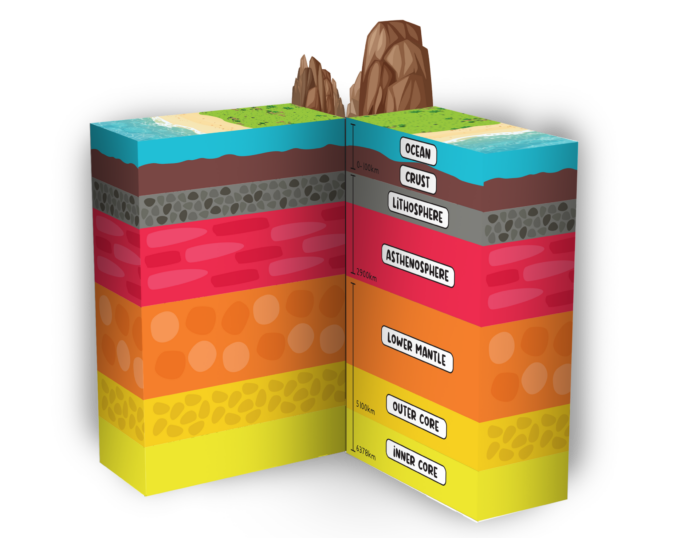
Plate tectonics: For older elementary students, use a Tectonic Plates Model to explore how tectonic plate movement can be linked to mountains, earthquakes, and volcanoes.
Volcanoes and earthquakes: Try a volcano model, volcano facts, or a simple earthquake investigation to explore changes happening inside and on Earth’s surface.
Weather and Climate Activities
Weather is one of the easiest Earth science topics to study because kids can collect real data right outside. Use temperature, wind, rain, clouds, and simple weather tools to observe changes and look for patterns over time.
👉 Explore our Weather Science Activities for the full collection.
Temperature. Use a thermometer to track changes over the course of the day or over several weeks. Our Fall Temperature Investigation is a good example of how to turn repeated measurements into a longer science project.
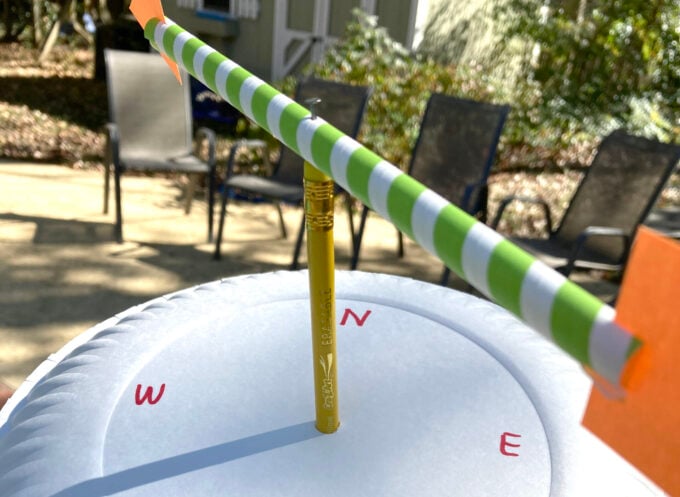
Wind. Build an Anemometer or Wind Vane, or use our Fall Wind Investigation to track wind strength and direction over time.
Rainfall. Make a Rain Gauge and compare rainfall after different storms.
Clouds. Use a Cloud Viewer, make a Cloud in a Jar, or keep a simple cloud journal.
Air pressure. Build a Homemade Barometer or try an air-pressure demonstration to make an invisible part of the weather easier to observe.
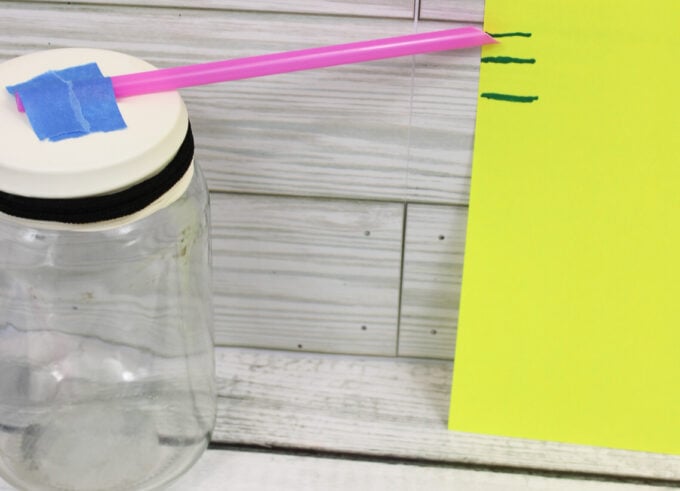
Weather station: Older elementary students can combine several tools into a Homemade Weather Station and collect temperature, wind, rainfall, and cloud data.
Water cycle: Try a Water Cycle in a Bag to explore how water moves between Earth’s surface and the atmosphere.

Ocean Science Activities
Ocean science connects water movement, erosion, landforms, climate, and marine environments. These activities help kids explore waves, currents, ocean layers, the seafloor, coastal change, and human impact on oceans.
👉 Visit our Ocean Activities for Kids for more.
- Coastal erosion: Model how waves and moving water can change a beach or shoreline.
- Ocean currents: Use warm and cold water to explore how currents move through the ocean.
- Ocean layers: Compare how light, temperature, and pressure change at different depths.
- Ocean floor: Map ridges, trenches, plains, and other features of the seafloor.
- Ocean waves: Use a bottle model to observe how water moves in waves.
- Ocean pollution: Try an Oil Spill Experiment or investigate what happens to shells in acidic water to connect ocean science with human impact.

Space and Astronomy Activities
Astronomy gives kids a way to explore Earth’s place in space through observations and models. Start with day and night, the Moon, stars, and the solar system before moving into more complex space science.
👉 Explore our Space Activities for Kids for the full collection.
- Day and night: Younger students can use our Day and Night Activities to compare daytime and nighttime observations and introduce Earth’s rotation.
- Moon phases: Try a Moon phase model, printable, or observation journal.
- Constellations: Build simple constellation models or use a star projector.
- Solar system: Create a lapbook, model, diorama, or printable solar system study.
- Stars: Explore the life cycle of a star or use a spectroscope to learn how astronomers study light.
- Space engineering. Build a satellite, space shuttle, or other simple model to connect science and STEM.

Earth Changes and Environmental Science
Earth’s surface is always changing through processes such as erosion, runoff, weathering, and moving water. Kids can also investigate how pollution and other human activities affect land and water systems.
- Runoff and erosion. Compare how water moves across bare soil, planted soil, or different slopes.
- Pollution: Explore oil spills, acid rain, water pollution, or other human impacts on land and water.
- Ocean acidification: Use shells to model how changing water chemistry can affect marine materials.
👉These topics also connect naturally with our Ecology Activities, Environmental Projects, and Ecosystems for Kids resources.
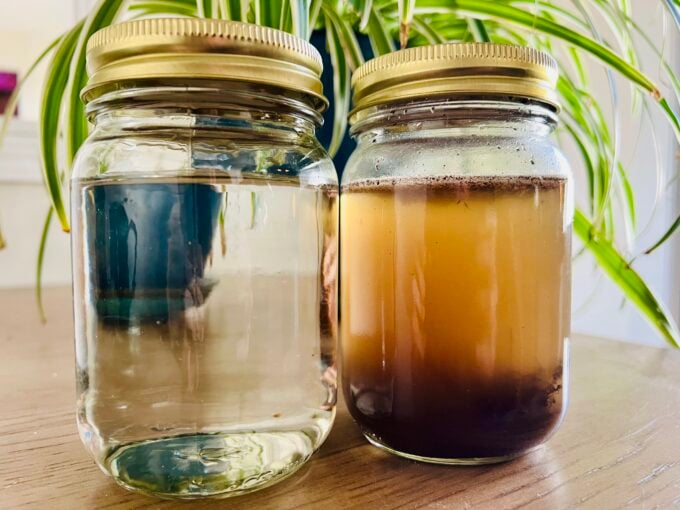
Earth Science for Younger Kids
Younger learners can explore Earth science through simple observation rather than complicated experiments. Weather watching, rock collecting, soil exploration, clouds, rainfall, and day-and-night observations are all easy places to start.
Simple observations work well:
- Watch and record the weather
- Collect and compare rocks
- Look at clouds
- Measure rainfall
- Explore soil and sand
- Compare day and night
- Watch water evaporate
- Go on a nature walk and notice land, air, and water
💡 For kindergarten and early elementary, focus on describing, sorting, comparing, and asking questions before adding more detailed explanations.
Use Scientific Models in Earth Science
Earth science often involves things we cannot observe directly.
We cannot travel through Earth’s mantle, watch the entire water cycle happen at once, or easily see the full ocean floor. That makes scientific models especially useful.
👉 Visit our Scientific Models for Kids post for more ways to introduce models and discuss what they can and cannot show.
Earth Science Skills
Earth science is a great place to practice observation, measurement, data collection, and long-term investigation.
Kids can:
- Use thermometers, rulers, balances, and magnifying glasses
- Record weather data
- Compare rocks and soil
- Make repeated observations
- Graph changes
- Use models
- Look for patterns
- Ask testable questions
- Use evidence to explain results
👉 Explore our Observation Activities for Kids and Science Tools for Kids for more help building these skills.
Guiding Questions
Use these questions with almost any Earth science activity.
- What do you notice?
- What has changed?
- What stayed the same?
- What can you measure?
- What pattern do you see?
- What evidence supports your idea?
- How could you model this process?
- What might happen over a longer period of time?
Printable Earth Science Resources
Printable recording pages, models, diagrams, and investigation guides can make Earth science easier to teach and learn across a full unit.
👉 Our Earth Studies Pack brings together printable resources for exploring major Earth science topics.
FAQ
What topics are included in Earth science?
Earth science includes geology, weather and climate, oceans, and astronomy, along with topics such as rocks, soil, erosion, landforms, the water cycle, Earth’s layers, and environmental change.
What are good Earth science experiments for kids?
Good hands-on choices include soil erosion, water cycle models, rock investigations, weather tracking, rain gauges, wind experiments, coastal erosion, and ocean current models.
What grade levels are Earth science activities for?
Earth science works across elementary grades. Younger students can focus on observation and simple models, while older students can collect data, compare patterns, and explore topics such as Earth’s layers and plate tectonics.
Is weather part of Earth science?
Yes. Meteorology, the study of weather and the atmosphere, is one of the major branches of Earth science.
Is space part of Earth science?
Yes. Astronomy is traditionally included as one of the main branches of Earth science.
Want Everything Organized for You?
Planning Environmental or Earth Day lessons doesn’t have to mean jumping between 20 different tabs. Our Environmental STEM Printable Pack brings everything together in one ready-to-use resource, with vocab, NGSS questions, and quick-start tips.