
Can you make a turkey gobble with a paper cup and string? This fun turkey call science experiment is an easy way to explore sound and vibrations with kids using just a few simple supplies!
Perfect for a Thanksgiving science lesson or a hands-on sound investigation, this activity lets kids make their own turkey call and experiment with how different movements change the sounds they hear.
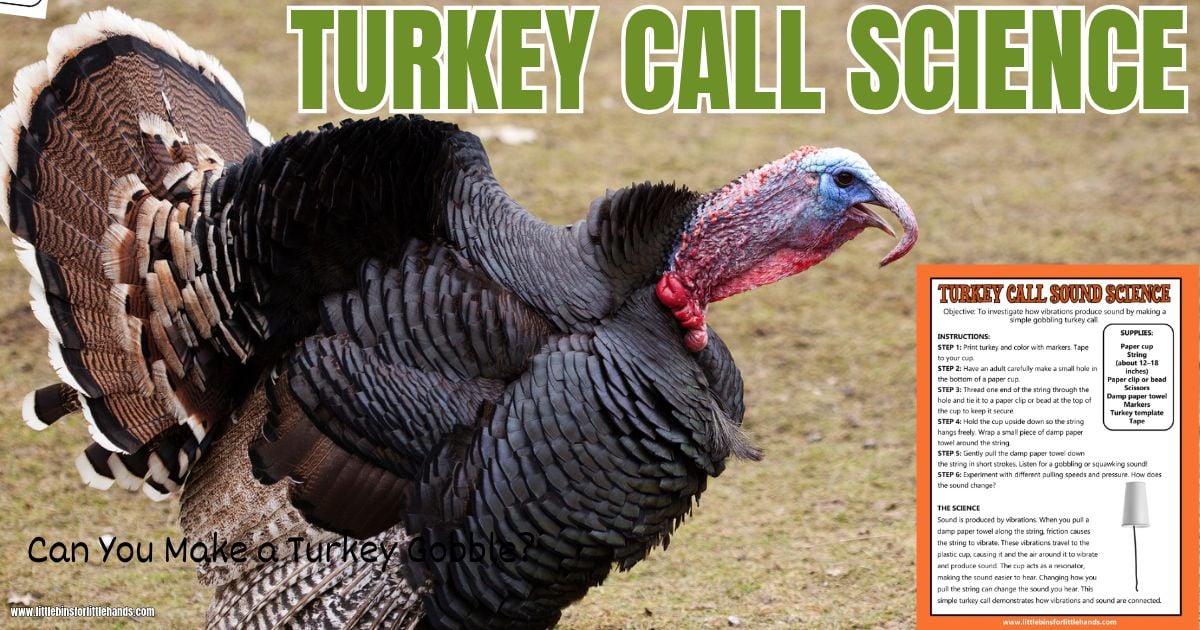
Turkey Call Sound Science Experiment
Field of Science: Physical Science
Grades: K–5
Concepts: Sound, vibrations, friction, sound energy, cause and effect, animal communication
Grab the free Turkey Call Sound Science printable below and start experimenting!
Can you make a turkey gobble with a paper cup and string? Explore how vibrations produce sound with this fun Thanksgiving science experiment. Make your own turkey call, then investigate how different movements change the sounds you hear. Grab the free Turkey Call Sound Science printable below and start experimenting!
Supplies for Your Turkey Call
You only need a few inexpensive materials to make your own gobbling turkey!
- Paper cup
- String (about 12–18 inches)
- Paper clip or bead
- Scissors
- Damp paper towel
- Markers or crayons
- Printable turkey template
- Tape
💡 TIP: The cup doesn’t have to look like a turkey to make the sound! Decorating it just adds a fun Thanksgiving twist.
How to Make a Turkey Call
STEP 1: Print and color the turkey template. Cut it out and tape it to the side of your paper cup.
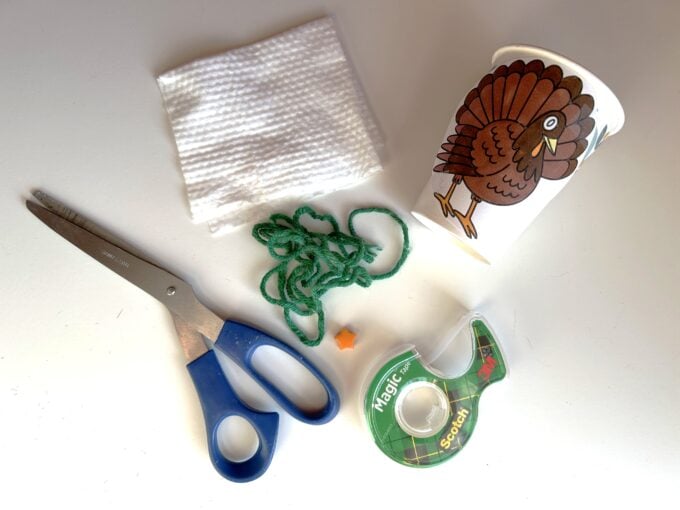
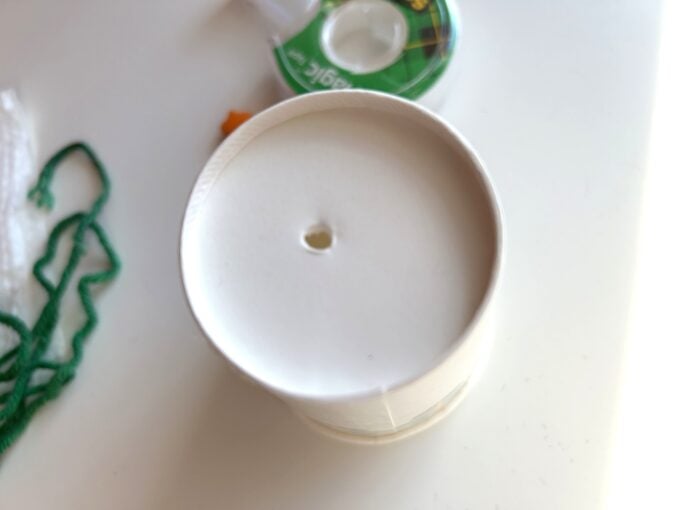
STEP 2: Have an adult carefully make a small hole in the bottom of the paper cup.
STEP 3: Thread one end of the string through the hole and tie it securely to a paper clip or bead inside the cup. This keeps the string from pulling through.
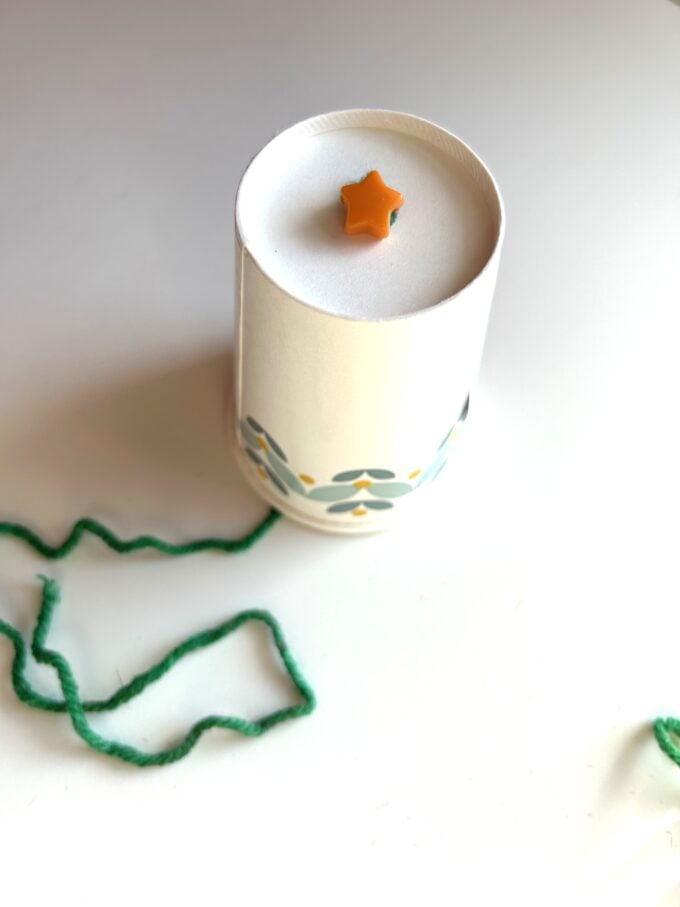
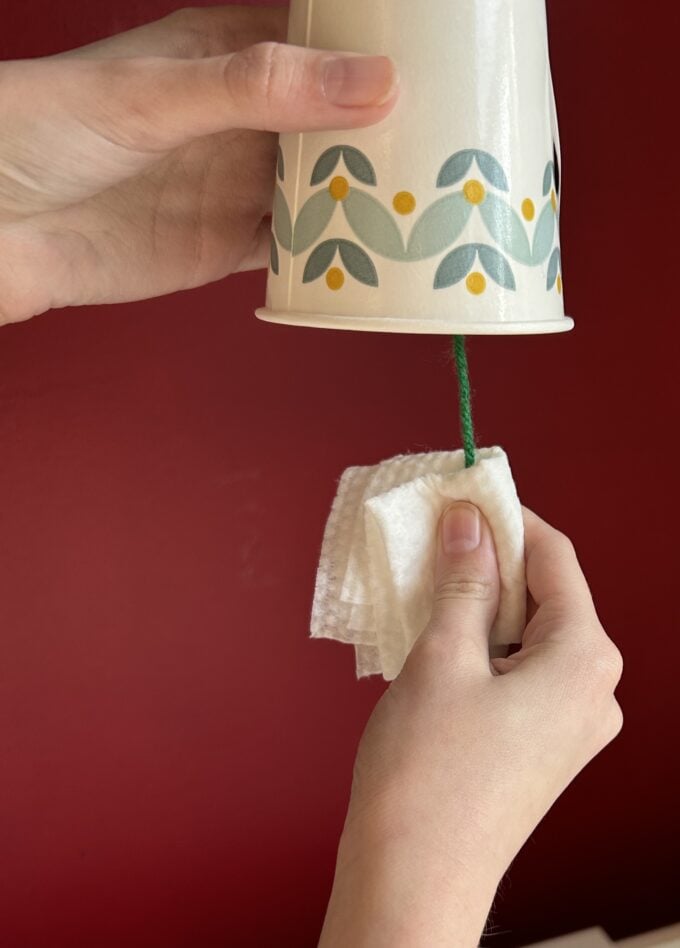
STEP 4: Turn the cup upside down so the string hangs freely. Wrap a small piece of damp paper towel around the string.
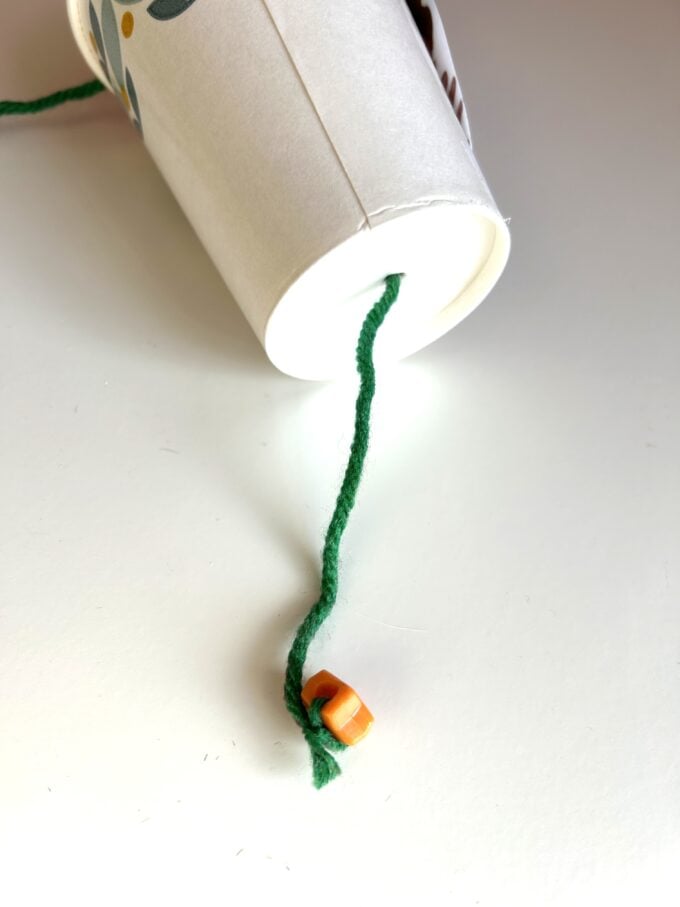
STEP 5: Gently pull the damp paper towel down the string in short strokes.
What do you hear? Does it sound like a turkey gobbling or squawking?
STEP 6: Try pulling the string at different speeds or with different amounts of pressure. Listen carefully to see how the sound changes.
TIP: The paper towel should be damp, not dripping wet. Try adjusting the moisture if the string isn’t making much sound.
The Science Behind the Turkey Call
Why does pulling a damp paper towel along a string make such a funny noise?
🔎 Sound is produced by vibrations, or quick back-and-forth movements.
When you pull the damp paper towel along the string, friction between the towel and string causes the string to vibrate. Those vibrations travel through the string to the paper cup, making the cup vibrate, too.
The cup acts as a resonator, helping make the sound louder and easier to hear. That’s why a simple string and paper cup can make such a surprising gobbling sound!
🔎 Changing how you pull the string affects the vibrations, which can change the sound you hear.
Free Turkey Call Science Printable
Make your Thanksgiving science lesson easier with our free printable Turkey Call Sound Science activity!
The printable includes a supply list, step-by-step instructions, a simple science explanation, and a turkey template to decorate your cup. Use it for a classroom science center, a Thanksgiving STEM activity, or a quick hands-on investigation at home.
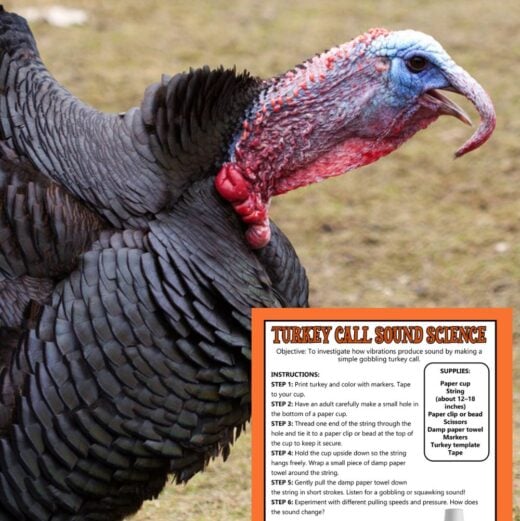
How Do Real Turkeys Gobble?
Did you know that turkeys make more sounds than just gobbling? Wild turkeys use different calls to communicate with one another!
Male turkeys, called toms, are famous for their loud gobbling sounds. They gobble mainly during spring mating season to attract females and announce their presence. Female turkeys, called hens, commonly make softer sounds like clucks and yelps.
Turkeys also make warning calls to alert other birds to danger. Some even purr when they’re calm and content!
Fun Fact: A male turkey’s gobble can be heard up to a mile away under good conditions!
How Do Turkeys Make Sounds?
Like other birds, turkeys have a special sound-producing organ called a syrinx, located near where the windpipe divides toward the lungs.
💡 Air passing through the syrinx makes tissues vibrate, producing sounds turkeys use to communicate.
Your paper cup turkey call works differently, but both demonstrate the same important science concept: sound starts with vibrations!
Try This: Listen to a recording of a real wild turkey gobbling. How does it compare to the sound of your homemade turkey call? Can you make your turkey call sound more like the real thing?
Turkey Call Science FAQs
Why does the turkey call make a sound? Pulling the damp paper towel along the string creates friction that causes vibrations. Those vibrations travel to the cup, which vibrates and helps produce the sound you hear.
Why do you need a damp paper towel? The damp paper towel helps create the friction needed to make the string vibrate. The amount of moisture can affect how easily the turkey call makes a sound.
Why isn’t my turkey call working? Check that the string is securely attached and can hang freely. Try adjusting how damp the paper towel is or changing the pressure and speed of your pulling motion. A different type of string may also help.
Can you make a turkey call with different cups? Yes! Try making turkey calls with different-sized paper cups. Compare the sounds they produce and investigate whether cup size makes a difference.
What science concepts does this activity teach? This experiment introduces sound energy, vibrations, friction, and cause and effect. Older students can also explore fair testing by changing one variable at a time.
Printable Thanksgiving Science and STEM Activities
Looking for more ready-to-use Thanksgiving science and STEM activities?
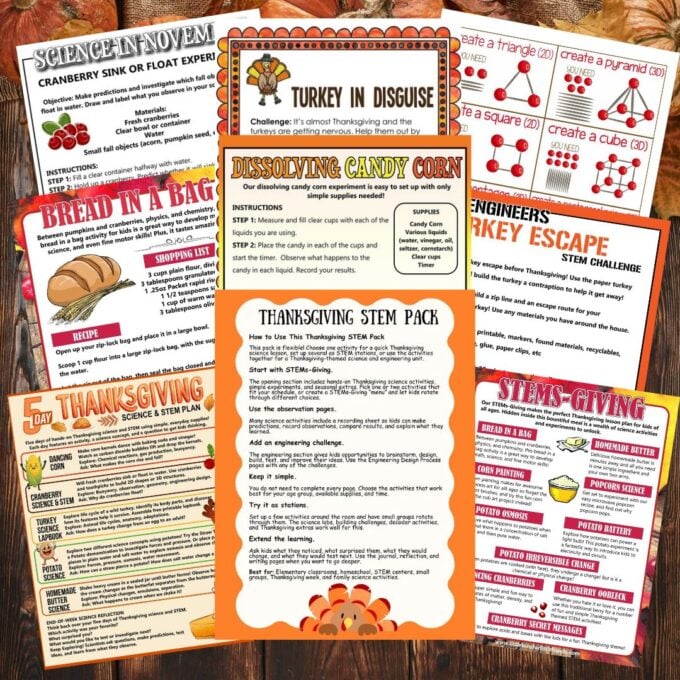
Our STEMS-Giving Thanksgiving Activity Pack includes seasonal science investigations, engineering challenges, and printable activities to make November learning easy!
With hands-on projects and simple supplies, it’s a great resource for elementary classrooms, homeschool, and Thanksgiving STEM centers.
Explore the Thanksgiving STEM Pack
More Thanksgiving Science Activities
Looking for more easy Thanksgiving experiments? 👉 Check out our collection of Thanksgiving Science Activities for hands-on investigations using cranberries, corn, pumpkins, and other seasonal materials.
More Sound Science Activities for Kids
Keep exploring how sound works with simple investigations! 👉 Try a Cup and String Telephone to explore how vibrations travel, or visit our Sound Science Activities for more hands-on experiments.