
Looking for a fun and creative way to combine science and art? This handprint salt painting activity is perfect for young kids! Not only does it create a beautiful piece of artwork, but it also introduces simple science concepts. Try STEAM projects today!

Handprint Art for Kids
Handprint crafts are an excellent way to incorporate an “All About Me” theme into your lessons or homeschool plans. Kids love seeing their handprints and using them to create a unique art piece that reflects who they are. Each handprint is unique, and this project allows students to celebrate what makes them unique.
Supplies:
- Black cardstock
- Scissors
- Pencil
- Glue
- Salt
- Watercolors
💡 Grade Level:
This project is suitable for preschool through 1st grade, but older children will also enjoy adding their own creative twists!
How to Do a Handprint Salt Painting
Trace Your Hand: Start by helping your kids or students trace their hands on the black cardstock using a pencil. They can decorate the space inside the handprint with designs or keep it simple.
Add Glue: Next, outline the handprint with glue. Be generous but careful to keep the glue lines clean and well-defined.

Pour Salt: Pour salt over the glue until it covers the entire handprint. Gently shake off the excess salt and allow the glue and salt to fully dry before moving on to the next step. This part of the process helps kids practice patience and anticipation as they wait for the glue to dry.

Paint the Salt: Once dry, dip a paintbrush into watercolors and gently touch the paint to the salt. Watch as the colors spread and blend across the salt crystals! This is the magic part of the project, where kids can experiment with color mixing and see how the salt absorbs the paint.

Simple Science: How Does It Work?
This handprint salt painting project also doubles as a simple science experiment. You’ll notice how the color spreads when you paint on the salt. This happens because salt is highly absorbent. It draws the water up through its crystals, carrying the watercolor pigment along with it. This is a fun way to introduce young kids to absorption and color mixing!
💡For a more complex science explanation, see our Salt Painting Experiment [here].

Extension Activities
- Color Mixing: Have your students experiment with mixing different colors on the salt to see how new shades are created. You can also discuss how primary colors (red, blue, and yellow) combine to make secondary colors (green, purple, and orange).
- Handprint Art Display: After completing their handprint salt painting, encourage each child to share their artwork. Create a gallery wall with all the handprint paintings and have each student write a few sentences about their artwork. This extension ties into the “All About Me” theme and helps develop early writing skills.
- Water and Absorption Experiment: After painting on the salt, use a sponge and some water to introduce absorption in a simple, hands-on way. Let the kids dip the sponge in water and press it onto different materials (like a paper towel, cardstock, or fabric) to see which material absorbs the water best. Ask the kids to compare the results and discuss why some materials soak up more water than others.
Related Art Activities for Kids
These related activities focus on mixing art with simple science concepts, making them perfect companions to the Handprint Salt Painting project!
Fizzy Sidewalk Paint
This colorful, bubbling activity introduces kids to simple chemical reactions using baking soda and vinegar while allowing them to explore painting and creativity outdoors. It’s another great combination of art and science!
Salad Spinner Art
A fun spin (literally!) on painting, this project lets kids create beautiful abstract art by spinning paint in a salad spinner. It’s a great hands-on activity for exploring color mixing and centrifugal force.
Tie Dye Paper Towels
This activity encourages kids to experiment with color absorption and patterns, similar to how the salt absorbs the watercolor paint in the Handprint Salt Painting.
Bubble Painting Art
Combine science and art with this bubbly project! Kids can blow colorful bubbles onto paper, creating fun and unique designs while learning about air pressure and surface tension.
Rain Painting
Perfect for incorporating nature, rain painting is a great way for kids to experiment with color mixing and water absorption. They use rain to create beautiful watercolor-like paintings, which ties in nicely with the salt painting activity’s water absorption theme.
Free Printable STEAM Activity Guide
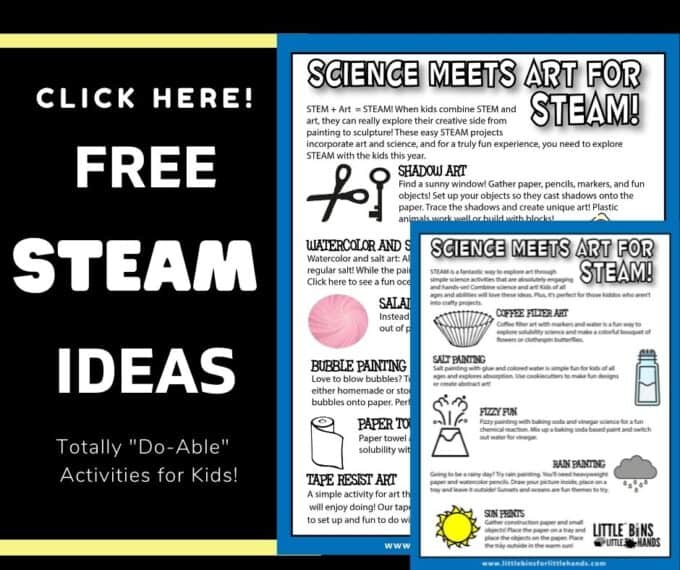
Get started with STEAM today, and use this handy STEAM guide to plan your next activity!