

Not all glue makes slime the same way.
Different Elmer’s glues contain different amounts of water and polymer, which means they require different ratios to activate properly.
In this guide you’ll learn which glue works best, how to prepare the glue base we use in all our slime recipes, and which activator (saline, borax, or liquid starch) gives the most reliable results.
👉 New to slime? Start with the complete beginner instructions here: Homemade Slime Recipe
Why Glue Matters in Slime
Slime forms when glue molecules (PVA — polyvinyl acetate) connect into long stretchy chains called polymers.
Different glues contain different amounts of water and PVA.
If you activate them the same way, you get completely different textures.
That’s why some slime becomes rubber and some becomes stretchy — even with the same ingredients.
Our Reliable Slime Base (Used for All Recipes)
We always dilute the glue first before adding an activator.
This prevents instant over-activation and makes slime easier for kids to knead.
Glue Base
1/2 cup glue
1/2 cup warm water
Mix until completely smooth
You will use this same base for saline, liquid starch, and borax slime.
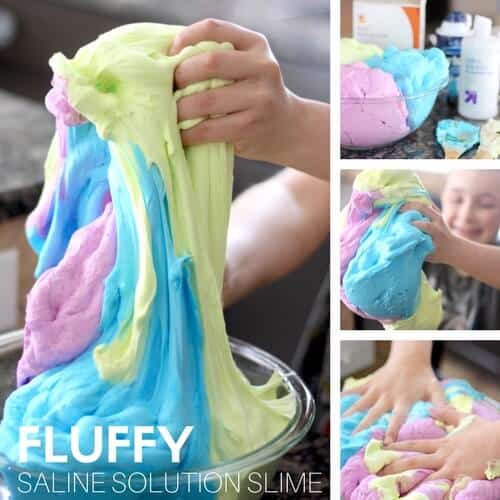
Saline Solution Slime (Most Reliable — Recommended)
Saline solution produces the most predictable slime and is our preferred activator.
Ingredients
Glue base
1/2 tsp baking soda
1 tbsp saline solution (add slowly)
Mixing
- Stir baking soda into glue base fully
- Add saline gradually while stirring
- Stop when slime pulls away from bowl
- Knead 2–3 minutes
👉 See the full tutorial: Saline Solution Slime Recipe
Liquid Starch Slime (Softest Texture)
Liquid starch is already diluted, so it requires more activator.
Ingredients
Glue base
1/4 – 1/2 cup liquid starch
Mixing
Add slowly while stirring, then knead thoroughly.
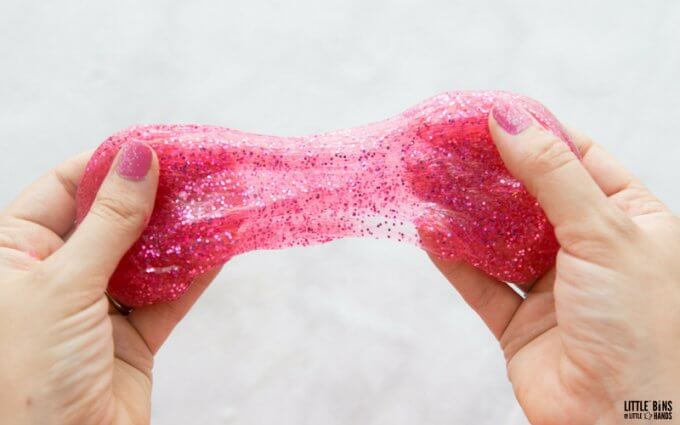
Produces a very soft, stretchy slime ideal for sensory play.
👉 See the full tutorial: Liquid Starch Slime Recipe
Borax Slime (Longest Lasting)
Borax makes the strongest and most durable slime. It’s also the best recipe for making crystal clear slime.
Borax Solution
1 tsp borax powder
1 cup warm water
Ingredients
Glue base
1–2 tsp borax solution
Add gradually and knead well.
👉 See the full tutorial: Borax Slime Recipe
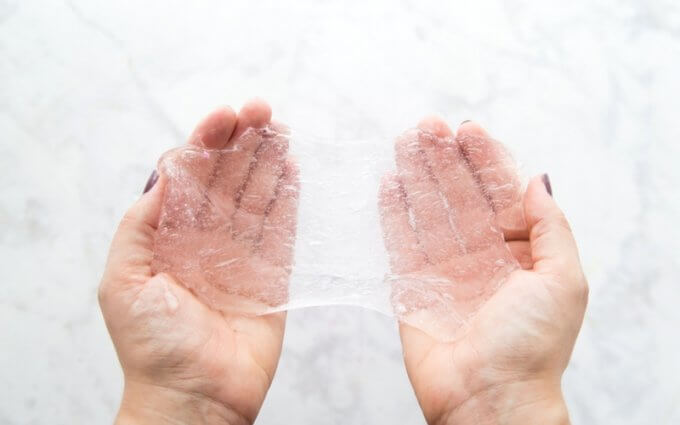
Contact Solution vs Saline Solution
Many recipes online use contact lens solution.
However, formulas vary widely and often contain conditioners that interfere with polymer formation.
💡 For consistent slime, we recommend saline solution labeled: sodium borate + boric acid
Contact solution may work — but results depend heavily on brand.
Not sure which activator to use? See our full comparison here → Slime Activator Guide
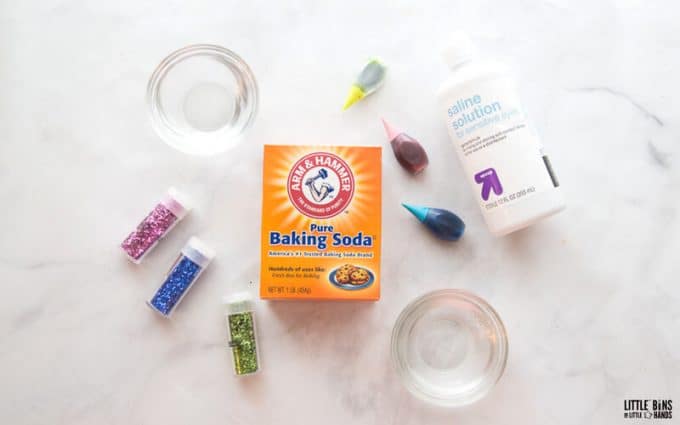
Which Elmer’s Glue Works Best?
White School Glue
Most forgiving and best for beginners
Clear Glue
Stretchiest slime but requires careful activation
Glitter Glue
Easiest for young kids — activates quickly
Color Glue
Similar to clear glue with slightly thicker texture
Washable school glue gives the most reliable results across all recipes.
Troubleshooting Glue Slime
Sticky Slime
Usually needs more kneading before more activator
Rubbery Slime
Knead in a few drops of warm water
Won’t Form Slime
Activator likely lacks borates — switch to saline solution
Still having trouble?
👉 How to Fix Slime (Sticky, Hard, or Rubbery)
👉 Why Slime Won’t Activate
👉 How to Make Slime Stretchy
The Science Behind Glue Slime
Glue contains long liquid molecules that slide past each other. The activator links those molecules together into flexible chains — a polymer.
That’s why slime behaves as a non-Newtonian material:
not a liquid and not a solid.
Diluting the glue first spaces the molecules so they connect gradually instead of clumping, creating smoother slime.
👉 Basic Slime Science Explained for Kids
Ready for the Step-By-Step Beginner Instructions?
This guide helps you choose the right glue and activator combination.
For the full beginner instructions, safety tips, and mixing walkthrough, use the main tutorial:
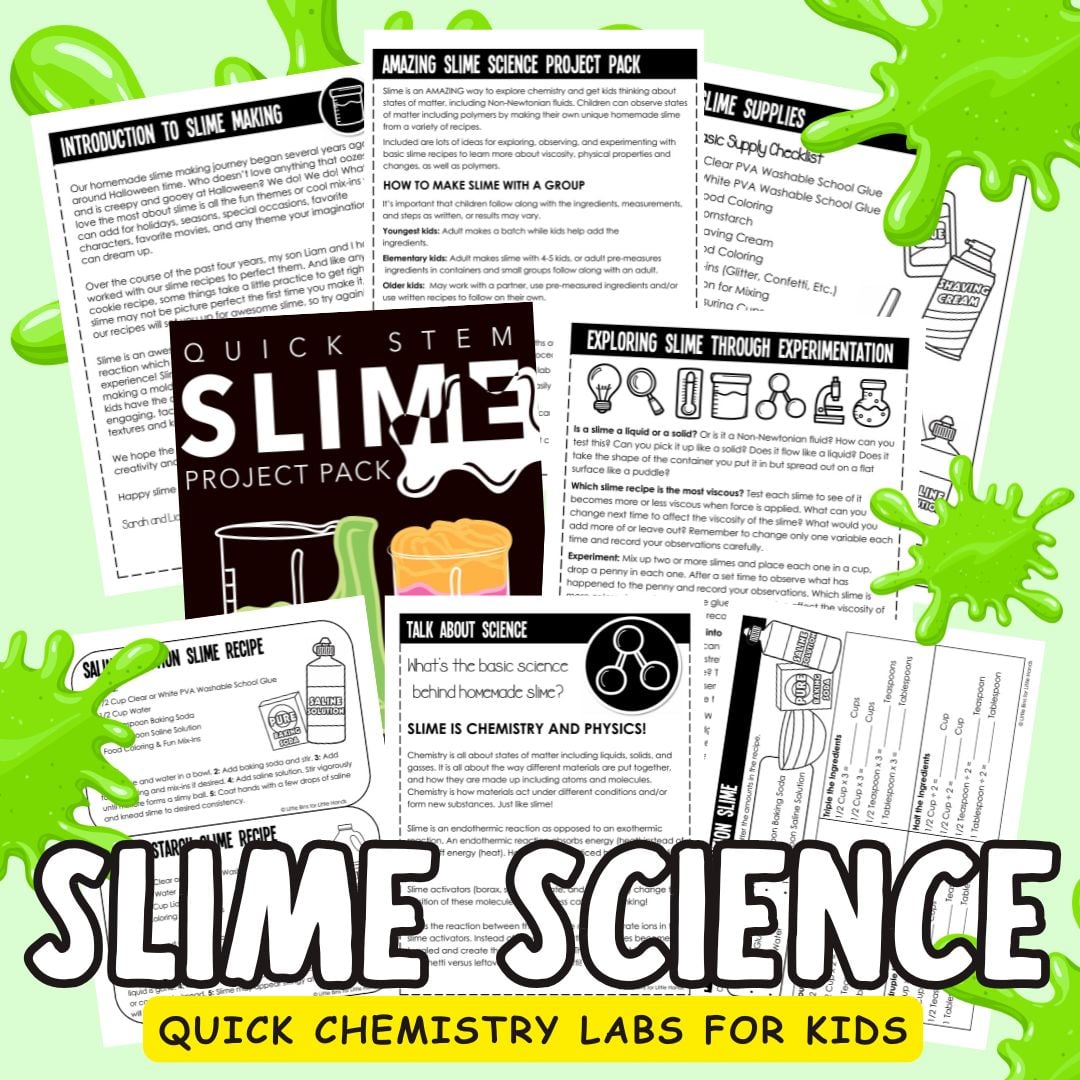
Extend the Learning with Slime
Our printable Slime Activity Pack includes step-by-step recipes, observations pages, challenges, and science extensions — perfect for home or classroom use.


Hey there! I’ve used your methods before and they are certainly more descriptive and more helpful than other sites. Every time I make slime from your website it works!
I tried making glue stick slime from another site and it failed. 🙁
Can you post a tutorial on how to make glue stick slime?
Question – can slime be mixed in styrofoam bowls with no problem? I am doing a Harry Potter potions class at our local college’s comic con fundraiser, and will have two classes of about 30 people each. Styrofoam bowls is the cheapest way to go for me, but I wasn’t sure is there would be a funky reaction. I will be doing a slime recipe using saline solution. Any help would be most appreciated!
I have never tried it! Maybe someone can chime in? How about the coated drinking cups or coated paper bowls?
yes i think so.
What are the dangers of slime to kids? Is it a skin reaction?
Kids who have sensitive skin ca/may experience a reaction. They would also be sensitive to other things potentially like laundry detergent, soaps, and other things that come in contact with the skin. We have never had a reaction to any of our slime recipes over the last 4 years.
Wow! So many great slime recipes!
Thank you! We love to make and play with slime so we use these all the time!
Thank you for sharing. One Day I will try it. 🙂
K so shouldn’t do this!!
Thanks so much for compiling these recipes and sharing your slime journey! We made saline slime and it turned out wonderfully!
You should put your blog address as a footnote on the slime recipe card so that people who want to see the awesome videos and tips you’ve added here can go back to it if they come upon the recipe card by itself!
Thanks so much for compiling these recipes and sharing your slime journey! We made saline slime and it turned out wonderfully! You should put your blog address as a footnote on the slime recipe card so that people who want to see the awesome videos and tips you’ve added here can go back to it if they come upon the recipe card by itself!
Thank you!
It depends on the ingridiant
I use to get minnor skin reactions form detergent slimes (gain) but I also know that people get reactions form borax.
You just need to be carful if yo don’t us houghs ingridients I just were gloves.
We do not make detergent slimes as we find them to be itchy. Using gloves as a caution is a good idea for sensitive skin.
At least I have known how to make slime. I will try the same. Thanks a lot.
i heart slime
The videos are great, but WHERE to we find the actual recipe? You throw in glue, water, glitter, baking soda, and saline solution, but the amount of each ingredient is not mentioned. That is key. If you don’t include that information then it is not a “how to” but watch someone make it. Far from a recipe!!!!!
The video is merely for entertainment. If you read carefully, you will find links to all the recipes. This article features all of the ideas you can try with our 4 basic slime recipes.
Great ideas!
I have watched the videos and read this post and I think am now in a better position to make my slime. I have bookmarked so I can benchmark again in case am stuck with the process. I will love to make a good slime and thanks for the nice piece.
Wish me luck as I am going to try 🙂 nothing to do in this lockdown time so going to give it a try.
3/4 months ago my wife tried but she was not success 100%. today when i get this article i shared with her and she told me she will try it again this week. Thanks you so much for this informative article from my Wife 🙂