
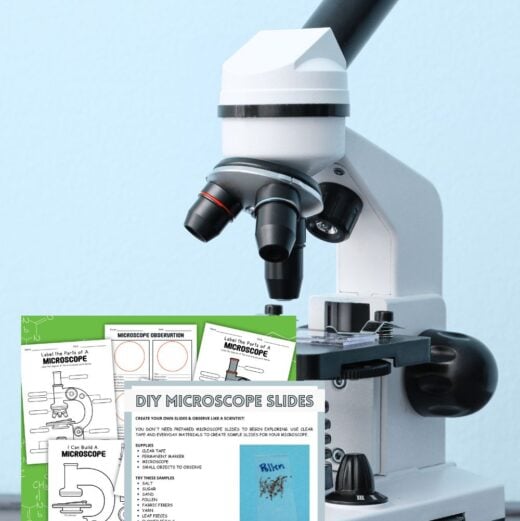
Looking for simple microscope activities for kids? Introduce young scientists to one of the most important science tools with hands-on observation activities, a microscope craft, and a free printable microscope activity pack.
Using a microscope encourages children to slow down, observe carefully, ask questions, and record what they discover. Best of all, you don’t need a microscope to begin exploring the tiny world around you! Start by making careful observations with your eyes or a magnifying glass, then use a microscope to discover even more amazing details.
👉 If you’re just getting started, explore our Science Tools for Kids for more foundational science skills.
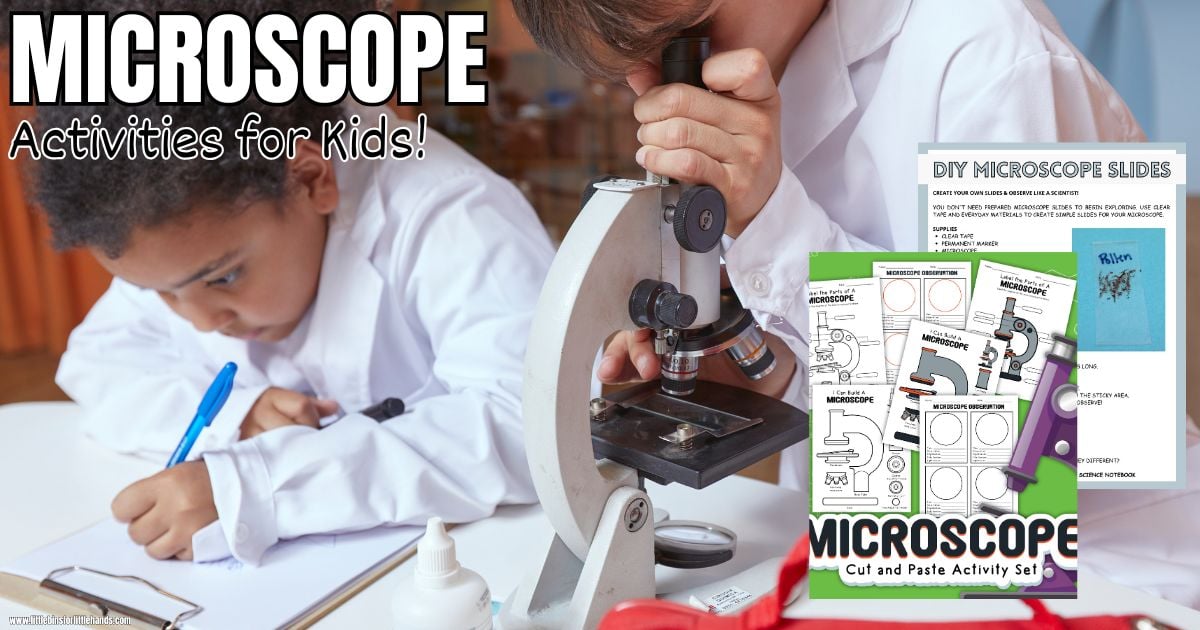
What Is a Microscope?
A microscope is a scientific instrument that magnifies tiny objects so they appear much larger. Scientists use microscopes to study plants, insects, rocks, water samples, crystals, fabrics, and tiny living organisms that cannot be seen with the naked eye.
What Kids Learn
Microscope and observation activities help students:
- Make careful observations.
- Compare objects and identify patterns.
- Record scientific observations using drawings and notes.
- Learn the parts of a microscope.
- Ask questions and make discoveries.
- Think and work like scientists.
💡 Learning how to use a microscope helps students build observation skills while encouraging curiosity about the natural world.
Three Ways to Observe Like a Scientist
Scientists use different tools depending on what they are investigating. Start with your eyes, then use a magnifying glass or microscope to reveal even more detail.
🔬 Use a Microscope: Examine pollen, plant cells, pond water, fabric fibers, crystals, and other tiny specimens that require greater magnification.
👀 Observe with Your Eyes: Notice color, shape, size, texture, and patterns.
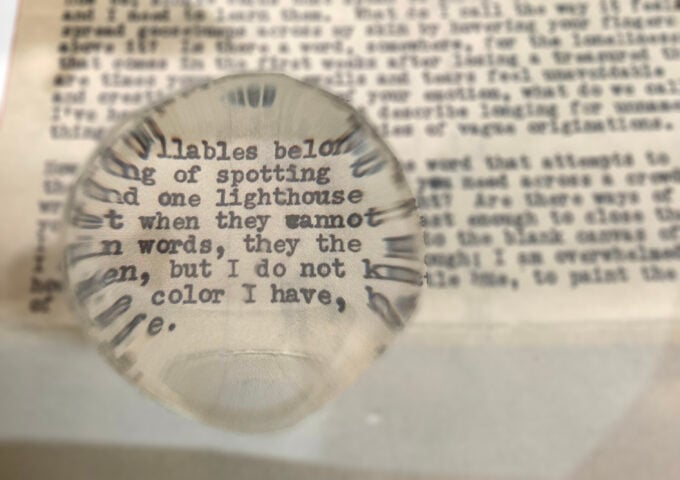
🔍 Use a Magnifying Glass: Explore salt, sugar, sand, leaves, feathers, moss, or fabric to discover details that are difficult to see with your eyes alone. Make a DIY magnifying glass.
Explore Everyday Objects in Science
One of the easiest ways to begin using a microscope—or practicing observation—is by examining familiar materials.
Try comparing:
- Salt
- Sugar
- Sand
- Fabric fibers
- Yarn
- Feathers
- Flower petals
- Leaves
- Moss
- Soil
- Tree bark
- Pollen
Encourage students to compare colors, shapes, textures, and repeating patterns.
Make Observation Slides
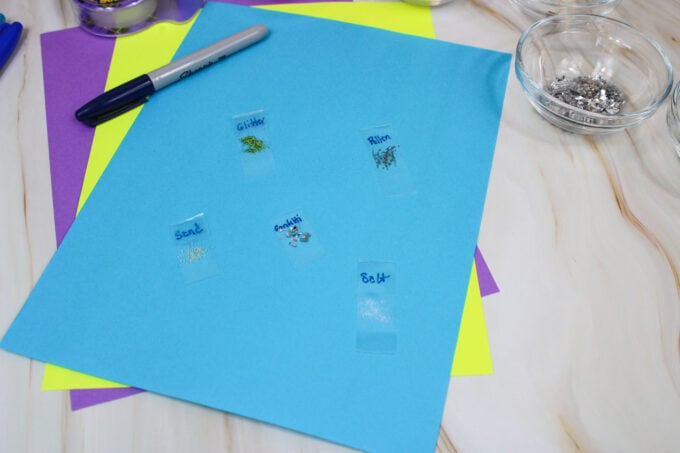
Create simple observation slides to organize and compare tiny objects. These easy tape slides can be explored with your eyes, a magnifying glass, or a microscope.
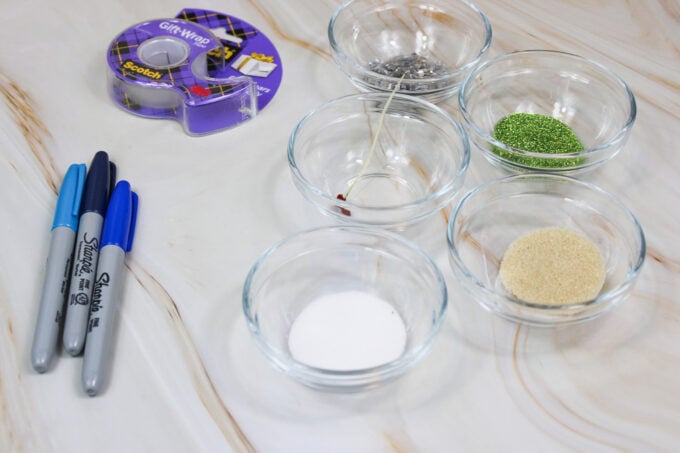
Supplies
- Clear tape
- Permanent marker
- Small objects to observe
Instructions
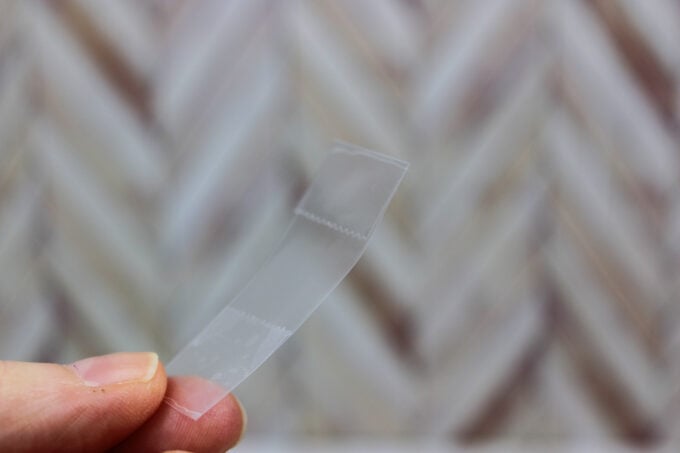
- Tear off a piece of clear tape about 2 inches long.
- Fold each end over to create tabs.
- Leave the sticky middle exposed.
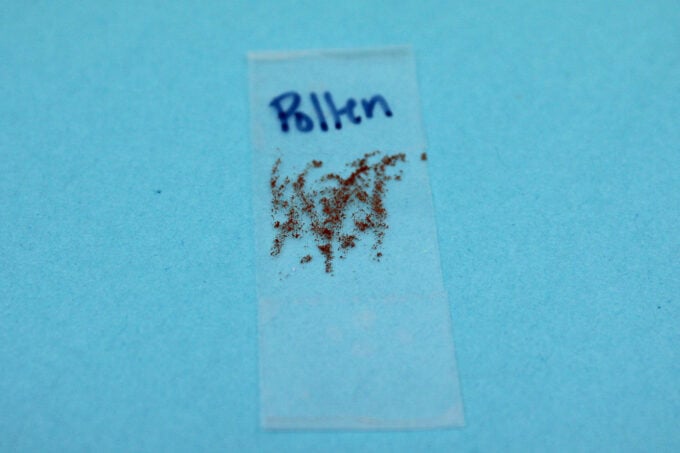
- Label one tab with the sample name.
- Press a tiny amount of the material onto the sticky area.
- Observe your sample using your eyes, a magnifying glass, or a microscope.
Observation Challenge
Collect 5–10 small samples to investigate.
Ideas include:
- Sand
- Salt
- Sugar
- Glitter
- Moss
- Leaf pieces
- Flower petals
- Feathers
- Fabric
- Soil
Compare each specimen and describe how they are alike and different.
👉 Learn about all the ways to use observation skills in science here.
Record Your Observations
Scientists don’t simply look—they carefully record what they discover.
Use the printable observation pages to:
- Draw your specimen.
- Record the observation tool you used.
- Write your observations.
- Compare different samples.
- Ask new questions.
Think like a scientist:
- Which sample has the largest particles?
- Which sample has repeating patterns?
- Which sample surprised you the most?
- Which observation tool helped you notice the most detail?
- What would you like to investigate next?
Learn the Parts of a Microscope
Before using a microscope, it’s helpful to understand the purpose of each part.
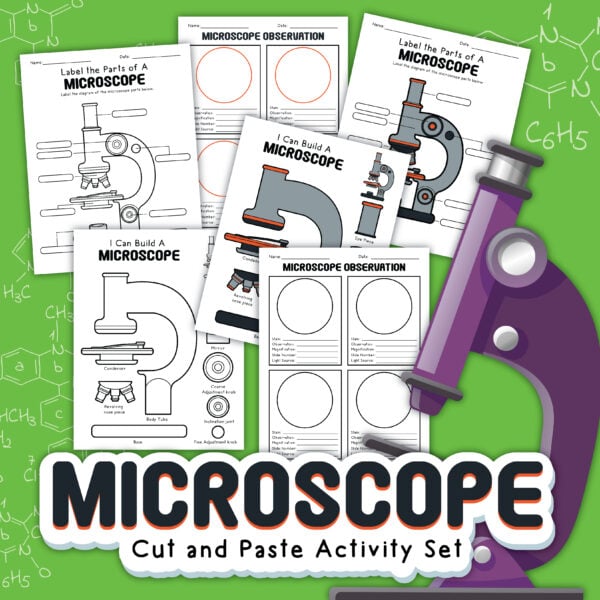
The printable activity pack includes labeling activities for common microscope parts, including:
- Eyepiece
- Body tube
- Revolving nosepiece
- Objective lenses
- Stage
- Stage clips
- Coarse adjustment knob
- Fine adjustment knob
- Light source
- Base
Knowing these parts helps students use the microscope safely and confidently.
Build a Paper Microscope
Reinforce microscope vocabulary by assembling a simple cut-and-paste microscope model. As students build the microscope, discuss how each part helps scientists make careful observations. This activity is a fun introduction before using a real microscope.
Extend the Investigation
Once students become comfortable observing, continue exploring new specimens throughout the year.
Try examining:
- Flower petals
- Leaves
- Seeds
- Moss
- Tree bark
- Feathers
- Hair
- Fabric
- Salt crystals
- Sugar crystals
- Pond water
- Rainwater
- Beach sand
- Soil
Challenge students to compare two specimens and explain how they are alike and different.
Continue Building Science Skills
Keep exploring with these hands-on science resources:
- Scientific Method for Kids
- Observation Activities
- Flower Dissection
- Plant Science Activities
- Nature Activities
Free Microscope Activities Printable
Download your free Microscope Activities Pack, featuring:
- Label the Parts of a Microscope
- Build a Paper Microscope
- DIY Observation Slides
- Microscope Observation Recording Pages
Pair the printable with the observation slide activity above for an engaging science lesson that helps students look closely, ask questions, and think like scientists.
Frequently Asked Questions
What is a microscope?
A microscope is a scientific instrument that magnifies tiny objects so we can observe details that are difficult or impossible to see with our eyes alone.
Do you need a microscope for these activities?
No. Many observation activities can be completed using your eyes or a simple magnifying glass. A microscope simply allows you to discover even more detail.
What can kids observe with a microscope?
Students can examine leaves, flower petals, pollen, feathers, salt, sugar, sand, fabric fibers, soil, moss, pond water, and many other everyday objects.
What science skills do microscope activities teach?
Microscope investigations develop observation, comparison, questioning, recording data, and evidence-based thinking.
Why do scientists use microscopes?
Scientists use microscopes to study tiny structures, compare materials, identify patterns, and investigate objects that are too small to see clearly without magnification.
Printable Elementary Science!
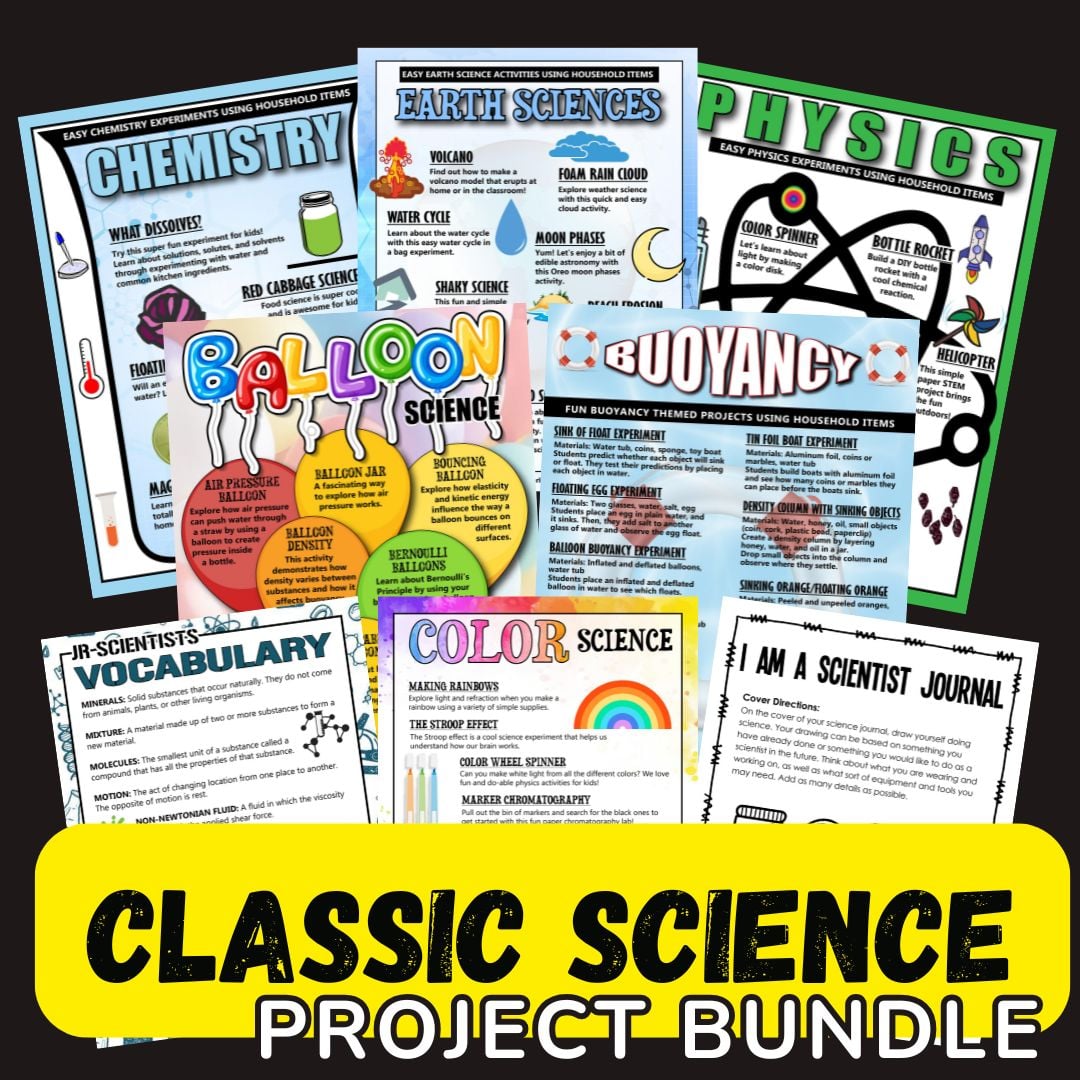
Want to do meaningful science — but not start a full unit yet? This starter lab provides quick, hands-on investigations across multiple science topics, allowing students to explore how science works before diving deeper into any one subject.
Perfect for regularly trying science without extensive planning. Grades: K–5.