
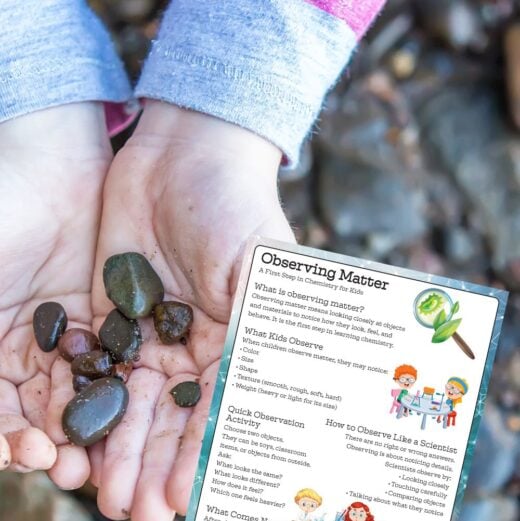
Observing matter is the first step in learning chemistry for kids. Before kids learn scientific terms or conduct experiments, they begin by noticing how objects look, feel, and behave. This simple introduction is designed for preschool and kindergarten learners and builds a foundation for understanding matter, observable properties, and material properties.
What Does It Mean to Observe?
To observe means to look closely and notice details. Young kids observe matter when they touch objects, compare materials, and talk about what they see. At this stage, observation happens naturally through play and conversation rather than measurements or data charts.
How Young Kids Observe Matter
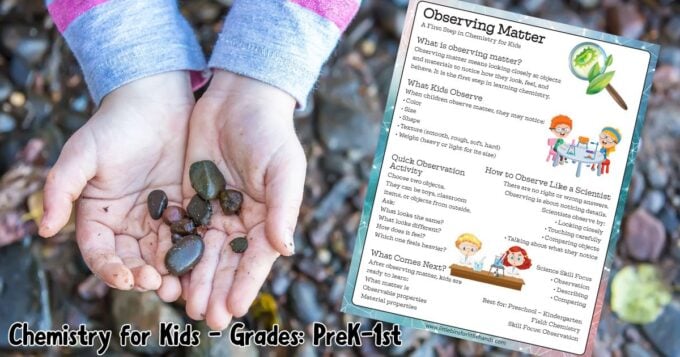
Kids can observe matter by noticing simple, visible features such as:
- Color
- Size
- Shape
- Texture (smooth, rough, soft, hard)
- Weight (heavy or light for its size)
💡 These early observations help kids sort, compare, and describe materials, which are essential science skills! Learning to notice details helps children ask questions and make sense of how the world works.
A Simple Observing Matter Activity (No Prep)
Object Comparison Activity (grade the free download here)
What You Need:
Two everyday objects (toys, blocks, leaves, or classroom materials)
What to Do:
- Place two objects side by side.
- Ask your child to look closely at each one.
- Talk about what they notice.
Ask questions like:
- What looks the same?
- What looks different?
- How does it feel?
- Which one feels heavier?
There are no right or wrong answers. The goal is noticing and describing, not testing. As kids get older, these observations help them begin to understand the difference between physical and chemical changes.
💡 Teacher & Parent Tip
Use open-ended prompts like “What do you notice?” instead of “Why?” to keep the focus on observation rather than explanation.
How Observing Matter Leads to Chemistry Learning
Observing matter helps kids build the skills they need to understand:
- What matter is
- Observable properties
- Material properties
As kids grow, these early observations turn into structured investigations and experiments.
👉 Ready to Learn More?
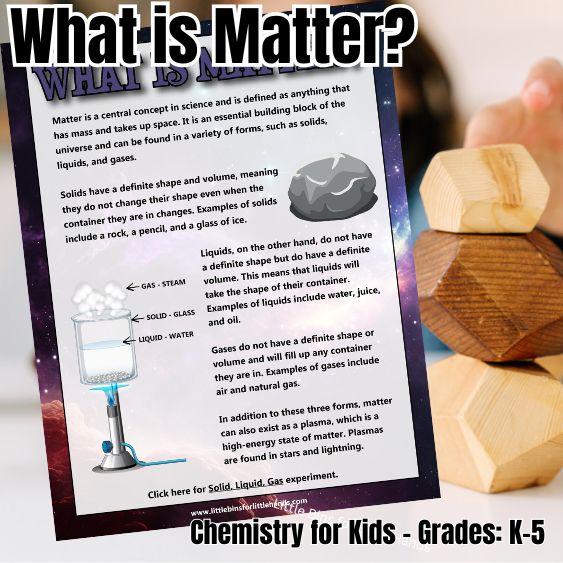
- Learn What Is Matter?
- Explore Observable Properties of Matter
- Compare Material Properties
Age Range & Learning Focus
Best for: Preschool – Kindergarten
Science Focus: Observation and description
Skills Practiced: Language development, comparing, sorting
Frequently Asked Questions About Observing Matter
Is observing matter science?
Yes. Observation is one of the most important science skills and is the starting point for all scientific learning. When children look closely at objects and talk about what they notice, they are practicing real science.
Do kids need to know the word “matter” yet?
Not at first. Young children can observe objects and materials long before learning formal science vocabulary. The focus at this stage is noticing, comparing, and describing.
How is observing matter different from material properties?
Observing matter focuses on noticing how objects look and feel. Learning about material properties builds on these observations by using more specific science language and comparisons.
What should kids learn after observing matter?
After observing matter, children are ready to learn what matter is and explore observable properties in more detail through simple activities and discussions.
🧪 Chemistry Learning Ladder
Level 1: Observing Matter
Level 2: What Is Matter
Level 3: Observable & Material Properties
Final Takeaway
You don’t need special supplies to introduce young children to chemistry. Encouraging them to look closely, touch carefully, and describe what they notice is the perfect place to begin.


Printable Elementary Science!
Want to do meaningful science — but not start a full unit yet? This starter lab provides quick, hands-on investigations across multiple science topics, allowing students to explore how science works before diving deeper into any one subject.
Perfect for regularly trying science without extensive planning. Grades: K–5.