

Groundhog Day is a fun winter tradition that sparks curiosity, questions, and predictions. Whether kids are wondering if the groundhog will see his shadow or learning why shadows form in the first place, this seasonal event is a perfect opportunity to explore light, shadows, patterns, and seasonal change with hands-on science and STEM activities.
Below you’ll find a collection of Groundhog Day activities for kids that work well for preschool through elementary ages. These ideas are easy to set up, flexible for classrooms or home learning, and connect real science concepts to a playful seasonal theme.
Who Is Punxsutawney Phil?
Every year on February 2nd, the groundhog known as Punxsutawney Phil emerges from his burrow in Punxsutawney, Pennsylvania. According to tradition, if Phil sees his shadow, there will be six more weeks of winter. If he doesn’t, an early spring is on the way.
While the prediction itself is folklore, Groundhog Day opens the door to meaningful science learning. Kids can explore why shadows form, how light behaves, and how seasonal changes affect animals and weather.
💡 Our complete Groundhog Day STEM pack is designed for kindergarten, first-grade, and second-grade kids.
Groundhog Day Prediction & Shadow Science
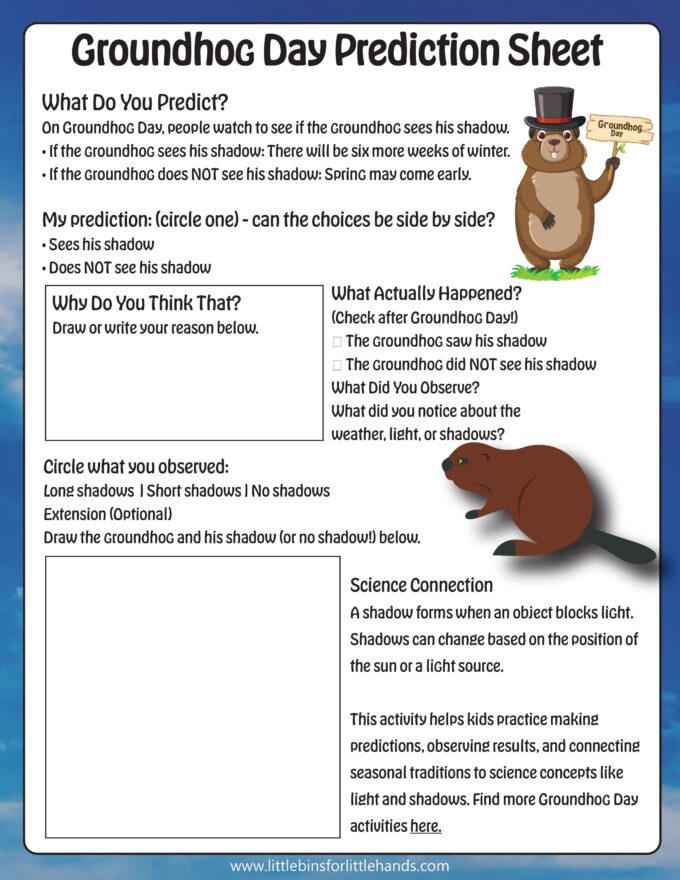
Before February 2nd, have kids predict whether the groundhog will see his shadow. Then, after Groundhog Day, come back and record what actually happened.
This simple activity helps kids practice making predictions, giving reasons, and observing results while connecting a seasonal tradition to real science. A shadow forms when an object blocks light, and it can change with the position of the sun or a light source.
Grab the free Groundhog Day Prediction Sheet here:
Now let’s explore more hands-on shadow science and STEM activities for Groundhog Day.
Groundhog Day Science & STEM Activities
Shadow Science for Groundhog Day
Shadows are at the heart of Groundhog Day, making light-based science activities a natural fit.
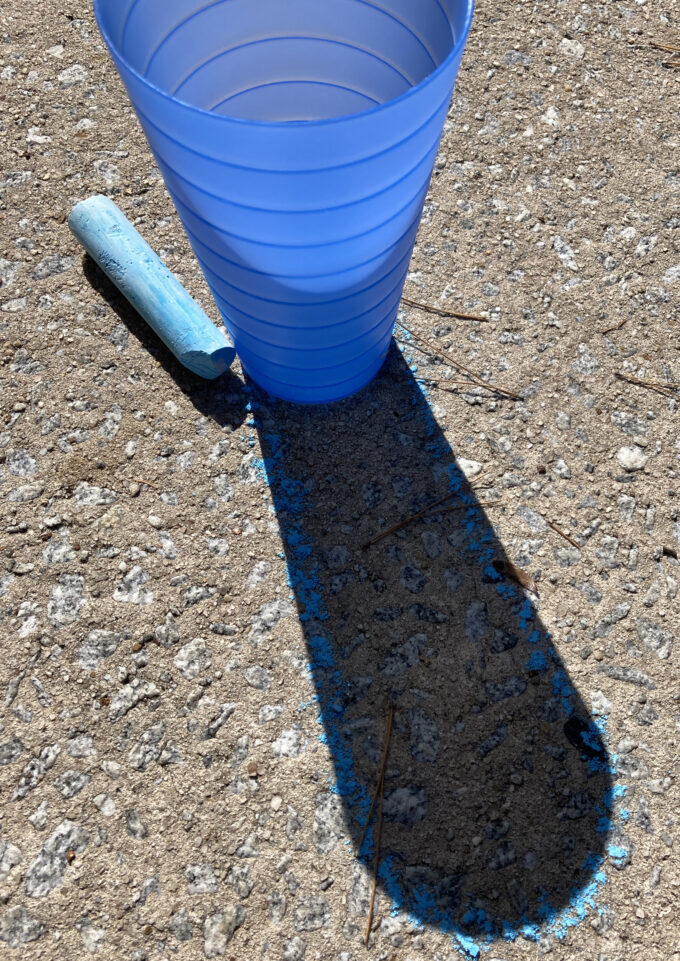
Start with a simple exploration of what shadows are and how they form using flashlights, sunlight, and everyday objects:
👉 All About Shadows for Kids
Dive deeper with hands-on investigations that allow kids to test how distance, direction, and light sources affect shadows:
👉 Shadow Science Activity
For younger learners, these shadow activities introduce the concept in a playful, developmentally appropriate way:
👉 Shadow Activities for Preschoolers
Add creativity and problem-solving with this LEGO-based shadow activity that blends art, physics, and design:
👉 Drawing Shadows
Groundhog Crafts & Puppets for STEM Play
Hands-on play helps kids visualize ideas and test their thinking.
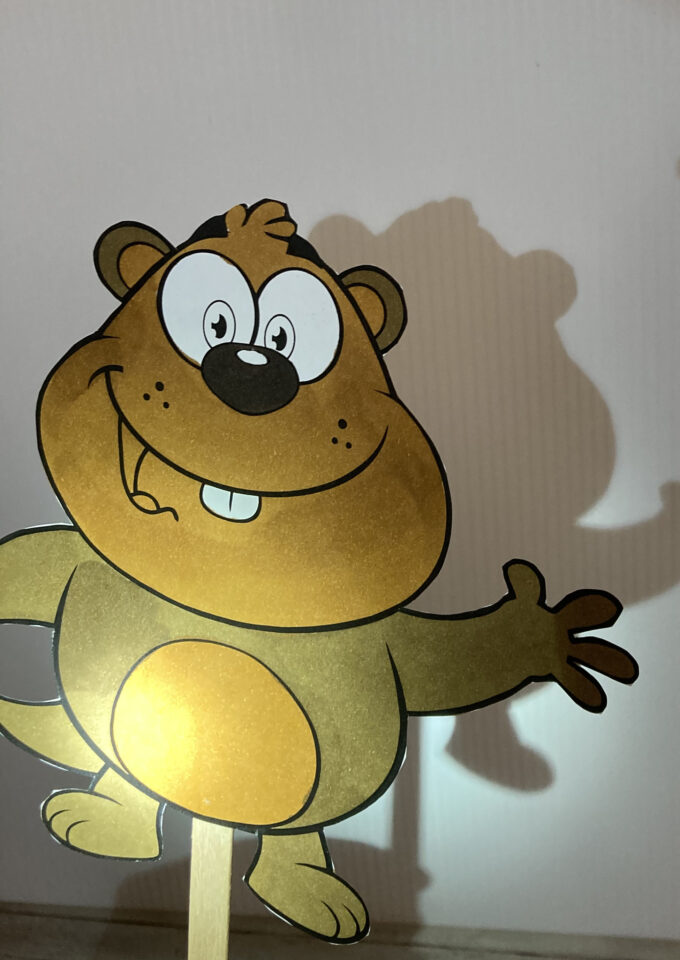
Create a printable groundhog puppet to explore silhouettes and storytelling through light and shadow play:
👉 Groundhog Shadow Puppet
Extend the learning by combining puppets with flashlights or sunlight to make predictions and observations about shadows.
STEM Challenges & Engineering Activities
Groundhog Day is also a great time to introduce simple engineering challenges.
Design and build a safe shelter inspired by how animals survive winter:
👉 Animal Shelter STEM Challenge
Explore how animals adapt to day and night cycles with printable activities that connect observation, patterns, and time:
👉 Day and Night Worksheets for Kids and Diurnal and Nocturnal Animals Worksheets for Kids
Groundhog Day STEM Challenge Cards
STEM challenge cards turn Groundhog Day into an open-ended engineering experience. These challenges encourage kids to use the engineering design process (ask questions, design solutions, test ideas, and improve their designs), all while staying connected to seasonal science.
The Groundhog Day STEM challenges focus on:
- Light and shadow investigations
- Building and testing groundhog burrows
- Making predictions and recording results
- Using everyday materials for creative problem-solving
The challenges work well for STEM centers, small groups, or individual exploration and naturally pair with the shadow science activities above.
👉 You can find the Groundhog Day STEM Challenge Cards here.
Explore Time & Sunlight With a Sundial
Take shadow learning outdoors by building a simple sundial. This activity helps kids connect sunlight, shadows, and the passage of time:
👉 DIY Sundial Project for Kids
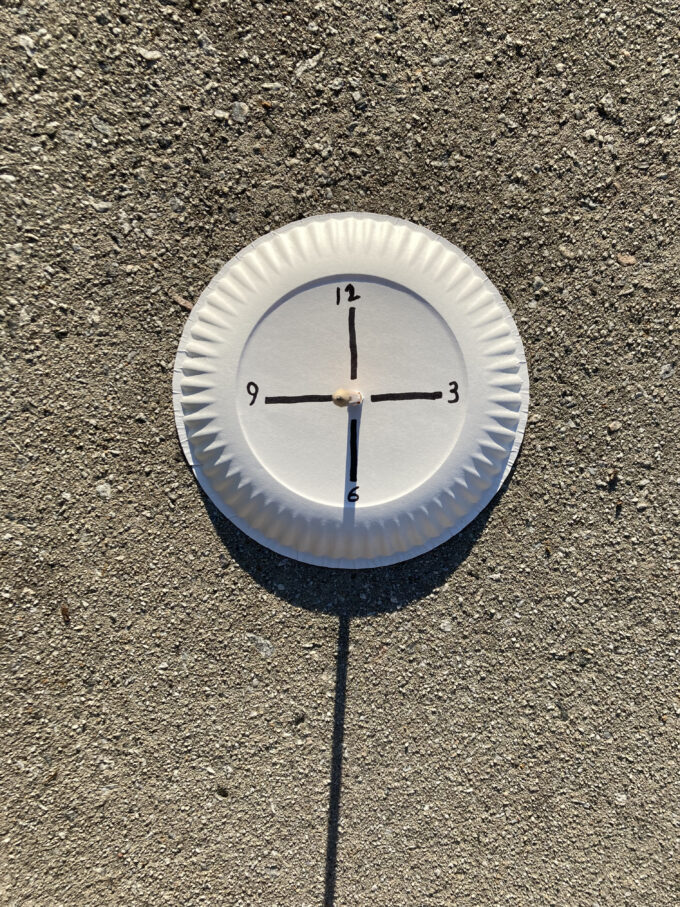
This pairs especially well with prediction activities and seasonal discussions.
Teaching Tips for Groundhog Day STEM
- Use predictions before activities to build critical thinking
- Encourage kids to test ideas more than once
- Let designs fail and improve — that’s part of STEM
- Keep materials simple and accessible
Groundhog Day works best when learning feels playful, flexible, and curiosity-driven.
FAQ
What age group are these Groundhog Day activities best for?
These activities work well for preschool through elementary-aged kids and can be adapted for different skill levels.
Is Groundhog Day based on real science?
The tradition is folklore, but it provides a great opportunity to explore real science concepts like light, shadows, and seasonal change.
Do these activities require special supplies?
Most activities use simple materials such as paper, flashlights, cardboard, LEGO bricks, and recycled items.
Can these be used in the classroom?
Yes. These activities work well for whole-group lessons, STEM centers, or small-group challenges.
Are there printable Groundhog Day resources available?
Yes. This page includes free printables, and there is also an optional Groundhog Day activity pack that organizes lessons and extensions in one place.
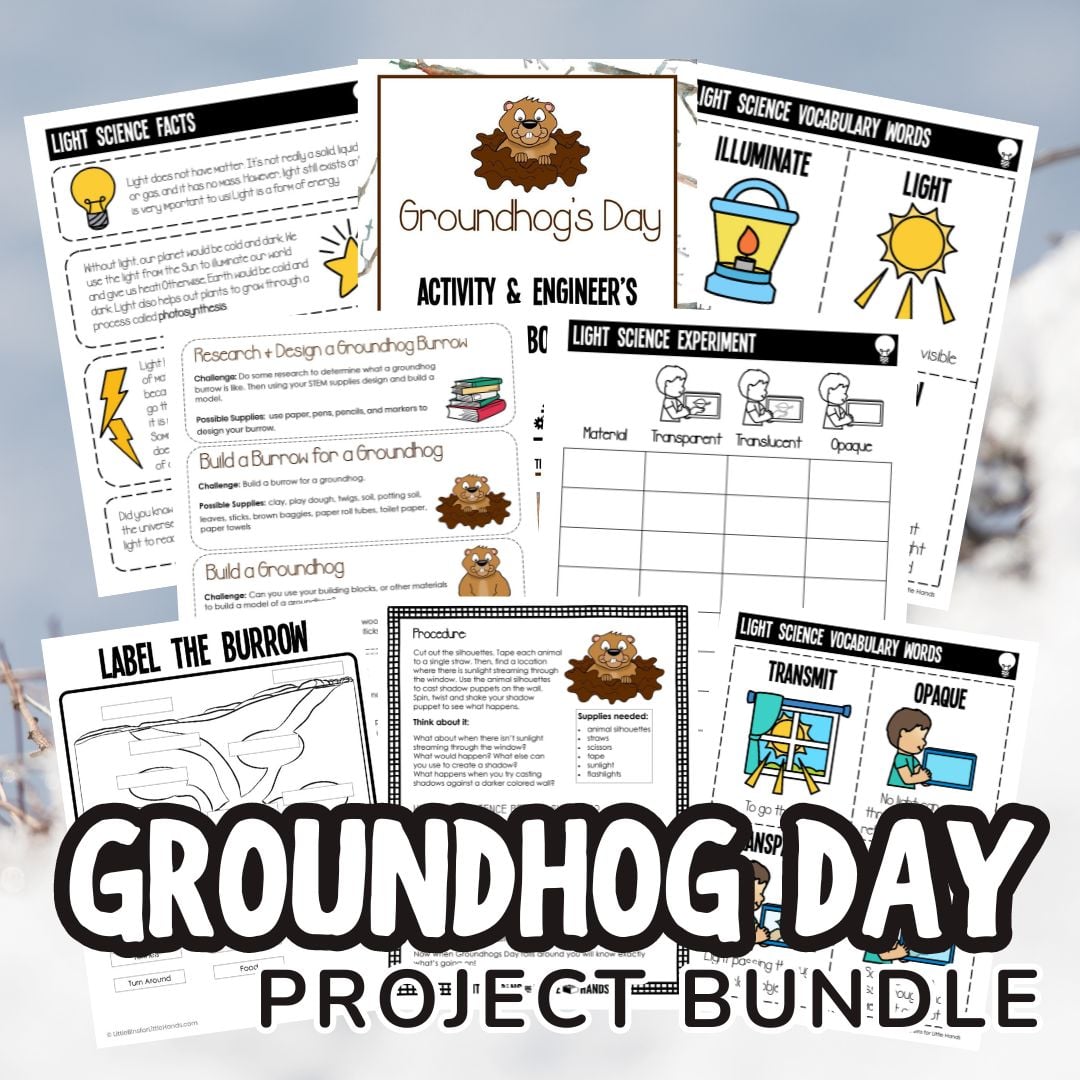
Light, Shadows, and Groundhogs!
This Groundhog Day STEM pack brings together light-and-shadow science, hands-on STEM challenges, printables, and simple extensions for early elementary learners. Use the light science activities year-round!





Hi there. I am unable to get the COMPLETE GROUNDHOG DAY PDF FILE . . . any idea? Error message 🙁
Thank you 🙂
Hi Amber, try the link again. I am going to add a new one!