
Winter is the perfect season to explore weather patterns, snow, ice, wind, and clouds with hands-on science. These winter weather science activities help kids observe real-world weather, model how winter precipitation forms, and investigate how cold temperatures affect air and water.

This collection focuses on cold-weather conditions like snow, frost, and winter storms. If you’re looking for broader weather topics, including rain, clouds, and severe weather, you can also explore our full weather science activities for kids.
Use the activities below for classroom lessons, STEM centers, or at-home science exploration during the winter months.
What Kids Will Learn About Winter Weather
Through these winter weather science experiments, kids will explore:
- Types of winter precipitation: snow, sleet, freezing rain
- How snowflakes and ice crystals form
- Why frost appears on cold surfaces
- How wind direction and wind chill affect winter weather
- How clouds and winter precipitation develop
- How the water cycle continues during freezing temperatures
Snow and Ice Weather Activities
Snowflake Symmetry Science
What to Do:
Create paper or craft snowflakes and examine their symmetrical patterns. Discuss how real snowflakes form in clouds and why snow crystals grow with six-sided symmetry.
Science Tie-In:
Snowflakes form when water vapor freezes into ice crystals. Cold temperatures and humidity influence crystal shape and growth. Explore snowflake science videos and facts for more in-depth information.
Supplies:
Paper, scissors, and art materials
💡 All About Snowflakes Activity Pack

Frost on a Can Experiment
What to Do:
Fill a metal can with ice and salt and observe frost forming on the outside of the can.
Science Tie-In:
Warm air contains water vapor. When that air touches a surface below freezing, the vapor condenses and freezes into frost.
Supplies:
Metal can, ice, salt
Frozen Bubbles
What to Do:
Blow bubbles outdoors on a very cold day and watch as they freeze into delicate patterns.
Science Tie-In:
Cold air temperatures cause moisture in the bubble film to freeze, forming ice crystal patterns.
Supplies:
Bubble solution, freezing outdoor conditions
Wind and Winter Storm Activities
Winter Wind Vane Experiment
What to Do:
Build a simple wind vane and track wind direction over several winter days.
Science Tie-In:
Wind plays a major role in winter storms and affects how cold temperatures feel through wind chill.
Supplies:
Cardstock, pencil, straw, pin, clay or base
💡 DIY Weather Station for Kids and Pine Cone Weather Station
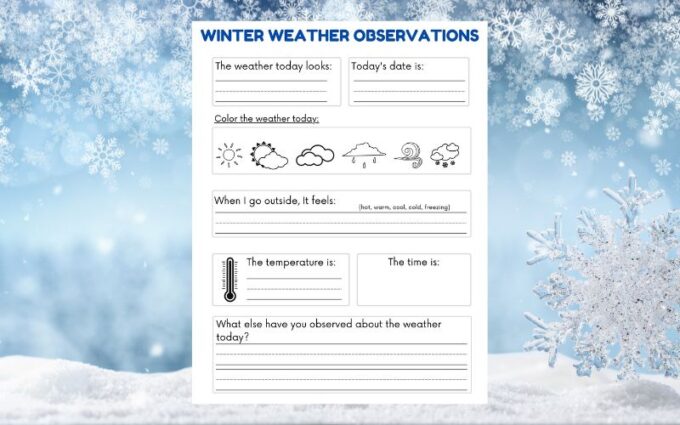
Daily Winter Weather Journal
What to Do:
Record daily winter weather observations such as temperature, wind, cloud cover, and precipitation type.
Science Tie-In:
Weather changes daily based on atmospheric conditions. Tracking patterns helps kids understand winter storms and seasonal trends.
Supplies:
Printable weather log, thermometer, ruler
💡 Free Winter Weather Log💡Grab this free .
Clouds, Condensation, and Winter Precipitation
Rain (and Snow) in a Jar
What to Do:
Fill a jar with hot water, place a plate of ice on top, and watch condensation form and fall inside the jar.
Science Tie-In:
Warm air rises and cools when it meets cold air, forming condensation and precipitation. In winter, this process can lead to snow or sleet instead of rain.
Supplies:
Glass jar, hot water, ice, plate

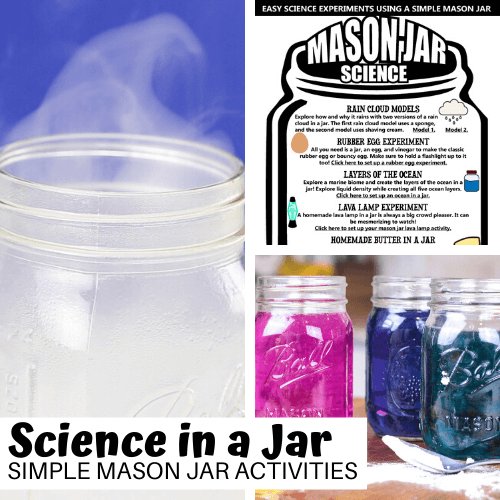
Cloud in a Jar
What to Do:
Create a cloud model inside a jar to observe how clouds form when warm, moist air cools.
Science Tie-In:
Clouds form when water vapor condenses into tiny droplets or ice crystals—an important step in winter precipitation.
Supplies:
Jar, warm water, ice
Winter Water Cycle Extensions
Winter Water Cycle in a Bag
What to Do:
Make a mini water cycle using a sealed plastic bag taped to a sunny window and observe evaporation, condensation, and precipitation.
Science Tie-In:
The water cycle continues year-round, even when temperatures drop and precipitation falls as snow.
Supplies:
Zip-top bag, water, food coloring, tape
Snowmelt and Runoff Experiment
What to Do:
Place an ice block on a sloped tray and observe how melting snow creates runoff.
Science Tie-In:
Snowmelt contributes to rivers and lakes and plays a key role in the water cycle during late winter and early spring.
Supplies:
Ice blocks, tray, ruler, timer
Integrated Activity: A Snowflake’s Journey
Have students create a short story or diagram following a snowflake through the winter weather cycle:
- Evaporation: Water vapor rises into the cold winter air
- Condensation: Vapor cools and forms ice crystals in clouds
- Precipitation: Snow falls to the ground
- Collection: Snow melts and returns to lakes and rivers
This activity reinforces both weather patterns and the winter water cycle.
Additional Winter Science Activities to Try
These activities extend winter learning beyond daily weather observations:
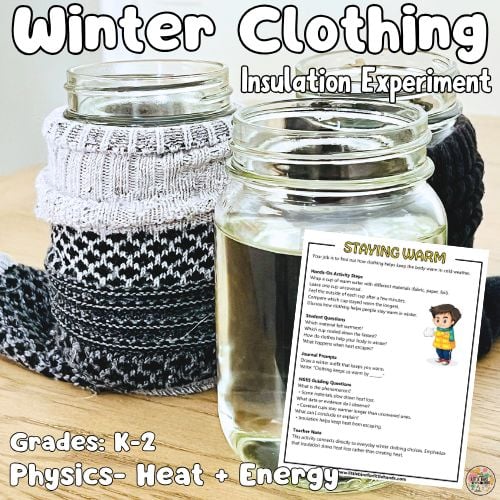
- Winter Clothing Experiment (Grades K-2)
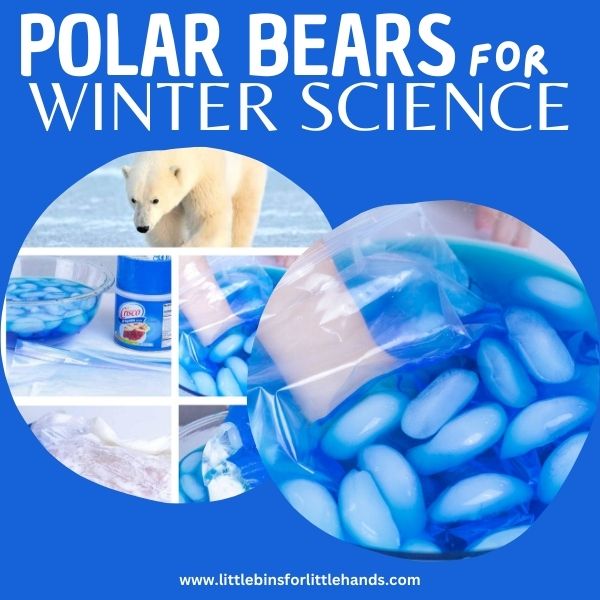
- Polar Bear Blubber Experiment
- Insulation Science Experiment (Grades: 2-5)
🔎 More Winter Science Experiments for Kids

FREE Printable Winter Science Guide
Looking for a ready-to-use collection of winter science activities?
Grab the FREE Winter Science and STEM Guide to get started with hands-on learning all season long.
Frequently Asked Questions About Winter Weather Science
What is winter weather science?
Winter weather science explores how cold temperatures affect air, water, and precipitation, including snow, ice, wind, and storms.
What winter weather activities are best for elementary students?
Hands-on experiments like frost formation, wind vanes, weather journals, and cloud models work well for grades K–5.
How does the water cycle work in winter?
The water cycle continues year-round. In winter, precipitation often falls as snow, and snowmelt later contributes to runoff and collection.

Extend Your Winter Learning
If you’d like everything organized in one place, our Printable Winter STEM Pack includes 250+ pages of winter-themed science, STEM, and art projects, complete with instructions, printables, and kid-friendly learning prompts.