
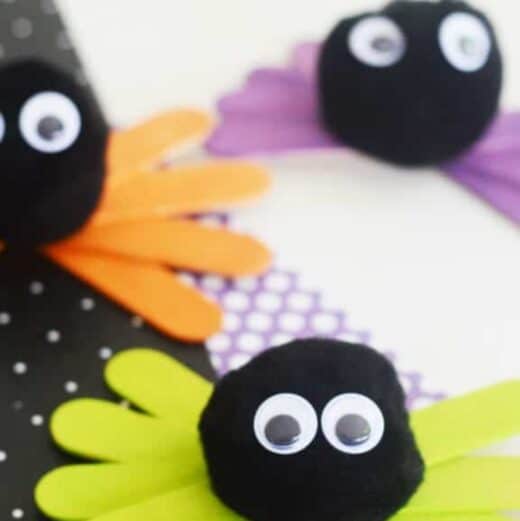
Make Halloween fun with this adorable popsicle stick spider craft for kids! This easy Halloween craft is perfect for preschoolers, kindergartners, and early elementary students using simple supplies. Discover a variety of Halloween activities for kids here.

Why You’ll Love This Spider Craft
This project is simple to prep, uses materials you already have, and is the perfect size for little hands. Whether at home or in the classroom, this spider craft makes a great addition to your Halloween activities!
🎨 Explore all of our Halloween Art Projects here.
- Fun way to explore spider anatomy and body parts
- Combines art and simple science for a STEM-based Halloween activity
- Encourages counting and symmetry while creating the spider’s eight legs
- Quick setup and great for small groups or full classrooms
- Uses classic craft materials — popsicle sticks, pom-poms, and googly eyes
Kids love creating silly, glittery, or colorful spiders! It’s a creative way to blend Halloween fun with real-world science learning.

Supplies Needed
- 4 popsicle sticks
- Large black pom-pom (1 per student)
- Paint (acrylic or washable)
- Paintbrush
- School glue
- Googly eyes (2 per spider)
- Paper plate (for workspace)

How to Make a Popsicle Stick Spider
Step 1: Set up your craft area.
Give each child a paper plate workspace with four popsicle sticks, one large pom-pom, paint, a brush, glue, and two googly eyes.
💡 Classroom Tip: Write names on plates to keep spiders organized while drying.
Step 2: Paint the popsicle sticks.
Apply a thin, even coat to each stick. Too much paint will take longer to dry. Bright Halloween colors — orange, green, purple, or pink — look great with a black pom-pom spider body.
Let it dry for 5–10 minutes before proceeding.

Step 3: Build the spider legs.
Once dry, glue the sticks together in a crisscross pattern to form eight legs. A small dot of glue is all that’s needed! Let them dry briefly before adding the body.

Step 4: Add the spider body.
Place a large glue dot in the center and press the black pom-pom onto the glued sticks. The big, fluffy pom-poms work best for this craft.
Step 5: Give your spider some eyes!
Add a tiny dot of glue to the back of each googly eye and press onto the pom-pom. Kids can position them close together or far apart — every spider turns out unique!

Allow the spiders to dry completely before handling. Once finished, kids will love playing with their fuzzy little creations or displaying them as Halloween decorations.
Tips and Variations
- Messy painters? Use smocks or aprons to protect clothes.
- Faster drying: Keep glue dots small and use less paint.
- Pom-pom tip: Choose large or glitter pom-poms for the best look.
- STEM tie-in: Talk about why spiders have eight legs and how they move.
Learning Connections
This simple Halloween craft supports hands-on learning goals:
- STEM integration: Explore spider body parts and their role in nature.
- Counting and symmetry: Reinforce math skills while building eight legs.
- Fine motor skills: Strengthen hand-eye coordination through painting and gluing.
- Creative design: Encourage self-expression with colors and materials.
🕷️ Spider Science Corner
Why do spiders have 8 legs?
Spiders belong to a group of animals called arachnids, not insects. Insects have 6 legs, but arachnids (like spiders and scorpions) have 8! Their extra legs help them crawl, climb, and spin webs. The tiny hairs on their legs can even feel vibrations in the air and on their webs.
How do spiders move?
Spiders move in a unique way! Instead of using muscles like people, they use body pressure — kind of like pushing water through a straw — to stretch and bend their legs. This helps them scurry quickly, climb walls, and even jump when they need to catch food.
More Halloween Crafts for Kids
Keep the spooky fun going with these easy Halloween projects for preschoolers:
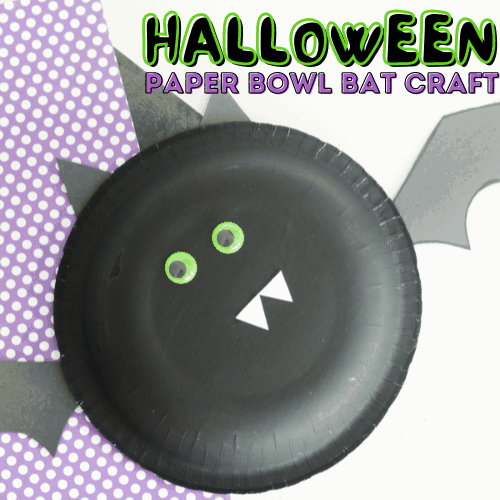
- Paper Bowl Bat Craft
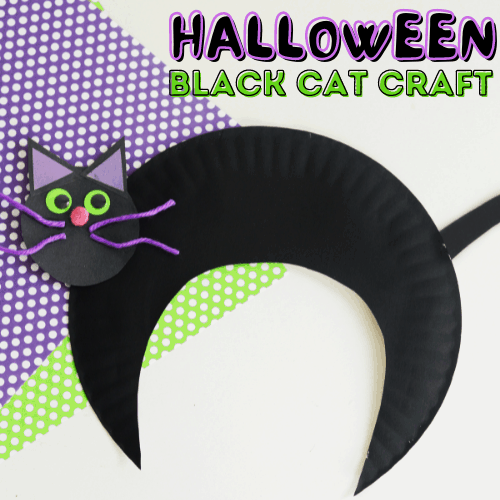
- Paper Plate Black Cat
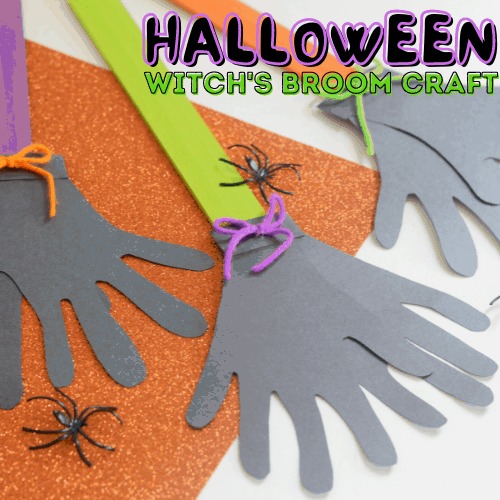
- Witch’s Broom Handprint Craft
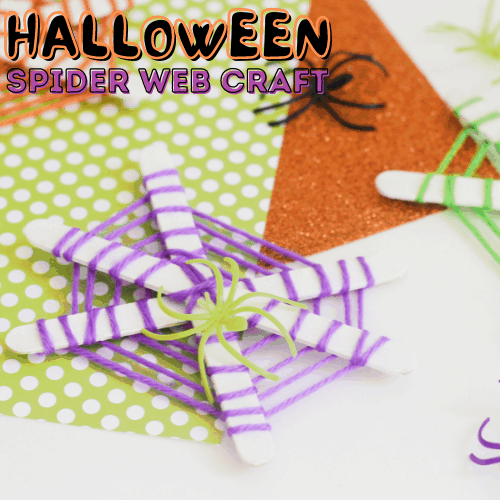
- Popsicle Stick Spider Web
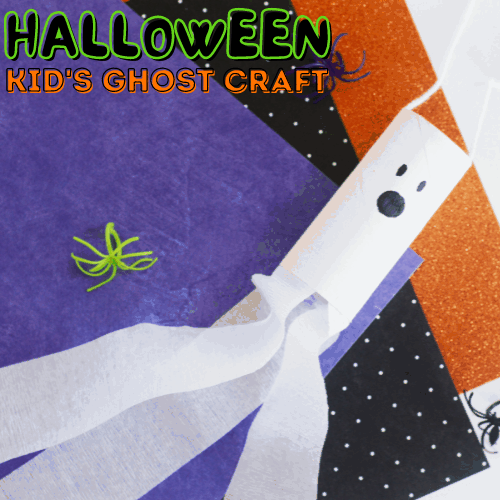
- Toilet Paper Roll Ghost Craft
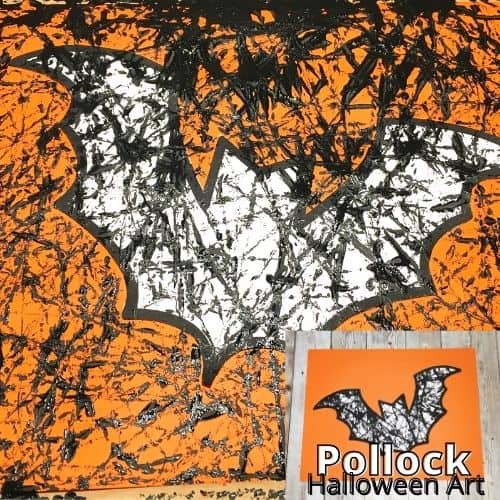
- Bat Art for Kids
FAQ About This Ghost Craft
What age is this spider craft best for?
This project works well for preschoolers through early elementary. Older kids can experiment with different colors or add glitter for fun textures.
Can I prep this ahead of time?
Yes! Pre-paint popsicle sticks or pre-cut pom-poms and eyes for faster assembly in group settings.
How can I make this a science lesson?
While crafting, discuss spider anatomy — eight legs, two body parts, and why spiders aren’t insects. It’s a fun mix of art and biology!
What’s the best glue to use?
Regular school glue works fine for most ages. For quick drying or classroom speed, use glue dots or a low-temp glue gun (with supervision).