
What if we told you that you can pierce a raw potato with just a paper straw? Sounds impossible, right? This simple science experiment explores air pressure and force, demonstrating how a weak paper straw can become strong enough to puncture a potato.

Potato Straw Experiment
Field of Science: Physics
Grade Level: Elementary (3 – 8)
Concepts Explored: Air pressure, force, materials science
When you try to insert a straw into a raw potato, the straw typically bends or breaks. This happens because the straw is weak and cannot withstand the resistance from the potato on its own.
However, when you use force to trap air inside the straw by covering the top with your thumb, you increase the strength of the straw. This trapped air creates higher internal pressure, allowing the straw to resist bending and apply enough force to puncture the potato.
In this experiment, you’re using force in two ways: applying direct physical force to push the straw into the potato, and using the air pressure inside the straw as an additional force to strengthen it.
Supplies Needed:
- 1 raw potato
- 2 paper straws
How-To Do the Potato Straw Experiment:
Prepare the materials: Grab your raw potato and paper straw.
First attempt: Try inserting the paper straw directly into the potato. You’ll likely see the straw bend or break due to the lack of strength.
Second attempt: Place your thumb over the end of the straw to trap the air inside and apply force. Try inserting it into the potato again. This time, the trapped air creates additional pressure inside the straw, making it much stronger and allowing it to pierce the potato without bending or breaking!

Potato Straw Science Information
In the first attempt, the paper straw lacks sufficient structural strength to push against the firm potato. The straw bends because it lacks rigidity, and the force applied isn’t enough to overcome the resistance of the potato.
However, when you trap air inside the straw by covering the opening with your thumb, you create increased air pressure inside the straw. The added air pressure makes the straw stiffer and stronger. This means the straw can now withstand the resistance of the potato and apply enough force to pierce through it.
By using force from both the thumb (which traps the air) and your hands (which push the straw into the potato), you can break through the potato’s outer surface.
Extension Activities:
- Straw Strength Challenge: Try different types of straws (plastic, flexible, etc.) to see how air pressure and force affect the strength of various materials. Which kind of straw needs the most force to pierce the potato?
- Force and Friction Investigation: Test how force changes when applied to different surfaces, such as a variety of potatoes, a carrot, a cucumber, or an apple!
- Air Pressure Blow Art: Utilize the concept of air pressure and force to create a fun art project by blowing air through straws to produce various designs on paper.
More Science Facts for Kids:
- What is force? Force is a push or pull that can change the motion of an object. In this experiment, you’re applying force to push the straw into the potato.
- How does air pressure affect force? Trapping air inside the straw increases internal air pressure, making the straw stronger and able to apply more force to pierce the potato.

Related Air Pressure Activities
- Cold and Hot Air Experiment: Investigate how temperature affects air pressure, causing air to expand and contract.
- DIY Air Cannon with Plastic Bottle: Make a fun air cannon that demonstrates how air pressure can be used to launch small objects across a room!
- Balloon in a Jar Experiment: Investigate how air pressure changes inside a jar and causes a balloon to inflate without blowing air into it.
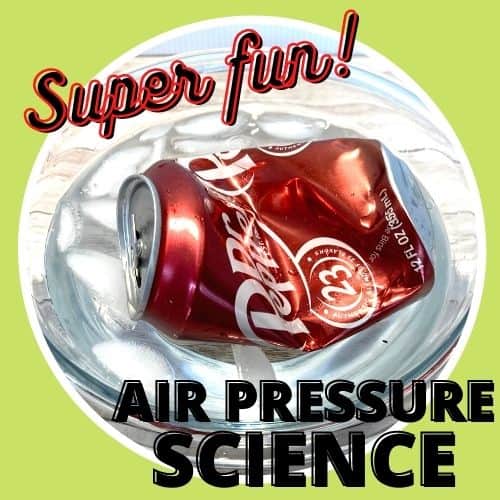
- Crushed Can Experiment: Discover how air pressure can crush a can in seconds when the internal pressure is removed.
- Cartesian Diver Experiment: Use a plastic bottle and a small diver to investigate how air pressure can cause objects to float or sink.
- Egg in a Bottle Experiment: Learn how air pressure can cause an egg to be sucked into a bottle without any force other than air pressure.