
Did you know air pressure is powerful enough to pull a balloon into a jar? This Balloon and Jar Air Pressure Experiment is a fascinating way to explore how air pressure works using just a few simple supplies you already have at home or in the classroom.

Balloon Air Pressure Experiment
Air pressure is the force that air exerts on everything around us. In this experiment, you’ll see how changes in air pressure can cause a balloon to get pulled into a jar! When we light a flame inside the jar, it heats the air and uses up oxygen. The air cools after the flame goes out, and the jar has less air. This creates a difference between the air pressure inside and outside the jar, which makes the balloon get sucked in!
Recommended Grade Level: 3rd-5th Grades
Supplies for the Balloon in a Jar Experiment:
🛑 Adult supervision is required for this experiment.
💡Find printable instructions and an observation sheet for this experiment in the CLUB.
- Latex balloon
- Glass bottle or jar
- Matches or lighter
- Water
- Paper (cut into long strips)
- Scissors
- Funnel (optional)
💡Tip: You can also use water balloons.
Balloon Jar Instructions:
Watch the video:
Prepare the balloon. Fill it with water (about 1/4 full) and blow air into it until it’s about halfway full.
Create heat inside the jar. Light a strip of paper and place it into the jar.

Place the balloon on top of the jar. As the fire burns, it consumes the oxygen, and once the flame goes out, the air inside the jar cools and creates lower air pressure. The balloon acts as a one-way valve, letting air push it partially inside the jar.

Air Pressure Science Explained
This experiment demonstrates how the absence of oxygen and cooling air inside the jar lowers the air pressure while the atmospheric pressure outside the jar pushes on the balloon, creating the fun effect of seeing the balloon pulled into the jar.
- Atmospheric Pressure: The air around us constantly presses down on us from all sides. This pressure is called atmospheric pressure. In this experiment, the air inside the jar has less pressure after the flame goes out, while the air outside has more pressure. This higher pressure outside pushes the balloon into the jar!
- New Air vs. Less Air: When the flame burns inside the jar, it heats up the air, causing some air to expand and escape. The flame also uses up oxygen to keep burning. After the flame goes out, the air cools down, leaving less air (and less oxygen) inside the jar. This leaves lower air pressure inside the jar.
- One-Way Valve: The balloon acts like a one-way valve. It lets air from outside the jar push the balloon in but doesn’t allow new air to flow back into the jar easily. As a result, the balloon gets sucked partway into the jar.
- Lack of Oxygen: The flame inside the jar needs oxygen to keep burning. The flame dies out as it uses up the oxygen, and no new oxygen enters the jar. This helps create the lower pressure inside that pulls the balloon in.

Extension Activities:
- Use different jar sizes. Will a larger jar affect how much of the balloon gets pulled inside?
- Try varying the amount of water in the balloon. Does changing how much water is inside the balloon affect the experiment?
- Test with different amounts of air in the balloon. Does less air in the balloon cause a stronger or weaker reaction?

Related Science Experiments to Explore
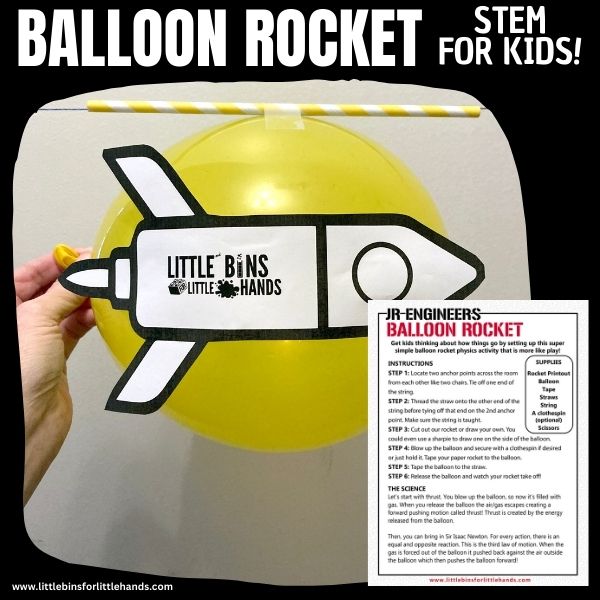
- Balloon Rocket: Release a balloon and watch it “rocket” along a string to demonstrate how air pressure changes create movement.
- Rising Water Experiment: Place a burning candle in the water and watch what happens to the water. A fun way to explore how heat affects air pressure.
- Hot and Cold Air Balloon Experiment: Use a balloon and a plastic bottle to explore how warm air expands (increasing pressure), while cool air contracts (decreasing pressure).
- Tea Bag Rocket (Thermal Expansion): This experiment uses a hollow tea bag to demonstrate thermal expansion. When lit on fire, it rises due to the expansion of air inside.
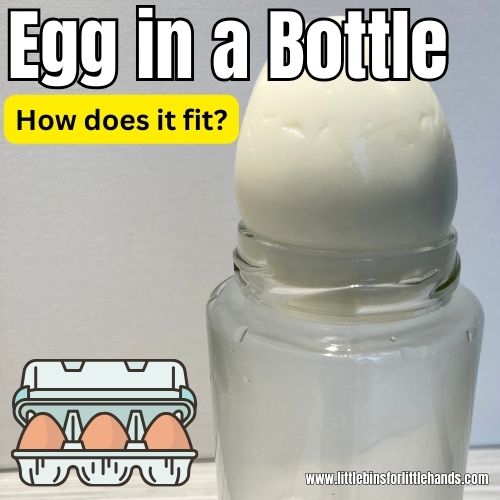
- Egg in a Bottle Experiment: In this experiment, a hard-boiled egg is sucked into a bottle using the power of air pressure.
- Build A Barometer: Use changes in air pressure to predict the weather.
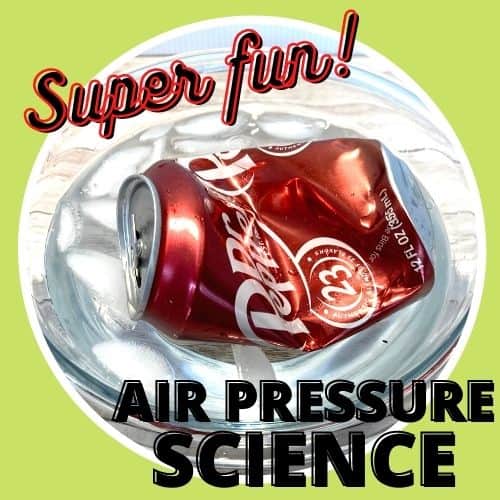
- Can Crusher Experiment: Observe how rapid cooling reduces air pressure inside a heated can, causing it to collapse under external air pressure.
- Bottle Rocket: Create a thrilling rocket launch with a soda bottle, water and air pressure.
- Potato Straw Experiment: Explore how a weak paper straw can become strong enough to puncture a potato using air pressure and forces.



Helpful Science Resources
Here are a few resources to help you introduce science more effectively to your kids or students and feel confident presenting materials. You’ll find helpful free printables throughout.
- Printable Science Project Pack 👇
- Best Science Practices (as it relates to the scientific method)
- Science Vocabulary
- All About Scientists
- Free Science Worksheets
- DIY Science Kits
- Science Tools for Kids
- Scientific Method for Kids
- Citizen Science Guide
- Join us in the Club