
Ever wonder how air can change a balloon without even blowing into it? This Cold and Hot Air Experiment is an exciting way to explore how temperature affects air pressure! Perfect for curious kids, it’s a simple science experiment that brings science concepts to life right before your eyes.

How Do Hot Air Balloons Work?
A hot air balloon works by using hot air to rise into the sky. When a burner heats the air inside the balloon, the air molecules inside move faster and spread out, making the air less dense than the cooler air outside. Since hot air is lighter than cold air, the balloon rises as the cooler, heavier air outside pushes up on it.
To control how high the balloon goes, the pilot can turn the burner on to heat the air more, increasing the balloon. When the pilot wants to come down, they can let the air inside the balloon cool, which makes it denser and causes the balloon to sink. This process of heating and cooling the air allows the pilot to control the balloon’s height.
Let’s experiment!
Cold and Hot Air Science Experiment
Heated air expands and fills space. Meanwhile, cold air contracts and takes up less room. This concept helps us explore how temperature affects gas molecules—and, in this case, the size of a balloon!
It’s a fantastic way to demonstrate air expansion and contraction with a balloon. Kids can observe real-world science through this hands-on cold and hot air balloon science experiment and discover why warm air rises and cold air sinks.
Supplies:
This activity is suitable for grades K-5 and introduces fundamental concepts in chemistry and physics, like gas expansion, temperature, and energy.
💡Find printable instructions and an observation sheet for this experiment in the CLUB.
- Water
- Two bowls (one for hot water, one for cold water or ice water)
- Empty plastic bottle
- Ice cubes
- Spoon
- Balloon
- Optional: Food coloring (blue and red)
Variables to Explore:
- Independent Variable: Temperature of the water (hot vs. cold)
- Dependent Variable: Balloon inflation or deflation
- Control Variables: Size of the bottle, amount of water, room temperature

Cold and Hot Air Experiment Instructions:
STEP 1. Prepare the water bowls:
- Fill one bowl with hot water from the tap.
- Fill the second bowl with cold water and add ice cubes to chill it.
STEP 2. Optional: Add red food coloring to the warm water and blue food coloring to the cold water to help kids visualize the two temperatures.
💡 Tip: Stretch the balloon a few times to make it easier to inflate later.
STEP 3. Place the balloon on the bottle opening: Stretch the balloon over the top of the bottle.

STEP 4. Begin the experiment:
- Submerge the bottle in the bowl of hot water and observe as the balloon inflates!
- After a few minutes, transfer the bottle to the cold water bowl and watch the balloon slowly deflate.
STEP 5. Repeat as needed: Encourage kids to try the experiment multiple times to see consistent results and record their observations.


How Does It Work?
When the plastic bottle sits in warm water, the air molecules inside the bottle absorb heat energy. As the molecules gain energy, they move faster, spread farther apart, and take up more space. This causes the air to expand, pushing into the balloon and making it inflate. This is known as thermal expansion. As the temperature increases, the volume of air in the balloon increases.
When the bottle is placed in the cold water, the air molecules lose energy and slow down. As they move less and crowd closer together, the air inside the bottle takes up less space. The result is thermal contraction, causing the balloon to shrink as the air contracts. As the temperature decreases, so does the volume of air inside the balloon.
Related Science Concept:
This experiment introduces kids to how molecules in gases behave differently when exposed to varying temperatures. Air is made up of tiny molecules (mostly oxygen and nitrogen), and those molecules respond to temperature changes by expanding or contracting—just like the gas inside a hot air balloon!
How To Apply The Scientific Method
💡 Learn more about the scientific method, using variables, and creating a hypothesis.
- Ask a Question: How do air molecules behave when heated or cooled?
- Form a Hypothesis: If the air molecules inside the bottle heat up, they will expand and inflate the balloon. If they cool down, they will contract and deflate the balloon.
- Experiment: Use hot and cold water bowls to test your hypothesis.
- Record Observations: Observe what happens to the balloon as the air molecules inside the bottle are heated and cooled.
- Draw a Conclusion: How did temperature changes affect the behavior of the air molecules? Did the balloon behave the way you predicted?
Extension Activities:
Hot Water vs. Cold Water Experiment: To understand how hot and cold liquids behave differently, fill two jars with hot and cold water, color them with red and blue food coloring, and observe how the colors move.
Balloon and Ice Experiment: Put an inflated balloon in the freezer and observe how it shrinks when cooled. Then, take it out and watch it slowly inflate again as it warms.
Exploring Hot Air and Cold Air in Nature: Compare how hot air balloons work using a similar concept of heated airlifting the balloon. Kids can also explore how cold air sinks in weather patterns, creating wind.

Related Science Experiments to Explore
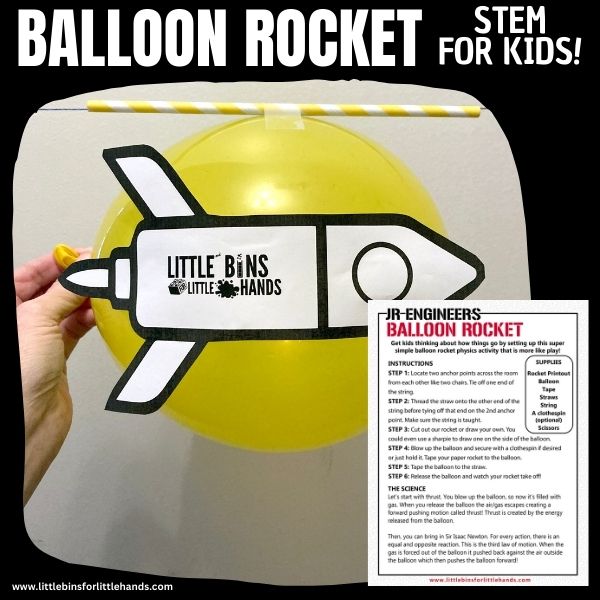
- Balloon Rocket: Release a balloon and watch it “rocket” along a string to demonstrate how air pressure changes create movement.
- Balloon In A Jar Experiment: Explore how changes in air pressure can cause a balloon to get pulled into a jar!
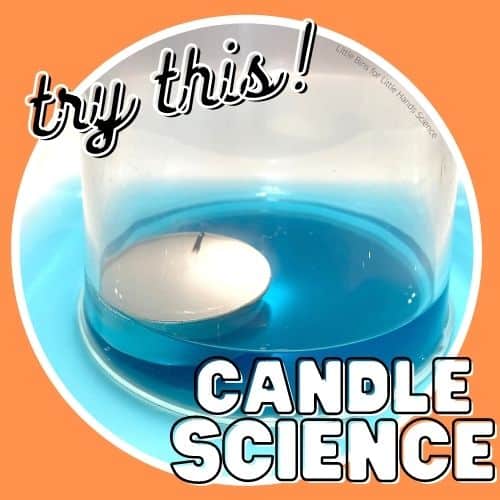
- Rising Water Experiment: Place a burning candle in the water and watch what happens to the water. A fun way to explore how heat affects air pressure.
- Tea Bag Rocket (Thermal Expansion): This experiment uses a hollow tea bag to demonstrate thermal expansion. When lit on fire, it rises due to the expansion of air inside.
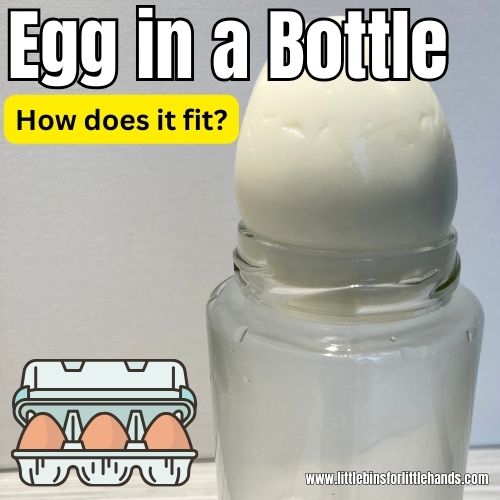
- Egg in a Bottle Experiment: In this experiment, a hard-boiled egg is sucked into a bottle using the power of air pressure.
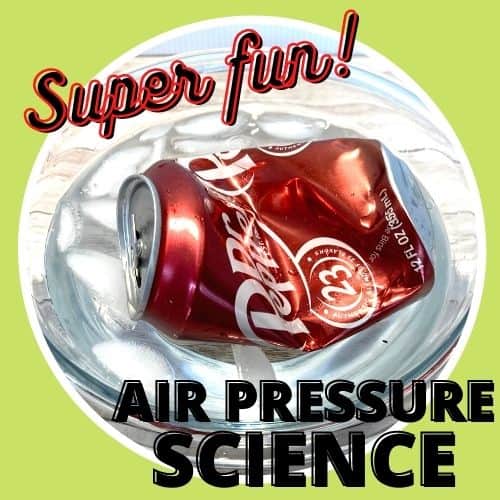
- Can Crusher Experiment: Observe how rapid cooling reduces air pressure inside a heated can, causing it to collapse under external air pressure.
- Potato Straw Experiment: Explore how a weak paper straw can become strong enough to puncture a potato using air pressure and forces.


Helpful Science Resources
Here are a few resources to help you introduce science more effectively to your kids or students and feel confident presenting materials. You’ll find helpful free printables throughout.
- Printable Science Project Pack 👇
- Best Science Practices (as it relates to the scientific method)
- Science Vocabulary
- All About Scientists
- Free Science Worksheets
- DIY Science Kits
- Science Tools for Kids
- Scientific Method for Kids
- Citizen Science Guide
- Join us in the Club