
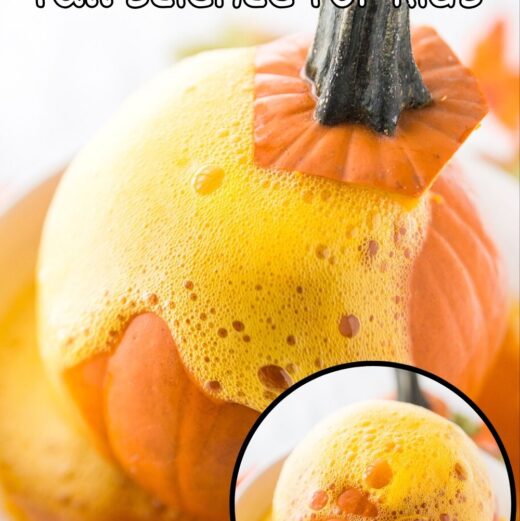
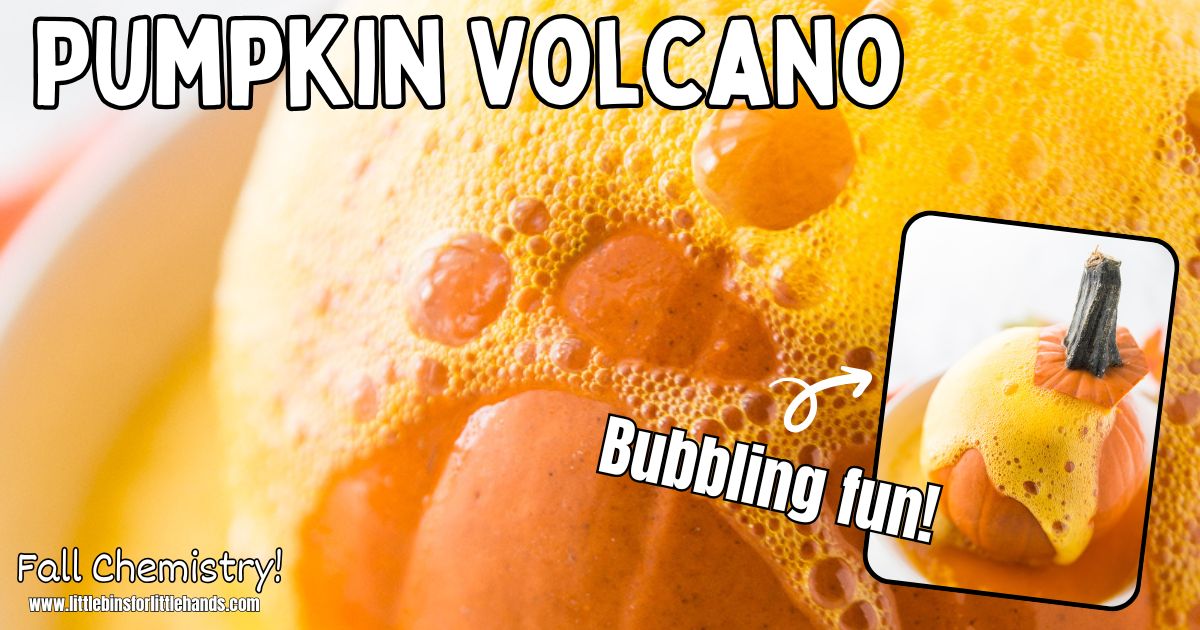
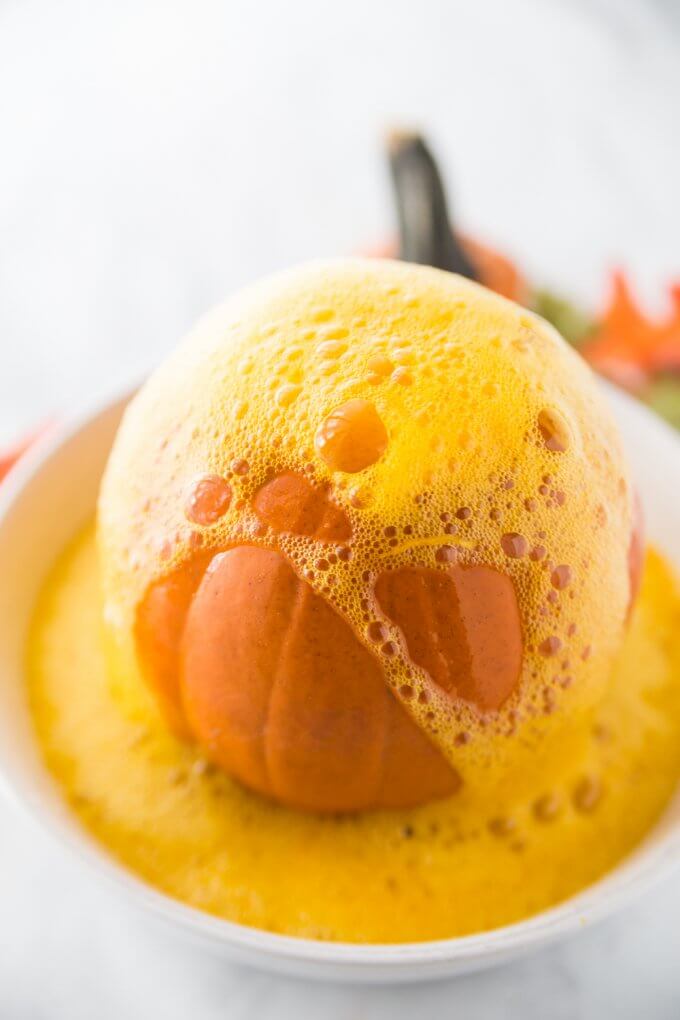
Turn a pumpkin into a bubbling pumpkin volcano experiment with baking soda and vinegar! This easy fall science activity uses a simple acid-base reaction to produce carbon dioxide gas and a foamy eruption.
It’s a fun way to explore chemical reactions during a pumpkin-themed fall science lesson or Halloween STEM activity using just a few common supplies.
Field: Chemistry
Grades: K–5
Concepts: Chemical Reactions, Acids and Bases, Gas Formation, States of Matter, Observation
Pumpkin Volcano Experiment
This pumpkin volcano puts a seasonal twist on the classic baking soda and vinegar experiment.
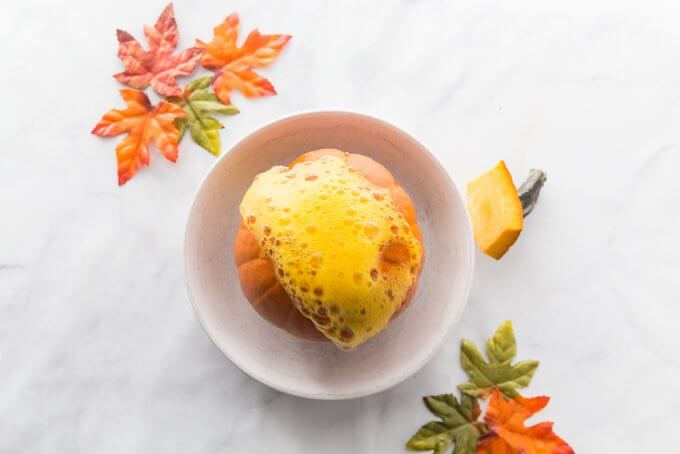
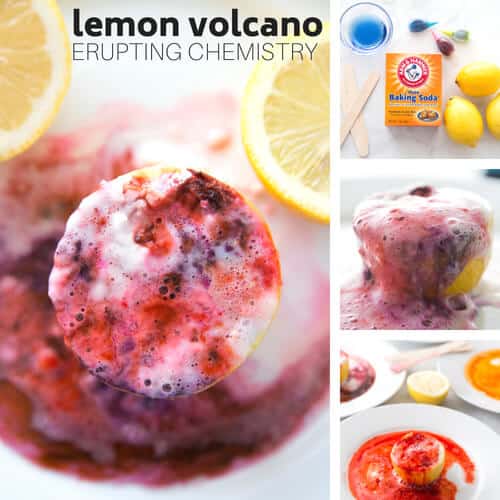
When baking soda and vinegar mix, they react and produce carbon dioxide gas. The gas creates bubbles that push the liquid upward and out of the pumpkin.
🔎 Add a little dish soap and the bubbles become trapped in a thicker foam, creating an extra-frothy pumpkin eruption.
💡 Want to compare this experiment with actual volcano science? Explore our Volcano Facts and Science Guide.
Supplies
- 1 small pumpkin
- ¼ cup baking soda
- ½–1 cup vinegar
- Dish soap, optional
- Food coloring, optional
- Spoon
- Knife for adult use only
- Large tray or pie dish
Tip: Put your pumpkin in a tray before starting. The reaction can overflow quickly!kly!
Pumpkin Volcano Instructions
Step 1: Have an adult cut the top off the pumpkin and scoop out the pulp and seeds.
💡 Save the seeds for another pumpkin activity, or use the pumpkin insides for a pumpkin investigation.
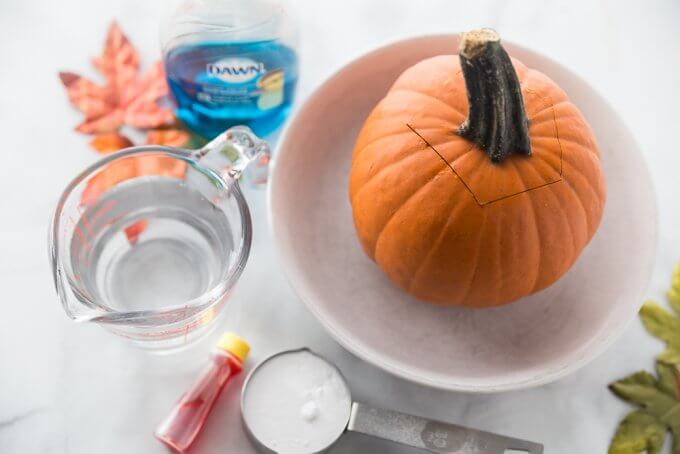
Step 2: Add about ¼ cup of baking soda to the hollow center of the pumpkin.
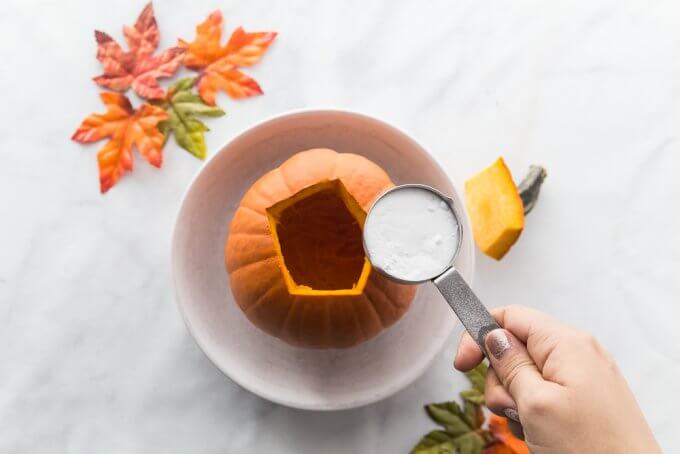
Step 3: Add a squirt of dish soap for a thicker, foamier eruption.
Step 4: Add a few drops of food coloring to the pumpkin or mix it into the vinegar.
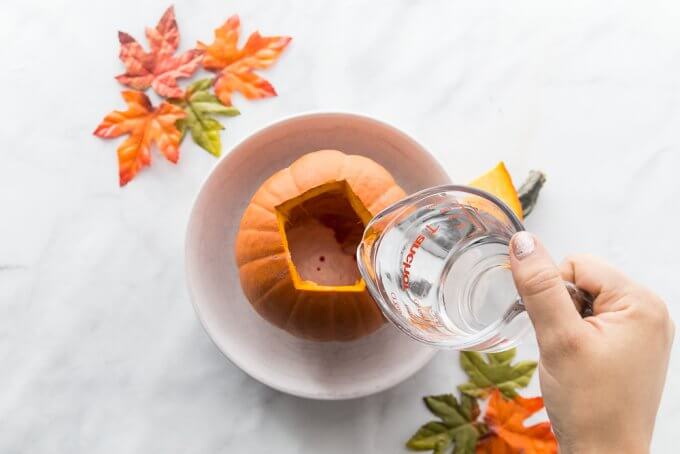
Step 5: Slowly pour the vinegar into the pumpkin and watch the bubbles rise and spill over the sides.
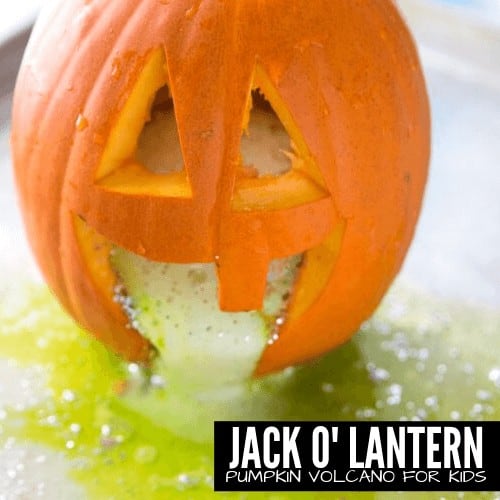
💡 Try a Halloween version: Carve a Jack-O’-Lantern face first and let the foamy eruption flow through the eyes and mouth.
The Science Behind a Pumpkin Volcano
This pumpkin volcano demonstrates an acid-base chemical reaction.
- Baking soda is sodium bicarbonate, a base.
- Vinegar contains acetic acid.
When they combine, a chemical reaction produces several new substances, including carbon dioxide gas. The carbon dioxide forms the bubbles you see during the eruption. Dish soap does not cause the chemical reaction. Instead, it traps the carbon dioxide bubbles and creates lots of foam.
This experiment lets kids observe:
- Changes that happen when substances are mixed
- A chemical reaction
- Gas formation
- Solids, liquids, and gases
- Cause and effect
Does This Work Like a Real Volcano?
Not exactly. A baking soda and vinegar volcano is a useful way to visualize an eruption, but real volcanic eruptions involve molten rock, dissolved gases, heat, and pressure inside Earth.
🔎 Use this activity to introduce chemical reactions, then explore how real volcanoes work to compare the two.
💡 That comparison makes a great science discussion!
Guiding Questions
Encourage kids to make observations and predictions as they experiment.
- What happens when the vinegar touches the baking soda?
- What is creating the bubbles?
- What happens when you add dish soap?
- Does more baking soda change the eruption?
- Does more vinegar change what happens?
- What happens if you repeat the reaction?
- How is this eruption different from a real volcano?
💡 For older kids, change one variable at a time—such as the amount of baking soda, vinegar, or dish soap—and compare what happens. Observe and record results in a science journal!
More Pumpkin Science Activities
Keep using your pumpkins for hands-on fall science.
- Pumpkin Investigation – Examine pumpkin pulp, seeds, textures, and other observable features.
- Pumpkin Oobleck – Explore a non-Newtonian fluid inside a pumpkin.
- Pumpkin Slime – Use a real pumpkin for a seasonal polymer experiment.
- Pumpkin Decomposition – Observe how a pumpkin changes as it breaks down.
- Pumpkin Science Experiments – Find even more pumpkin chemistry, life science, physics, and STEM activities.
[3-IMAGE GALLERY: Pumpkin Investigation | Pumpkin Oobleck | Pumpkin Decomposition]
I like these links better here than Life Cycle + Rotting Pumpkin Jack + Apple Volcano. They keep this page connected to hands-on pumpkin science, while the Volcano Guide already handles the broader volcano cluster.
Free Pumpkin STEM Starter Guide
Want more pumpkin science and STEM ideas?
Grab our free Pumpkin STEM Starter Guide with hands-on science ideas, a pumpkin decomposition investigation, science planning pages, and pumpkin engineering challenges.
👉 Get the Free Pumpkin STEM Starter Guide
Pumpkin Volcano FAQ
Why does a pumpkin volcano erupt?
Baking soda and vinegar react and produce carbon dioxide gas. The gas forms bubbles that push the liquid upward and out of the pumpkin.
Do I need dish soap?
No. The experiment works without it, but dish soap traps the gas bubbles and creates thicker foam.
Can I do the pumpkin volcano more than once?
Yes. Add more baking soda and vinegar to repeat the reaction. You may want to rinse out excess foam between trials if you are comparing results.
What size pumpkin works best?
A small pumpkin is usually easiest because it requires fewer ingredients and fits easily inside a tray.
Is a baking soda volcano the same as a real volcano?
No. This experiment demonstrates a chemical reaction and gas formation. Real volcanoes erupt because of geological processes involving magma, gases, heat, and pressure inside Earth.
Can preschoolers do a pumpkin volcano?
Yes, with adult help. Younger kids can make predictions, pour ingredients, watch the reaction, and describe what they observe.
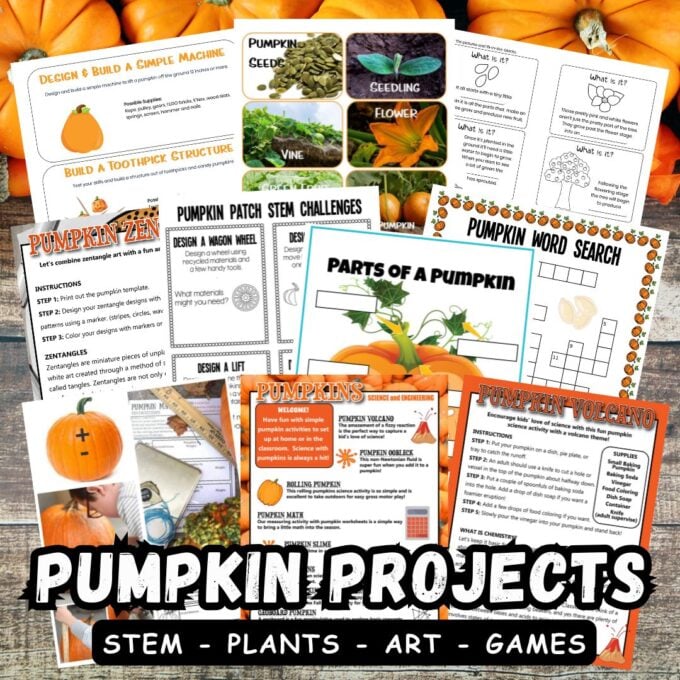
Printable Pumpkin STEM Pack
Want your pumpkin science, STEM, math, and art activities organized?
Our Pumpkin STEM Pack includes 100+ pages of pumpkin-themed science, engineering, early math, and hands-on activities. It’s a great way to build a complete pumpkin theme without needing a Halloween focus.
👉 Explore the Printable Pumpkin STEM Pack
More to Explore
Pumpkin Science | Fall Science | Volcano Science | Pumpkin STEM | Baking Soda Experiments

Hello,
Just wondering why do you add the dish soap?? My mom is a science teacher and I have never seen her add dish soap to her volcanoes for class. Thanks for posting this fun idea. My neice will love it!!
Add it after baking soda and before vinegar. Or you can gently mix it into the vinegar. You don’t need it as the reaction happens with the other two ingredients. The soap makes it really froth!
Appreciation to my father who informed me on the topic of
this blog, this website is truly awesome.
Ohhh never seen this one before! Bet my boys would LOVE to try it with a pumpkin 🙂 x
My name is Lesli Richards and I am the author of The Homegrown Preschooler…I am writing some content for Old Schoolhouse Magazine’s Teacher website, and I’d love permission to use one of your photos (the one of the pumpkins at the top) and link up to your blog. Could you please consider it and email me and let me know? Blessings,
Lesli Richards
Talk about a great way to kids involved! (especially those that may scrunch their nose at slimy seeds–they won’t be able to turn away from this!) Another great idea from you! Thanks for sharing at Magic Moments Monday.
We have a few pumpkins begging to be cut open. This looks like such a fun way to put them to use! Thanks for sharing at Discover & Explore. I’m featuring this post today.
I LOVE IT! I know both my girls would really love this and want me to do it over and over again! Thanks so much for sharing on We Made That Wednesday!
Oh yes! I am sure we will be doing it again. He was eyeing the huge pumpkin outside. Could you imagine what that would do?!
Hi there! I found you on Mom’s Library link up. This is way too cool! My kiddo is 7 and will just love this. Never would have thought of it, thank you. Pinned! 🙂
Thank you! So glad you found us. I imagine it will be a hit for years to come!
This is awesome!! We love vinegar/baking soda science!!