
Are you ready to start an exciting scientific journey right in the backyard? Being a scientist doesn’t always mean working in a lab. Sometimes, all it takes is keen observation and curiosity to uncover the wonders around us! Today, we’re exploring collecting activities for kids — a fantastic way to be a real-life explorer!

The Science of Collecting: Observation in Action
Science collecting projects allow kids to explore their environment and practice observation skills. When you collect objects like rocks, leaves, seashells, or even fossils, you’re doing the work of a scientist like Mary Anning.
💡 The key to being a successful collector is organizing and analyzing what you find.
For example, scientists often categorize objects based on their size, shape, texture, or material — and that’s precisely what you’ll be doing as you explore nature!
Grade-Level Recommendation: This STEM activity is perfect for grades 1-5. Younger kids will love observing and gathering objects, while older kids can take the exploration further by comparing and documenting their findings in more detail.
Supplies You’ll Need 🔍
Here are some essential tools to help with your collecting journey:
- Camera or video camera to document your collection
- Tweezers for picking up delicate objects
- Glue and tape for securing items
- Insect net for safely catching bugs
- Magnifying glass to inspect items closely
- Notebook and pencils for writing observations
- Ziploc bags or envelopes for storing smaller objects
- Recycled boxes and jars with lids to organize your collection

How To Be a Collector! Hands-on Science for Young Explorers 🌿
💡Learn more about material properties here.
Step 1: Observation
Look around your environment. What objects capture your interest? Use your observation skills to notice small details — color, shape, or texture. Try to observe things during everyday activities, like walking to school or at special times, like during a hike or on a trip.
Step 2: Collection
Now it’s time to collect items that intrigue you! Whether it’s pinecones, seashells, or leaves, your collection can be built from objects you find in nature. Set a goal to collect a certain number of items each day — for example, aim to collect 20 small items during each outing.
Step 3: Study Your Objects
Once you’ve collected your items, study them carefully. Use your magnifying glass to inspect each object, taking note of size, color, texture, and weight. Then, sort them into categories such as “smooth” or “rough,” or by natural versus man-made. Document your findings in your notebook — be sure to add details like the date, time, and location of where each item was found.


Dive Deeper into the Science
In nature collections for kids, scientists use classification to understand patterns in their environment. Is one type of object more common in certain places? What differences do you notice between natural and man-made items? Studying these details helps you learn how scientists make discoveries.
Extension Activities:
Here are some additional activities from the printables that will take your collecting to the next level:
- Map Your Collection! Draw a map showing where you found each item. This adds another layer of observation, helping you see patterns where certain items are located. Did you find more shells near water or more leaves under trees?
- Sort by Characteristics! Try re-sorting your collection in different ways. Can you group items by size, color, material, or texture? Look at your objects from new perspectives to see details you might have missed.
- Notebook Exploration! Use your notebook to record specific details about each item. Where did you find it? What time of day was it? Was the object smooth, rough, heavy, or light? These observations are the building blocks of scientific discovery.
Related Collecting Activities:
Want to continue your adventure with more outdoor exploration for kids? Try these science projects, which will help you hone your observation and collecting skills:
- Rock Identification Station: Set up a station with a guidebook or printout to help you identify the types of rocks you’ve collected. Compare their textures, colors, and weight to learn about local geology.
- Nature Journaling: Combine collecting with journaling by sketching or pressing flowers and leaves from your collection. Create beautiful pages that showcase your findings and document your observations.
Free Printable Be A Collector Pack
Now it’s time to start your collecting activity for kids! These hands-on science activities make you think like a scientist and see the world differently. Find the free Be A Collector Pack here.

Related Activities
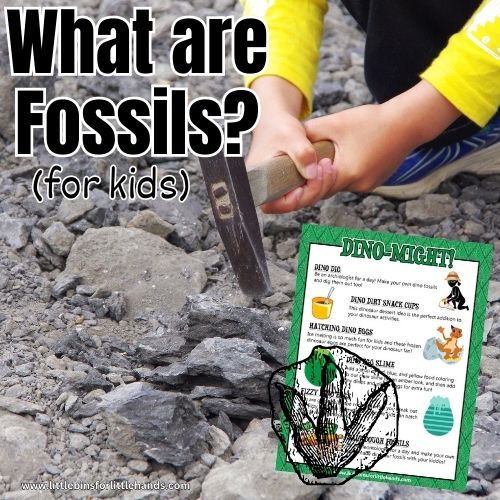
Explore geology, study nature, and learn about fossils!

Helpful Science Resources
Here are a few resources to help you introduce science more effectively to your kids or students and feel confident presenting materials. You’ll find helpful free printables throughout.
- Printable Science Project Pack
- Best Science Practices (as it relates to the scientific method)
- Science Vocabulary
- All About Scientists
- Free Science Worksheets
- DIY Science Kits
- Science Tools for Kids
- Scientific Method for Kids
- Citizen Science Guide
- Join us in the Club