
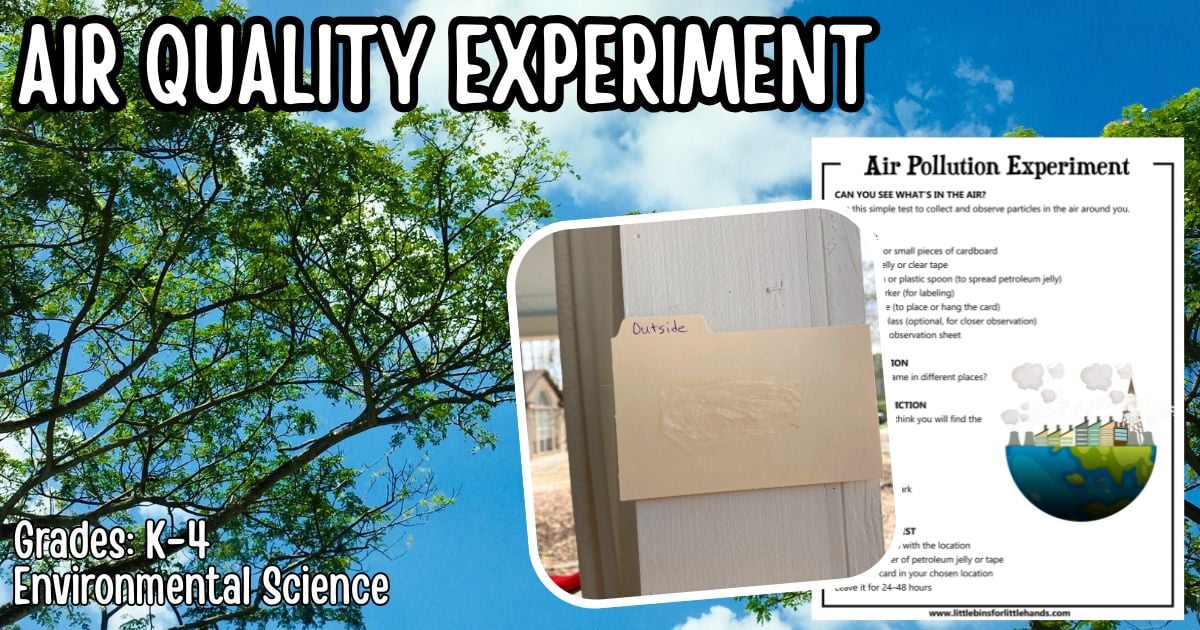
Can you see air pollution? Not always—but you can test it! This simple air pollution experiment for kids helps you collect and observe airborne particles using simple materials. It’s a great way to explore environmental science with a hands-on activity that works in the classroom or at home.
👉 This experiment also makes a perfect introduction to your air pollution activities and Earth Day lessons.
The Science Behind It
Field: Earth Science—Environmental Science
Grades: K–4
Concepts Explored: Air contains particles we can’t always see; pollution comes from natural and human sources; air quality affects living things; particles can be collected and observed.
Learning Goal
Kids will understand that air contains tiny particles and that pollution can be observed and compared in different environments.
Supplies Needed
- Index cards or cardstock
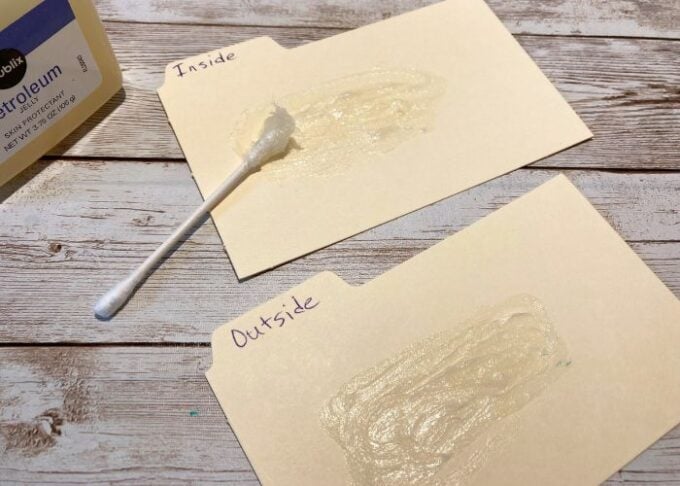
- Petroleum jelly (or clear tape)
- String or tape
- Marker
- Magnifying glass (optional)
How To Do the Air Pollution Experiment
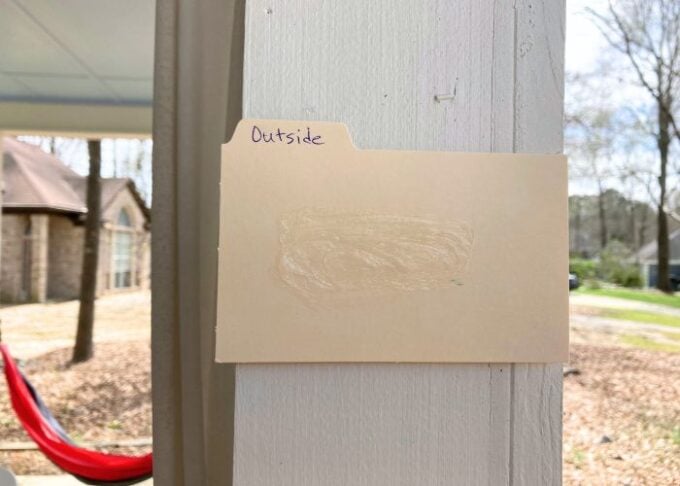
- Label your card with the location (indoors, outdoors, near a road, etc.).
- Spread a thin layer of petroleum jelly on one side of the card.
- Place or hang the card in your chosen location.
- Leave it for 24–48 hours.
- Collect the card and observe the surface closely.
- Use a magnifying glass to look for dust and tiny particles.
💡 You may see small dark specks, dust, or tiny fibers collected on the surface.
What’s Happening?
Some particles are so small that they are called particulate matter. These tiny particles can travel through the air and affect air quality even when we cannot see them.
Air may look clean, but it contains tiny particles called pollutants. These can come from cars, factories, smoke, dust, and even natural sources like pollen.
In this experiment, the sticky surface traps particles floating in the air. Over time, you can see how much material collects—even though you couldn’t see it before!
Different locations may have different amounts of pollution. Areas near roads or busy spaces often collect more particles than quieter areas.
Grab the Free Air Pollution Experiment Printable
Make this activity even easier with printable worksheets that guide students through:
- Setting up the experiment
- Testing and recording results
👉 Grab your Air Quality Challenge printable here
How to Turn This Into a Simple Lesson
1. Introduce the Topic
Ask: What is air? Can we see it? Do you think air can be dirty?
2. Make a Prediction
Where do you think you will find the most particles?
3. Do the Experiment
Place cards in different locations and observe.
4. Compare Results
Which location had the most particles?
5. Discuss Real Life Connections
Talk about cars, pollution, and ways to keep air clean.
Classroom Tips
- Works in small groups or stations
- Prep materials ahead of time
- Use as part of an Earth Day lesson
Discussion Questions
- What did you notice on your card?
- Which location had the most particles? Why?
- Do you think all air looks clean?
- How can we help keep air clean?
Make It a Science Project
Take this experiment further by testing:
- Indoor vs outdoor air
- Near a road vs backyard
- Different times of day
- Different lengths of time
👉 This is a fantastic opportunity to practice the scientific method. Record your results and compare your data. Learn more about the scientific method here.
More Air Facts for Kids
- Air is made of gases like oxygen that we need to breathe.
- Some air pollution is visible, but most is invisible.
- Wind can move pollution from one place to another.
- Plants help clean the air.
Extend the Learning
Try building a filter to clean the air:
👉 Check out our Air Filter STEM Challenge
Or explore more hands-on activities:
👉 Air Pollution Activities for Kids
Air Pollution FAQ
What is air pollution for kids?
Air pollution is when harmful particles and gases enter the air and make it dirty or unsafe.
Can you really see air pollution?
Sometimes, but often it is invisible. This experiment helps make it visible.
How does this experiment work?
The sticky surface traps particles from the air so you can observe them.
How long should the experiment run?
24–48 hours works best, but you can test longer.
Related Science Activities
- Environmental Science Activities for Kids
- Oil Spill Cleanup Experiment
- Earth Day Science Activities
- Water Conservation Projects
- Land Pollution Activities for Kids
Want Everything Organized for You?
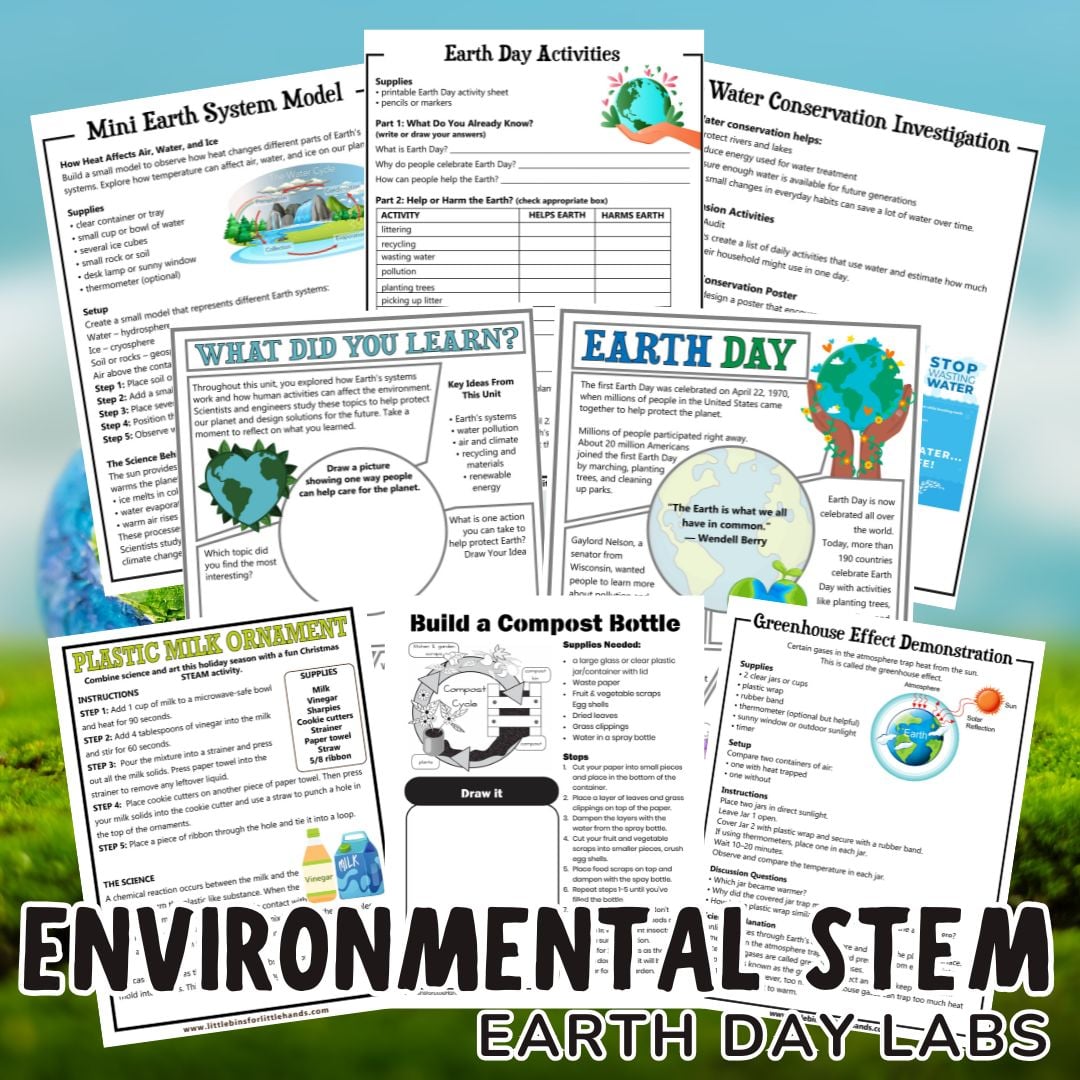
Planning Environmental or Earth Day lessons doesn’t have to mean jumping between 20 different tabs. Our Environmental STEM Printable Pack brings everything together in one ready-to-use resource, with vocab, NGSS questions, and quick-start tips.