
What happens to trash after we throw it away—and where does it go?
Land pollution is one of the easiest environmental topics for kids to see and understand. From food scraps to plastic waste, land pollution illustrates how different types of trash affect the environment.
In this guide, you’ll find simple, hands-on activities that help kids explore what happens to waste and how land pollution affects the world around them.
These activities pair well with our full pollution activities for kids guide.
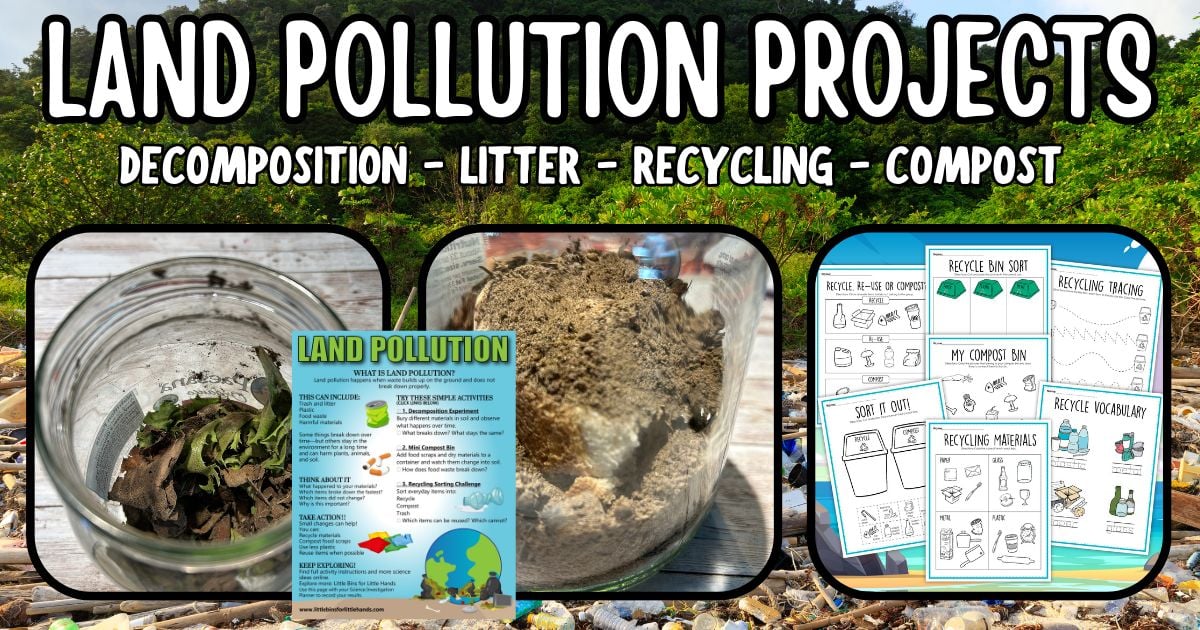
Land Pollution Activities at a Glance
- Best Ages: K–4
- Prep Time: Low
- Mess Level: Low to Medium
- Focus: Decomposition, recycling, composting, environmental impact
What Is Land Pollution?
Land pollution happens when waste collects on the ground and does not break down properly. Much of this waste ends up in landfills, where it can stay for many years.
This includes:
- Trash and litter
- Plastic materials
- Food waste
- Chemicals and harmful substances
Some of this waste can break down naturally, but other materials can stay in the environment for a very long time.
Over time, this buildup can:
- Damage soil
- Affect plant growth
- Harm animals
- Spread pollution into water systems
Why Teach Kids About Land Pollution?
Land pollution is something kids can easily see and connect with in their everyday lives.
These activities help kids:
- Understand what happens to trash after it is thrown away
- Learn the difference between materials that break down and those that do not
- Explore how waste impacts the environment
- Think about ways to reduce pollution
👉 This makes it a great topic for both classroom lessons and real-world learning.
Hands-On Land Pollution Activities
Start with one activity or combine a few to build a simple unit.
1. Decomposition Experiment (What Happens to Trash?)
Start here!
In this activity, kids bury different materials in soil and observe what happens over time.
👉 Try this decomposition experiment for kids here
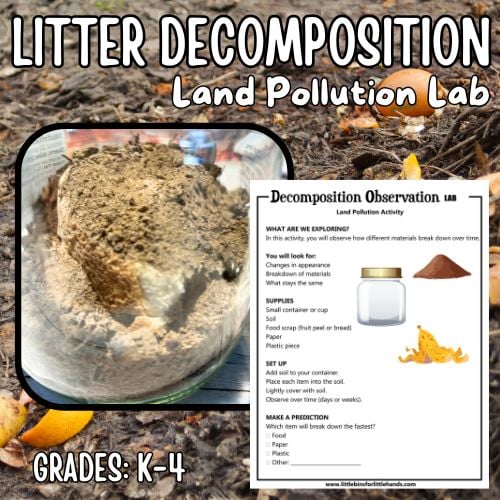
What kids explore:
- Which materials break down over time
- Which materials stay the same
- Why some waste builds up in the environment
🔎 This is the best introduction to land pollution because it clearly shows that not all trash disappears.
2. Mini Compost Bin (Turn Food Scraps Into Soil)
Take decomposition one step further by turning food scraps into soil.
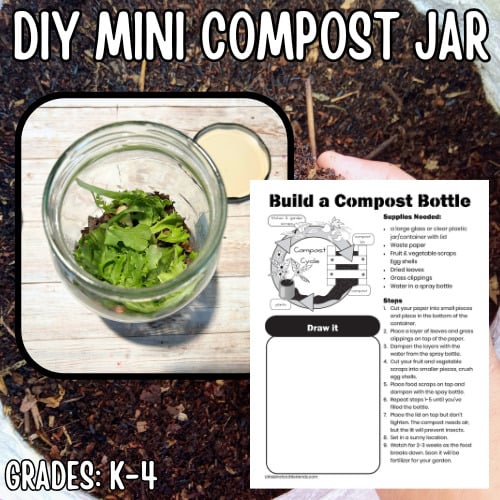
Kids create a small compost bin using a container or jar and observe how organic materials break down and change over time.
👉 Try the mini compost bin activity here
What kids explore:
- How composting speeds up decomposition
- The difference between food waste and trash
- How compost helps plants grow
🔎 This activity introduces a real-world solution to land pollution.
3. Recycling Sorting Challenge
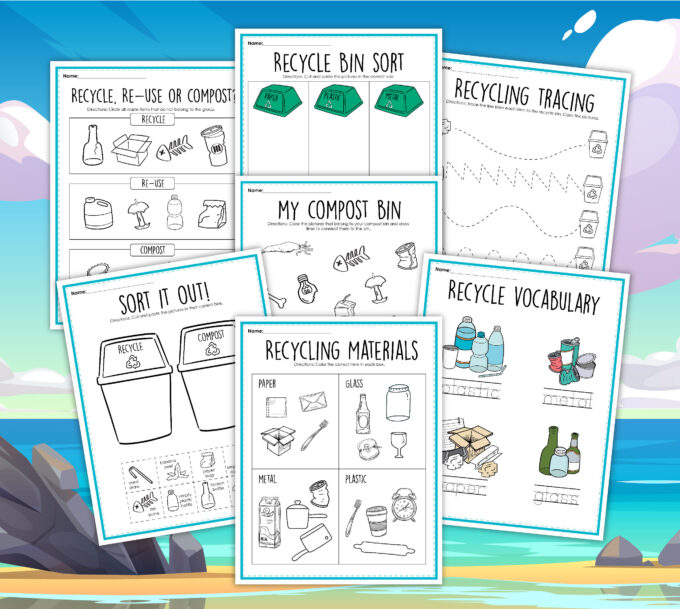
Help kids understand how waste can be reduced through sorting and recycling.
Provide a mix of materials such as paper, plastic, cardboard, and food scraps. Have kids sort them into categories:
- Recycle
- Compost
- Trash
- (Optional) Reuse
👉 Grab the recycling activity pack here
Extend the activity:
- Ask why each item belongs in a category
- Discuss what happens if items are sorted incorrectly
- Identify common household items
What kids explore:
- How recycling reduces waste
- Why sorting materials matters
- How small actions can reduce land pollution
🔎 This activity connects directly to everyday choices kids can make.
4. Optional Extension: Simple Landfill Model
Create a basic model to illustrate how trash accumulates over time. You can add to it weekly, just like garbage is collected weekly and brought to a landfill.
Use a clear container and layer:
- Soil
- Paper
- Plastic
Observe how materials stack and remain over time.
What kids explore:
- How landfills store waste in layers
- Why space becomes limited
- Why reducing waste is important
🔎 This is a helpful visual, but not required for a complete lesson.
Free Land Pollution Starter Kit
Make it easy to explore land pollution with kids.
This simple starter kit includes:
- A quick guide with easy activity ideas
- A reusable science planner for experiments
Perfect for:
- Decomposition experiments
- Compost activities
- Recycling investigations
👉 Download your free Land Pollution Ideas Guides here
How to Teach Land Pollution (Simple Lesson Plan for Kids)
Use these steps to turn the activities above into a simple, ready-to-use lesson.
Lesson Overview
- Time: 30–45 minutes
- Best Ages: K–4
- Focus: Understanding what happens to waste and how it impacts the environment
Step 1: Start With a Question (5 minutes)
Ask:
💡 What happens to trash after we throw it away?
Let kids share ideas such as:
- “It goes in the trash”
- “The garbage truck takes it away”
- “It disappears”
🔎 This helps reveal prior understanding.
Step 2: Explore With an Activity (15–20 minutes)
Start with the decomposition experiment.
Kids will:
- Bury materials in soil
- Observe changes over time
🔎 Key idea: Some materials break down, and some do not.
Step 3: Observe and Discuss (10 minutes)
Ask:
- Which materials changed the most?
- Which stayed the same?
- What surprised you?
Encourage kids to describe what they see and compare results.
Step 4: Connect to Real Life (5–10 minutes)
Talk about:
- Landfills (where trash goes)
- Recycling (what can be reused)
- Composting (how food waste can turn into soil)
🔎 This is where the concept becomes meaningful.
Step 5: Take Action (Optional Extension)
Have kids:
- Try a recycling challenge
- Create a “reduce waste” poster
- Share one way to reduce trash at home
🔎 This builds real-world connection.
Teaching Tips
- Keep vocabulary simple (break down, waste, soil)
- Focus on observation over memorization
- Let kids share ideas and ask questions
- Revisit experiments over time
The Science Behind Land Pollution
Scientists study decomposition and waste using environmental science to understand how pollution affects ecosystems and soil health.
Some materials are biodegradable, which means they break down naturally over time.
👉 Learn more about natural vs man made materials here
Examples:
- Food scraps
- Leaves
- Paper
Other materials are non-biodegradable, which means they do not break down easily.
Examples:
- Plastic
- Metal
- Glass
When non-biodegradable waste accumulates, it can persist in the environment for a long time and contribute to land pollution.
Decomposition helps recycle nutrients back into the soil, supporting plant growth and healthy ecosystems. This process is part of the carbon cycle
Composting is one way humans can reduce waste and support this natural process.
👉 Explore the carbon cycle for kids here
More Environmental Science Activities
Build a full unit with:
👉 Explore all environmental topics in our environmental science activities for kids hub
Reduce, Reuse, Recycle STEM Challenges
Looking for more ways to explore land pollution through hands-on learning?
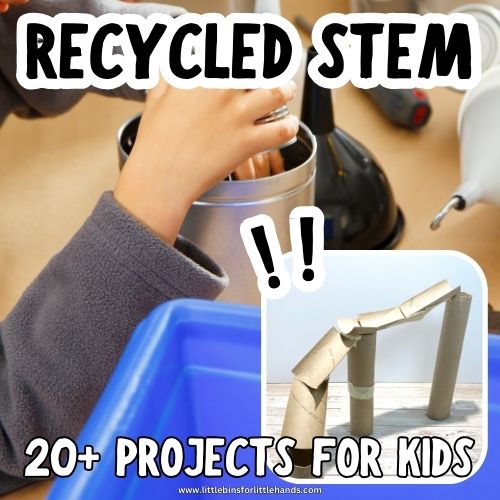
Reusing materials is one of the best ways to reduce waste and keep trash out of landfills. These recycled STEM challenges encourage kids to think like engineers while using everyday items that might otherwise be thrown away.
👉 Explore our full collection of recycled STEM projects for kids
Try challenges like:
- Build a bridge using cardboard and paper tubes
- Design a container from recycled materials
- Create a simple machine using household items
What kids learn:
- How to reuse materials instead of throwing them away
- Problem-solving and engineering design skills
- How small changes can help reduce land pollution
🔎 These activities are a great extension once kids understand how waste impacts the environment.
Land Pollution FAQ for Kids
What is land pollution in simple terms?
Land pollution occurs when waste accumulates on the ground and does not break down properly. This can harm soil, plants, animals, and the environment.
What are examples of land pollution?
Common examples include litter, plastic waste, landfills, and harmful chemicals in the soil.
Why is land pollution a problem?
Land pollution can damage soil, prevent plants from growing, harm animals, and spread pollution to water sources.
How can kids help reduce land pollution?
Kids can help by reducing waste, recycling materials, composting food scraps, and making thoughtful choices about what they throw away.
How long does trash take to decompose?
Different materials break down at different speeds. Food scraps may decompose in weeks, while plastic can take hundreds of years.
Want Everything Organized for You?
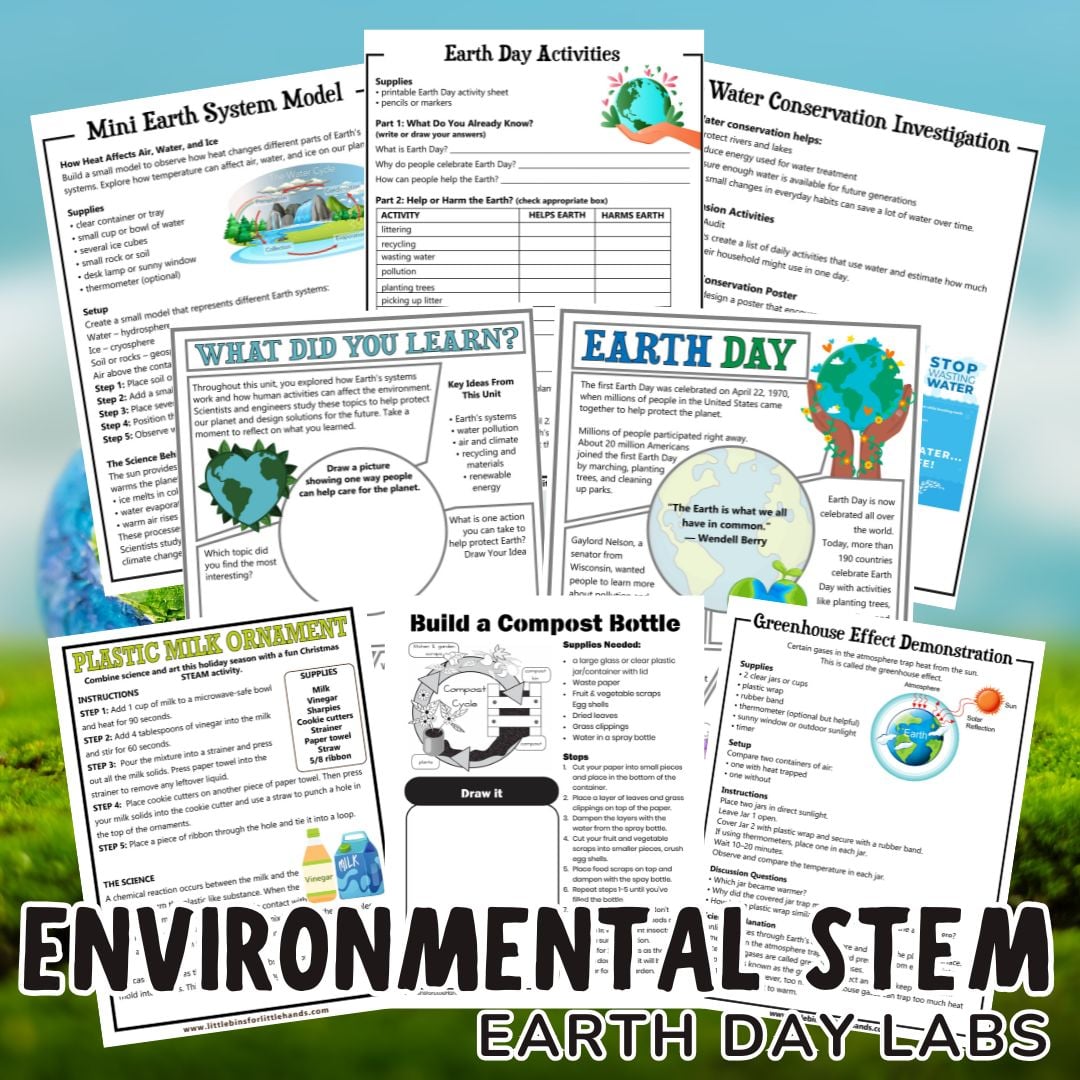
Planning Environmental or Earth Day lessons doesn’t have to mean jumping between 20 different tabs. Our Environmental STEM Printable Pack brings everything together in one ready-to-use resource, with vocab, NGSS questions, and quick-start tips.