

Looking for hands-on Earth Day STEM activities that go beyond simple crafts? Celebrate Earth Day on April 22 with meaningful science experiments and environmental engineering challenges that help kids explore recycling, pollution, renewable energy, and sustainability.
These Earth Day STEM projects are perfect for preschool and elementary students (K–5) and use simple materials — many of them recycled — to encourage real-world problem-solving.
👉 For general art activities and printables, visit our full Earth Day Activities hub.
Field of Study
Field: Environmental Science & Engineering
Grades: K–5
Concepts Explored: Pollution, recycling, renewable energy, plant science, sustainability, simple machines, and the Engineering Design Process.
Earth Day Science Experiments
These Earth Day science activities allow students to observe environmental cause-and-effect relationships in action.
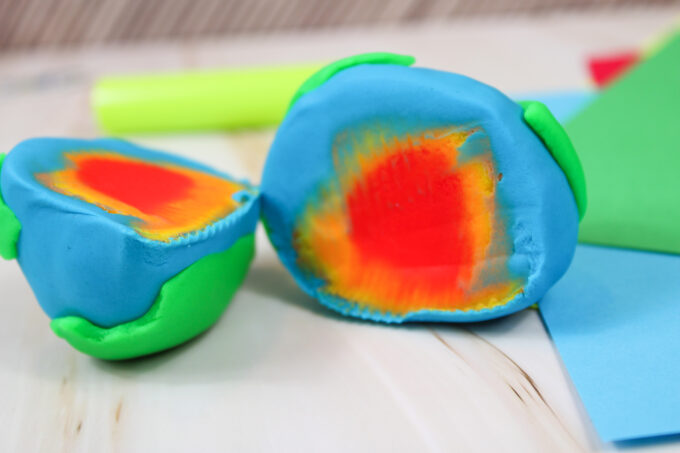
- Playdough Earth Model
Represent the layers of the Earth with playdough, and then take a cross-section. - Acid Rain Demonstration
Investigate how acidic pollution affects plants using flowers and vinegar. - Stormwater Runoff Lab
Model how rain carries pollutants into rivers and waterways. - Oil Spill Cleanup Simulation
Test different cleanup methods while discussing environmental impact. - Make a Water Filter
Design and test a filtration system to clean “dirty” water. - Shells in Vinegar (Ocean Acidification)
Explore how increasing acidity affects marine life. - Make Bioplastic or Casein Plastic from Milk
Transform different materials into a plastic-like material through a chemical reaction. Discuss sustainable material alternatives and environmental chemistry. - Carbon Footprint Activity
Help students explore how daily habits affect energy use and emissions. - Solar Energy Investigation (Extension)
Explore how sunlight can be converted into heat energy by designing a simple solar oven or testing material absorption. - Build a Mini Greenhouse – Reuse plastic bottles or containers to create a greenhouse.
- Water Pollution Cleanup Challenge – Explore ways to clean polluted water using hands-on engineering and environmental science
These investigations help students connect science concepts to real environmental issues.

Earth Day Engineering & STEM Challenges
Earth Day is also the perfect opportunity to introduce environmental engineering challenges that focus on sustainability and innovation.
Each activity can follow the Engineering Design Process:
Ask → Imagine → Plan → Create → Test → Improve
This structured approach encourages a growth mindset and critical thinking.
Earth Day STEM Challenge Ideas
- Build a Mini Greenhouse
Reuse plastic bottles or containers to create a greenhouse. Test which design retains heat best. - Wind-Powered Vehicle
Design a car powered only by wind. Experiment with blade shape and sail size. - Hand-Crank Winch
Construct a simple machine using recycled materials to lift a weight. - Recycled Birdhouse Design
Build a functional birdhouse using reused materials. - Design a Better Recycling Bin
Create a bin that encourages proper sorting and accessibility. - Reusable Shopping Bag Challenge
Test the strength and durability of a reusable bag made from fabric scraps. - Newspaper Engineering Challenge
Roll a newspaper into structural supports and build a tall tower. - Cardboard Marble Run
Design a gravity-powered system using paper tubes and boxes.
👉 These challenges reinforce sustainability while strengthening engineering thinking. For more year-round recycled building ideas, visit our Recycled STEM Projects page.
Why Earth Day STEM Matters
STEM-based Earth Day activities help students:
- Understand how pollution affects ecosystems
- Explore renewable energy solutions
- Apply the Engineering Design Process
- Practice measurement and data collection
- Develop environmental responsibility
Rather than just talking about conservation, students actively test solutions and observe outcomes.
Make It a Science Project
Many of these Earth Day STEM activities can easily be expanded into full science fair projects.
Students can:
- Test multiple greenhouse designs and measure temperature changes
- Compare different water filtration materials
- Measure wind-powered vehicle distance across trials
- Track seed growth under different conditions
- Compare biodegradable vs. non-biodegradable materials
Encourage students to use the scientific method:
- Form a hypothesis
- Identify variables
- Record data
- Graph results
- Draw conclusions
Earth Day STEM Facts for Kids
- Americans throw away about 4.9 pounds of trash per person per day.
- Plastic bags can take over 500 years to decompose.
- Wind and solar energy are renewable resources.
- Plants need warmth, water, sunlight, and air to grow.
👉 Use these facts to spark classroom discussion and inquiry. Add our Earth Day conversation starters for further discussion.
Earth Day STEM Activities FAQs
What are Earth Day STEM activities?
Earth Day STEM activities are science and engineering projects focused on environmental topics such as recycling, renewable energy, pollution, and sustainability. They encourage students to design solutions and test ideas using the Engineering Design Process.
What are simple Earth Day science experiments for kids?
Simple experiments include acid rain demonstrations, oil spill simulations, water filtration systems, bioplastic investigations, and mini greenhouse experiments using recycled materials.
What is a good Earth Day engineering challenge?
Examples include building a wind-powered vehicle, designing a better recycling bin, creating a mini greenhouse, or constructing a hand-crank winch from reused materials.
How are Earth Day STEM activities different from recycled STEM projects?
Earth Day STEM activities focus specifically on environmental science concepts and sustainability themes. Recycled STEM projects emphasize creative engineering builds using reused materials and can be used year-round.
What materials are needed for Earth Day STEM projects?
Most projects use common materials such as cardboard, paper rolls, plastic containers, rubber bands, string, aluminum foil, LEGO® bricks, soil, and seeds. Many activities intentionally incorporate recycled materials to reinforce sustainability.
Want Everything Organized for You?
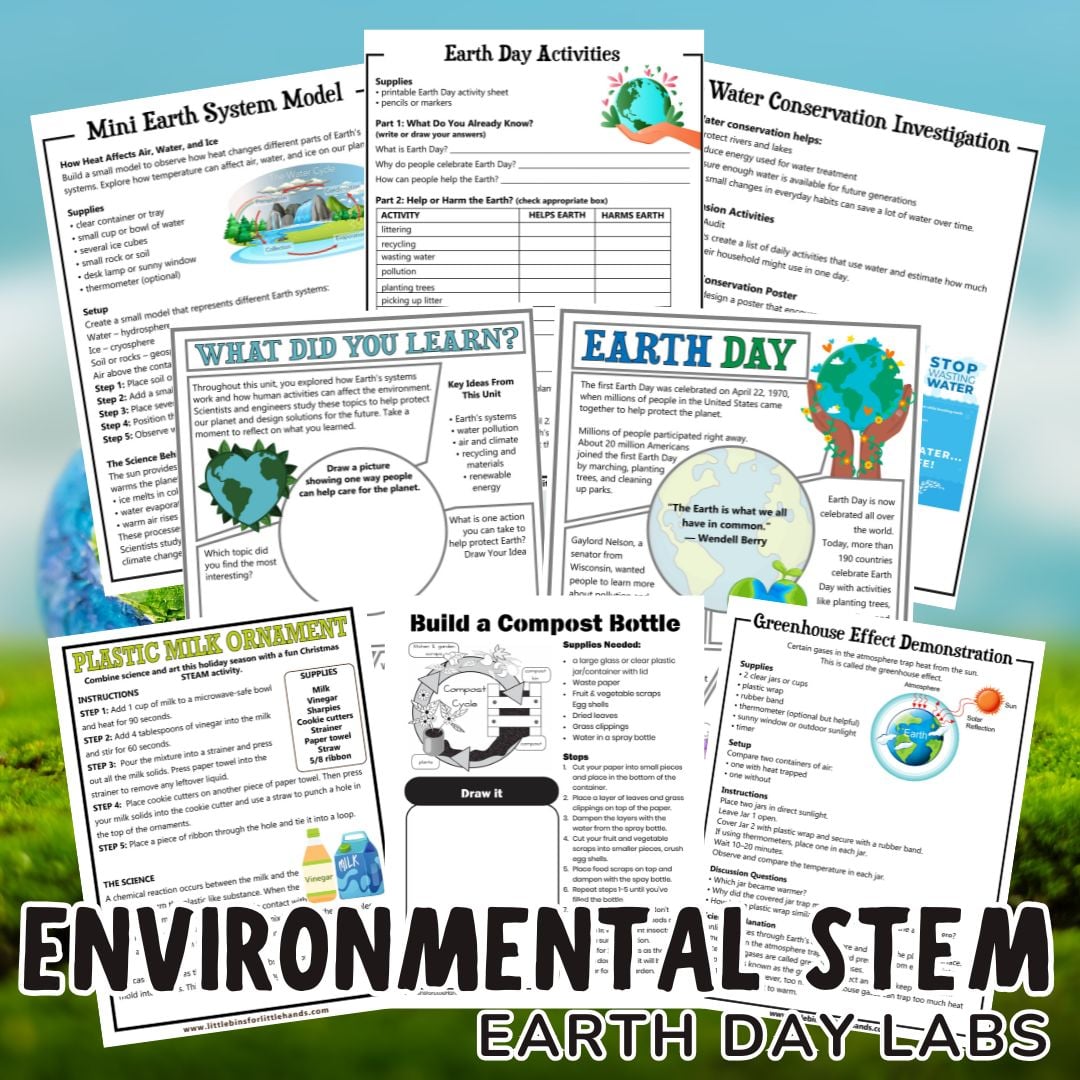
Planning Environmental or Earth Day lessons doesn’t have to mean jumping between 20 different tabs. Our Environmental STEM Printable Pack brings everything together in one ready-to-use resource, with vocab, NGSS questions, and quick-start tips.


I love these Ideas!
Thank you so much!