
Environmental science is one of the best ways for kids to connect science to the real world. These environmental science activities for kids are hands-on, engaging, and easy to use for grades K–4. From pollution experiments to renewable energy projects, kids will explore how the Earth works—and how we can take care of it.
Use these activities for:
- Classroom science lessons
- Homeschool learning
- STEM centers
- Earth Day and spring science themes
👉 Be sure to explore our Earth Day Activities Guide for even more ideas.

What is Environmental Science for Kids?
Environmental science helps kids understand how living and nonliving things interact. It combines Earth science, life science, and physical science to explore topics like water, air, soil, energy, and ecosystems.
Through hands-on activities, kids can observe changes, ask questions, and begin to understand how their actions impact the environment.
Environmental Science Activities by Topic
Start with any topic below or work through them as a complete unit. Each section focuses on a key environmental science concept to help build understanding step by step.
👉 Grab Your Free Environmental Science Starter Guide
Water Pollution & Human Impact
Water pollution happens when harmful substances enter rivers, lakes, and oceans. These activities help kids explore how pollution spreads, how it affects ecosystems, and how scientists test solutions to protect water.
- Carbon Footprint Worksheet (Grades 2–4)
- Oil Spill Experiment (Grades 2–4)
- Stormwater Runoff Demonstration (Grades 2–4)
- Acid Rain Experiment (Grades 2–4)
- Beach Erosion Experiment (Grades 2–4)
- Water Pollution Clean Up Challenge (Grades K–2)
- DIY Water Filter (Grades 2–4)
👉 Explore more of our water conservation activities here.
👉 Learn more about water pollution for kids here.

Earth Systems & Our Planet
Earth’s systems include land, water, air, and living things. These activities help kids see how everything is connected and how changes in one system can affect another.
- Ocean Floor Mapping (Marie Tharp Project) (Grades 2–4)
- Weather Tools (Grades 2–4)
- DIY Mini Greenhouse (Grades K–4)
- Sun vs. Shade Plant Growth (Grades K–2)
- Soil Investigation (Grades K-4)
👉 Explore more Earth’s Systems Activities here

Renewable Energy Activities for Kids
Renewable energy comes from natural sources like sunlight, wind, and water. Kids can explore how energy is created and how we can use these resources in ways that reduce environmental impact.
- Solar Oven (Grades 2–4)
- Water Wheel (Grades K–2)
- Wind Energy Projects (Grades K–4)
- Insulation Experiment (Grades 2–4)
👉 Find more renewable energy activities and free printables here.

Recycling & Sustainability Activities
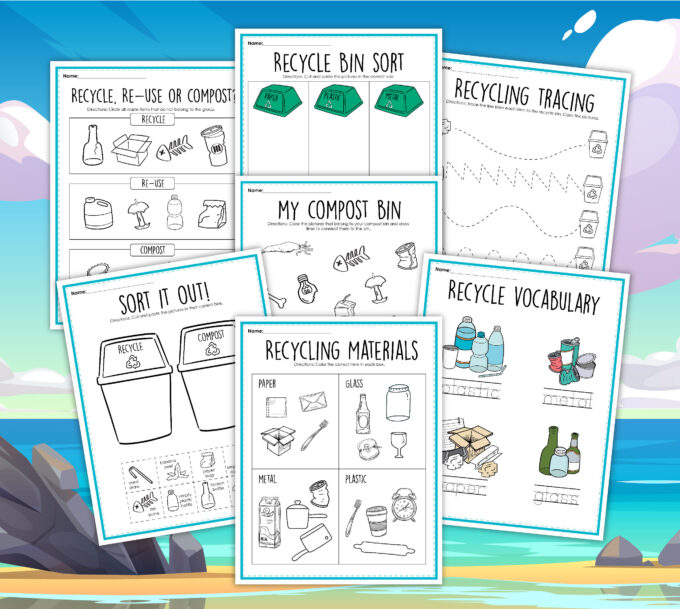
Recycling helps reduce waste and conserve natural resources. These activities introduce kids to how materials are used, reused, and how everyday choices can impact the environment.
- Natural vs Man-Made Resources Worksheets (Grades K–2)
- Sort the Recyclables (Grades K–2)
- Homemade Paper Project (Grades K–4)
- Make Milk Plastic (Grades 1-6)
- Make Bioplastic Ornaments (Grades 1-6)
👉 Browse our Recycled STEM Projects here
Ecosystems & Habitats for Kids
Ecosystems are communities of living things interacting with their environment. These activities help kids explore how plants and animals depend on each other and how different habitats support life.
Try these simple ecosystem activities:
- Plants and Animal Needs (Grades K–2)
- Build an Animal Habitat (Grades 2–4)
- Pollinator Activities (Grades K–4)
👉 Explore more ecosystem and animal habitat activities here.

Pollution Activities for Kids
Pollution happens when harmful materials affect the air, water, or land. It’s a key part of environmental science and helps kids understand how human actions impact the Earth.
Explore hands-on pollution activities organized by type:
Air Pollution Activities
Investigate how pollution affects the air with simple experiments like building filters and observing particles.
👉 Explore Air Pollution Activities
Water Pollution Activities
Explore how pollutants move through water with filtration experiments, oil spill cleanups, and conservation ideas.
👉 Explore Water Pollution Activities
Land Pollution Activities
Learn what happens to waste on land through decomposition activities, recycling challenges, and cleanup ideas.
👉 Explore Land Pollution Activities
How to Teach Environmental Science (K–4)
Environmental science works best when kids can explore, observe, and test ideas through hands-on activities.
You can use these activities for whole group lessons by introducing a topic and completing an activity together. They also work well for STEM centers where students rotate through different environmental themes.
For a more structured approach, group activities by topic and use them to build a simple unit over several days or weeks. Encourage discussion, ask questions, and let kids share what they notice.
Differentiating Environmental Science for K–4
These activities can easily be adapted for different ages.
Younger students benefit from simple observations, sorting, and hands-on exploration. Older students can record results, make predictions, and connect activities to real-world environmental issues.
You can also add drawing, labeling, or journaling to extend learning at any level.
🌱 Want a Complete Environmental Science Plan?
If you love these activities but want everything organized into a complete, easy-to-use unit, you can use a structured environmental science pack that brings all of these topics together.
It includes:
- Activities grouped by science concepts
- Student recording pages and prompts
- Guided questions to support discussion
- Ready-to-use lessons for classrooms or homeschool
👉 Take a look at the full Environmental Science Activity Pack here.
Environmental Science Activities for Kids FAQ
What is environmental science for kids?
Environmental science helps kids understand how living and nonliving things interact. It includes topics like ecosystems, pollution, weather, water, and energy. Hands-on activities make these concepts easier to understand and connect to real life.
What are examples of environmental science activities?
Some simple environmental science activities include water filtration experiments, oil spill cleanup challenges, recycling activities, solar energy projects, and water conservation investigations. These activities help kids explore real-world environmental problems and solutions.
How do you teach environmental science to elementary students?
The best way to teach environmental science is through hands-on learning. Experiments, models, and observations help kids explore topics like water, energy, and ecosystems in a meaningful way. Grouping activities by topic helps build understanding over time.
What are environmental science experiments for kids?
Environmental science experiments allow kids to test ideas and observe results. Examples include testing water pollution, building renewable energy models, observing plant growth, and simulating erosion or runoff. These experiments encourage critical thinking and problem-solving.
Why is environmental science important for kids?
Environmental science helps kids understand their role in protecting the Earth. It builds awareness of pollution, conservation, and sustainability while encouraging responsibility and real-world thinking.
Want Everything Organized for You?
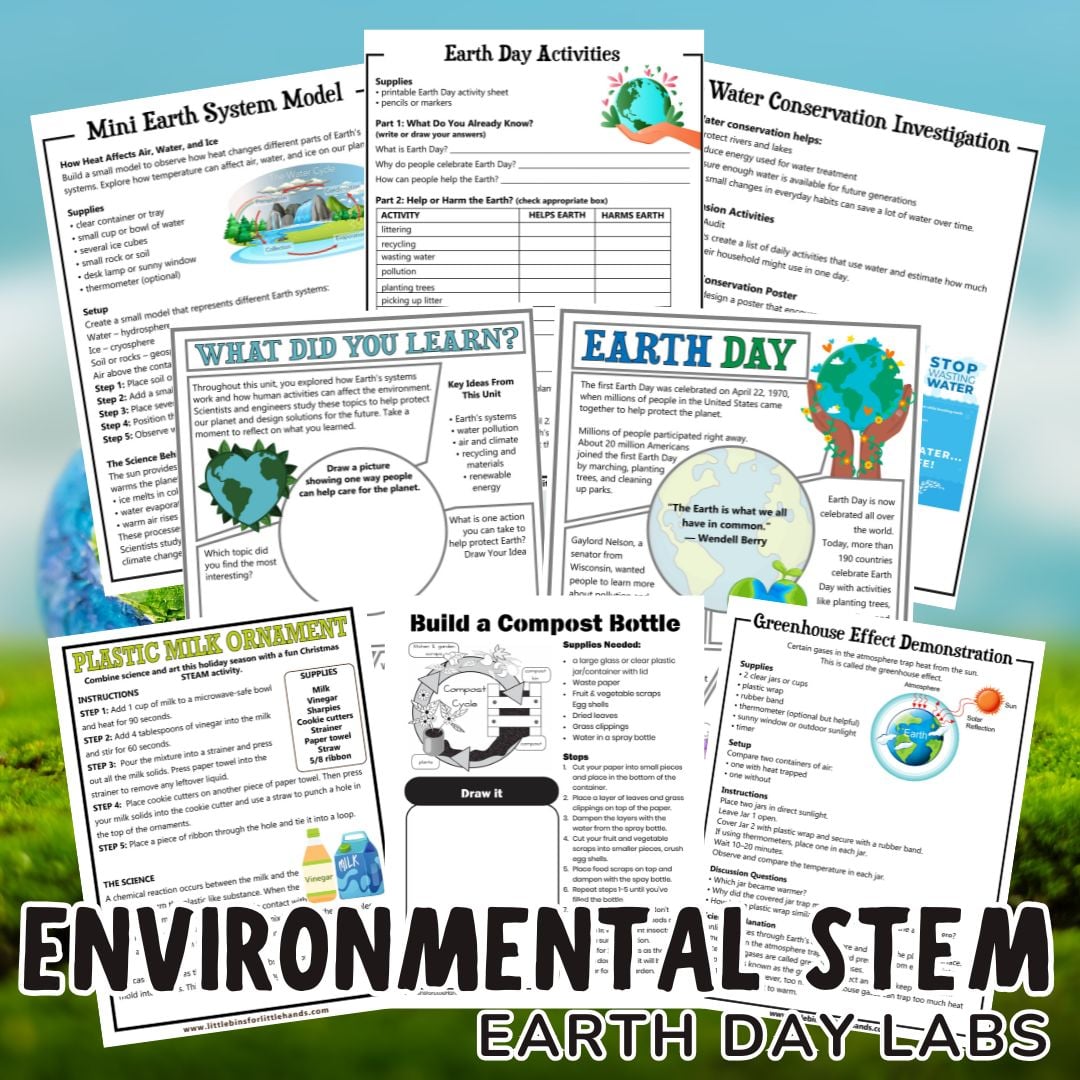
Planning Environmental or Earth Day lessons doesn’t have to mean jumping between 20 different tabs. Our Environmental STEM Printable Pack brings everything together in one ready-to-use resource, with vocab, NGSS questions, and quick-start tips.