
Have you ever wondered what DNA looks like? With just a few simple ingredients from your kitchen, you can extract the DNA from a banana and see it! This hands-on biology experiment is a great way to introduce kids to genetics and the building blocks of life.

Banana DNA Experiment
Field of Science: Biology (Genetics)
Grade Level: 3rd–6th Grade
Concepts Explored: DNA structure, cell components, molecular biology, simple lab procedures
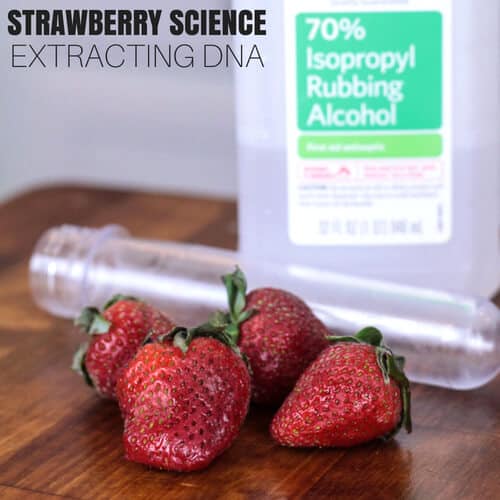
Kids will learn how cells are made up of many parts, including DNA, and how to use common substances like dish soap and salt to break open cells and release the DNA. Cold rubbing alcohol helps make the DNA strands visible! You can learn how to extract DNA from strawberries!
NGSS Alignment (Simplified)
1. What will kids figure out?
DNA is a fundamental structure found in all living things; you can see it with your own eyes using household materials.
2. What will they do?
Using a simple chemical process, they will break down a banana’s cells and isolate its DNA.
3. What will they need to understand?
All living things contain DNA, which is stored inside their cells. Soap breaks down cell membranes, salt helps the DNA clump together, and alcohol makes it rise and become visible.
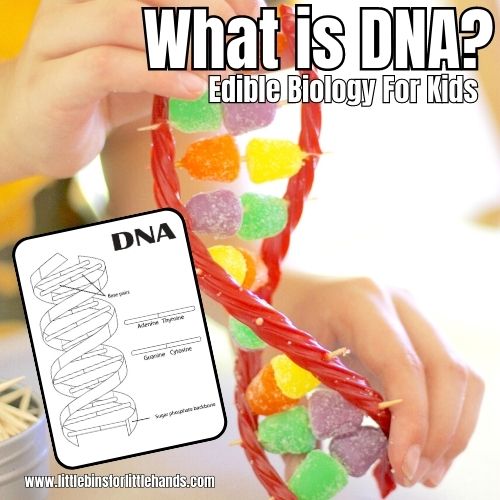
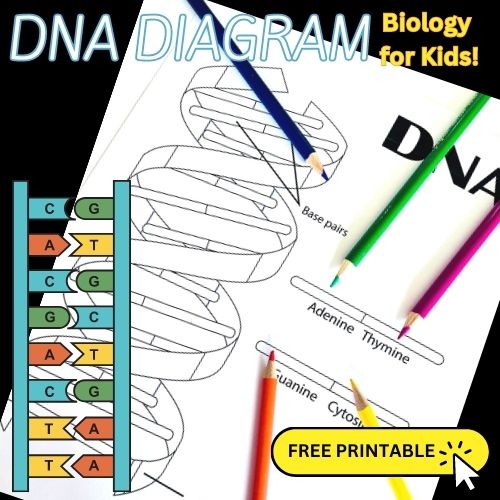
💡Make sure to check out our DNA coloring worksheet and DNA candy model!
Supplies Needed
- 1” piece of a ripe banana
- 1 sandwich-size plastic bag
- Rubbing alcohol (chilled, 70% or higher)
- Small jar or cup
- Coffee filter
- Rubber band
- Dish soap
- Salt
- Water
- Small bowl
- Wooden skewer or toothpick
How-To Extract Banana DNA Instructions
Chill the alcohol: Place the rubbing alcohol in the freezer for at least 30 minutes before starting.
Mash the banana: Put the banana in the plastic bag, seal it, and mash it well with your fingers.

Make the extraction mixture: Mix two teaspoons of water, ½ teaspoon of dish soap, and a pinch of salt in a small bowl. Stir until combined.
Combine mixtures: Pour the soap mixture into the bag with the mashed banana. Seal and squish everything together for about 30 seconds.

Filter the banana mixture: Place the coffee filter over the jar and secure it with a rubber band. Carefully pour a small amount of the banana mixture into the filter and let the liquid drip. Repeat as needed until you have about 1 inch of liquid in the jar.


Add the alcohol: Slowly pour the cold rubbing alcohol down the side of the jar until the jar is about ¾ full.

Observe: You’ll begin to see white, stringy banana DNA form and float to the top.
Collect the DNA: Use a wooden skewer to lift and twist the DNA strands from the jar gently.


DNA Science Information
Cells are made up of membranes, organelles, and the nucleus, which holds the DNA. Dish soap breaks open the cell and nuclear membranes. The salt helps the DNA clump together by neutralizing its negative charge. When cold alcohol is added, DNA, which is not soluble in alcohol, precipitates out of solution and becomes visible.
💡 Fun fact: You share about 60% of your genes (not DNA) with a banana! Yes, we share some similar biological processes!
More Science Facts for Kids
- DNA stands for Deoxyribonucleic Acid.
- All living organisms—plants, animals, even bacteria—have DNA.
- The twisted ladder shape of DNA is called a double helix.
- Scientists often extract DNA from fruit in labs when studying genetics.
Make It a Science Project
To turn this into a whole science project, use the scientific method! Try comparing the DNA of different fruits:
- Which fruit gives the most visible DNA: banana, strawberry, kiwi, or spinach?
- Does the temperature of the alcohol change how much DNA you can see?
- What happens if you leave out one ingredient?
💡 Learn about the scientific method, writing a hypothesis, and choosing variables here.
Related Science Activities
💡Biology Experiments for kids are fascinating!
- Strawberry DNA Extraction Activity
- Playdough Plant Cell Model
- 3D Printable Plant Cell Model
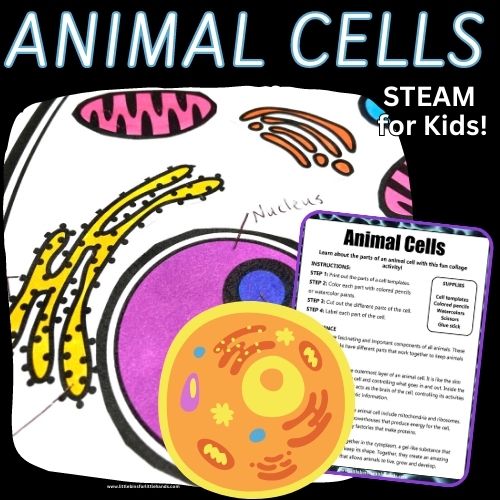
- Animal Cell Coloring Sheet
- 3D Printable Animal Cell Model
- DNA Candy Model
- DNA Coloring Worksheet


Printable Science Projects For Kids
If you’re looking to grab all of our printable science projects in one convenient place, plus exclusive worksheets and bonuses like a STEAM Project pack, our Science Project Pack is what you need! Over 300+ Pages!