


Slime is one of the most popular hands-on science activities for kids because it combines chemistry, sensory play, and creativity all in one stretchy experiment.
When glue and activator combine, they create a new material called a polymer. Kids can actually see and feel how molecules change as slime stretches, snaps, flows, and bounces.
In this guide, you’ll learn:
- why slime stretches
- what makes slime sticky
- how slime changes from a liquid into a non-Newtonian fluid
- the simple chemistry behind homemade slime
💡 Want to make slime first? Start with our Homemade Slime Recipes.
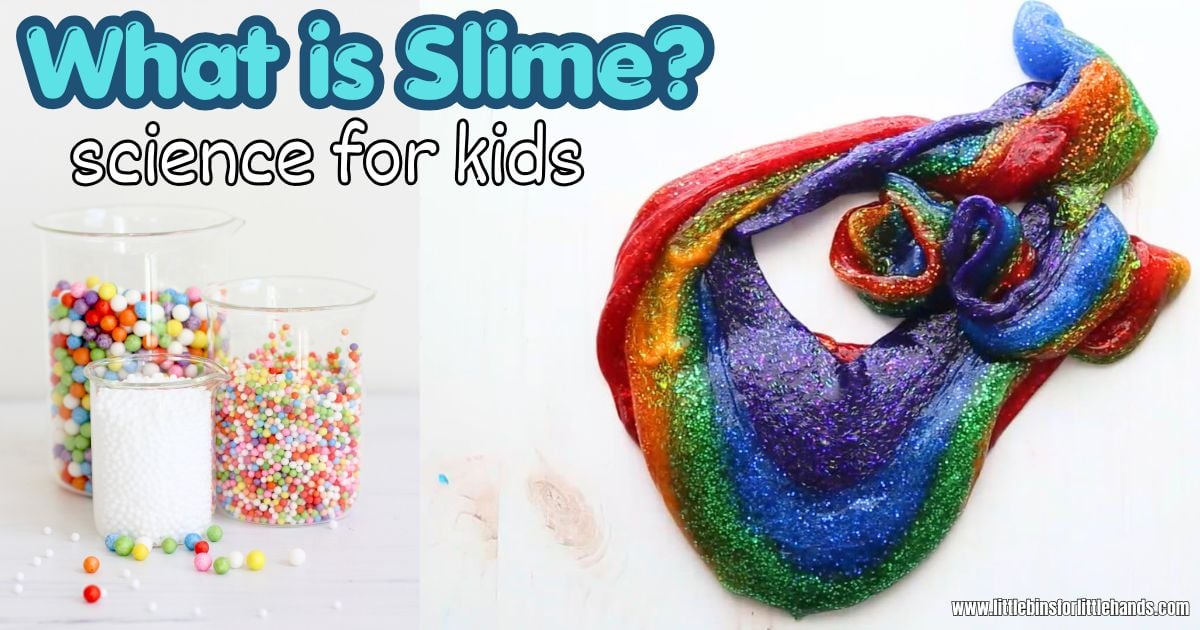
Quick Answer: Is Slime a Liquid or a Solid?
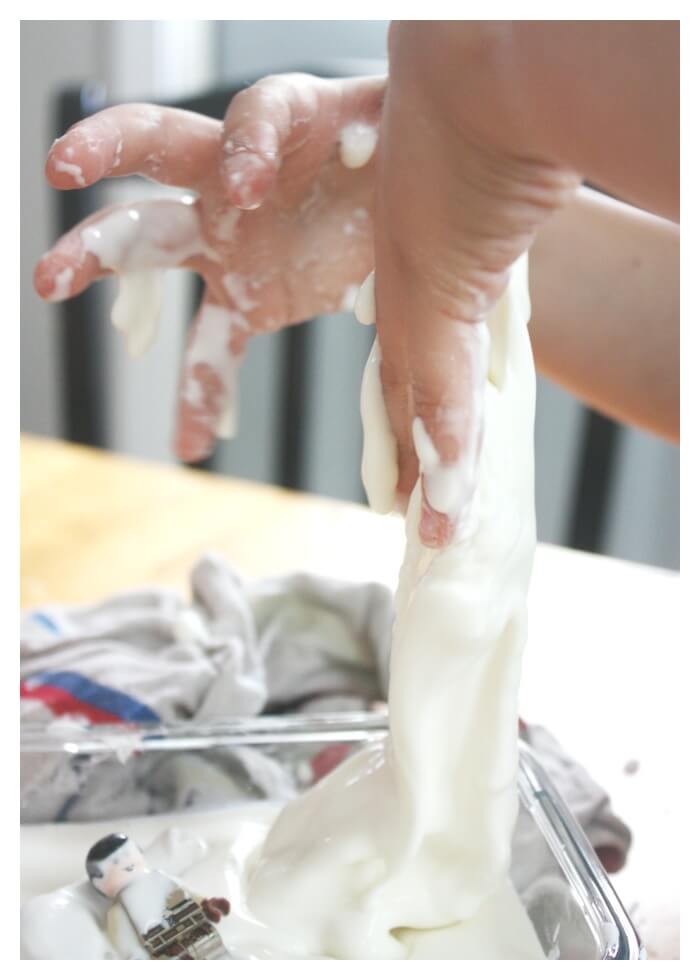
Slime is neither a true solid nor a true liquid.
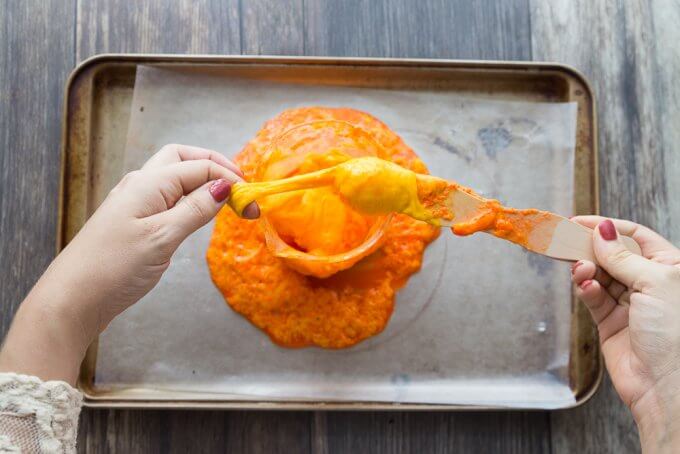
- Pull slowly → it flows like a liquid.
- Pull quickly → it snaps like a solid.
💡 Because slime’s behavior changes with applied force and movement, it is classified as a non-Newtonian fluid.
What Is Slime Made Of?
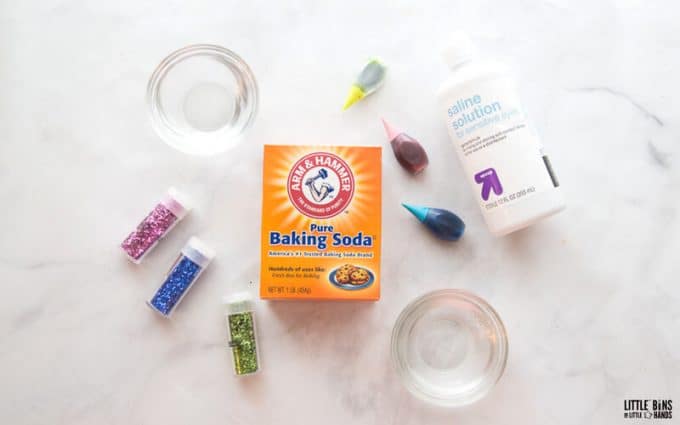
Traditional slime forms when glue reacts with an activator.
Glue (PVA polymer)
+
Borate ions (activator)
= SLIME!
Common slime activators include:
- saline solution
- liquid starch
- borax powder
When combined, the molecules connect in a process called cross-linking.
💡 Learn more about slime activators and how they work.
Why Slime Is Stretchy
Glue contains long, flexible molecular chains called polymers. Normally, those chains slide past each other easily, which is why glue pours like a liquid.
When the activator is added, the molecules begin to connect and tangle. Instead of flowing freely, the slime becomes stretchy and elastic.
Think about:
- freshly cooked spaghetti = slippery
- cold spaghetti = tangled together
Slime behaves more like tangled spaghetti.

Why Slime Breaks or Snaps
Slime reacts differently depending on how quickly you pull it.
- Pull slowly → stretches
- Pull quickly → snaps
Fast movement temporarily tightens the molecular network. Scientists call this shear thickening. That’s why slime can feel gooey one moment and rubbery the next.
Slime Is a Polymer
A polymer is a long chain of repeating molecules.
Polymers are everywhere! Everyday examples include:
- rubber bands
- silicone
- plastic containers
- hair gel
💡 Slime is special because kids can observe polymer chemistry in real time using simple household ingredients.
Slime as a Hands-On Chemistry Activity
Slime is more than just sensory play. It demonstrates real science concepts kids can explore through observation and experimentation.
Slime activities can introduce:
- polymers
- viscosity
- elasticity
- material properties
- states of matter
- non-Newtonian fluids
Once kids understand that slime changes depending on how it’s handled, they naturally begin asking questions and testing ideas like real scientists.
Try a Slime Science Experiment
One of the easiest ways to explore slime chemistry is by changing one variable at a time.
Try testing:
- amount of activator
- type of glue
- mixing speed
- temperature
- amount of shaving cream
Questions kids can investigate:
- Which slime stretches the farthest?
- Which slime breaks the fastest?
- Which slime is the least sticky?
💡 Explore our slime experiments and investigation ideas.
Can You Make Slime Without Borax?
Yes — but borax-free slime behaves differently.
Taste-safe slime recipes use thickening ingredients instead of true polymer cross-linking, so they usually feel softer and less stretchy than traditional slime recipes.
💡 See our favorite borax-free slime ideas.
Slime Vocabulary for Kids
- Polymer — a long chain of repeating molecules
- Cross-linking — molecules connecting together
- Viscosity — how easily something flows
- Non-Newtonian Fluid — behaves like both a liquid and a solid
Helpful Slime Resources
Everything you need to know about making slime successfully:
Frequently Asked Questions
Why does slime feel rubbery?
The molecules in slime are tightly connected. When pulled quickly, the slime resists movement and feels firmer.
Why does slime melt over time?
The molecular connections slowly loosen over time. Kneading the slime again often improves the texture.
Why is slime sticky?
Sticky slime usually means not enough activator formed enough cross-links between the glue molecules.
Is slime safe for kids?
Slime is a chemistry activity and should always be used with supervision and proper ingredients. Wash hands after play.
Can you make slime without borax?
Yes, but the texture and stretchiness will be different because borax-free slime uses different thickening ingredients.
Is slime a liquid or a solid?
Slime is neither. It is a non-Newtonian fluid that behaves like both depending on how force is applied.
The Science Behind Slime (For Curious Kids)
Glue is made of long molecular chains called polymers. In liquid glue, those chains slide past one another easily.
When an activator containing borate ions is added, the polymer chains begin connecting together through a process called cross-linking.
Instead of moving independently, the molecules form a loose network that traps water between them.
That’s why slime behaves differently depending on how it is handled:
- move slowly → it flows
- pull quickly → it resists motion
💡 This unusual behavior is what scientists call a non-Newtonian fluid.
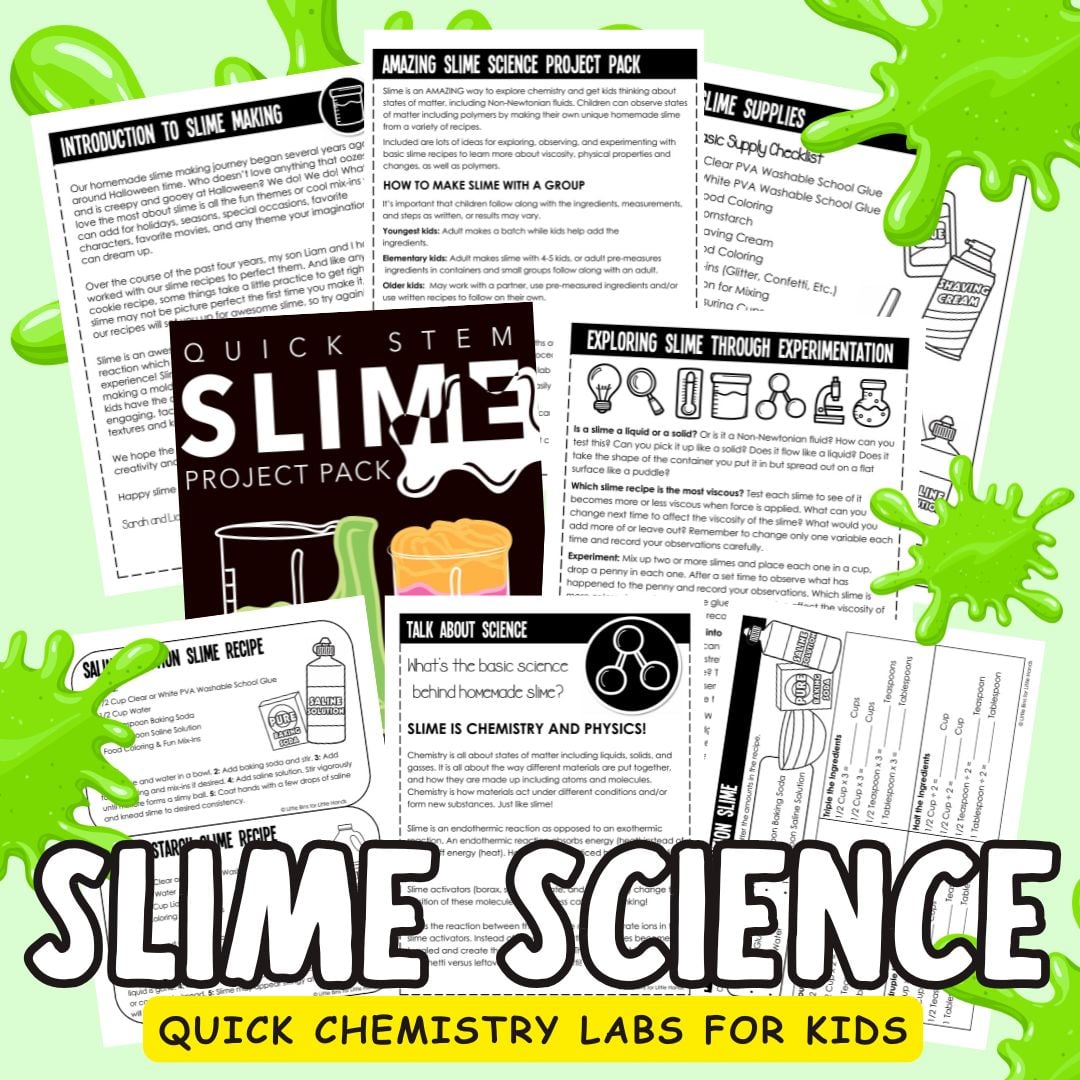
Printable Slime Science Guide
Once kids understand why slime stretches, snaps, and flows, the next step is testing it themselves.
This free printable Slime Science Guide turns slime into a simple, hands-on investigation rather than just a one-time activity. Kids compare textures, record results, and experiment with different ingredients while practicing real observation skills.
The activities connect to science concepts like:
- polymers
- viscosity
- non-Newtonian fluids
- material properties
Included:
- investigation pages
- observation charts
- variable testing ideas
- simple kid-friendly science explanations
- a 5-day slime chemistry mini lab
👉 See the Slime Science Guide here
More Slime Science Fun
Ready to try slime yourself?
Explore our:
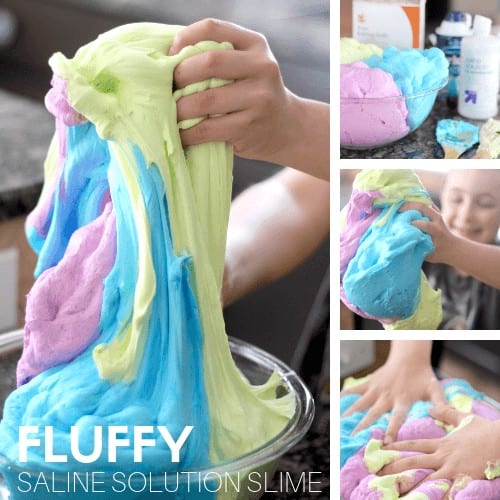
- Fluffy Slime
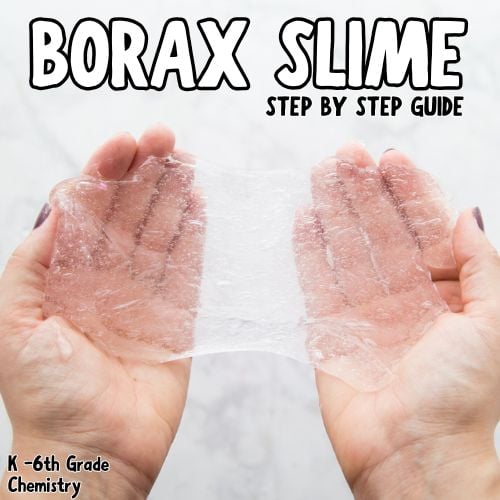
- Borax Slime
- Clear Slime
- Butter Slime
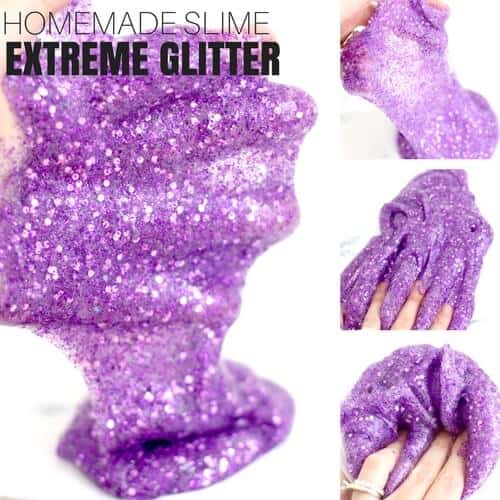
- Glitter Slime
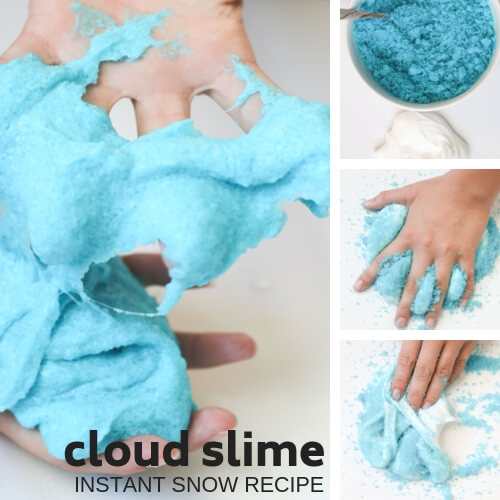
- Cloud Slime
💡 Browse the complete Homemade Slime Hub for all our slime recipes and slime science activities.
Extend the Learning with Slime
Our printable Slime Activity Pack includes step-by-step recipes, observations pages, challenges, and science extensions — perfect for home or classroom use.






I need some slime facts, I am doing a project on slime at school. I need some help. Thanks, Everest
slime is amazing you can do anything with it like: Put it in stress balls, or play with it with your hands. Also, it’s a great stress reliever I do recommend this. Thx for the recipes 😀