
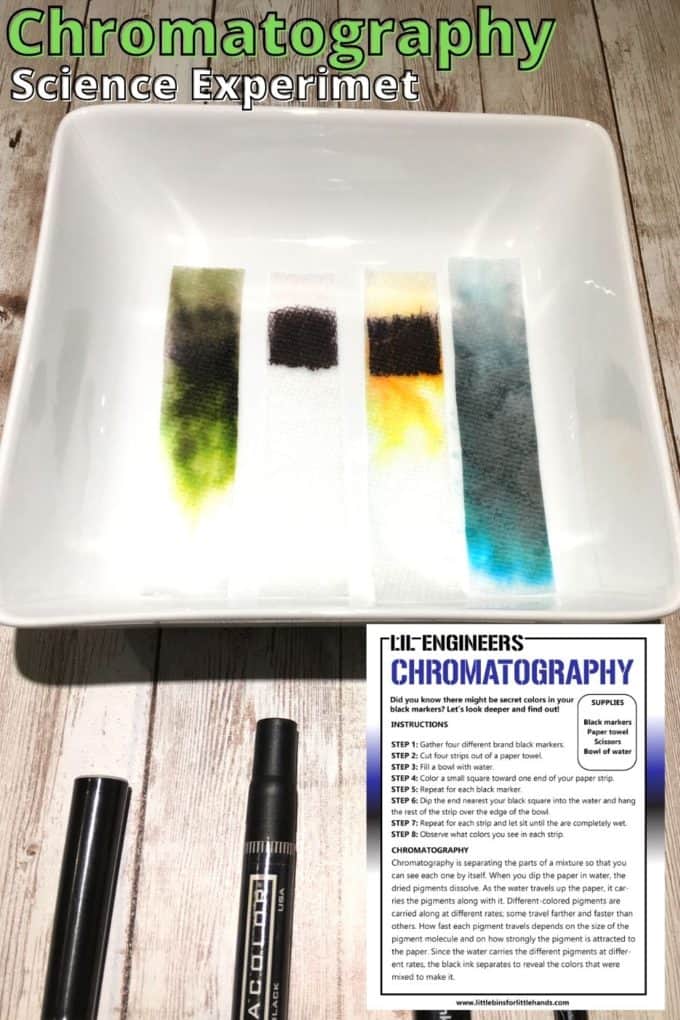
Pull out the bin of markers and search for the black ones to get started with this fun paper chromatography lab! All you need are a couple of washable markers (more is better), water, a paper towel, and a dish/bowl to enjoy simple science experiments any day of the week!
Marker Chromatography Experiment
In this fun chemistry experiment, we’ll explore how different colors in marker ink can be separated using chromatography. This experiment helps us see how polarity affects how ink interacts with water. By watching how the colors move on the paper, we’ll learn how some parts of the ink travel farther depending on how well they mix with water!
Recommended Grade Level: 2-5th Grades (see more below)
Supplies:
- Black markers
- Scissors
- Paper towel
- Bowl of water
Science Experiment Instructions:
Watch the video:
STEP 1. Gather four different brands of black washable markers.
Also, use your washable markers for our coffee filter flower STEAM project!
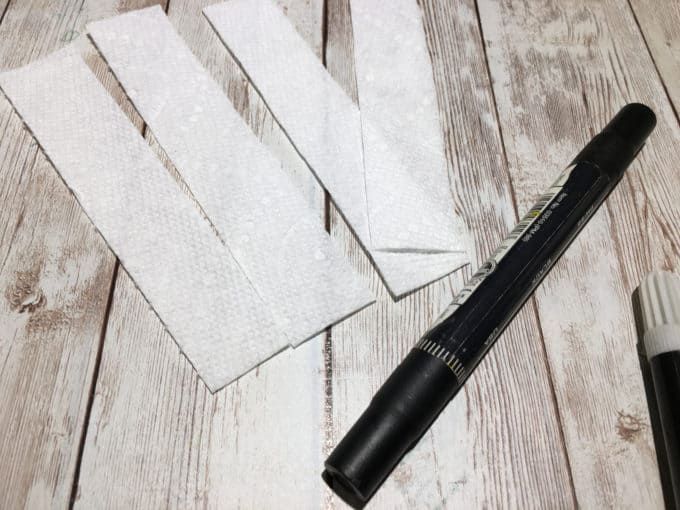
STEP 2. Cut four strips of paper towel.
STEP 3. Fill a bowl with water.
STEP 4. Using one of the black markers, color a small square at one end of the paper towel. Repeat with the remaining markers and paper towel strips.
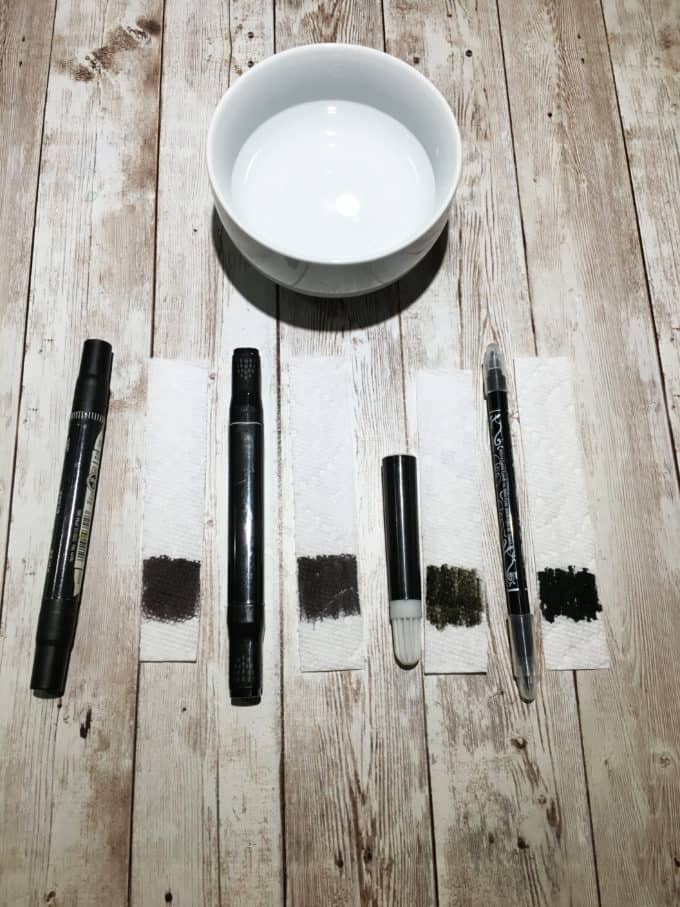
STEP 5. Dip the end nearest the black square into the water and hang the end over the edge of the bowl.
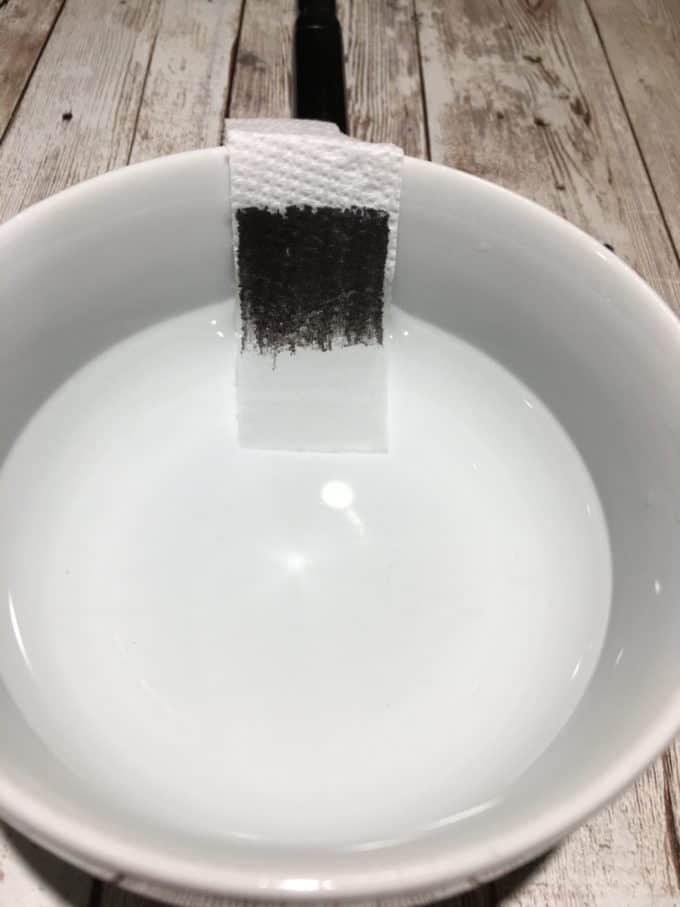
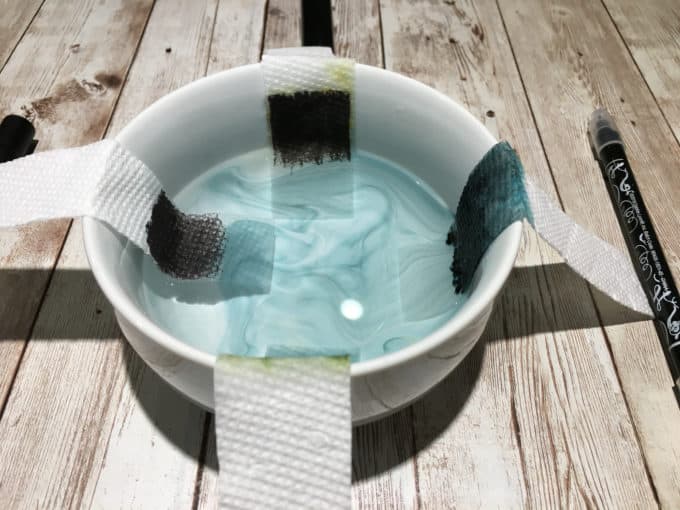
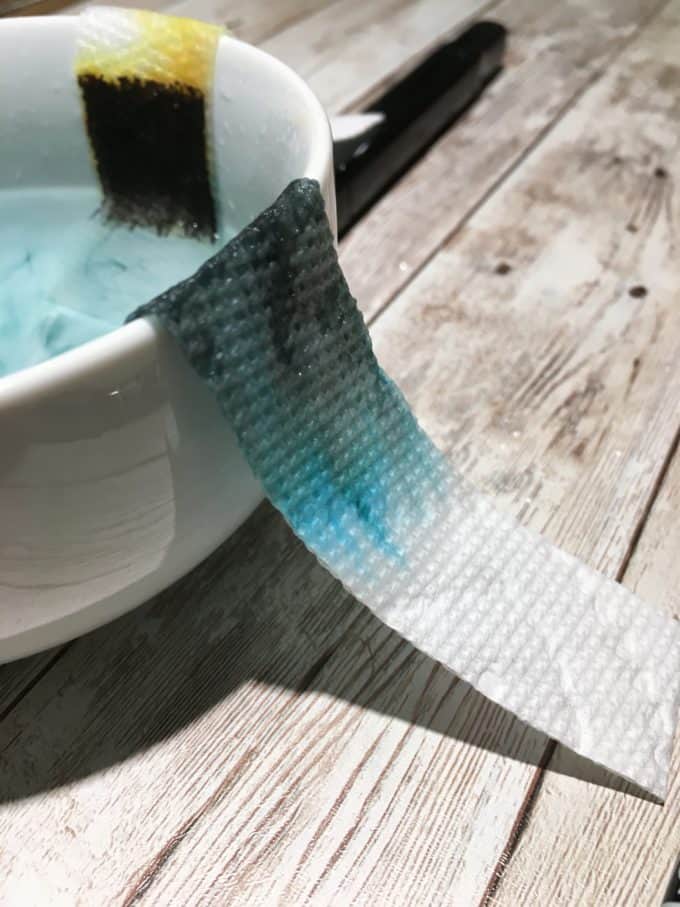
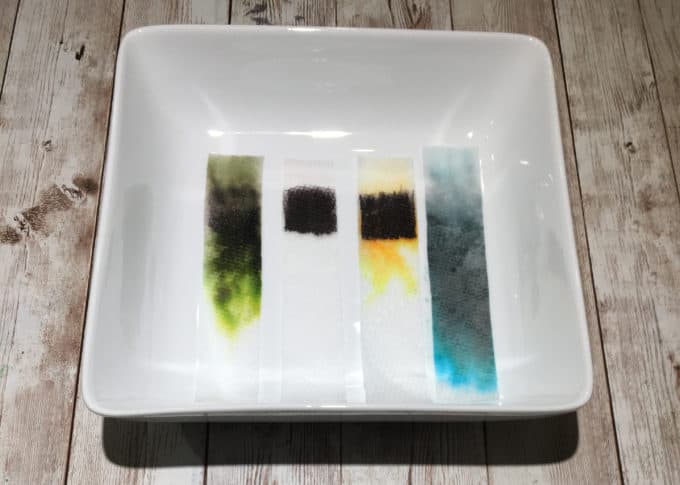
STEP 6. Repeat for each strip and let them sit until they are completely wet. Observe what colors you can see in the strips.
What Is Chromatography?
Chromatography is a way of separating the parts of a mixture so that you can see each component by itself. Paper chromatography has to be the best method for separating ink!
When you dip the paper in water with a black marker drawn on it, the dried pigments from the marker ink dissolve. As the water travels further up the paper, it carries the pigments via capillary action.
In marker chromatography, the water pulls the ink colors up the paper because of polarity. Some colors move farther because their materials mix well with water due to similar polarity. In contrast, others stay closer to the bottom because their polarity is different, and they don’t mix as well.
How fast each pigment travels depends on the pigment molecule and how strongly the pigment attracts the paper. Since the water carries the different pigments at different rates, the black ink separates to reveal the mixed colors to create it.
The solvent in this chromatography lab is water because we use washable markers that dissolve in water. You must use an alternative solvent to separate the colors in permanent markers.
For younger students (grades 2-3), Kids explore the basic concept of chromatography, separating ink into its different colors, while understanding some foundational science principles such as mixtures, solutions, and how substances interact with water.
For older students (grades 4-5), you can introduce more advanced concepts like polarity and capillary action to deepen their understanding.
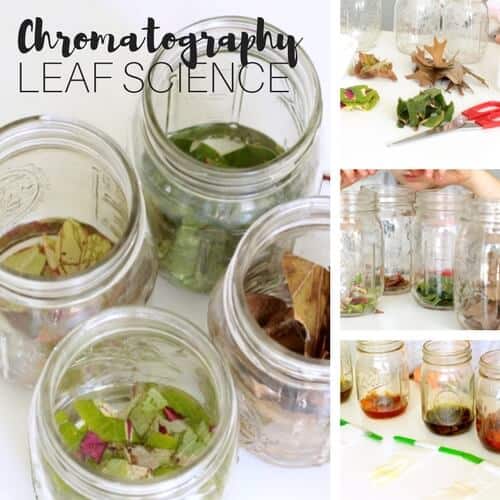
You might also want to try Leaf Chromatography, which separates the pigments in leaves!
Extend The Learning
Here are some experiments you can set up to extend the learning experience. Apply the scientific method, choose variables and make observations.
- Use different types of markers such as washable, permanent, and dry-erase markers on chromatography paper. Compare how the pigments separate and travel.
- Instead of using just water, try different solvents like rubbing alcohol, vinegar, or saltwater. Perform the chromatography with these solvents and compare the results.
- Conduct the chromatography experiment in different temperature conditions (e.g., room temperature, in a refrigerator, or in a warm environment). Observe how temperature changes affect the rate of chromatography
- Instead of using just chromatography paper or coffee filters, try using different surfaces like paper towels, napkins, or even fabric. Compare how well each surface separates the pigments.
- Measure the time it takes for the solvent to travel a certain distance up the chromatography paper. Use different types of solvents or papers to see how they affect capillary action speed.
Want to turn this paper chromatography into a cool science project? Then check out these helpful resources below.
Related Science Experiments
- Separating Mixtures
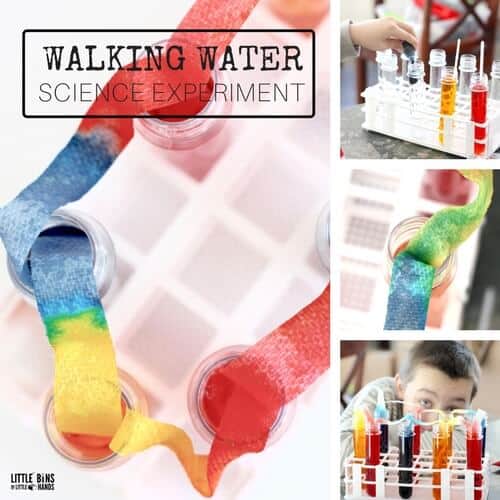
- Walking Water Experiment
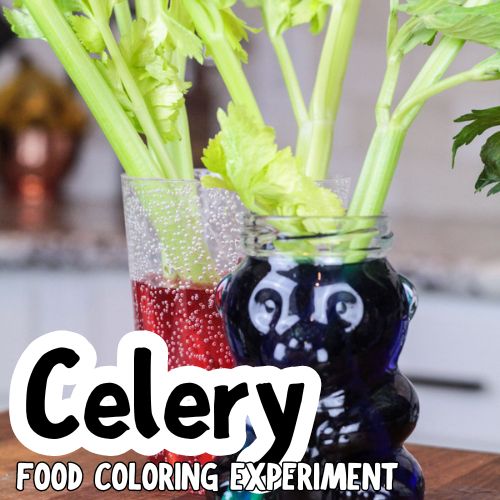
- Celery Experiment
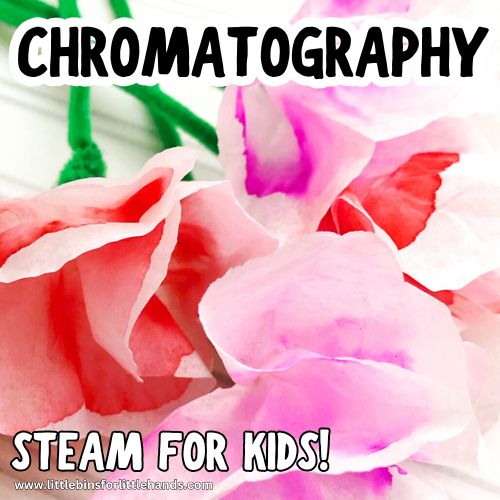
- Coffee Filter Chromatography
- Leaf Chromatography
- Capillary Action Experiments

Helpful Science Resources
Here are a few resources that will help you introduce science more effectively to your kiddos or students and feel confident yourself when presenting materials. You’ll find helpful free printables throughout.
- Best Science Practices (as it relates to the scientific method)
- Science Vocabulary
- All About Scientists
- Free Science Worksheets
- DIY Science Kits
- Science Tools for Kids
- Scientific Method for Kids
- Citizen Science Guide
- Join us in the Club
Printable Science Projects For Kids
If you’re looking to grab all of our printable science projects in one convenient place plus exclusive worksheets and bonuses like a STEAM Project pack, our Science Project Pack is what you need! Over 300+ Pages!
- 90+ classic science activities with journal pages, supply lists, set up and process, and science information. NEW! Activity-specific observation pages!
- Best science practices posters and our original science method process folders for extra alternatives!
- Be a Collector activities pack introduces kids to the world of making collections through the eyes of a scientist. What will they collect first?
- Know the Words Science vocabulary pack includes flashcards, crosswords, and word searches that illuminate keywords in the experiments!
- My science journal writing prompts explore what it means to be a scientist!!
- Bonus STEAM Project Pack: Art meets science with doable projects!
- Bonus Quick Grab Packs for Biology, Earth Science, Chemistry, and Physics