
In this exciting coin tower experiment, kids can explore Newton’s First Law of Motion using a stack of coins. By quickly removing the bottom coin, they’ll observe how inertia keeps the rest of the stack from falling! It’s a hands-on way to see the power of force and motion.

Coin Tower Experiment
Sir Isaac Newton’s First Law of Motion states that an object at rest stays at rest unless acted upon by an external force. In this experiment, the coin tower resists falling because of inertia, the tendency of objects to resist changes in motion. The quick removal of the bottom coin shows how inertia helps the other coins stay still.
Grade Level: K–5th Grade (from basic science to more involved principles)
Concepts Explored: Newton’s First Law of Motion, Inertia, Friction
Supplies:
- 8–10 coins: pennies, nickels, or quarters
- Smooth surface (table or countertop)
- Butter knife (optional)
How-To Instructions:

- Coin Stack: Stack 8–10 pennies, nickels, or quarters on a flat surface to create a coin tower.
- Prepare the Coin: Take one quarter from the stack and hold it between your thumb and index finger.
- Aim and Slide: Aim the quarter at the stack of coins, targeting the bottom coin.
- Release the Coin: Let the coin slide towards the bottom of the tower. Watch as the bottom coin comes out, but the rest of the stack stays standing!
🔎 Tip: You can also use a butter knife to strike the bottom coin from the tower instead of sliding a coin into the stack.

Coin Tower Challenge Science Information
This experiment demonstrates Newton’s First Law of Motion, which states that an object at rest will remain at rest unless acted upon by a force. Inertia is the force that resists any change in motion, meaning that once the bottom coin is quickly removed, the rest of the stack resists moving due to inertia.
What is Inertia?
Inertia is the tendency of objects to keep doing what they’re already doing—staying at rest unless something causes them to move. When the bottom coin is taken away quickly, the other coins don’t have enough time to move, and the tower stays intact.
How Does Friction Affect the Experiment?
Friction resists motion, but in this experiment, the quick removal of the bottom coin minimizes the friction’s effect on the remaining coins. This allows the bottom coin to move without disrupting the entire stack.
🔎 Try this friction science experiment, too!
What is Momentum?
Momentum is a word that describes how much “motion” something has. If you roll a ball, it has momentum because it’s moving. In this experiment, when you move the bottom coin, it has momentum, but the other coins stay still because of inertia.
Extension Activities:
Inertia Science Facts:
- Inertia is why you feel pushed back in your seat when a car suddenly starts or stops—you’re resisting the change in motion, just like the coins resist moving in the coin tower experiment.
- The more mass an object has, the more inertia it has. That’s why it’s harder to stop a large truck than a bicycle, and why the coin stack resists falling when the bottom coin is removed quickly.
- Momentum is the “motion” an object has when it moves. The momentum of the bottom coin is transferred to the other coins, but they stay still because of inertia.
Bonus Fact: You might have seen a version of this trick called the “tablecloth trick”, where you yank a tablecloth from underneath dishes without disturbing them. It’s a great example of how inertia works in real life!
Related Science Activities
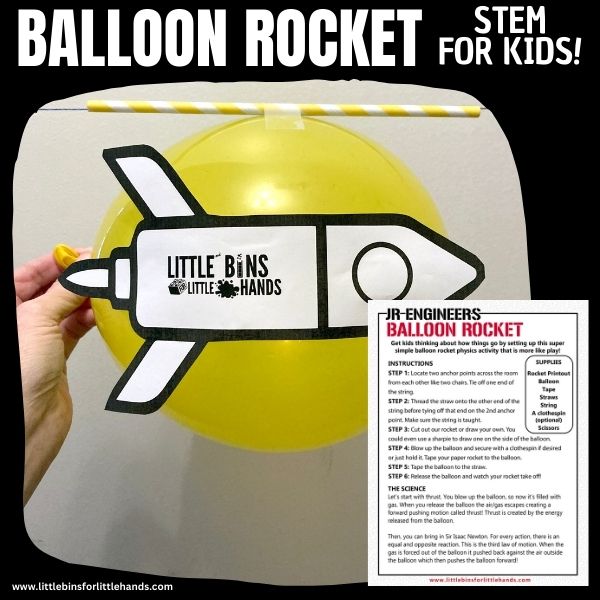
- Balloon Rocket
- Balloon Powered Car
- Water Pressure Bottle Rocket
- Alka-Seltzer Boat
- Egg Drop (Inertia in Impact)
- Force and Motion Worksheets
- Newton’s Laws Experiments