
What happens to trash after we throw it away?
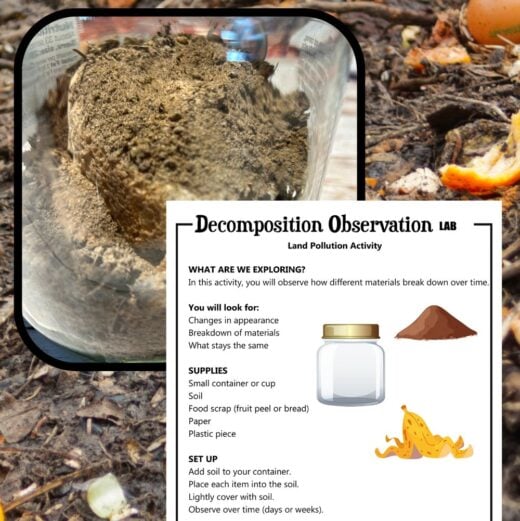
Some materials break down quickly, while others stay in the environment for a very long time. In this simple decomposition experiment, kids will explore what happens when different materials are buried in soil—and why it matters for land pollution.
👉 Explore more land pollution projects here.
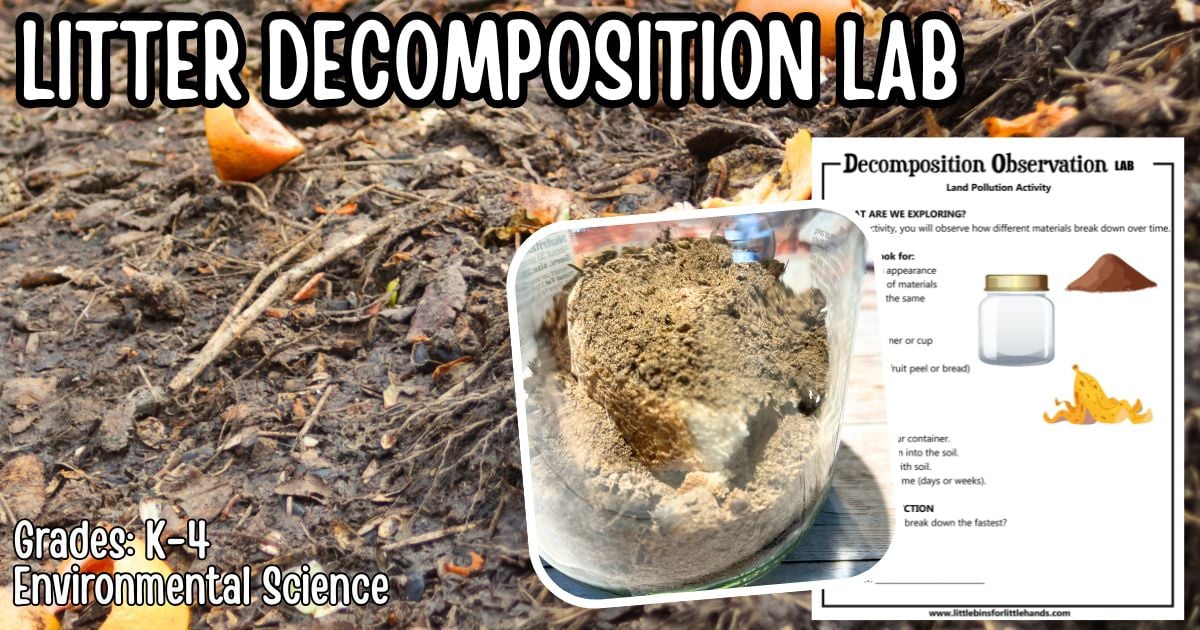
The Science Behind It
Field: Earth Science / Environmental Science
Grades: K–4
Concepts Explored: Decomposition, biodegradable vs non-biodegradable materials, land pollution, nutrient cycling
Decomposition is the process of breaking down materials into smaller parts.
Natural materials like food and paper are biodegradable, meaning they can be broken down by living organisms such as bacteria, fungi, and worms. These materials return nutrients to the soil.
Other materials, like plastic, are non-biodegradable. They do not break down easily and can stay in the environment for many years.
This is one reason why land pollution happens—waste that doesn’t break down builds up over time.
👉 Learn more about natural vs man made materials with a free printable
Supplies Needed
- Clear jars or containers
- Soil
- Organic materials (fruit peel, leaf, bread)
- Paper
- Small piece of plastic
- Spoon or small shovel
- Labels and marker
- Printable pages (see below)
Optional:
- Magnifying glass
- Notebook or observation sheet
How To Set Up the Decomposition Experiment
Step 1: Prepare Your Containers
Fill each jar about halfway with soil.
Step 2: Add Materials
Place one material in each jar:
- Food (fruit peel or bread)
- Paper
- Plastic
Cover each item with soil.
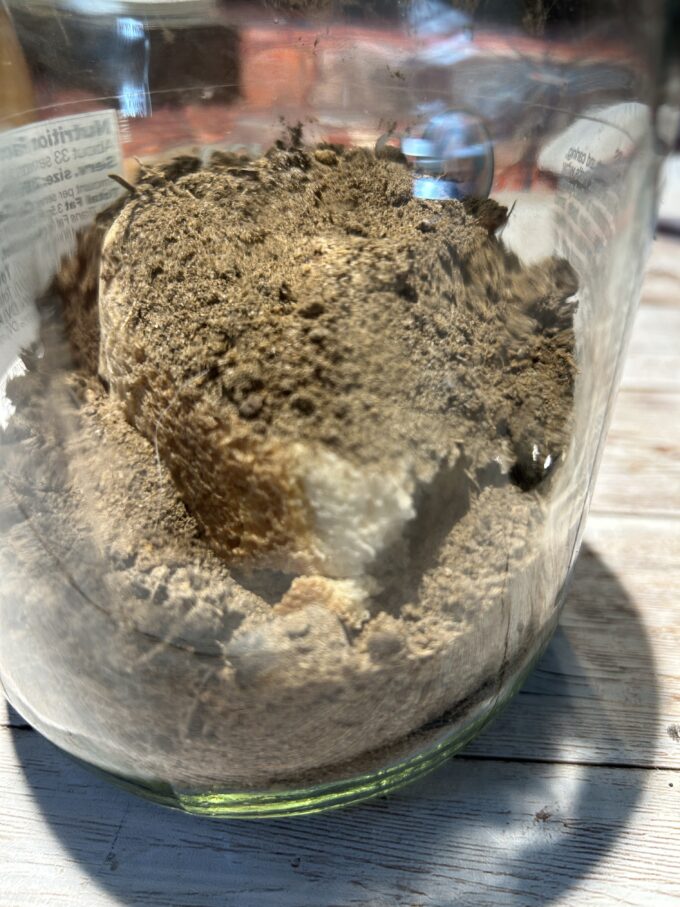
Step 3: Label Your Jars
Write what is inside each jar so you can track changes.
Step 4: Store and Observe
Loosely cover the jars and place them in a warm spot.
💡 Note: This project is best when you can observe changes over time. Check on the jars over several days, weeks, or even a month and record what changes.
👉 Want to take this further? Try setting up a simple mini compost bin for kids to see decomposition in action over time.
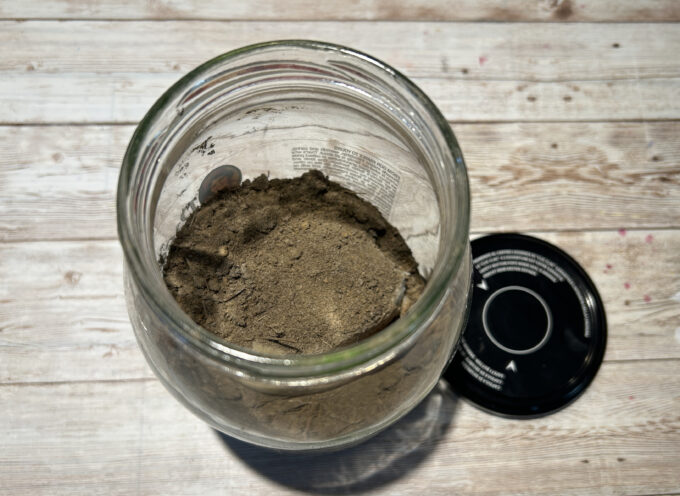
What To Observe
Encourage kids to look for:
- Changes in color or texture
- Signs of mold or breakdown
- Differences between materials
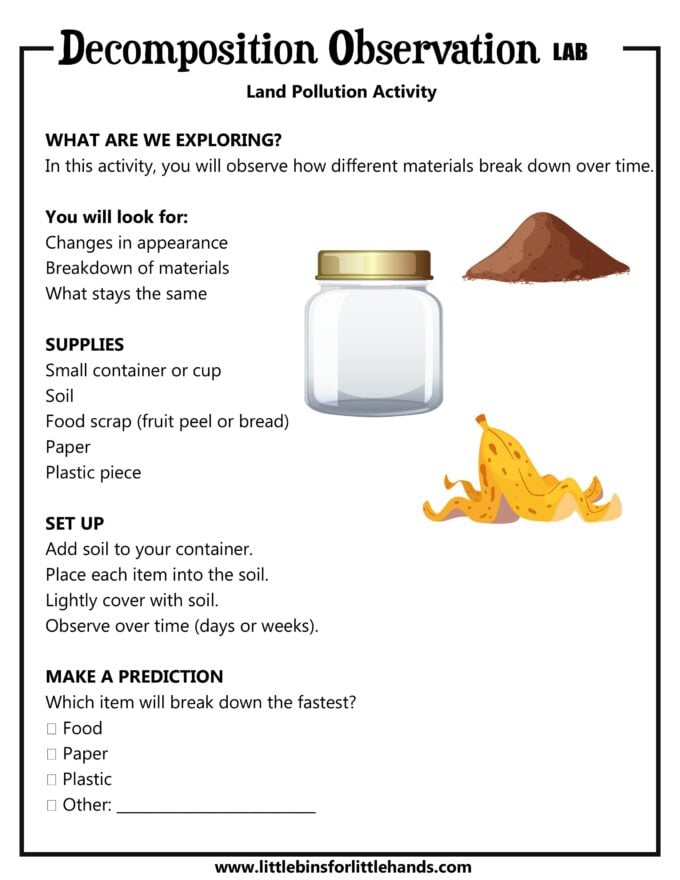
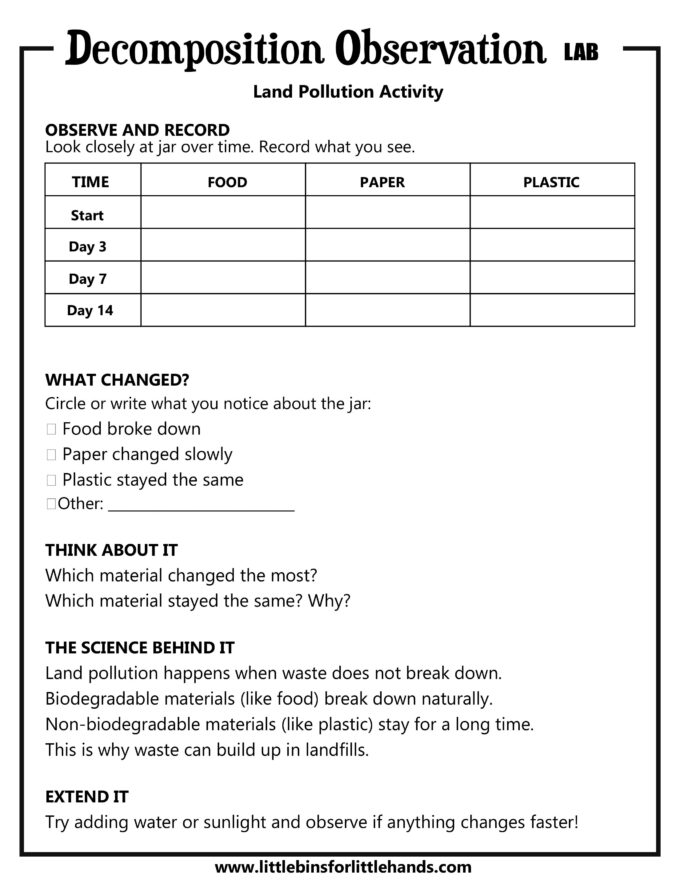
👉 Use the printable observation sheet to guide thinking and responses:
Decomposition Science Information
Decomposition is an important part of the carbon cycle.
When plants and animals die, decomposers break them down into nutrients like carbon and nitrogen. These nutrients return to the soil, where plants can use them again.
👉 You can learn more about this process in the carbon cycle for kids.
For example:
- Bread may grow mold and fall apart
- Fruit peel may shrink and darken
- Leaves may crumble over time
But plastic does not behave the same way. It does not break down easily, so it remains in the environment and contributes to pollution.
💡This is why waste can build up in landfills over time
Why This Matters for Land Pollution
Land pollution happens when waste collects in the environment and does not break down.
In this experiment, you may notice:
- Food breaks down quickly
- Paper changes slowly
- Plastic stays the same
This shows why reducing waste and choosing materials that break down naturally is important for protecting the environment.
More Facts for Kids
- Decomposers include bacteria, fungi, worms, and insects
- Composting is a way to help food waste break down faster
- Some plastics can take hundreds of years to break down
- Healthy soil depends on decomposition
Extension Activities
- Add water to see if decomposition speeds up
- Place jars in different environments (sun vs shade)
- Try composting food scraps in a larger container
- Compare natural materials vs man-made materials
Make It a Science Project
Take this experiment further:
👉 Use the principles of the scientific method for kids to help guide this science project
- Change one variable (material type, temperature, or moisture)
- Record results over time
- Create a chart or graph
- Share conclusions about which materials break down fastest
Related Pollution Activities
- Land pollution activities for kids
- Water pollution experiments
- Air pollution STEM activities
- Environmental science activities for kids
Free Decomposition Lab Printable
Make this activity easy to use with a ready-to-go worksheet:
👉 Download your Decomposition Observation Lab here:
Decomposition FAQ
What is decomposition for kids?
Decomposition is the process by which materials break down into smaller parts, often with the help of living organisms such as bacteria and worms.
What materials decompose the fastest?
Food scraps and natural materials usually break down the fastest.
Why doesn’t plastic decompose?
Plastic is made from synthetic materials that do not break down easily, so it can stay in the environment for many years.
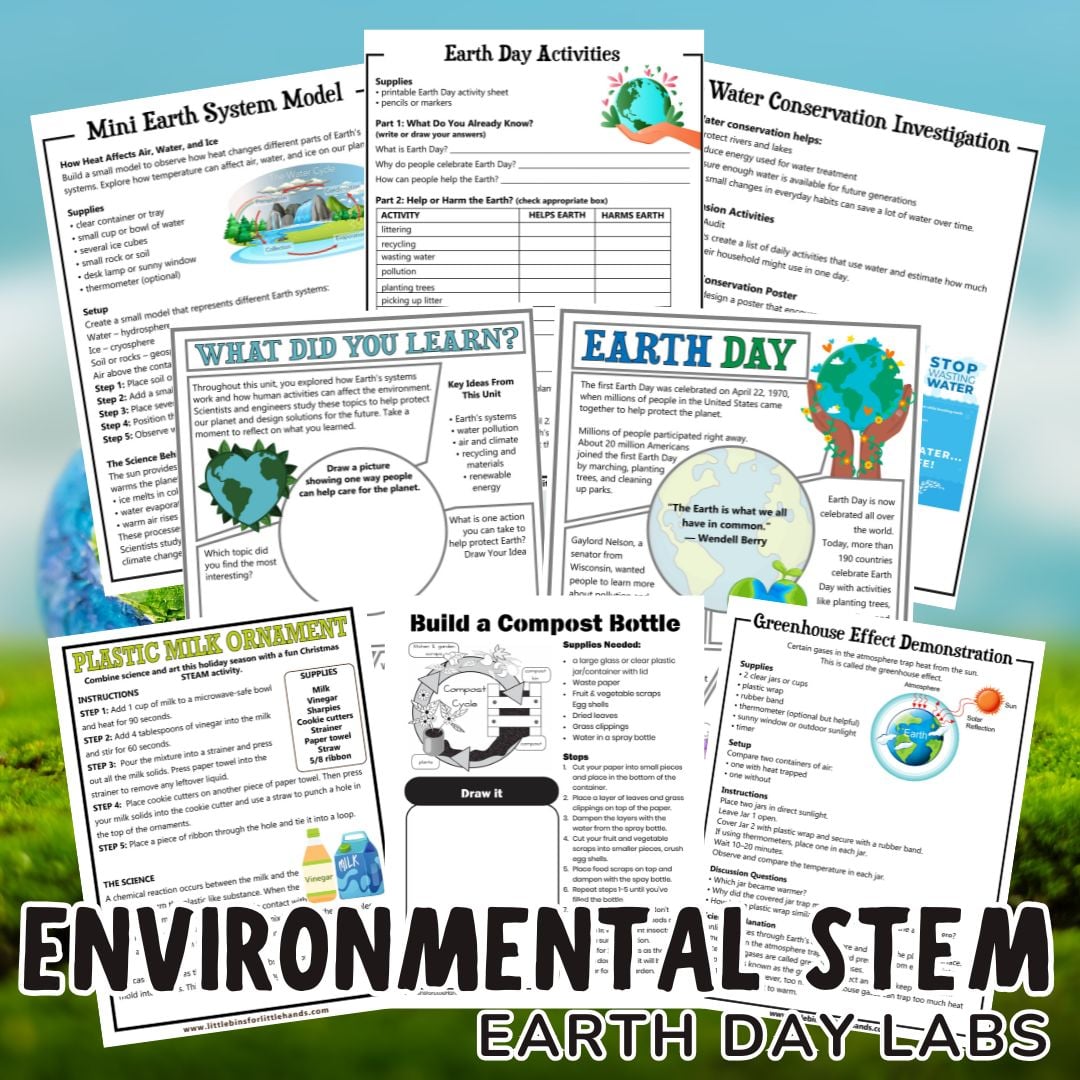
Want Everything Organized for You?
Planning Environmental or Earth Day lessons doesn’t have to mean jumping between 20 different tabs. Our Environmental STEM Printable Pack brings everything together in one ready-to-use resource, with vocab, NGSS questions, and quick-start tips.