
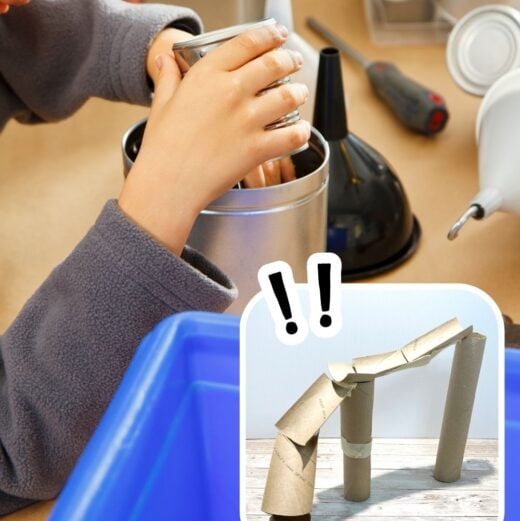
Looking for recycling projects for kids that actually teach real science and engineering?
These hands-on STEM activities use recycled materials like cardboard tubes, plastic bottles, cereal boxes, egg cartons, scrap paper, and old CDs. Whether you’re planning an Earth Day unit, a classroom STEM center, a science fair project, or an inexpensive afternoon activity at home, these recycling STEM ideas make learning creative, meaningful, and budget-friendly.
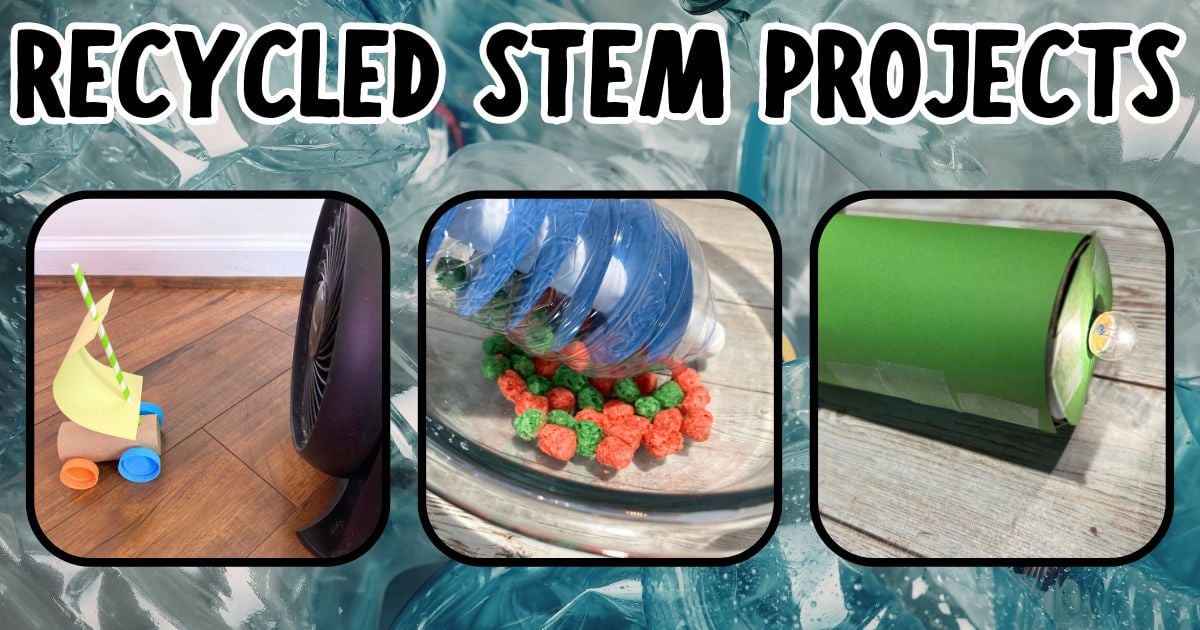
Before you toss it — build with it.
If you’re planning eco-focused lessons, be sure to explore our full Earth Day STEM Hub for even more environmental science activities and printable challenges.
Why Recycling STEM Projects Work So Well
Recycled engineering projects naturally combine:
- Environmental awareness
- Engineering design process
- Real-world problem solving
- Core science concepts
With simple recycled materials, kids explore:
- Forces and motion
- Energy transfer
- Simple machines
- Electricity and circuits
- Weather and climate
- Structures and stability
- Heat and insulation
And the best part? The supplies are already in your bin.
Cardboard & Paper Engineering Projects
Cardboard and paper are some of the best materials for hands-on engineering projects. These recycled STEM challenges help kids explore structural stability, balance, center of mass, and simple machines as they test and redesign their builds.
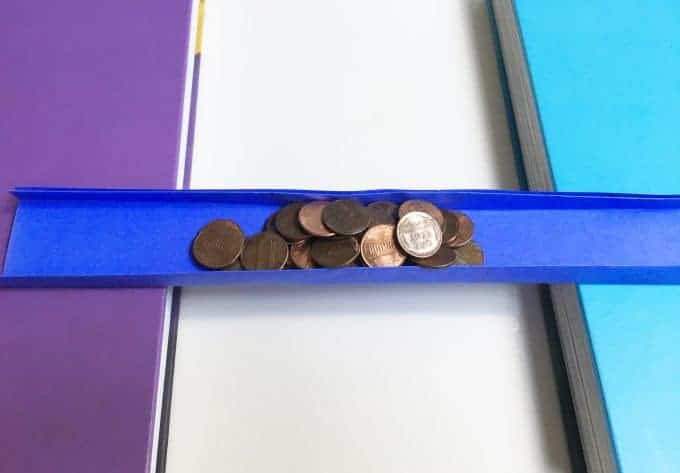
- Paper Tower Challenge (How tall can you build?)
- Strong Paper Shapes Investigation (Which shape holds the most weight?)
- Paper Bridge Challenge
- Newspaper Eiffel Tower Challenge
- Paper Grabber STEM Challenge (lever system build)
- Balancing Objects Challenge (center of mass exploration)
These projects are ideal for engineering design lessons and science fair testing because students can easily adjust variables such as height, folds, and the support structure.
Motion & Energy Projects Using Recycled Materials
These recycled STEM activities focus on forces, motion, friction, and energy transfer. Kids can explore elastic potential energy, air pressure, thrust, and Newton’s Laws using simple materials.

Build and test:
- Balloon Car
- Rubber Band Car (elastic potential energy)
- Wind-Powered Car
- Bottle Rocket (water + air pressure physics)
- Water Bottle Air Cannon
- CD Hovercraft (friction experiment)
These are especially strong for grades 2–5 and make excellent recycling science fair projects because students can test distance, speed, air pressure, or surface type.
Simple Machines & Mechanical Systems
Simple machines make work easier by changing force, speed, or direction. These recycled engineering builds help kids understand gears, pulleys, levers, and rotational systems through hands-on mechanical design.
- Pulley System
- Hand Crank Winch
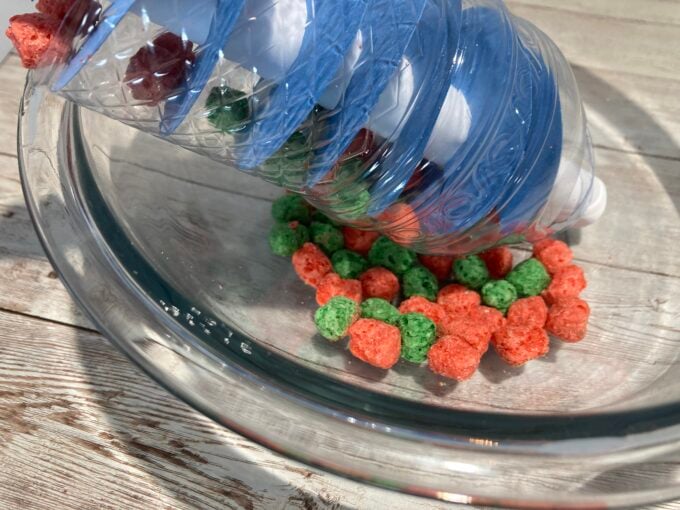
- Archimedes’ Screw (moves water upward)
- Candy Corn Gears mounted on cardboard (gear system demonstration)
These projects help students understand mechanical advantage, rotation, and force.
Electricity & Sound STEM Projects
Explore how energy travels through circuits and how vibrations create sound. These recycled builds introduce electrical engineering basics and sound wave science in a visual, hands-on way.
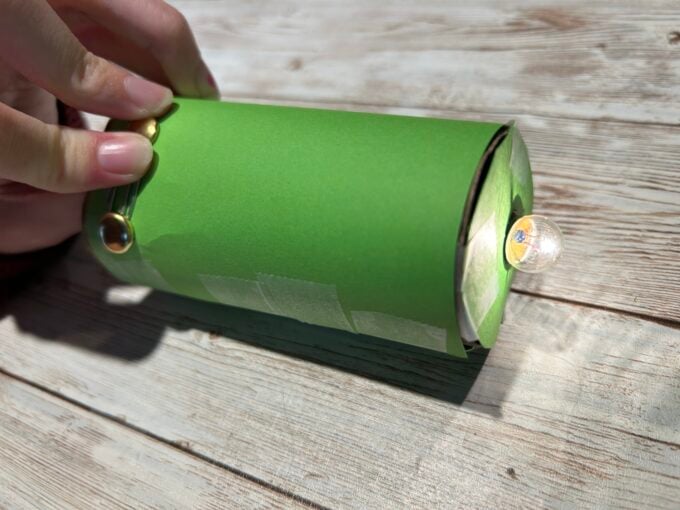
- DIY Flashlight (basic electrical circuit)
- Cardboard Circuit Switch
- Tissue Box Guitar (sound vibration experiment)
- DIY Phone Speaker (sound amplification)
These are great introductory electrical engineering and physics builds for upper elementary.
Weather, Environmental & Renewable Energy Projects
Environmental STEM projects connect engineering to real-world problems. These activities explore renewable energy, climate, water systems, and sustainable design using recycled materials.
Build and investigate:
- Wind Turbine Model (renewable energy experiment)
- DIY Anemometer (measure wind speed)
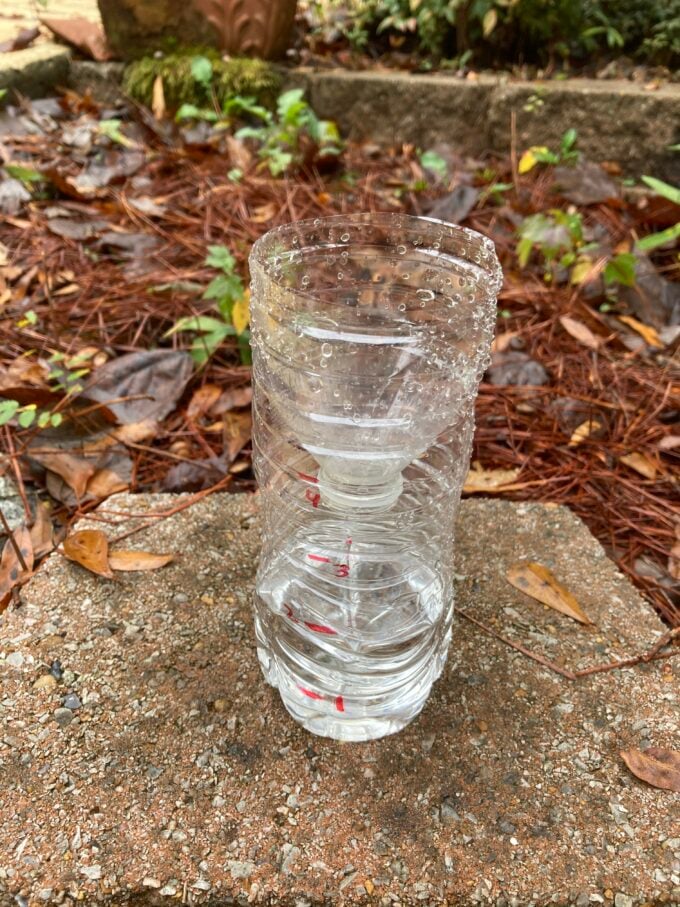
- DIY Rain Gauge
- Plastic Bottle Greenhouse
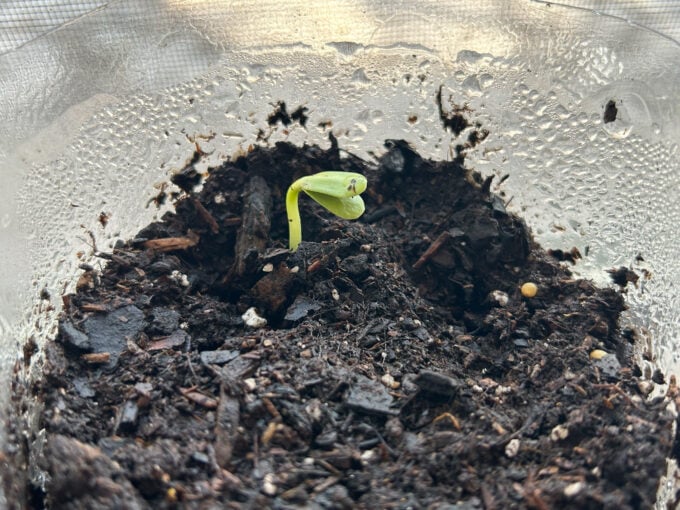
- Eggshell Seed Starter
- Water Filter Engineering Project
- Solar Oven (heat transfer & solar energy)
- Water Pollution Clean Up STEM Challenge
If you’re teaching environmental science or planning April lessons, pair these with our Earth Day STEM Hub for a complete eco-focused unit.
Recycling Science Experiments
These investigations focus on physics and chemistry concepts like air pressure, light, heat transfer, and material properties — all using everyday recyclable items.
Explore:
- Crushing Can Experiment (air pressure & temperature change)
- Pinhole Camera (light & optics)
- Recycling Paper (material breakdown & reforming)
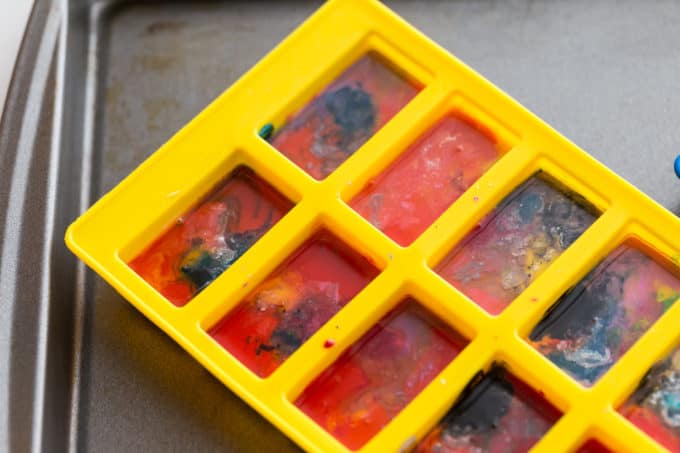
- Melting Crayons (states of matter & heat transfer)
These experiments are easy to turn into data-driven science fair projects.
Recycling Science Fair Project Ideas
Many recycling projects can become full science fair investigations with one small shift — test a variable.
Here are strong experiment angles:
Engineering Questions
- Which paper shape supports the most weight?
- How does gear size affect speed?
- Which pulley setup requires the least force?
Physics Questions
- How does the length of a rubber band affect the car distance?
- At what water level does a bottle rocket launch the highest?
- Which surface reduces hovercraft friction the most?
Environmental Questions
- Which recycled material insulates ice the longest?
- Which water filter design removes debris best?
- How does greenhouse placement affect plant growth?
Encourage students to:
- Ask a testable question
- Control variables
- Record data
- Redesign and improve
This transforms a fun recycling activity into a real scientific investigation.
Recycling Projects by Grade Level
Grades K–1
- Paper Tower
- Tissue Box Guitar
- Eggshell Seed Starter
Grades 2–3
- Balloon Car
- Paper Bridge
- Wind Turbine Model
- Water Filter
Grades 4–5
- Bottle Rocket
- Pulley System
- Archimedes’ Screw
- DIY Flashlight

What Recycled Materials Should You Save?
Start a simple STEM recycling bin with:
- Cardboard boxes
- Paper towel and toilet paper tubes
- Plastic bottles
- Egg cartons
- Cereal boxes
- Old CDs
- Scrap paper
- Clean tin cans (smooth edges)
Add basic building tools:
- Tape and glue
- Rubber bands
- String
- Craft sticks
- Pipe cleaners
- Rulers and measuring tape
Recycling Projects for Kids FAQ
What can kids build from recycled materials?
Kids can build cars, towers, bridges, rockets, simple machines, circuits, weather tools, and environmental science experiments.
Are recycling projects good for STEM learning?
Yes. They teach engineering design, environmental responsibility, physics, and problem-solving in a hands-on way.
What recycled materials work best for STEM?
Cardboard is the most versatile, followed by plastic bottles and scrap paper.
Keep Exploring
For more eco-friendly science ideas, visit our Earth Day STEM Hub for printable challenges and environmental engineering activities.
Recycling STEM proves that meaningful science learning doesn’t require expensive supplies — just curiosity, creativity, and what’s already in your bin.
Want Everything Organized for You?
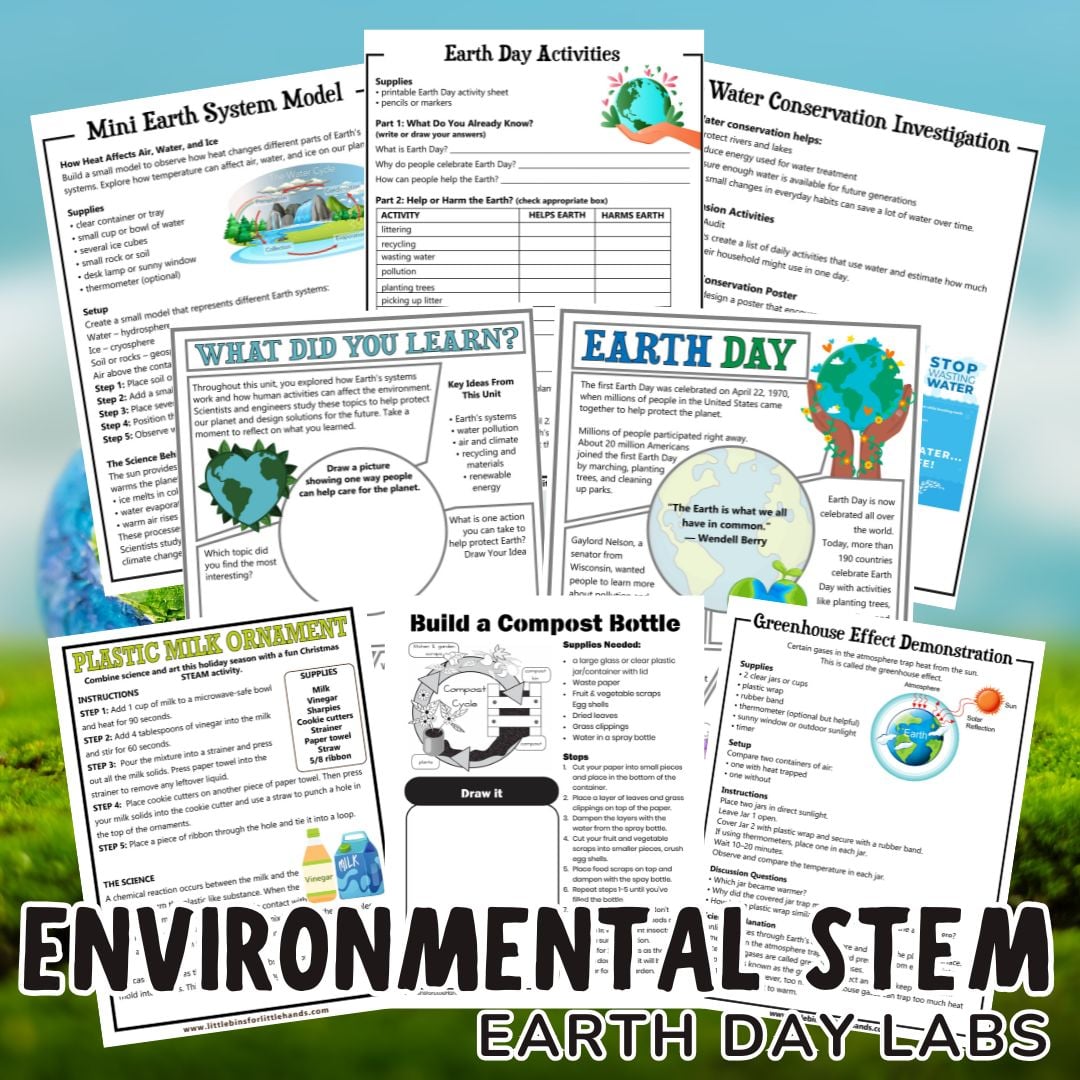
Planning Environmental or Earth Day lessons doesn’t have to mean jumping between 20 different tabs. Our Environmental STEM Printable Pack brings everything together in one ready-to-use resource, with vocab, NGSS questions, and quick-start tips.


3 Comments
Comments are closed.