
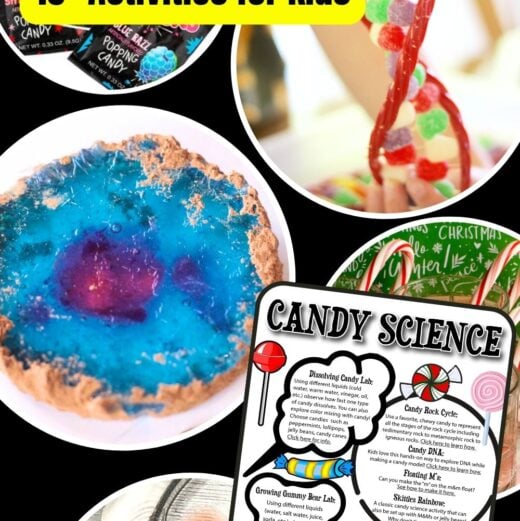
Looking for candy science experiments kids actually get excited about? These easy science activities use favorite candies to explore chemistry, dissolving, osmosis, reactions, engineering, and more with simple supplies you probably already have at home or in the classroom.
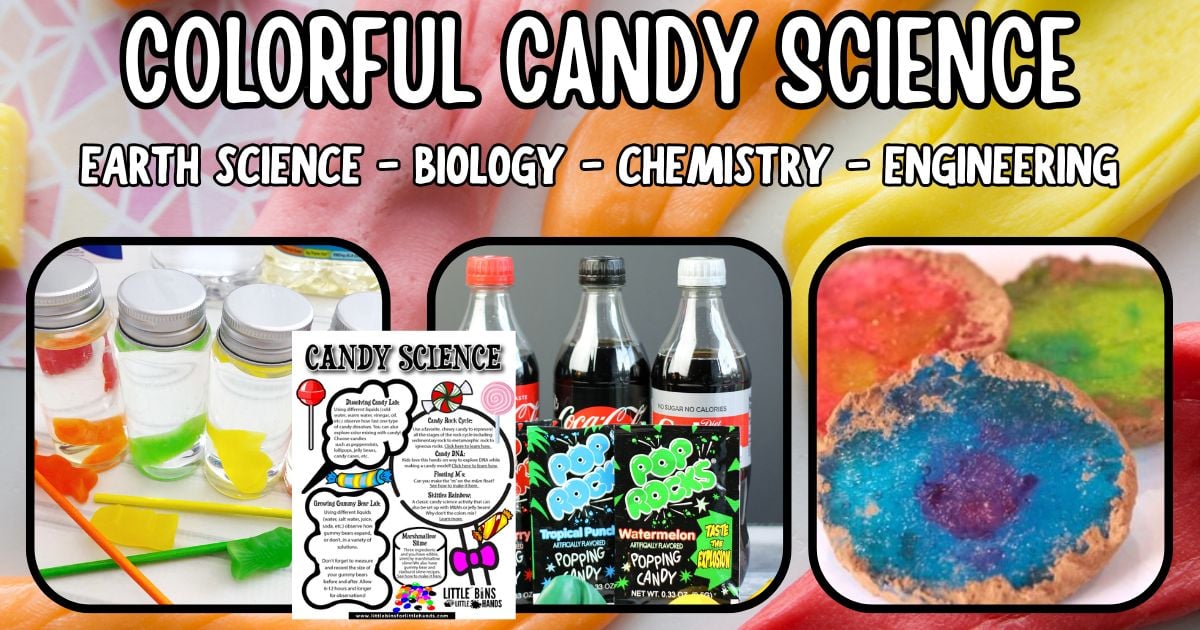
Candy Science At A Glance
From growing gummy bears and rainbow Skittles to edible geology and candy engineering challenges, these hands-on candy experiments make science fun, colorful, and memorable for preschoolers through elementary-age kids.
Field: Chemistry • Physics • Earth Science • STEM
Grades: Preschool–5th Grade
Concepts Explored: Dissolving, osmosis, density, chemical reactions, polymers, engineering, diffusion, crystal formation, geology, observation skills
What Is Candy Science?
Candy science uses edible materials to demonstrate real science concepts in a way kids can actually see and understand.
With candy experiments, kids can explore:
- dissolving and solutions
- osmosis
- diffusion
- chemical reactions
- density
- engineering and structures
- earth science processes
Because candy changes quickly and visibly, kids can easily observe what happens and make predictions along the way.
Free Printable Candy Science Guide
Turn these candy activities into simple science investigations with printable observation pages and recording sheets.
Use them for:
- homeschool science
- science journals
- STEM centers
- science fair projects
- classroom activities
👉 Get the free candy science worksheets
Easy Candy Science Experiments
Rock Candy Experiment
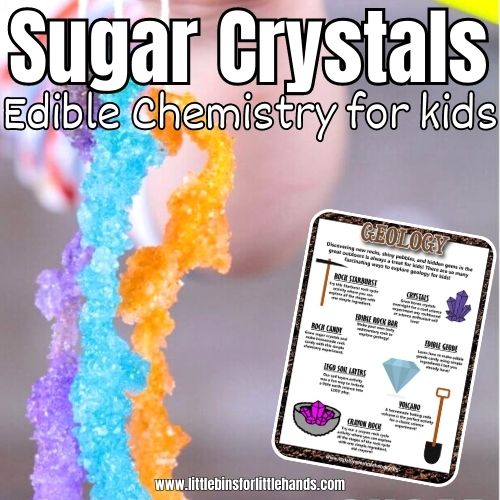
Learn how to grow your own sugar crystals with homemade rock candy! This classic candy science experiment is a fun way to explore crystal formation and supersaturated solutions using just sugar, water, and sticks or string.
Kids can observe crystals forming over several days while learning how dissolved materials can reform into solid crystals as the solution cools.
This activity is perfect for chemistry lessons, science fair projects, and edible science fun.
Dissolving Candy Lab
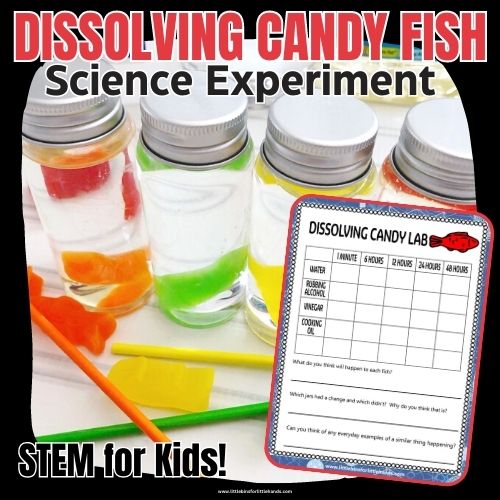
A dissolving candy experiment is one of the easiest ways to introduce scientific observation and comparison testing.
Try different:
- candies
- liquids
- temperatures
Test hard candy, lollipops, gummy candy, peppermints, or chocolate candy to compare which dissolve the fastest.
This is an easy candy science activity for younger kids because the setup is simple and the results are easy to observe.
👉 Try the dissolving candy lab.
Try This Too:
Use colorful candies to create candy color mixing art in water.
Growing Gummy Bears
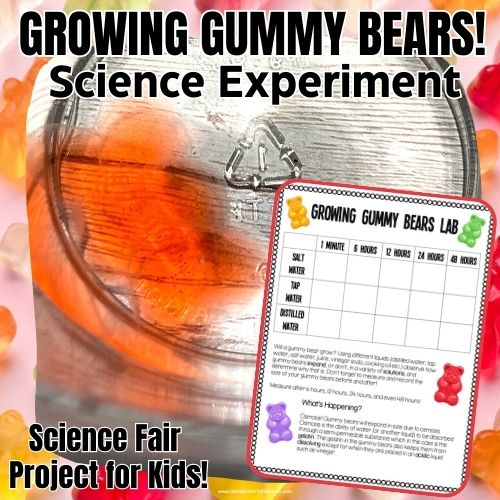
Can you make a gummy bear grow? This classic candy science experiment is always a huge hit because the results are easy to see and surprisingly dramatic.
Place gummy bears in different liquids and compare what happens after several hours. Some gummy bears expand, some shrink, and some barely change at all.
Try:
- water
- salt water
- soda
- juice
- vinegar
Kids can measure and compare results while learning about osmosis and absorption.
👉 Try the Growing Gummy Bears experiment.
Skittles Experiment

The Skittles experiment is one of the most popular candy science experiments for kids.
Arrange Skittles in a circle, add warm water, and watch the colors slowly spread toward the center, creating a rainbow effect. Kids love watching the patterns form while learning about dissolving and diffusion.
Try This Too:
Compare warm water vs. cold water, or try the experiment with M&M’s.
👉 Try the Skittles Experiment.
Floating M Experiment
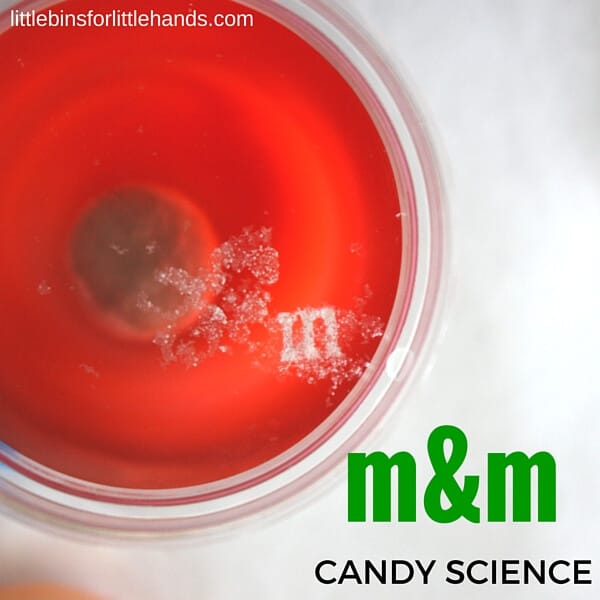
Did you know the printed “m” on M&M candies floats off in water?
This simple candy experiment is fascinating for younger kids and works perfectly as a quick science activity.
Kids observe the candy coating dissolve while the printed letter lifts away and floats on the surface.
👉 Try the Floating M Experiment.
Chocolate Candy Taste Test
This leftover candy activity turns candy into a fun observation-and-comparison experiment. Many chocolate candies look similar on the outside but have very different textures, fillings, and flavors inside.
Set up a blind taste test and compare:
- texture
- color
- shape
- filling
- smell
This activity works especially well after Halloween or holidays.
👉 Take the Candy Taste Test with chocolate
Marshmallow Structures
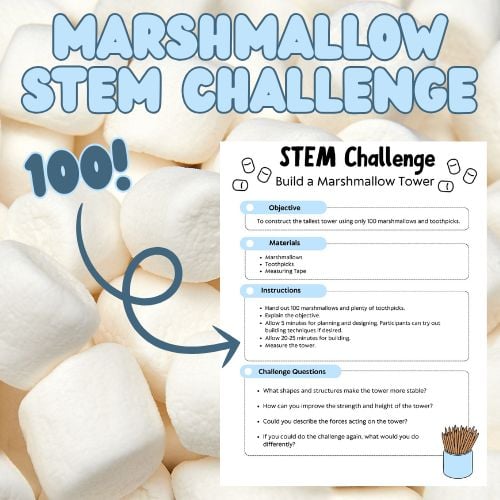
Candy engineering challenges are always a hit with kids. Use marshmallows and toothpicks to build:
- towers
- bridges
- cubes
- pyramids
Kids can test designs, make improvements, and explore simple engineering concepts through play.
👉 Grab these 2D and 3D Marshmallow Shape Cards
Challenge Idea:
Can you build the tallest structure using only 100 toothpicks and 100 marshmallows?
👉 Try Marshmallow Structures (image shown).
👉 Try the classic Marshmallow and Spaghetti STEM Challenge
Starburst Rock Cycle
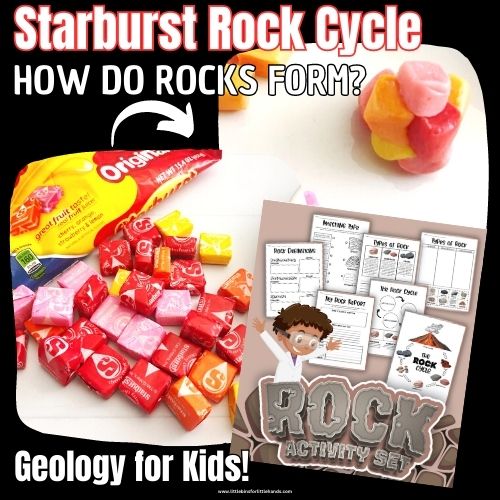
Teach earth science with candy!
Use Starburst candies to model the different stages of the rock cycle. Kids press, stack, and warm the candy to demonstrate sedimentary, metamorphic, and igneous rocks.
This is one of our favorite edible science activities for combining geology with hands-on learning.
👉 Try the Starburst Rock Cycle activity.
Candy DNA Model
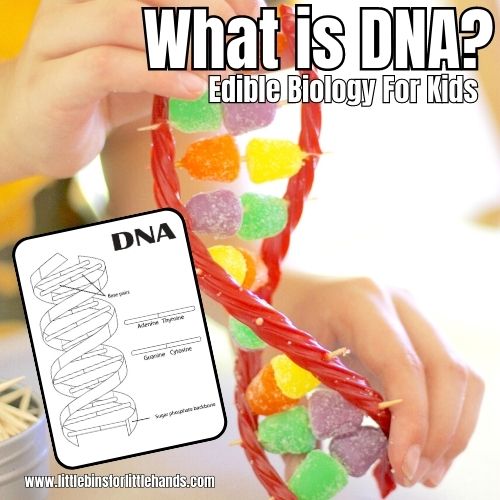
Make biology more hands-on with a candy DNA model.
Kids build a simple DNA strand using candy while learning about patterns, sequencing, and the basic structure of DNA.
This activity works especially well for upper elementary students.
Candy Marshmallow Slime Recipes
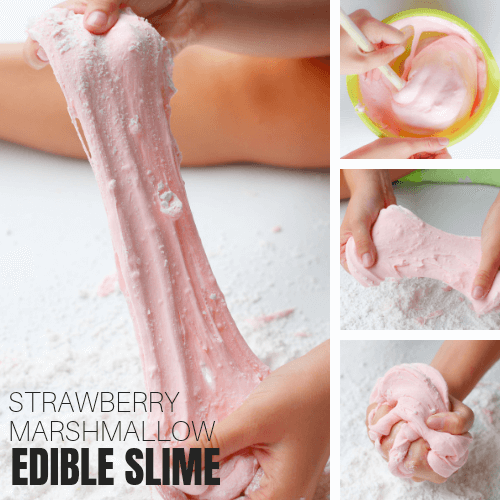
Candy slime combines chemistry and sensory play into one fun STEM activity. Kids can stretch, mix, and experiment while learning about polymers and physical changes.
👉 Try:
Pop Rocks Experiments
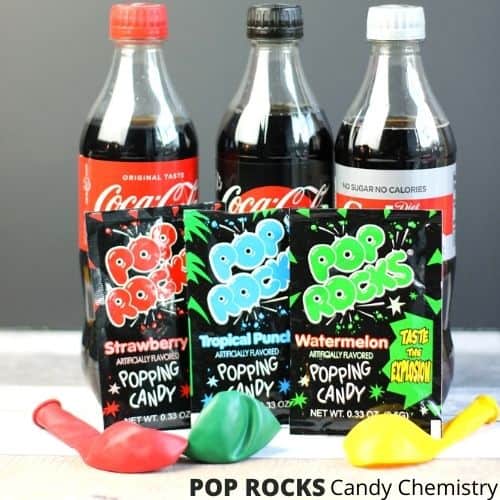
Pop Rocks are a fun way to explore chemistry and the five senses.
Try:
- Pop Rocks and soda
- dissolving Pop Rocks
- sensory investigations
Kids can hear, feel, and observe the reaction as they learn about trapped gas and carbon dioxide.
👉 Try:
Snow Candy
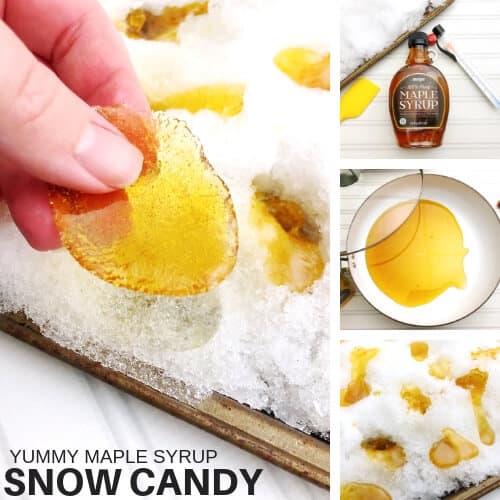
When the snow starts falling, make homemade snow candy.
This old-fashioned candy activity is a fun way to explore temperature changes and states of matter during winter.
Edible Geodes
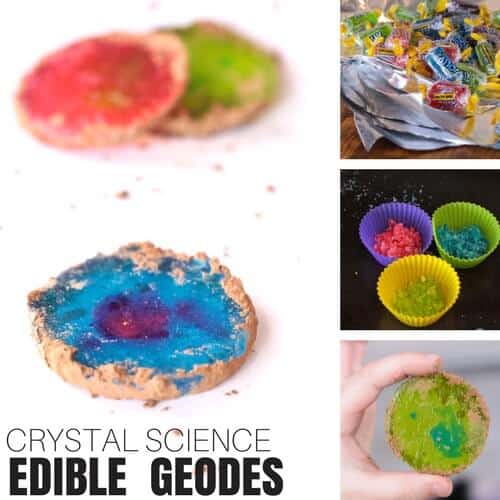
Edible geodes combine geology and candy chemistry into one colorful science activity.
Kids can create crystal-inspired candy treats while learning about rocks, minerals, and crystal formation.
Perfect for an earth science unit!
More Fun Science Projects
Need more science projects for home or in the classroom that are actually do-able? Check out these fun and easy science ideas below. Make sure to download the science worksheets as well!
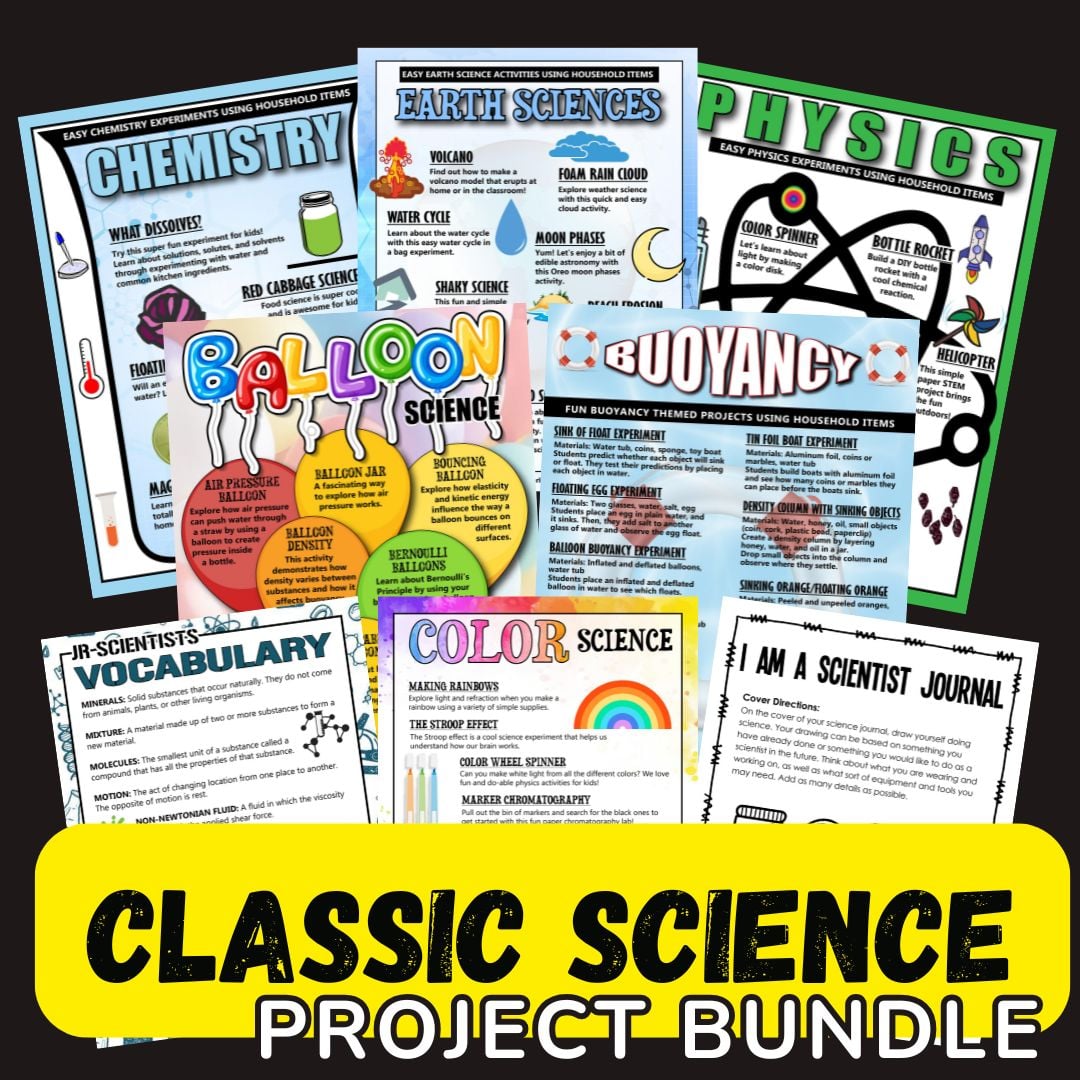
Printable Elementary Science!
Want to do meaningful science — but not start a full unit yet? This starter lab provides quick, hands-on investigations across multiple science topics, allowing students to explore how science works before diving deeper into any one subject.
Perfect for regularly trying science without extensive planning. Grades: K–5.
Candy Science Experiments FAQ
Are candy science experiments real science?
Yes. They demonstrate real chemistry and physics concepts using safe, familiar materials.
Can kids eat the candy afterward?
Only if it has not been contaminated during testing. Many experiments should be considered observation only.
What age is best for candy experiments?
Preschool through middle school. The learning depth changes with age.
Do I need special supplies?
No. Most use common pantry items and leftover holiday candy.
Can these be used for science fairs?
Yes — especially dissolving tests, gummy bear osmosis, and Pop Rocks reactions.