

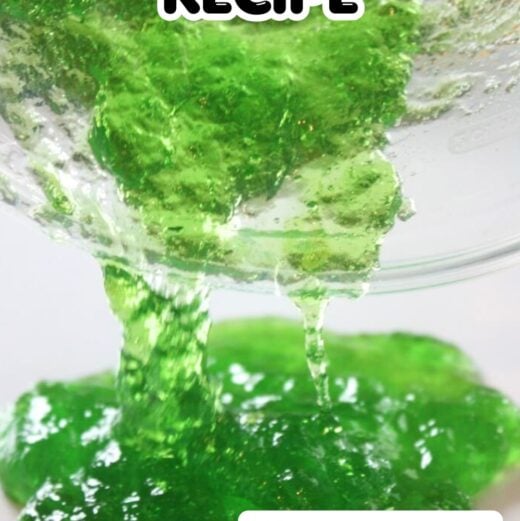
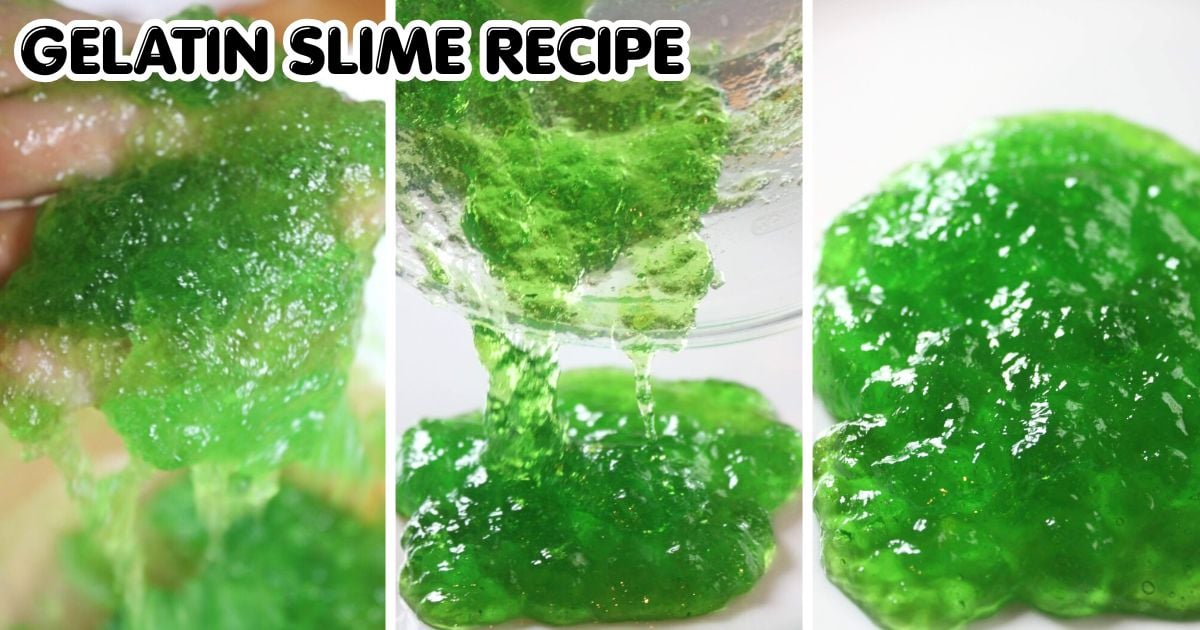
Looking for an easy gelatin slime recipe? This stretchy, gooey slime is made with simple kitchen ingredients and provides a fun introduction to polymers, material properties, and slime science. Unlike traditional slime recipes, gelatin slime uses food-based ingredients to create a unique texture that kids will love exploring.
👉 Whether you’re looking for a taste-safe sensory activity, a kitchen chemistry experiment, or a fun way to learn about polymers, this gelatin slime recipe is simple to make and packed with hands-on learning.
The Science Behind It
- Field: Chemistry—Polymers & Materials Science
- Grades: Preschool–5
- Concepts Explored: Polymers, viscosity, material properties, food science, sensory exploration, observations, and comparisons.
Why Make Gelatin Slime?
This gelatin slime recipe is a fun way to explore polymer science using simple kitchen ingredients. If your kids enjoy slime experiments, be sure to check out our Slime Science guide and learn more about polymers in everyday materials.
Supplies Needed
- Fork or spoon
- 3 packets unflavored gelatin
- 1/4 cup corn syrup
- 1/2 cup boiling water
- Food coloring (optional)
- Flavoring (optional)
- Bowl
How To Make Gelatin Slime
Step 1
Bring the water to a boil and add food coloring if desired.
Step 2
Slowly sprinkle the gelatin into the hot water while stirring. Some small clumps may still form.
Step 3
Allow the mixture to sit for about 5 minutes.
Step 4
Add the corn syrup and stir until combined.
Step 5
Let the mixture cool slightly before exploring the texture.
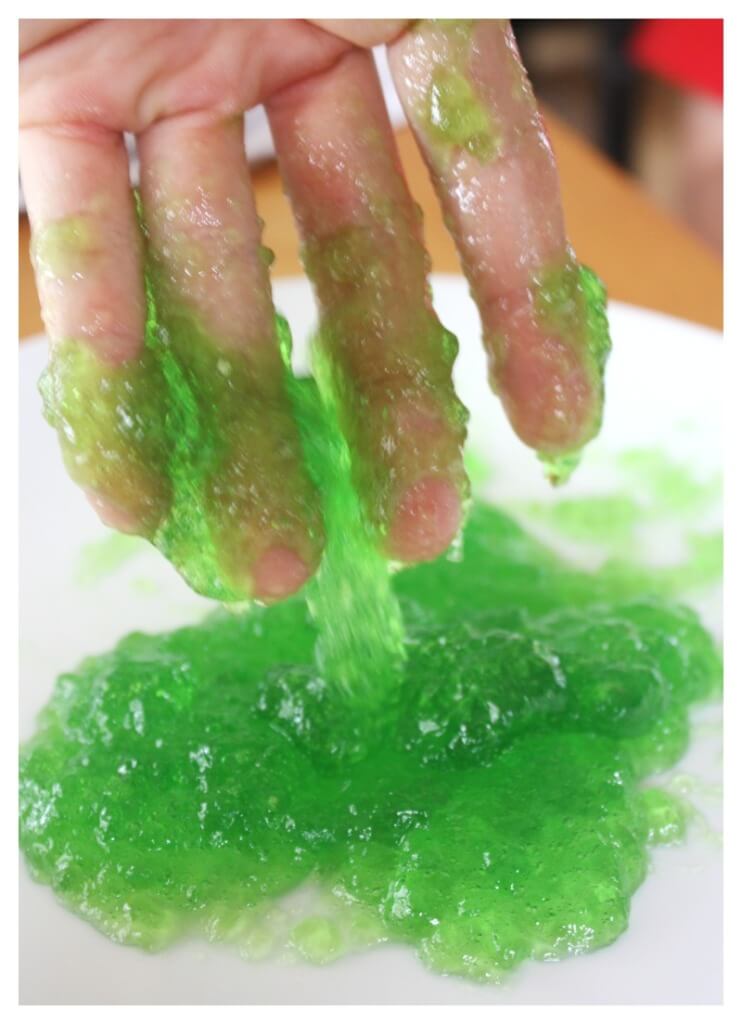
💡 Stretch it, squeeze it, and observe how it behaves differently from traditional slime.
What Happened?
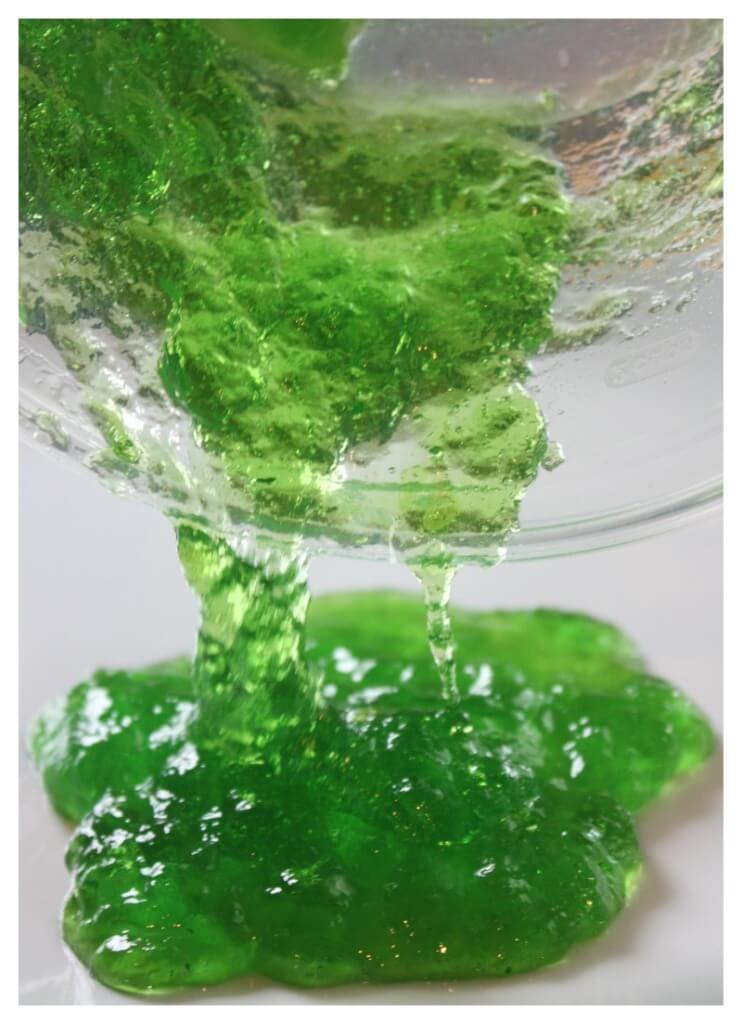
The gelatin and corn syrup combine to create a thick, stretchy material that behaves differently from a typical liquid or solid.
When pulled slowly, the slime stretches into long strands. When squeezed, it flows and changes shape. The result is a gooey material that makes a fantastic sensory science activity.
The Science of Gelatin Slime
Although this slime is made from food ingredients, it still demonstrates important chemistry concepts.
Gelatin contains proteins that form long polymer chains when mixed with water. These chains interact with one another to create the stretchy, gooey texture that makes gelatin slime so much fun to play with.
Polymers are materials made of many repeating units connected together into long chains. These chains give materials unique properties such as stretchiness, flexibility, and elasticity.
The corn syrup changes how the polymer chains move, which affects the slime’s texture.
- More corn syrup creates longer, stretchier strands.
- Less corn syrup creates a thicker, chunkier slime.
💡 Small changes in the recipe create noticeable changes in the material properties.
Want to learn more about the polymer science behind slime? Grab our free Slime Chemistry Starter Guide below.
FREE Slime Chemistry Starter Guide
Ever wonder why slime stretches, bounces, and flows?
Grab our FREE Slime Chemistry Starter Guide to learn the science behind slime, polymers, and material properties while exploring fun slime activities kids love.
✔ Learn the science of slime
✔ Explore polymer chemistry
✔ Discover why different slimes behave differently
✔ Includes kid-friendly science activities
Is Gelatin Slime a Polymer?
Yes! The proteins in gelatin form polymer chains that help create the slime’s unique texture.
Food polymers are found in many everyday foods, including:
- Gelatin
- Gummy candy
- Marshmallows
- Bread dough
- Taffy
Gelatin slime is a simple way to explore polymer science using common kitchen ingredients.
👉 Learn more about polymer science for kids here and find more fun kitchen science activities to try.
Try Different Textures
Experiment with the amount of corn syrup you use.
Try:
- Less corn syrup for thicker slime
- More corn syrup for stretchier slime
- Different food coloring colors
- Different flavorings
Compare how each batch feels and behaves.
- Which version stretches the farthest?
- Which version feels the thickest?
- Which version flows the slowest?
More Facts For Kids
- Gelatin is made from proteins.
- Proteins are natural polymers.
- Polymers can be natural or synthetic.
- Many foods contain polymers.
- Slime demonstrates how polymer chains can stretch and move.
- Scientists use polymers to create materials with specific properties.
Gelatin Slime FAQ
What is gelatin slime made of? Gelatin slime is made from unflavored gelatin, water, and corn syrup.
Is gelatin slime edible? The ingredients are food-based and taste-safe. Most kids use it as a sensory science activity rather than a snack.
Why is gelatin slime stretchy? The proteins in gelatin form polymer chains that create stretchy strands and gooey textures.
What happens if you add more corn syrup? More corn syrup usually creates longer, stretchier strands and a thinner texture.
Is gelatin slime the same as regular slime? No. Traditional slime uses an activator such as saline solution or borax. Gelatin slime relies on food ingredients to create its texture.
Can I add food coloring? Yes. Food coloring is an easy way to customize your slime.
Is gelatin slime safe for young children? Because it is made with food-based ingredients, it can be a good taste-safe alternative for younger children. Adult supervision is still recommended.
More Slime Recipes To Try
More Chemistry Activities for Kids
- Physical and Chemical Changes
- Slime Science
- What Is a Polymer?
- Kitchen Chemistry Activities
- Chemistry Experiments for Kids
- States of Matter Activities
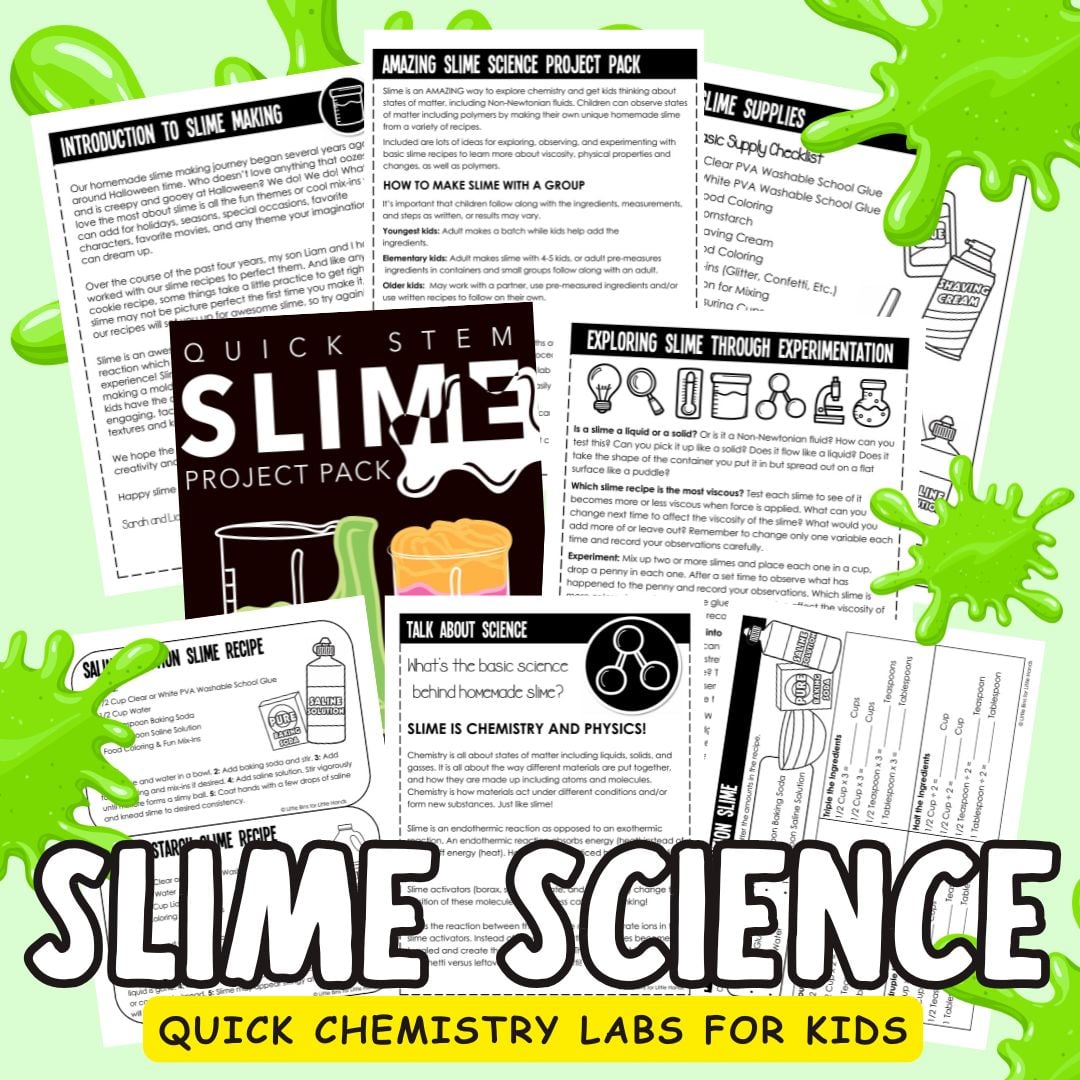
Extend the Learning with Slime
Our printable Slime Activity Pack includes step-by-step recipes, observations pages, challenges, and science extensions — perfect for home or classroom use.

Thanks for posting these great ideas. I am most happy to find an ‘edible’ recipe for slime however I have not been successful with this particular recipe yet even with considerable experimentation.
I’ve used
1/2 boiling water
x3 sachets of non flavoured gelatin (10 g a sachet compared with knox gelatin’s 7g per sachet)
experimented with 1/8 to 1/2 cup of light corn syrup
2 drops of green food coloring.
I currently have it in the fridge to see if that makes a difference but I was expecting the polymer to happen immediately much like borax/glue slime. Are you able to help me out?
Thanks for your help!!
Sorry, that should read 1/ cup boiling water
Argh! 1/2 a cup of boiling water. Sorry :-$
About how much does this make? I’m doing this with 20 kids and unsure how much to make!
It doesn’t make a whole lot maybe 1 batch to three kids.
I did a bit of experimenting my self and my measurements are exactly what worked for us. I am not sure if temperature, location, or water could have an effect on it. The edible slime is certainly more gooey and messy than our traditional slime.
What happens if i use flavoured gelatin
We could not get the right consistency with the flavored gelatin so you may need to experiment a bit!
How much water did you use?