
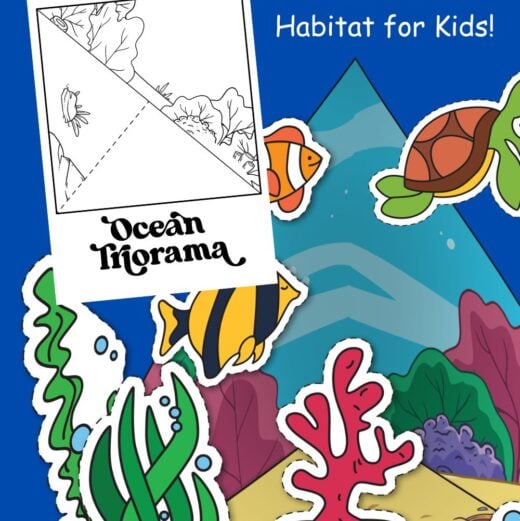
Looking for an easy ocean diorama project for kids? This printable ocean triorama is a simple 3D ocean habitat project students can color, cut, fold, and build.
Kids can create an ocean scene with fish, a sea turtle, coral, seaweed, shells, ocean plants, and other habitat pieces. It is a great project for an ocean unit, summer camp, homeschool science, STEM centers, art centers, or a final ocean science project.
Use this ocean diorama to help kids show what they have learned about ocean animals, habitats, coral reefs, ocean zones, and marine ecosystems.
Ocean Diorama Project Quick Guide
Best For Grades: 1–5
Subjects: Science, STEM, Art, Ocean Theme
Time Needed: 30–60 minutes
Main Skills: Cutting, folding, coloring, building, labeling, explaining
Use For: Ocean units, habitat projects, science centers, summer camp, final projects, early finishers, and classroom displays
👉 Explore more Ocean Science Activities here
Why Make an Ocean Diorama?
An ocean diorama gives kids a hands-on way to show what they know.
Instead of only reading about ocean habitats, students build a model they can point to, label, and explain. This helps them connect ocean animals to the places where they live.
Students can use an ocean diorama to show:
- where ocean animals live
- what ocean animals need to survive
- how animals use their habitat
- how ocean plants and coral provide shelter
- how animals, plants, and the ocean environment are connected
It also makes a great display project after learning about ocean zones, animal adaptations, coral reefs, food chains, or ocean conservation.
Supplies Needed
- Free printable ocean triorama template
- Crayons, markers, or colored pencils
- Scissors
- Glue stick or tape
- Cardstock, optional
- Pencil
- Optional: labels, sticky notes, or sentence strips
Tip: Print on cardstock if you want the triorama to stand more easily. Regular computer paper also works, but kids should glue the finished project onto construction paper.
Free Printable Ocean Diorama
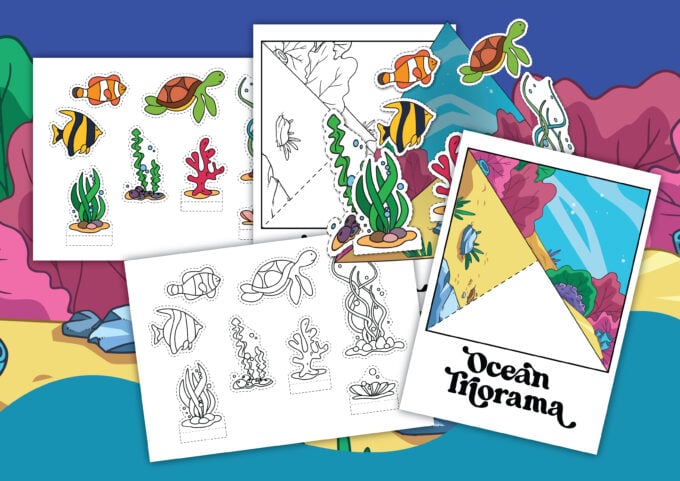
Want the printable template? Grab the free Ocean Triorama Template and build a simple 3D ocean habitat with printable ocean animals, plants, coral, shells, and habitat pieces.
How To Make an Ocean Diorama
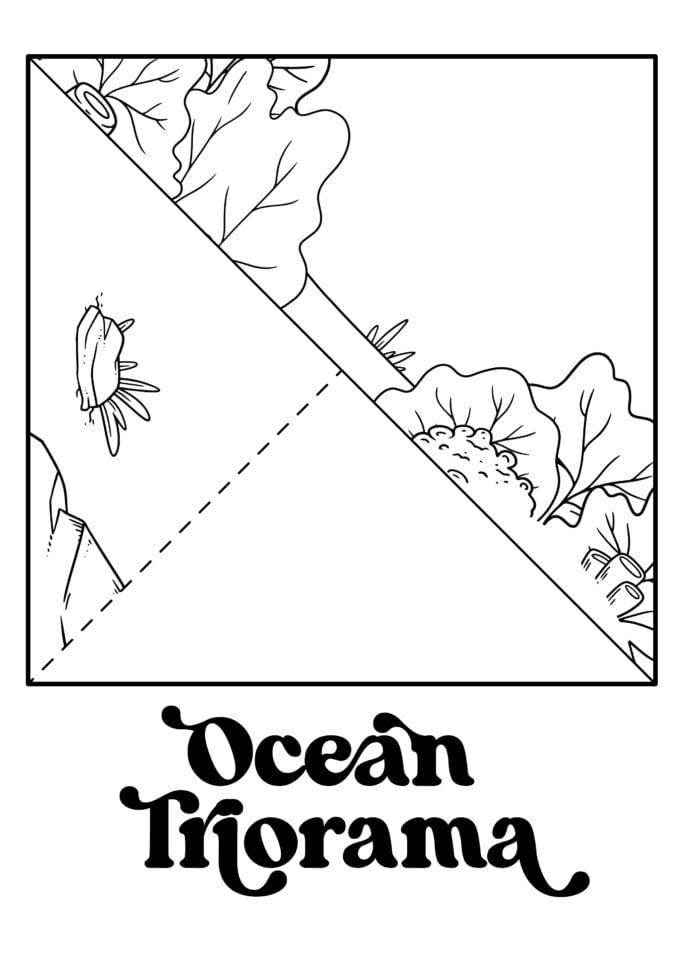
Step 1: Print the Ocean Triorama Template
Print the ocean triorama background and the ocean animal pieces.
You can use the color version for a quick project or the black-and-white version if students will color their own ocean scene.
Older kids can cut and fold their own blank template, starting from scratch.
Step 2: Color the Ocean Scene
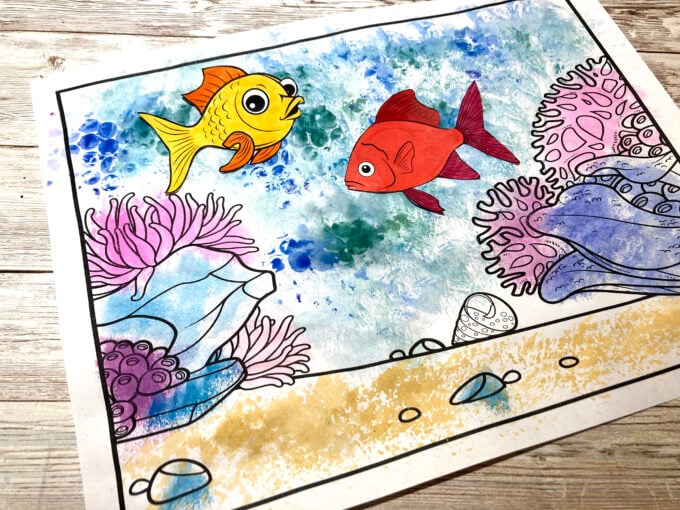
If using the black-and-white version, have students color the background first.
Encourage them to think about the habitat:
- Is this a coral reef?
- Is this a sandy ocean floor?
- Are there rocks, shells, or seaweed?
- What colors might they see underwater?

Step 3: Cut Out the Ocean Pieces
Cut out the ocean animals, coral, seaweed, shells, and plant pieces.
Younger students may need help cutting around smaller pieces.
Step 4: Fold the Triorama
Fold the triorama background along the lines to create the 3D scene.
Help students match the folded edges so the triorama stands up.
Step 5: Add the Ocean Animals and Habitat Pieces
Glue or tape the ocean animals and habitat pieces into the triorama.
Students can place animals near coral, seaweed, shells, or open water, depending on the habitat they want to show.

Step 6: Add Labels
Have students label 3–5 parts of their ocean diorama.
Label ideas:
- fish
- sea turtle
- coral
- seaweed
- shell
- ocean floor
- habitat
- shelter
- food
- predator
- prey
Step 7: Share the Ocean Diorama
Ask students to explain one thing their model shows about ocean life or create a journal page.
They can answer:
- My ocean diorama shows ________.
- One animal in my ocean habitat is _________.
- This animal uses the habitat to ________.
Ocean Diorama Science Connections
This project can be as simple or as detailed as you want.
- For younger students, focus on naming ocean animals and habitats.
- For older students, add labels, facts, food chains, adaptations, or ocean zones.
Ocean Habitats
An ocean habitat is a place in the ocean where living things get what they need to survive.
Ocean animals need:
- food
- water
- shelter
- space
- oxygen
- protection
Students can use their diorama to show where animals might hide, rest, swim, or find food.
Coral Reefs
A coral reef is a busy ocean habitat filled with many living things. Reefs can provide food and shelter for fish, sea turtles, crabs, and other ocean animals.
If students add coral, seaweed, and small animals to the triorama, they can use it as a model of a coral reef habitat.
👉 Take a look at our Coral Reef STEAM Project
Ocean Animal Adaptations
An adaptation is a body part or behavior that helps a living thing survive. After building the diorama, students can choose an animal and describe one of its adaptations.
Examples:
- A fish has fins to help it swim.
- A turtle has flippers to move through water.
- A crab has claws for catching food and protection.
- Some animals use color or shape to hide in their habitat.
👉 Learn more about animal adaptations here.
Ocean Food Chains
Students can also use the diorama to show a simple ocean food chain.
Example:
Ocean plants or plankton → small fish → larger fish
Keep it simple and have students draw arrows to show how energy moves from one living thing to another.
👉 Learn more about animal food chains here.
Ocean Habitat Diorama Ideas
Add a Simple Writing Connection
After building the ocean diorama, students can write one or two sentences about their model.
Use these sentence starters:
- One way people can help ocean habitats is _____.
- My ocean diorama shows _____.
- One animal in my habitat is _____.
- This animal needs _____ to survive.
- One part of the habitat I included is _____.
Students can use the printable triorama in several ways:
- Ocean Conservation Diorama: Add a short note about protecting ocean habitats.
- Coral Reef Diorama: Add coral, fish, seaweed, shells, and a sea turtle.
- Ocean Habitat Diorama: Show where ocean animals find food, shelter, and space.
- Ocean Food Chain Diorama: Add arrows to show how energy moves from one living thing to another.
- Ocean Zones Diorama: Use labels to show where animals might live in the ocean.
Pair This With Ocean Science
This ocean diorama project pairs well with hands-on ocean science activities.
Try it after:
- learning about ocean zones
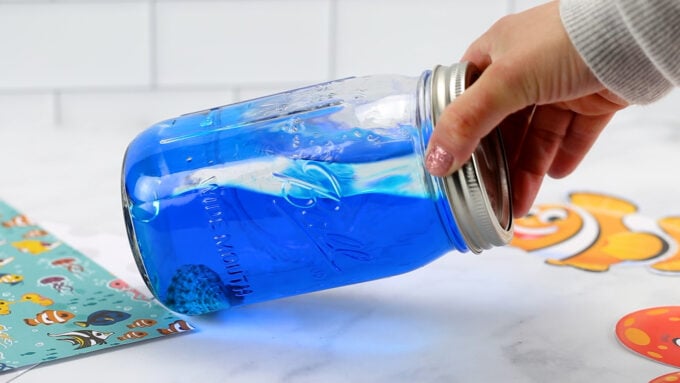
- making layers of the ocean in a jar
- exploring ocean waves and currents
- learning how fish breathe
- testing how sharks float
- exploring how squid move
- learning how whales stay warm
- talking about oil spills and ocean conservation
💡 This helps students move from learning about the ocean to creating a model that shows what they learned.
Want the Full Ocean Unit Organized For You?
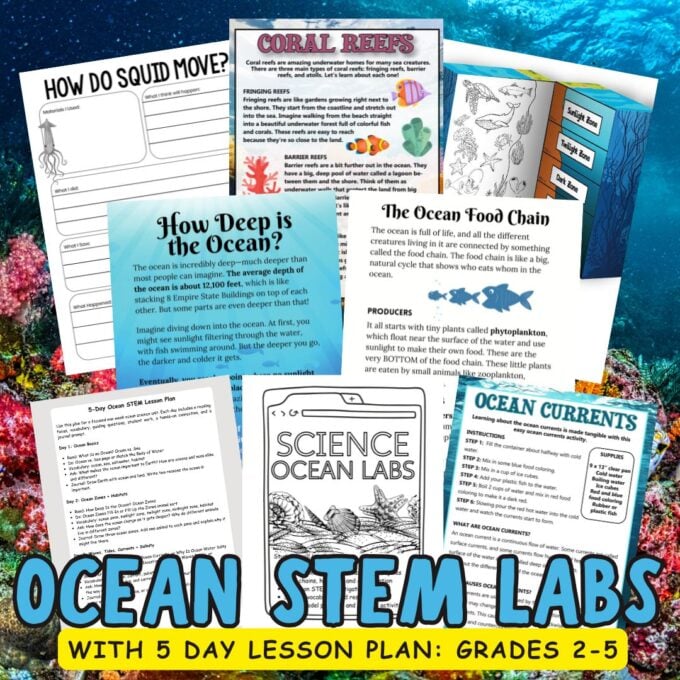
The Ocean STEM Labs Pack for grades 2–5 gives you a ready-to-use ocean science resource with a 5-day lesson plan, reading pages, vocabulary, guiding questions, student response pages, hands-on ocean labs, and final project ideas.
Inside, students explore:
- ocean zones and layers
- waves, tides, and currents
- salinity, density, and water movement
- ocean animals and adaptations
- food chains, pollution, and conservation
- hands-on ocean STEM labs
- ocean triorama, diorama, and coral reef projects
Use it for an ocean unit, science centers, summer camp, homeschool science, or a hands-on Earth science week.
👉 GET THE OCEAN STEM LABS PACK
Ocean Diorama FAQ
What is an ocean diorama?
An ocean diorama is a 3D model that shows an ocean habitat or underwater scene. It can include ocean animals, plants, coral, shells, sand, rocks, and labels.
What is an ocean triorama?
An ocean triorama is a folded paper version of a diorama. It creates a simple 3D ocean scene without needing a shoebox.
What should kids include in an ocean diorama?
Kids can include ocean animals, coral, seaweed, shells, sand, rocks, ocean plants, food chains, labels, and habitat facts.
What animals can go in an ocean diorama?
Students can add fish, sea turtles, crabs, sharks, jellyfish, octopuses, whales, dolphins, seals, or any ocean animal they are studying.
What grade is this ocean diorama project best for?
This project works well for K–5. Younger students can focus on coloring, cutting, and naming animals, while older students can add labels, adaptations, food chains, and written explanations.
Can this be used as a final ocean project?
Yes. An ocean diorama makes a great final project after students learn about ocean zones, habitats, animal adaptations, food chains, waves, currents, or conservation.
How do you make an ocean diorama without a shoebox?
Use a printable ocean triorama template. Students can color, cut, fold, and glue the pieces to create a 3D ocean habitat on paper.