
What happens when rain falls on bare soil compared with soil covered by leaves or grass?
In this simple soil erosion experiment, kids compare two surfaces, pour the same amount of water over each, and observe which one loses more soil. It’s an easy hands-on way to explore how plant cover can help reduce erosion.
Field: Earth Science
Grades: 1–4, especially 2nd grade
Concepts: Soil erosion, plants, ground cover, water, conservation
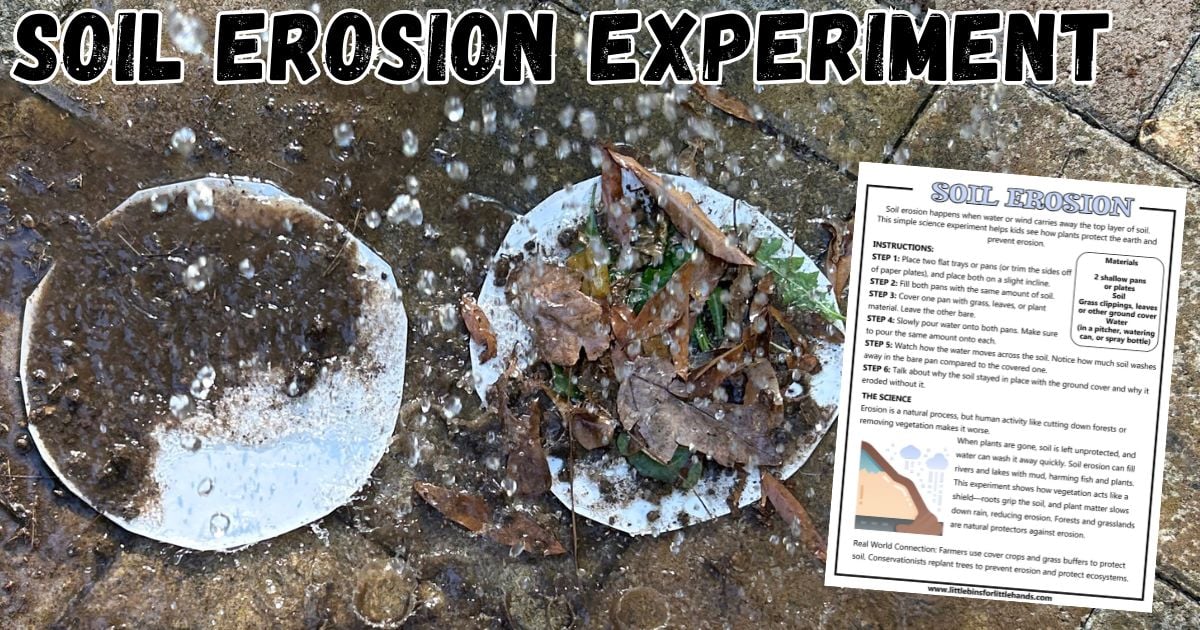
Soil Erosion Experiment
This investigation compares bare soil with soil protected by plant material.
Kids can observe how water moves across each surface and use the results to explain why ground cover helps keep soil in place.
Supplies
- 2 shallow pans or plates
- Soil
- Grass clippings, leaves, or other ground cover
- Water
- Pitcher, watering can, or spray bottle
These are the same simple materials used in the printable activity.
Instructions
STEP 1: Place two shallow pans or plates on a slight incline.
STEP 2: Add about the same amount of soil to each pan.
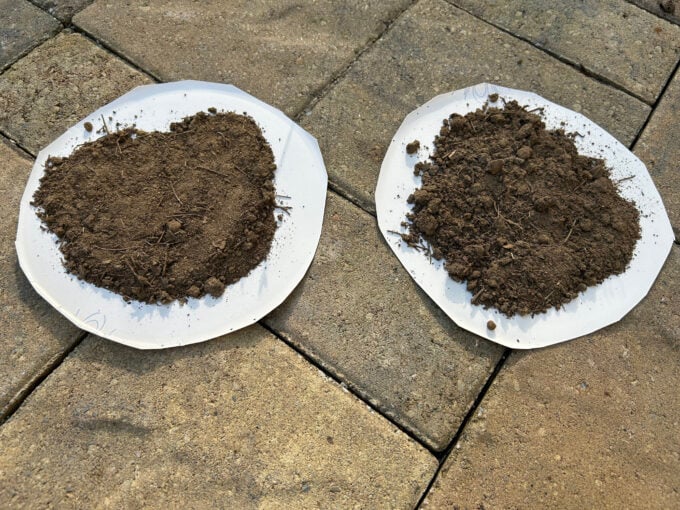
STEP 3: Leave one pan with bare soil. Cover the soil in the second pan with grass clippings, leaves, or other plant material.
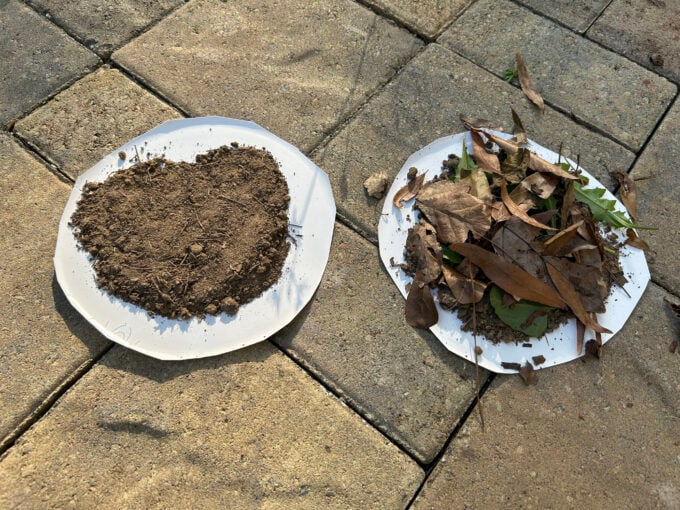
STEP 4: Slowly pour the same amount of water over each pan.
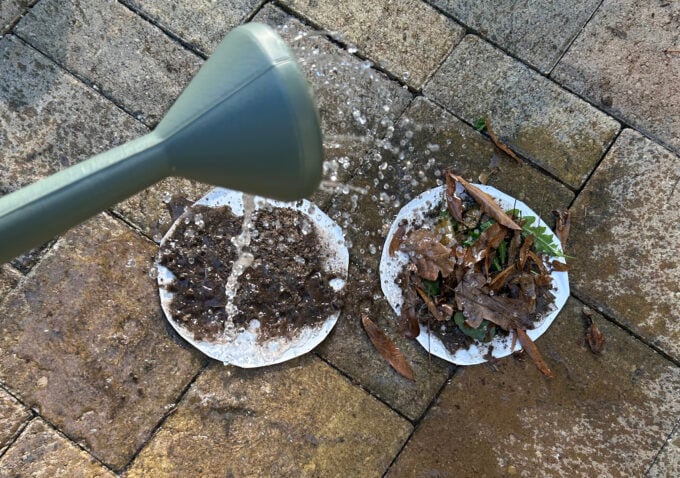
STEP 5: Watch how the water moves across the soil. Compare how much soil washes away from the uncovered pan with how much moves from the covered pan.
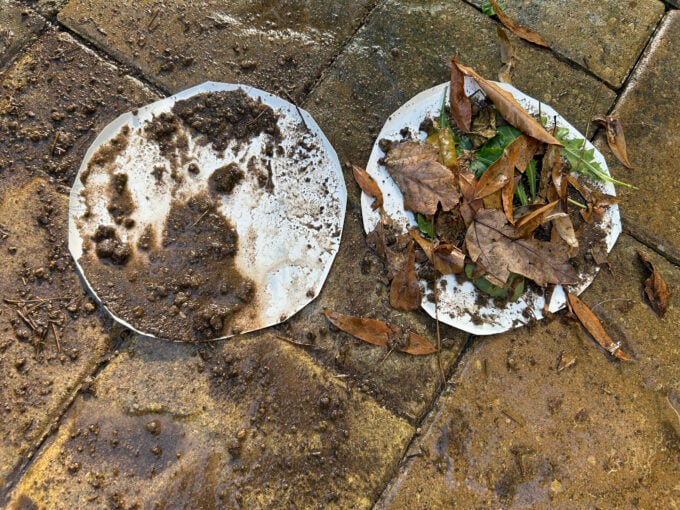
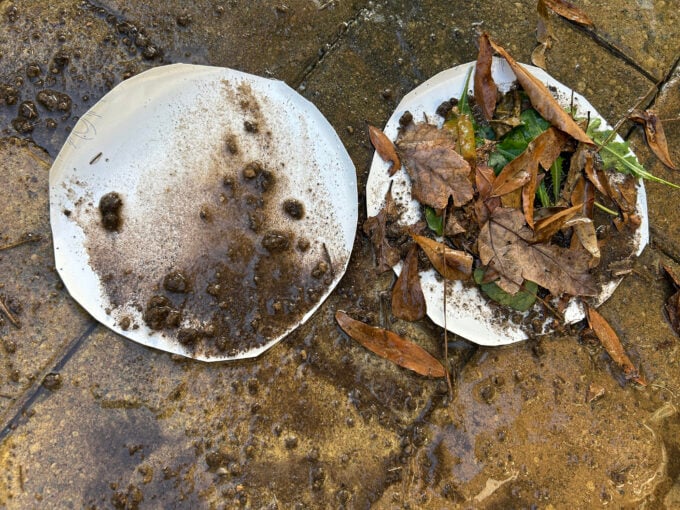
STEP 6: Discuss why the soil with ground cover stayed in place better than the bare soil.
💡 TIP: This activity works especially well outdoors, but you can also set it up inside. Place the pans or trays inside large, shallow clear bins to catch the runoff, and put a dollar-store shower curtain underneath for extra protection. Pour the water slowly from a small cup, measuring cup, or watering can so you can control the flow and keep the amount the same for both trays.
What Should Kids Notice?
The bare soil should lose more material as the water moves across it.
Ask kids to compare:
- How quickly the water moves
- How much soil washes away
- How muddy the runoff looks
- Which pan stays more stable
- How the plant material changes the results
The goal is not just to watch what happens, but to use the observations as evidence.
Why Does Ground Cover Reduce Erosion?
Erosion happens when soil, sand, rock, or other Earth materials are moved from one place to another.
In this experiment, water models rainfall as it moves across the land.
Grass, leaves, and other plant material help protect the soil surface. Plant roots also help hold soil together. Together, vegetation can slow moving water and reduce the amount of soil carried away.
This is why forests, grasslands, and other planted areas can help protect soil from erosion.
Guiding Questions
- Which pan do you predict will lose more soil? Why?
- What happens when the water first hits each surface?
- Which pan loses more soil?
- How does the ground cover change the way the water moves?
- Which pan has muddier runoff?
- What evidence shows that the ground cover helped protect the soil?
- Where might you see something similar happening outdoors?
Record Your Observations
Use the printable observation page to help kids process what happened during the investigation.
Students can record:
- What they noticed when the water first hit the soil
- Which pan lost more soil
- How the ground cover changed the water
- What they would change if they repeated the experiment
- What they learned
This makes the activity especially useful for 2nd grade science because students are making observations, comparing results, and explaining what their evidence shows.
Try Changing One Variable
Repeat the experiment and change just one thing at a time. What is a Variable in science?
Try:
- More or less ground cover
- Leaves versus grass
- Different types of soil
- A steeper slope
- More water
- Faster or slower water flow
Have kids make a prediction before each test.
🔎 Which change causes more erosion? Which helps protect the soil best?
Think Like an Engineer: Slow Down the Erosion
Once kids see how plant cover affects erosion, challenge them to design another way to keep soil from washing away.
Try using:
- Small rocks
- Sticks
- Leaves
- Grass
- A small barrier
- A combination of materials
Pour the same amount of water over the soil again and compare the results.
🔎 Can you design a solution that keeps more soil in place? Explore the Engineering Design Process to extend the activity for older kids or the time you have available.
Soil Erosion in the Real World
Plants can help protect soil outside the classroom too.
Farmers may use cover crops or grassy areas to help keep soil from washing away. Conservationists may replant trees and other vegetation in places where soil has been disturbed.
The same idea kids observe in this experiment applies in the real world: covering and stabilizing soil can reduce erosion.
Explore More Soil and Erosion Activities
Continue your Earth science study with:
- Edible Soil Erosion for Kids – Explore erosion with our cracker soil erosion activity.
- Coastal Erosion Experiment – See how moving water changes shorelines.
- Soil Science for Kids – Explore soil with more hands-on activities.
- Soil Layers Model – Build a simple model of a soil profile.
- Erosion in Action – Compare how different materials respond to moving water.
- 2nd Grade Science Activities – Find more classroom-ready science ideas for this grade level.
Printable Soil Erosion Activity
Use the printable Soil Erosion Experiment and Observation pages to make this investigation easy to add to a science lesson.
Kids can complete the hands-on activity and then use the observation sheet to compare results and explain what they learned.
For a broader soil erosion lesson, pair this experiment with the All About Soil Erosion printable resource, which includes erosion vocabulary, causes and effects of erosion, soil conservation, and additional student activities.
FAQ
What does this soil erosion experiment show?
It shows that soil covered with plant material can lose less soil than bare soil when water moves across it.
Why does plant cover help reduce erosion?
Grass, leaves, and other plant material help protect the soil surface and slow moving water, while plant roots help hold soil in place.
What grade is this experiment best for?
It works well for grades 1–3 and is especially useful for 2nd grade Earth science.
Can I do this experiment outside?
Yes. An outdoor setup works especially well and makes cleanup easier. The activity photos show the experiment completed outside using paper plates.
Can I use something besides grass?
Yes. Try leaves, mulch, small plants, or another type of natural ground cover and compare the results.
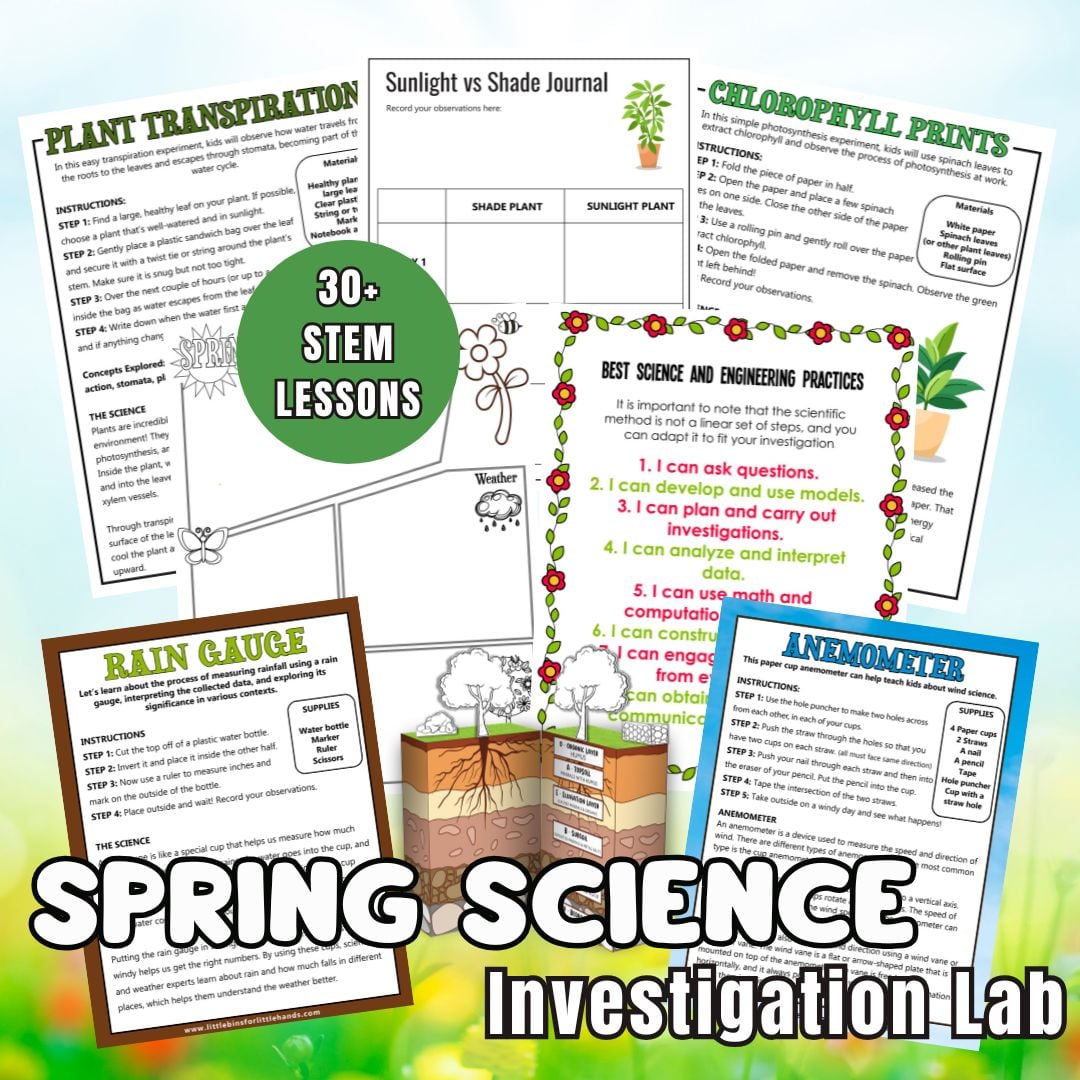
If you’re looking for a ready-to-use collection of investigations, explore our Spring STEM Project Pack, which includes 30 hands-on science and engineering activities covering plants, weather, earth science, life cycles, and STEM challenges.