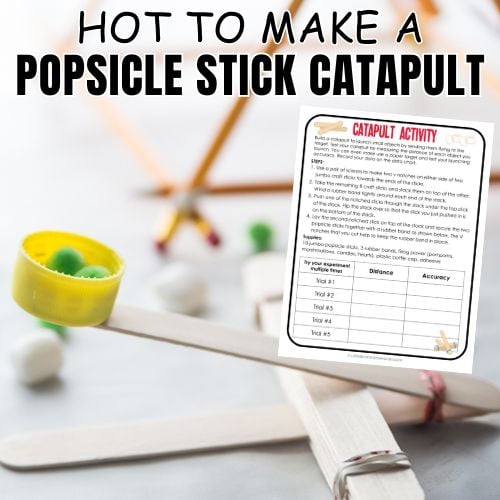
First grade science is all about helping kids observe, ask questions, make predictions, and begin to explain what they notice. Hands-on investigations make science easier to understand because kids can see, touch, measure, compare, and test ideas for themselves. Use a mix of hands-on activities and printables for engaged learning!
These first grade science activities cover life science, physical science, Earth science, weather, space, and STEM with simple materials and classroom-friendly ideas.
Field: General Science
Grades: 1st Grade
Concepts: Observation, plants and animals, life cycles, five senses, forces and motion, sound, light, materials, weather, rocks, day and night
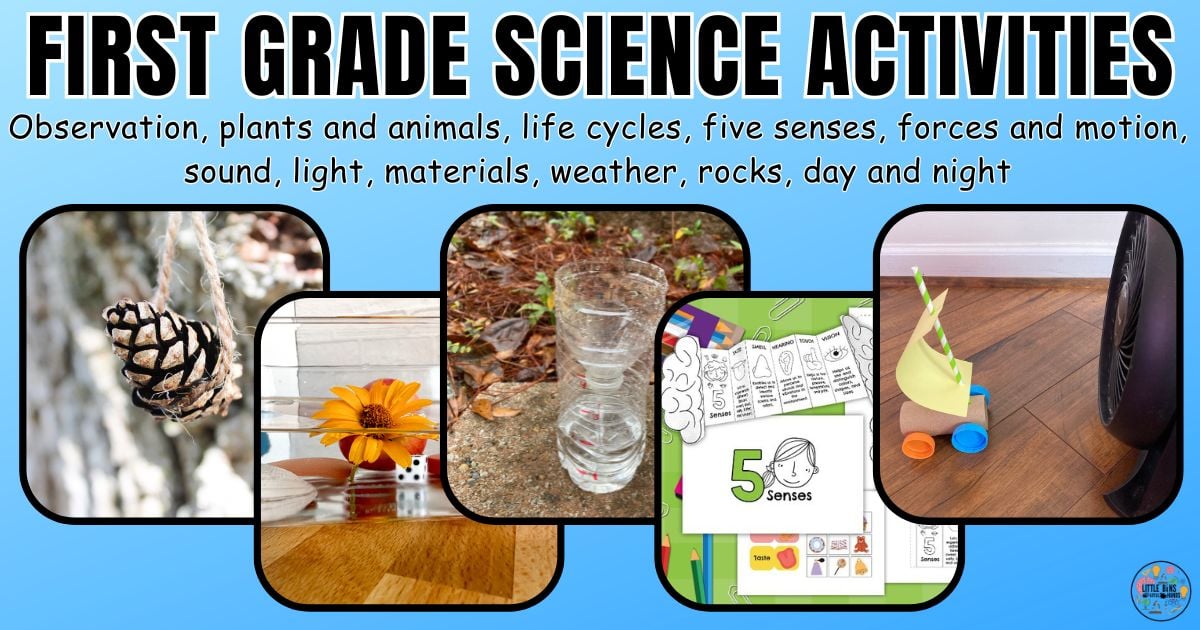
Featured First Grade Science Activities
Start with these simple science activities that work especially well for first graders.
- Sink or Float Experiment – Make predictions, test everyday objects, and compare results.
- Push and Pull Cars – Use toy cars and ramps to explore pushes, pulls, motion, and distance.
- Cup and String Telephone – Investigate how vibrations help sound travel.
- Dancing Sprinkles – Make sound vibrations visible with a quick experiment.
- Plant Growth Investigation – Observe and record how seeds and plants change over time.
- Pine Cone Weather Experiment – Explore how pine cones respond to changing moisture.
- Day and Night Activities – Compare what we observe during the daytime and nighttime.
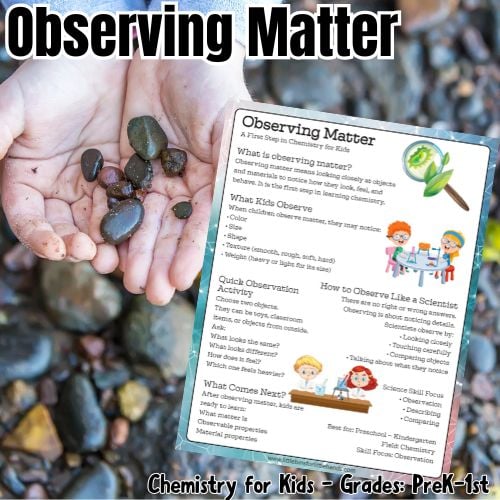
- Rock Observation Activity – Use a magnifying glass to compare color, texture, shape, and other observable properties.


What Do First Graders Learn in Science?
First graders are ready to move beyond simply noticing what happens and begin comparing, measuring, recording, and looking for patterns.
They can practice making observations, asking questions, making predictions, using simple science tools, recording results, and explaining what they notice.
💡 A flashlight, toy car, growing plant, cup of water, or collection of rocks can all become useful science investigations.
👉 Find even more ideas in our Science Experiments for Kids collection.
First Grade Life Science
Plants, animals, life cycles, and the five senses give first graders plenty of opportunities to observe living things and how they interact with the world around them. Explore our Life Science Activities for more ideas.
- Living and non-living things. Help kids compare what makes something living or non-living with our Living and Non-Living Things Activities.
- Plants. Grow seeds, observe roots and leaves, measure growth, and explore what plants need. Find more in our Plant Science Activities and Plant Life Cycle resources.
- Animals and life cycles. Compare how animals grow and change with our Animal Life Cycles and broader Life Cycle Activities collections. Butterfly, frog, bee, chicken, and shark life cycles all work well at this age.
- Daytime and nighttime animals. Our Diurnal and Nocturnal Animals Activities help kids compare animals that are active during the day, at night, or around dawn and dusk.
- Five senses. Use our Five Senses Activities to explore sight, hearing, touch, smell, and taste while building observation skills. Try a mystery object investigation!

First Grade Physical Science
Physical science gives first graders opportunities to explore motion, sound, light, and materials. Visit our Physical Experiments Collection for more ideas.
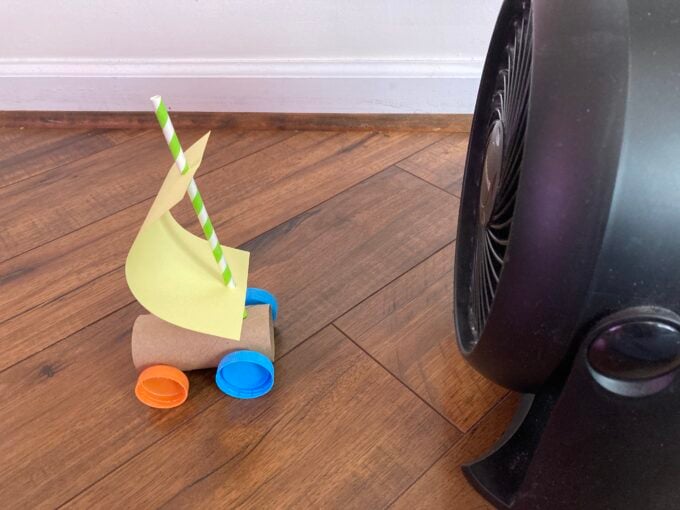
- Forces and motion. Use toy cars and ramps to explore pushes, pulls, speed, distance, and changing motion. Try push-and-pull cars, a ramp-height experiment, a balloon car, a wind-powered car, a pinwheel, or a domino chain reaction. Find more in our Force and Motion Activities.
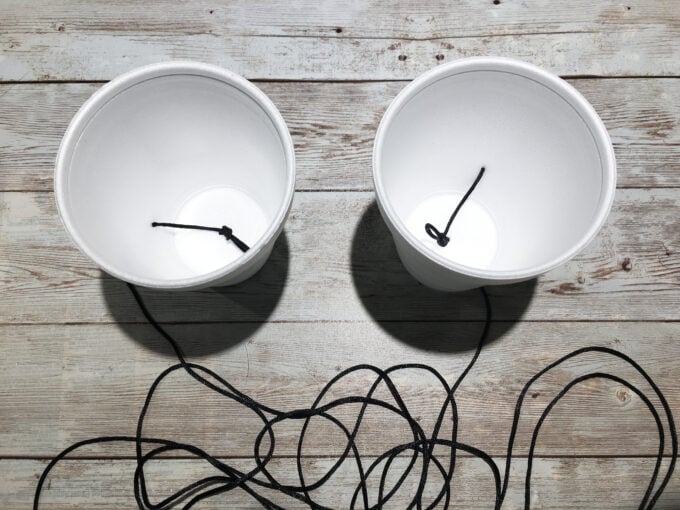
- Sound and vibrations. Try a cup and string telephone, dancing sprinkles, or tissue box guitar to investigate how vibration is connected to sound. Explore our Sound Experiments for Kids for more ideas.
- Light and shadows. Use flashlights, sunlight, mirrors, and everyday objects to explore shadows, reflection, and transparent, translucent, and opaque materials. Find more in our Light Activities for Kids.
- Materials and matter. Compare objects made from wood, metal, plastic, fabric, paper, and rubber. Sort them by properties such as hard or soft, smooth or rough, flexible or rigid, or absorbent or waterproof. Add a Sink or Float Experiment or simple dissolving activity, then explore more in our Matter Activities for Kids.
First Grade Earth and Space Science
Earth and space science gives first graders plenty to observe both outdoors and in the sky. Start with our Earth Science Activities hub for more ideas.
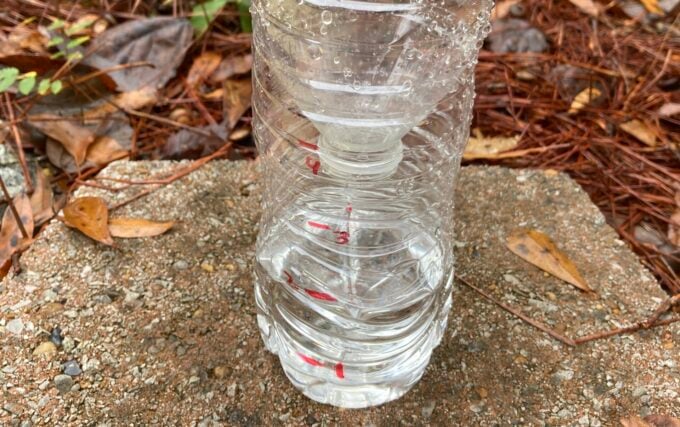
- Weather. Track temperature, wind, rain, clouds, and sunshine. Try a simple homemade weather station with a rain gauge, temperature investigation, pine cone weather experiment, or wind investigation. Explore our Weather Science Activities for more.
- Rocks and soil. Compare rocks by color, texture, shape, size, and patterns. Use a magnifying glass and record observations. Find more in our Rock Activities for Kids.
- Day and night. Our Day and Night Activities help kids compare what they see during the daytime and at night and introduce the idea that Earth’s rotation creates day and night.
- Space. Keep astronomy observation-based, focusing on the Sun, Moon, stars, shadows, and patterns in the sky. Visit our Space Activities for Kids for more elementary astronomy ideas.

Science Skills for First Grade
Hands-on investigations help first graders build science skills they will use throughout elementary school.
- Observation. Encourage kids to slow down, notice details, compare what they see, and describe changes. Visit our Observation Activities for Kids for simple practice.
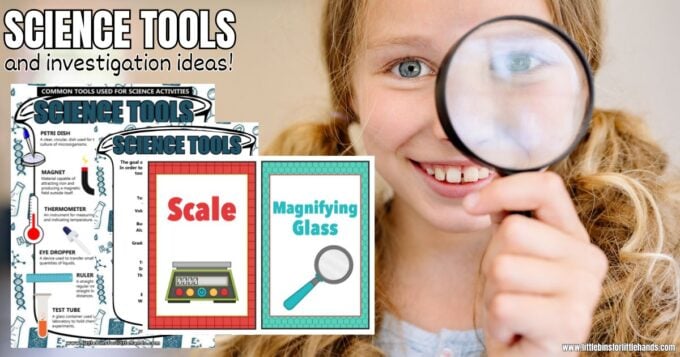
- Science tools. Introduce magnifying glasses, rulers, thermometers, measuring cups, and balances. Explore our Science Tools for Kids post for easy ways to use common tools.
- Scientific method. Keep it simple: ask a question, make a prediction, test the idea, observe what happens, record the results, and talk about what was learned. Visit our Scientific Method for Kids page for printable tools and examples.
- Guiding questions: What do you notice? What do you think will happen? What changed? What stayed the same? What can you measure? What pattern do you notice? What could you test next?
First Grade Science and STEM
Science investigations can easily lead into simple engineering challenges.
After exploring forces, build a paper bridge or design something that moves down a ramp. After investigating wind, create something the wind can move. After learning about animals and habitats, design a simple shelter.
👉 Visit our STEM Activities for Kids and Engineering Projects for Kids for more build, test, and improve challenges.
Printable First Grade Science Resources
Printable science pages can help first graders organize predictions, observations, measurements, drawings, and results without requiring much writing.
Our printable science and STEM resources include investigations, science tools, experiments, and classroom-ready activities for elementary learners.
The All-Access Pass includes our full collection of printable science and STEM packs plus future additions.
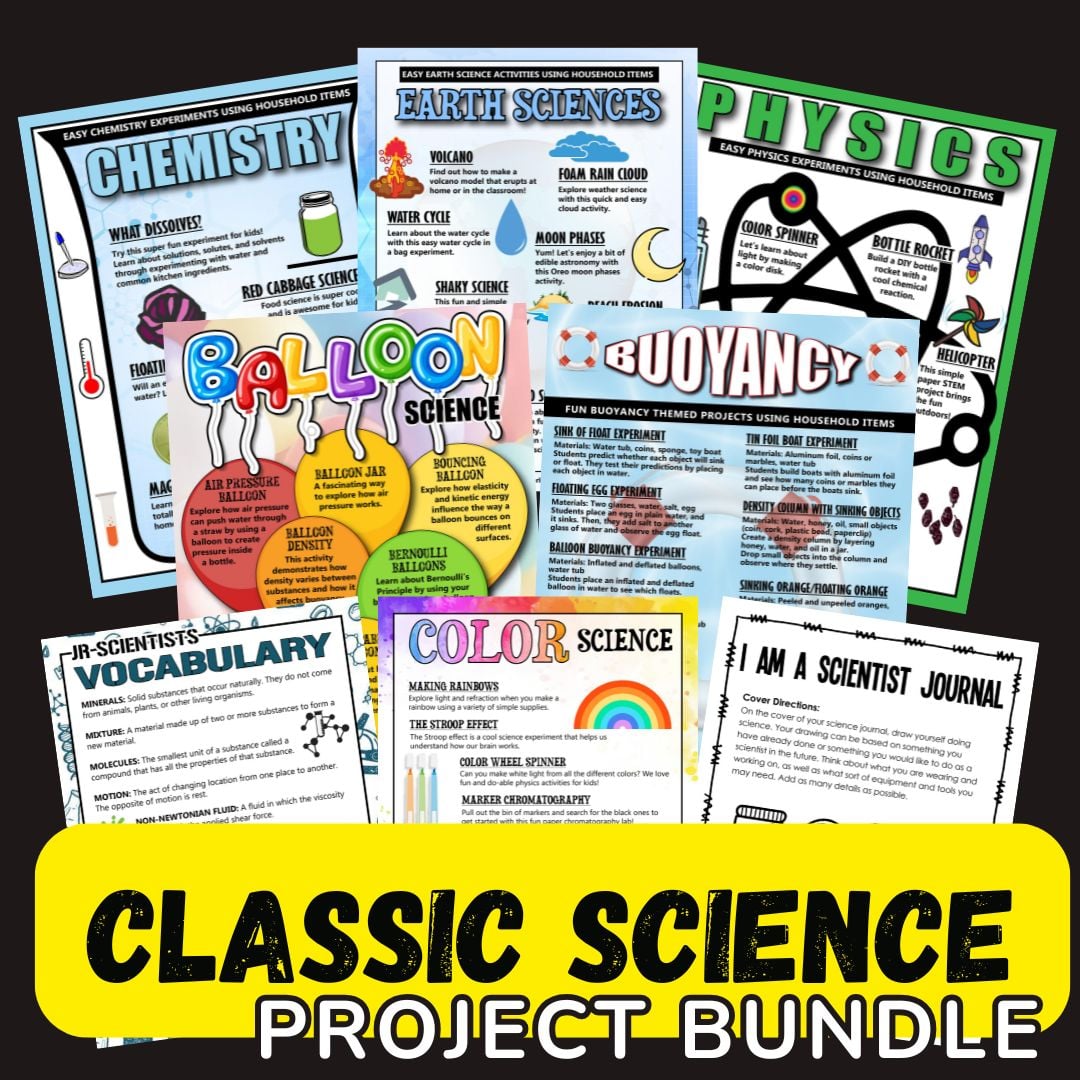
Printable Elementary Science!
Want to do meaningful science — but not start a full unit yet? This starter lab provides quick, hands-on investigations across multiple science topics, allowing students to explore how science works before diving deeper into any one subject.
Perfect for regularly trying science without extensive planning. Grades: K–5.
FAQ
What science should first graders learn? First grade science can include plants and animals, life cycles, the five senses, weather, rocks, day and night, light, sound, forces and motion, materials, and basic investigation skills.
What are good science experiments for first grade? Look for activities with simple materials and results kids can easily observe, such as sink or float, toy car ramps, sound vibrations, plant growth, shadows, weather observations, and rock investigations.
Can first graders use the scientific method? Yes. Keep it simple by asking a question, making a prediction, testing an idea, observing what happens, recording results, and talking about what was learned.
How long should first grade science activities take? Many hands-on investigations work well in about 15 to 30 minutes. Plant growth, weather tracking, and other observation projects can continue over several days.