
Second grade science helps kids move from simple observations to comparing, measuring, recording data, and explaining why things happen. Hands-on investigations make it easier for kids to explore materials, plants, animals, weather, Earth science, forces, and engineering in meaningful ways.Au
Field: General Science
Grades: 2nd Grade
Concepts: Properties of materials, plants, habitats, life cycles, weather, erosion, landforms, rocks, water, forces, observation, measurement
Featured Second Grade Science Activities
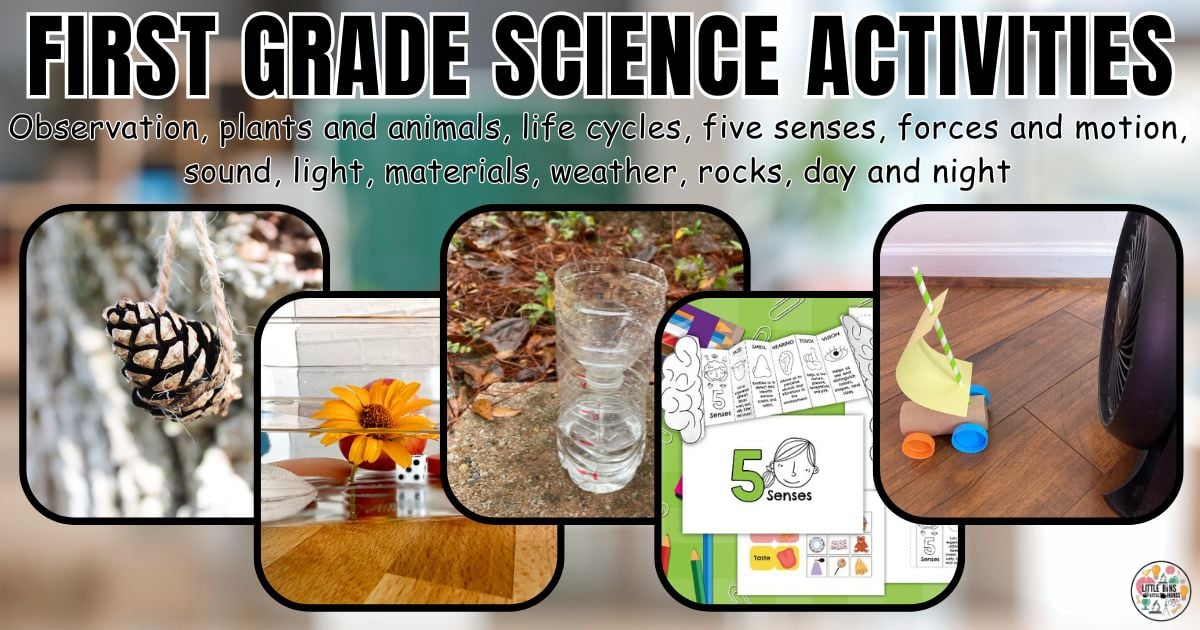
Start with these hands-on activities that fit especially well with second grade science.
- Properties of Materials Investigation – Compare materials by strength, flexibility, texture, absorbency, and other observable properties.
- Natural vs. Man-Made Materials – Sort and compare materials based on where they come from and how they are made.
- Seed Dispersal Activity – Explore different ways seeds travel to new places.
- Pollination Activity – Model how pollen moves from flower to flower.
- Erosion Experiment – Observe how moving water can change soil and land.
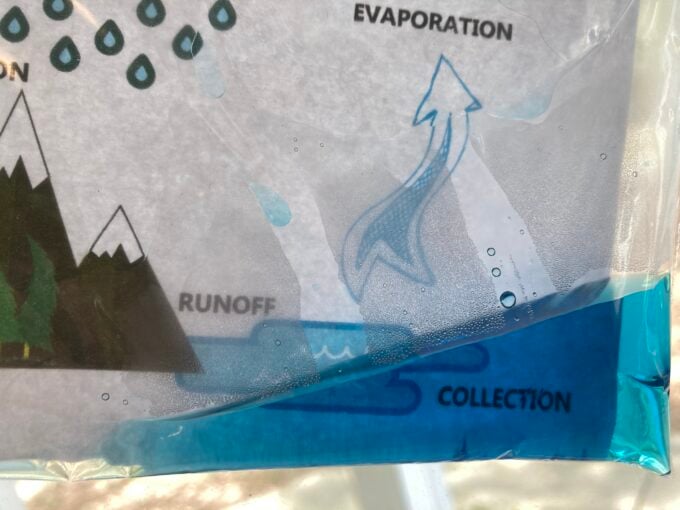
- Water Cycle Activity – Explore evaporation, condensation, and precipitation.
- Animal Habitats Activity – Investigate how habitats provide animals with what they need.
- Force and Motion Investigation – Test how pushes, pulls, surfaces, and other variables affect motion.
What Do Second Graders Learn in Science?
Second graders can begin making more detailed observations and using evidence from an investigation to explain what they notice.
They can practice:
- Comparing materials and their properties
- Measuring and recording results
- Looking for patterns
- Asking questions
- Making predictions
- Using simple science tools
- Organizing information
- Testing ideas
- Explaining results with evidence
👉 Explore our Science Experiments for Kids collection for even more hands-on investigations.
Second Grade Life Science
Second grade life science can include plants, animals, habitats, life cycles, pollination, seed dispersal, and how living things depend on their environments.
👉 Explore our Life Science Activities for more ideas.
- Plant and animal needs. Use our Plant and Animal Needs Worksheets to compare what living things need to survive, grow, and stay healthy, including food, water, air, light, shelter, and space.
- Plants. Investigate what plants need to grow, observe plant structures, and compare different stages of the plant life cycle. Find more in our Plant Science Activities and Plant Life Cycle resources.
- Pollination. Explore how pollen moves between flowers and why pollinators are important to many plants. Use a simple Pollination Activity to make this process easier to see.
- Seed dispersal. Compare the different ways seeds can travel by wind, water, animals, or other methods. A hands-on Seed Dispersal Activity is an easy way to connect plant structures with how plants spread.
- Animal habitats. Explore forests, deserts, oceans, ponds, polar regions, and other habitats. Use our Animal Habitats Activities and Biomes to look at how a habitat provides food, water, shelter, and space.
- Animal adaptations. Compare body structures and behaviors that help animals survive in different environments. Explore more with our Animal Adaptations Activities.
- Life cycles. Compare how plants and animals grow and change over time with our Life Cycle Activities and Animal Life Cycles collections.
- Food chains and ecosystems. Introduce simple relationships between plants and animals by exploring producers, consumers, and basic food chains.

Materials and Physical Science
Materials is an especially useful second-grade science topic because kids can test, compare, sort, and apply what they learn in engineering challenges.
- Observable properties of materials. Compare objects by color, texture, hardness, flexibility, strength, absorbency, transparency, or other properties kids can observe and test.
- Natural vs. man-made materials. Sort materials such as wood, cotton, metal, plastic, stone, and paper and discuss where they come from and how people use them.
- Choosing materials for a purpose. Ask kids which material would work best for a specific job. Which material makes the best rain cover? Which is strongest for a bridge? Which absorbs the most water?
- States of matter. Explore solids, liquids, and gases with simple observations and demonstrations. Find more in our States of Matter Activities.
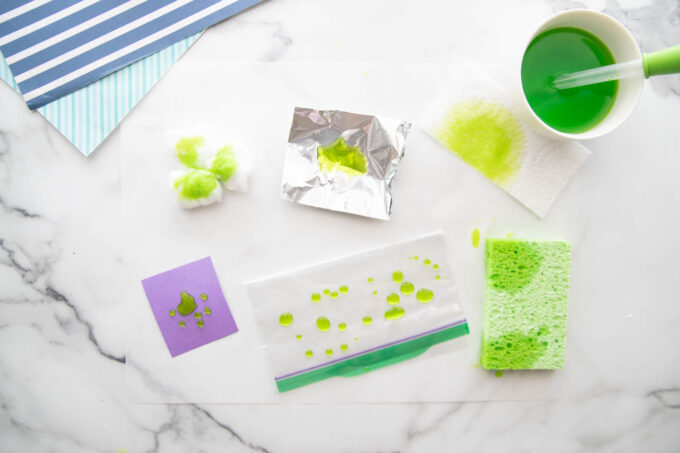
- Absorbency and waterproofing. Test paper, fabric, plastic, foil, and other materials to compare how they interact with water.
- Forces and motion. Use ramps, toy cars, balls, and different surfaces to explore pushes, pulls, gravity, friction, speed, and distance. Find more in our Force and Motion Activities.
Second Grade Earth and Weather Science
Second grade Earth science gives kids opportunities to explore rocks, soil, landforms, erosion, water, and changing weather.
👉 Start with our Earth Science Activities collection.
- Rocks and minerals. Observe and compare rocks by color, texture, hardness, shape, layers, and other visible properties. Explore more in our Rock Activities for Kids.
- Soil. Compare sand, soil, clay, and other Earth materials. Observe particle size, texture, drainage, and how each responds to water. Try our Soil Science Lab.
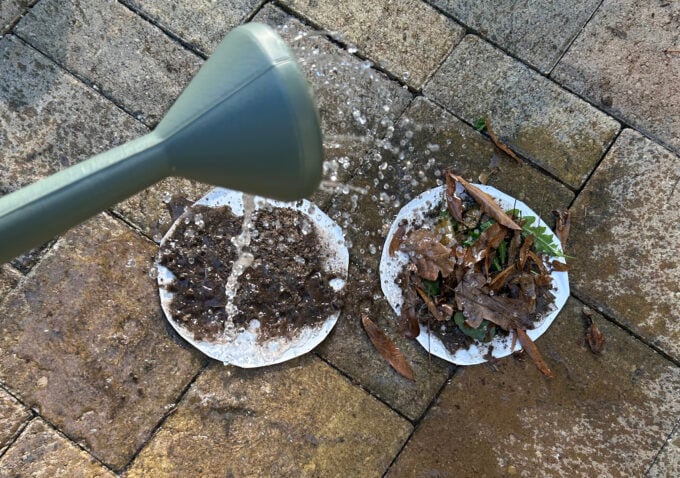
- Erosion. Build a small model landscape and observe how water can move soil or sand. Change the slope, the amount of water, or the surface covering, and compare what happens.
Landforms. Explore mountains, valleys, rivers, islands, canyons, plains, and other landforms through models, maps, or hands-on activities. (Coming Soon: Playdough and water models with free printables)
- Water on Earth. Investigate where water can be found and compare oceans, rivers, lakes, ponds, ice, and groundwater.
- Water cycle. Explore evaporation, condensation, and precipitation with our Water Cycle Activities.
- Weather and clouds. Observe temperature, precipitation, wind, and cloud conditions over time. Use our Weather Science Activities and Cloud Activities to look for daily weather patterns.
Science Skills for Second Grade
Second graders can begin taking more responsibility for planning, measuring, recording, and explaining an investigation.
Scientific models. Second graders can use simple models to represent things that are too large, too small, too slow, too fast, or too difficult to observe directly. Visit our Scientific Models for Kids post for examples of how to use diagrams, physical models, and simple representations in elementary science.
Observation. Encourage kids to notice details, compare changes, and distinguish between what they observe and what they think might be happening. Explore our Observation Activities for Kids.
Science tools. Use rulers, thermometers, balances, measuring cups, magnifying glasses, timers, and other tools to collect information. Visit our Science Tools for Kids post for more ways to introduce measurement and investigation tools.
Recording data. Begin using simple tables, tally charts, drawings, measurements, and graphs to organize results. Our printable science worksheets often include graphs and charts.
Scientific method. Second graders can ask a question, make a prediction, test an idea, collect observations, compare results, and explain what they learned. Visit our Scientific Method for Kids page for printable tools and examples.
Guiding questions: What do you notice? What changed? What stayed the same? How can you measure it? What pattern do you see? What evidence supports your idea? What could you change and test next?

Second Grade Science and STEM
Second grade science connects naturally with engineering because kids can use what they learn about materials, forces, plants, water, and Earth science to solve simple problems.
Try challenges such as:
- Choose the best material for a waterproof roof.
- Build a bridge and test its strength.
- Design a structure that reduces erosion.
- Build something that can move using wind.
- Create a model habitat for an animal.
- Design a seed that can travel by wind.
👉 Visit our STEM Activities for Kids and Engineering Projects for Kids for more opportunities to design, build, test, and improve.
Printable Second Grade Science Resources
Printable science pages can help second graders organize observations, measurements, predictions, data, and conclusions while keeping the focus on hands-on learning.
Our printable science and STEM resources include investigations, recording pages, science tools, experiments, and classroom-ready activities for elementary students.
The All-Access Pass includes our full collection of printable science and STEM packs plus future additions.
Printable Elementary Science!
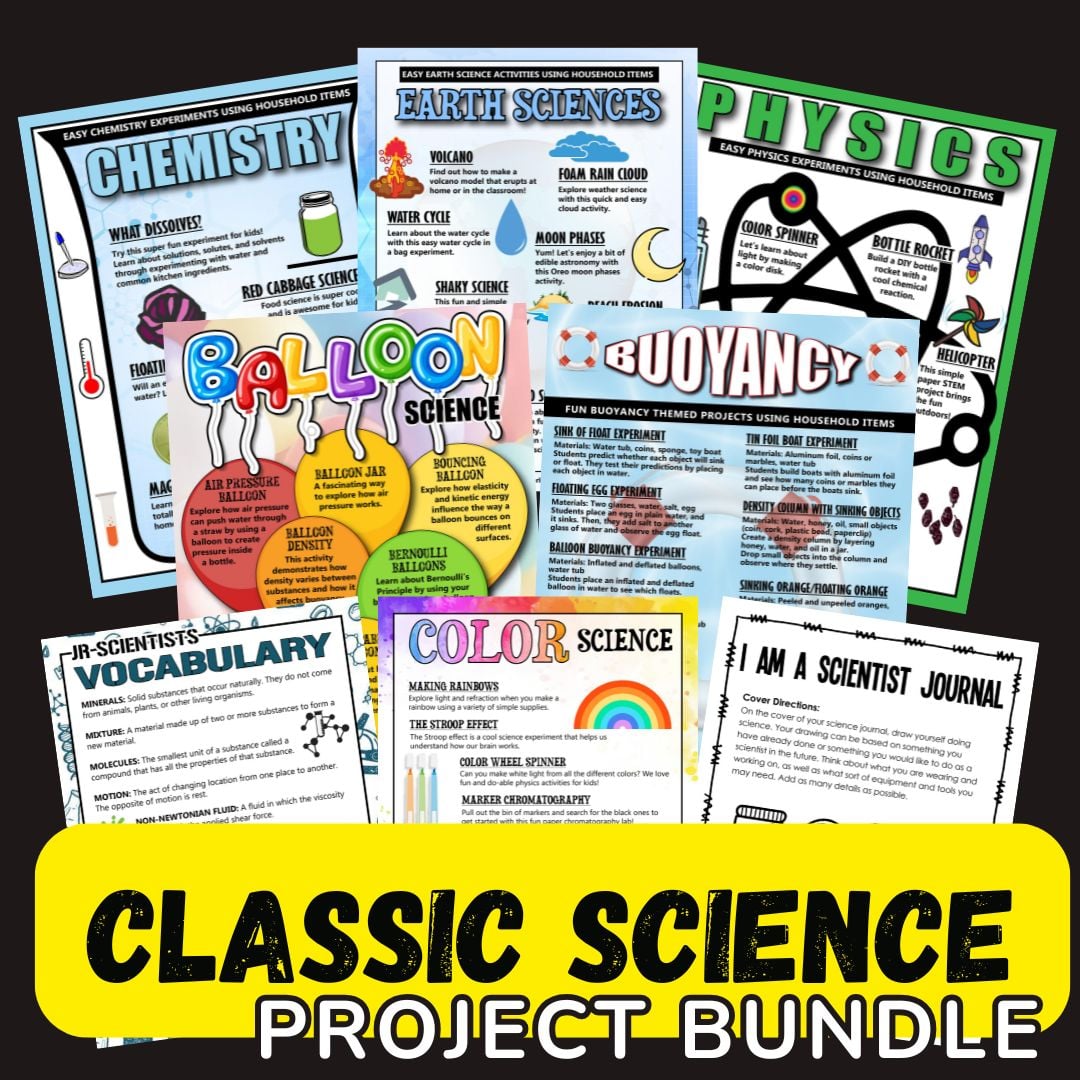
Want to do meaningful science — but not start a full unit yet? This starter lab provides quick, hands-on investigations across multiple science topics, allowing students to explore how science works before diving deeper into any one subject.
Perfect for regularly trying science without extensive planning. Grades: K–5.
FAQ
What science should second graders learn? Second grade science can include properties of materials, plants, pollination, seed dispersal, animal habitats, life cycles, weather, rocks, soil, erosion, landforms, water, forces, and basic investigation skills.
What are good science experiments for second grade? Look for activities that let kids compare, measure, test, and record results, such as material testing, erosion models, seed dispersal, water cycle activities, habitat investigations, and force and motion experiments.
Can second graders use the scientific method? Yes. Second graders can ask a question, make a prediction, test an idea, record observations or measurements, and use their results to explain what happened.
How is second grade science different from first grade science? Second graders can begin going beyond simple observation by comparing properties, collecting measurements, identifying patterns, and using evidence from an investigation to support an explanation.