
This hands-on playdough layers of the Earth model helps students understand the Earth’s structure by visually and physically layering each part. Scientific models are a fantastic way to explore big science concepts. Grab the free printable Earth layers worksheets below to accompany the science lesson.

Playdough Layers of the Earth Model for Kids
Objective: To create a hands-on model of Earth’s layers using playdough, helping students visualize the different layers that make up our planet. Scientific models are an excellent way for kids to visualize larger than life science concepts.
💡Explore more DIY scientific models here.
Grade Level Recommendation: Suitable for Grades 2-5 as a hands-on science activity (preschoolers through first grade will still enjoy this activity with more adult guidance). It is perfect for use in the classroom, homeschool, or screen-free weekends.
Materials Needed:
💡Find various playdough recipes here, including traditional stove-top playdough and no-cook playdough variations. Of course, store-bought playdough is perfect, too!
- Playdough in different colors:
- Red ball (Inner Core)
- Orange ball (Outer Core)
- Yellow ball (Mantle)
- Brown (Lower Crust)
- Blue ball (Oceans/Upper Crust)
- Green playdough (Continents)
- Rolling pin or plastic cylinder
- Plastic knife
- Construction paper (optional for background)

Make a Playdough Model of the Layers of the Earth
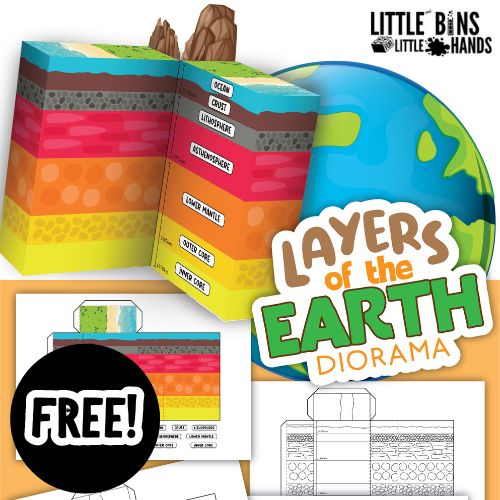
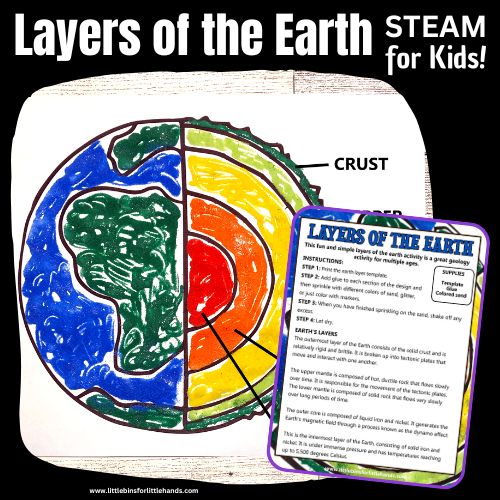
🔎 You can also add our 3D printable paper model or STEAM project to add more layers of the Earth project ideas to your lesson plans.
Form the Inner Core – Roll a small red ball of playdough to represent Earth’s solid inner core.
Add the Outer Core – Flatten some orange playdough, wrap it around the inner core, and smooth it out.

Create the Mantle – Roll out yellow playdough, wrap it around the outer core, and press gently to shape the sphere.

Add the Crust – Cover the mantle with brown playdough, representing the lower crust.

Form the Surface – Roll out blue playdough for the oceans and green playdough for the continents. Attach them to the surface of the sphere.

Cut the Earth in Half – Carefully slice the playdough Earth in half using a plastic knife or dental floss to reveal the inner layers.
Observe and Discuss – Identify each layer and discuss its characteristics.

Layers of the Earth for Geology
Geologists study the layers of the Earth to understand its structure, composition, and history. They use seismic waves, rock samples, and computer models to learn about the Earth’s core, mantle, and crust. Their research helps explain earthquakes, volcanic activity, and plate tectonics.
🔎 Explore more geology activities here.
Earth is made up of several distinct layers, each with unique properties:
Free Layers of the Earth Worksheets
Grab this free printable layers of the earth pack and science journal pages to learn more about the earth’s layers, and use the diagrams to show the layers of the earth science project.

Discussion Questions:
- Which layer is the thickest? (Mantle)
- Why is the outer core liquid while the inner core is solid? (Due to pressure differences)
- How does the mantle affect Earth’s surface? (It moves the tectonic plates)
- What do the crust’s different colors represent? (Oceans and continents)
Extensions:
- Research how scientists study Earth’s layers without being able to dig deep inside.
- Compare Earth’s structure to other planets in the solar system.
- Experiment with different materials to represent the density of each layer.
More Fun Science Projects
- Layers of Soil Model
- Layers of the Ocean Model
- Layers of the Atmosphere
- Layers of Earth STEAM Project
- 3D Layers of the Earth Model
- Geology Projects for Kids
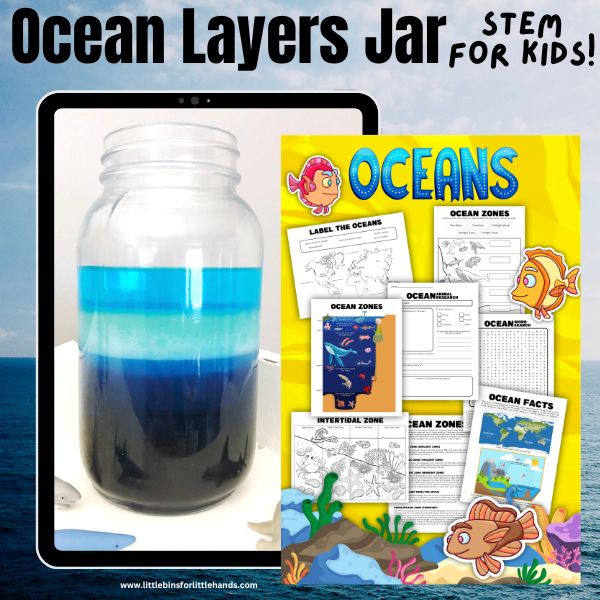

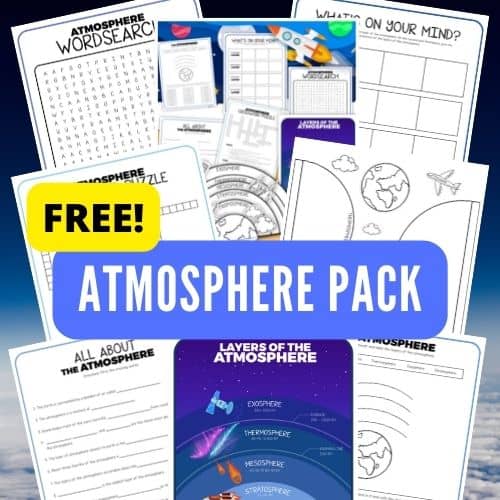
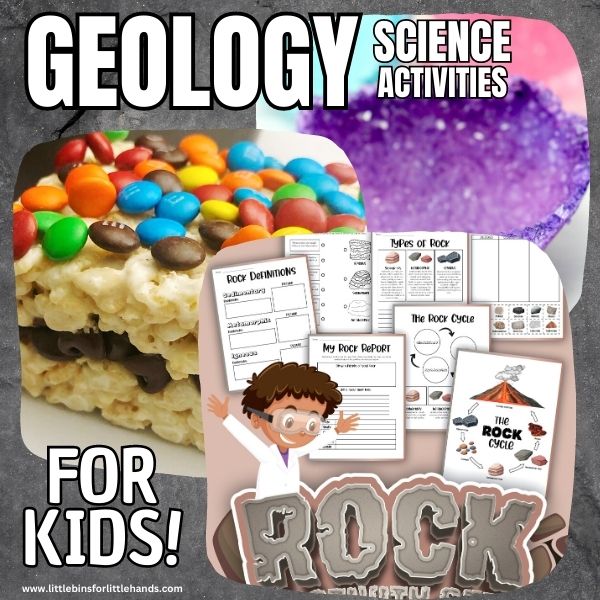
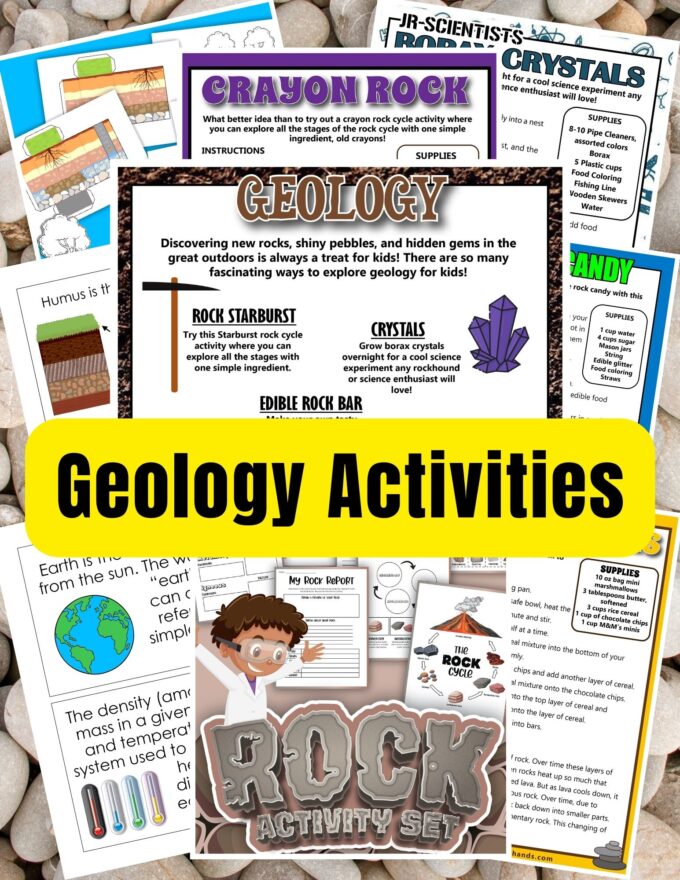
Printable Geology Activities Pack
Kids love rocks, and this pack is a fantastic way to encourage their passion for exploring, learning, and collecting with hands-on learning activities! Note: This pack is included in our Spring STEM Pack!
- 8+ Hands-On Learning Activities exploring crystals, rocks, and volcanos
- Additional mini-packs include materials to learn about soil layers, layers of the earth, and the rock cycle!
- Extras include: vocabulary words, fun games, projects
- Be a Collector Pack: start a rock collection like a geologist
- 3 Dioramas: Build 3 models including rock cycle, soil layers, and layers of the earth