

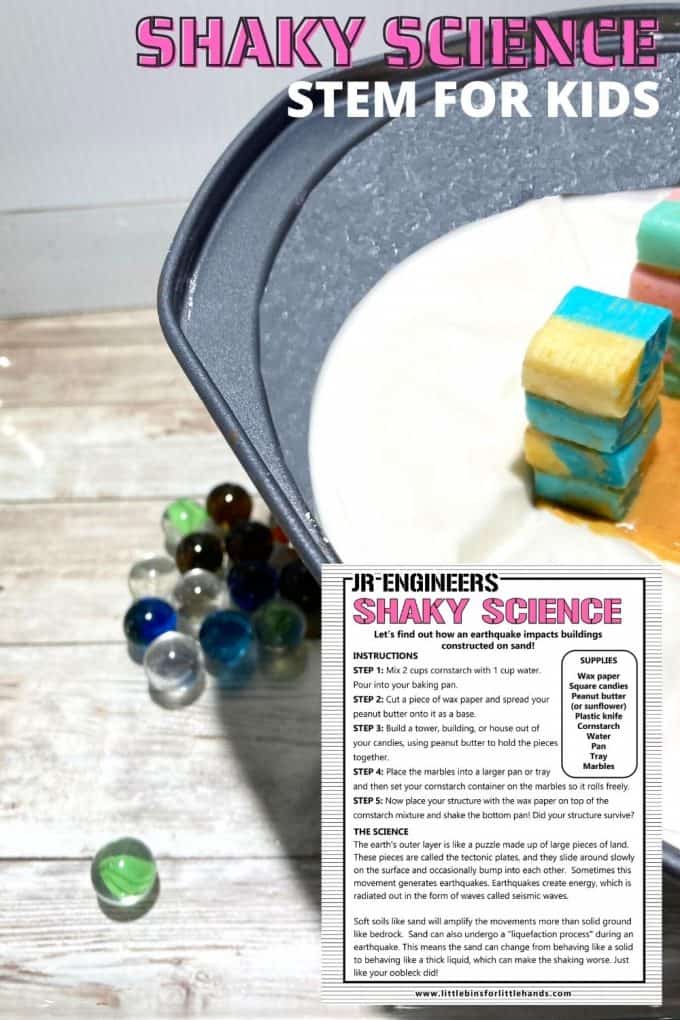
What happens when the ground starts to shake beneath a building? In this exciting earthquake science experiment, you’ll build mini structure and see how different surfaces and designs stand up to seismic forces. Get ready to shake things up and discover the science behind earthquakes!
What Causes Earthquakes?
The Earth’s surface is made up of tectonic plates that float on a semi-liquid layer called the mantle. These plates move slowly, but when they collide, slide past each other, or grind together, they create earthquakes. Earthquakes can be of different magnitudes, resulting in varying damage.
The energy from an earthquake travels as seismic waves, shaking the ground.
Different soils respond differently to these seismic waves:
- Soft soils (e.g., sand) amplify shaking.
- Liquefaction occurs when loose, water-saturated soil behaves like a liquid during shaking, causing buildings to tilt or sink.
Using simple materials, this experiment will demonstrate how different surfaces and building designs impact stability during an earthquake.
Grade Level: 3rd–6th Grade
Focus Areas: Earth Science, Geology, Engineering
Skills Practiced: Observation, Hypothesis Testing, Scientific Method, Hands-On Exploration
Earthquake Materials List:
Note: You will see optional materials on the list for setting up various experiments which I have outlined below.
- Wax paper
- Square candies (e.g., Starburst)
- Cornstarch
- Water
- Baking pan
- Large tray
- Marbles
- Peanut butter (or sunflower butter for allergy-friendly options)
- Optional: Sand, gravel, dirt (testing variables)
- Optional: Marshmallows and toothpicks (testing variables)
- Optional: LEGO bricks (testing variables)
💡Note: The peanut butter has an important purpose! Simple, sticky, and effective!
- Adhesive Glue: Holds building materials (candies, marshmallows, LEGO bricks) together to prevent them from falling apart.
- Stable Base: Keeps the structure steady on the wax paper, reducing sliding during shaking.
- Foundation Simulation: Mimics how real buildings are anchored to their foundations for better stability during seismic activity.
Earthquake Activity Instructions:
Can you design earthquake-proof structures? Scientists and civil engineers work together to make this happen.
Step 1: Prepare the Earthquake Surface
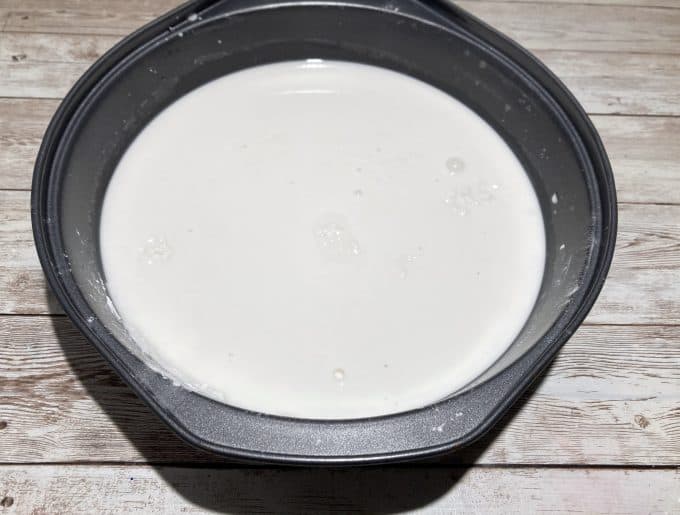
- Mix 2 cups of cornstarch with 1 cup of water to create an oobleck mixture.
- Pour the mixture into a baking pan.
Step 2: Build the Structure
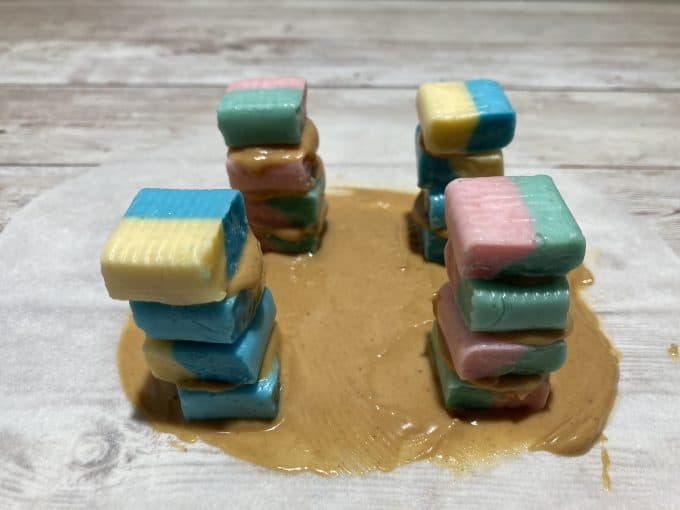
- Cut a piece of wax paper and spread a thin layer of peanut butter onto it.
- Choose a building material (e.g., LEGO bricks, marshmallows, or candy blocks).
- Build a small tower, house, or bridge structure on wax paper.
Step 3: Create the Earthquake Platform
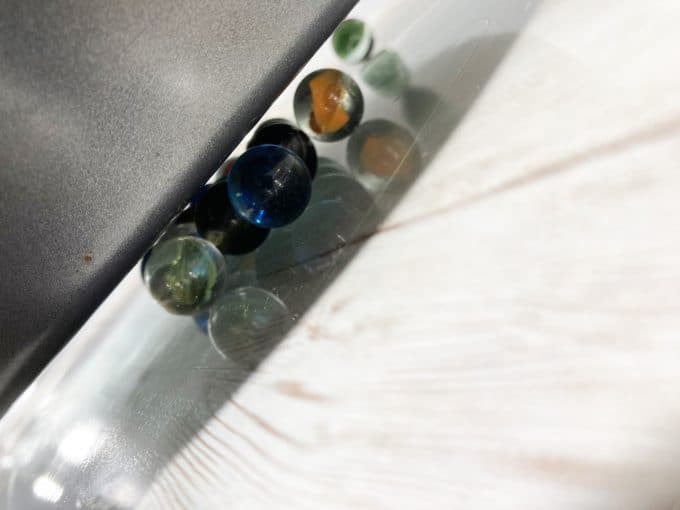
- Place marbles in a large tray.
- Set the baking pan filled with oobleck on top of the marbles.
Step 4: Test the Structure During an Earthquake
- Carefully place your wax paper with the building on top of the oobleck mixture.
- Gently shake the tray to simulate an earthquake.
- Observe what happens to your structure.
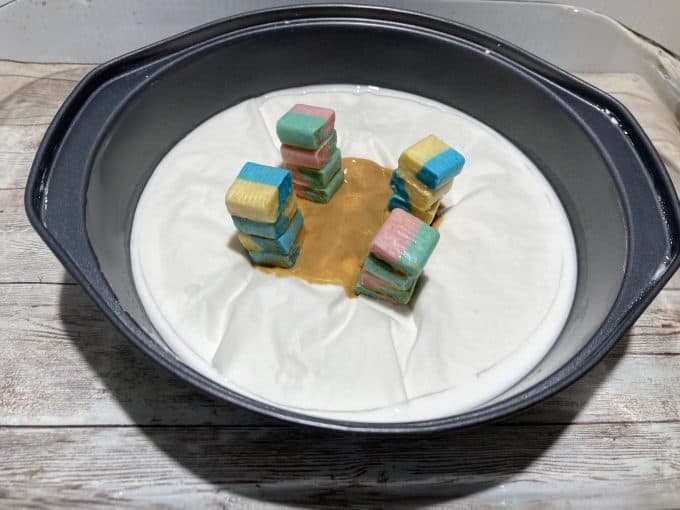
Did it tilt, sink, or collapse? How did the material or surface impact stability?
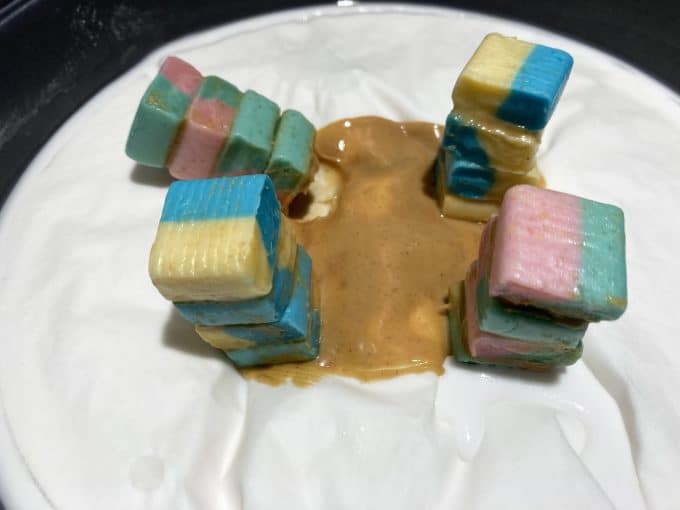
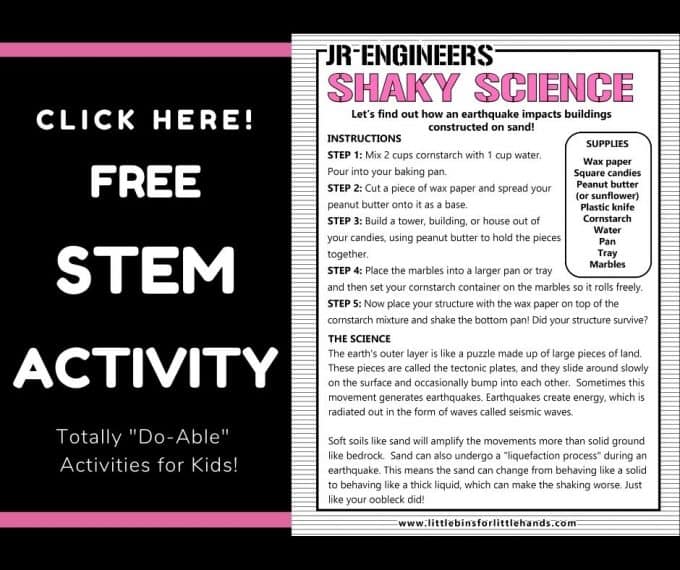
What Happens During an Earthquake?
Have you ever wondered what happens to buildings during an earthquake? Beneath our feet lies a dynamic world of rock, sand, and shifting tectonic plates. This hands-on earthquake science experiment allows kids to model how buildings behave on different types of surfaces during seismic activity.
This earthquake simulation activity combines science, engineering, and geology to introduce key concepts like tectonic plate movement, seismic waves, and soil liquefaction. Students will test different variables, observe cause-and-effect relationships, and think critically about building stability.
Let’s dive into the science behind earthquakes and build mini earthquake models to explore how structures react to seismic shaking!
Exploring Variables in Your Earthquake Experiment
💡 Learn more about variables in science here.
1. Testing Soil Type (Independent Variable)
Question: How does the type of surface affect the stability of a building during an earthquake?
- Independent Variable: Soil Type (Oobleck, Dry Sand, Gravel, Solid Surface)
- Controlled Variables: Building material (e.g., LEGO bricks), building design (e.g., tall tower), shaking intensity (e.g., medium shaking).
- Dependent Variable: Observation of stability (e.g., tilt, time to collapse, damage level).
2. Testing Building Material (Independent Variable)
Question: How does the material used to build a structure affect its stability during an earthquake?
- Independent Variable: Building Material (Candy Blocks, Marshmallows, LEGO Bricks)
- Controlled Variables: Soil type (e.g., Oobleck), building design (e.g., tall tower), shaking intensity (e.g., medium shaking).
- Dependent Variable: Observation of stability (e.g., tilt, time to collapse, damage level).
3. Testing Shaking Intensity (Independent Variable)
Question: How does the intensity of shaking affect building stability?
- Independent Variable: Shaking Intensity (Low, Medium, High)
- Controlled Variables: Soil type (e.g., Oobleck), building material (e.g., LEGO Bricks), building design (e.g., tall tower).
- Dependent Variable: Observation of stability (e.g., tilt, time to collapse, damage level).
Reflection Questions
- Which soil type provided the most stability?
- Which building material performed best?
- How did shaking intensity impact building collapse?
More Fun Geology Activities
When you finish this earthquake activity, why not explore more earth science with one of the ideas below? You can find all our earth science activities here!
- Learn all about volcanoes and make one!
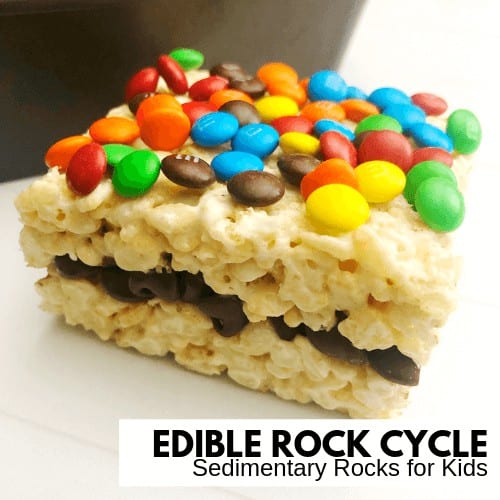
- Make your own tasty sedimentary rock to explore geology.
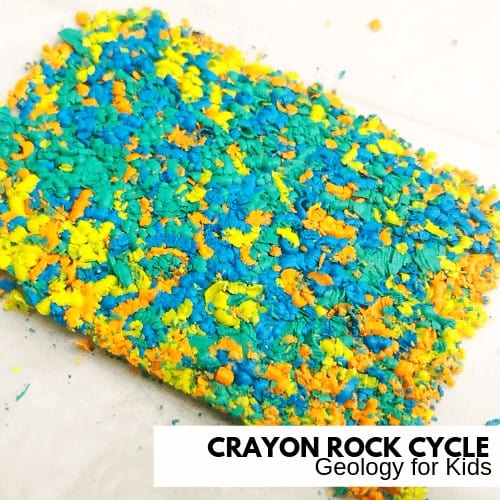
- Explore the stages of the rock cycle with a crayon rock cycle or candy rock cycle!
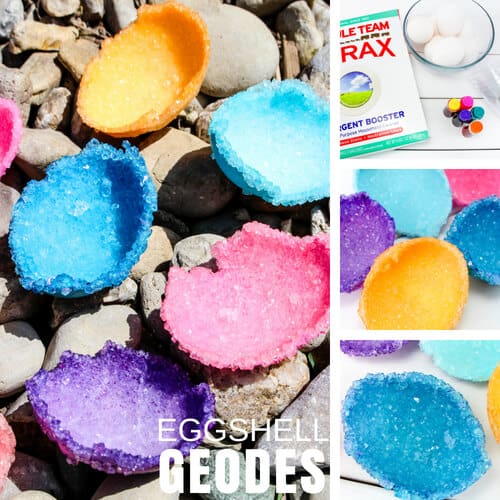
- Why not grow sugar crystals or make edible geodes!
- Explore the layers of soil with simple LEGO bricks or make an edible soil layers model.
- Explore soil erosion for kids.
- Make a playdough layers of the earth model.
- Make this fun tectonic plates model.
- Learn about how fossils are formed.
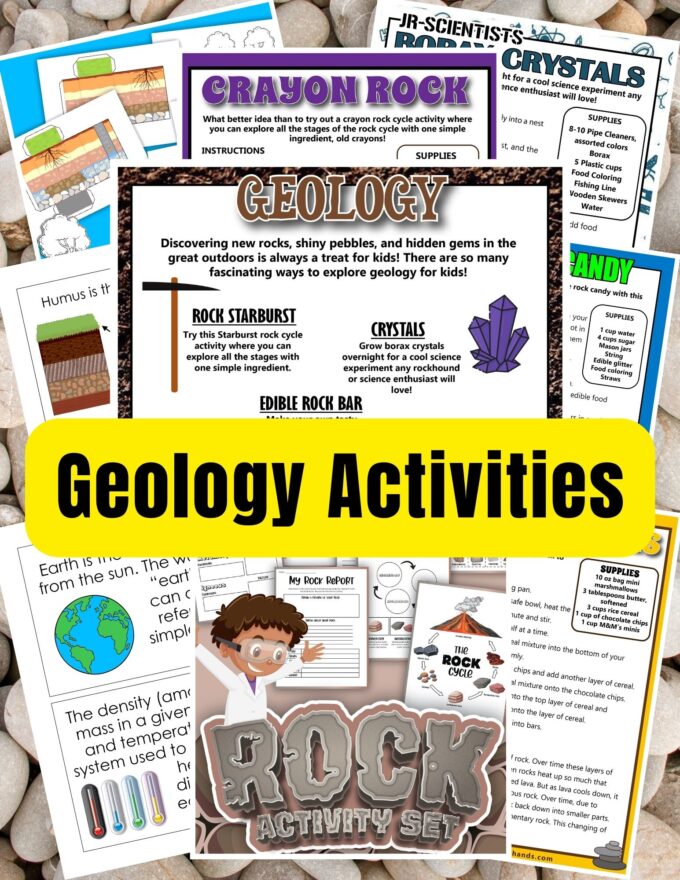
Printable Geology Pack
Kids love rocks, and this 100+ page Geology Pack is a fantastic way to encourage their passion for exploring, learning, and collecting!
WHAT’S INCLUDED:
- 8+ Hands-On Learning Activities exploring crystals, rocks, and volcanos
- Additional mini-packs include materials to learn about soil layers, layers of the earth, and the rock cycle!
- Extras include vocabulary words, fun games, and projects.
- Be a Collector Pack: start a rock collection like a geologist
- 3 Dioramas: Build 3 models including rock cycle, soil layers, and layers of the earth

Can you use honey instead of peanut butter for this activity?
You can certainly try or a sun nut butter if you have to go peanut free!