
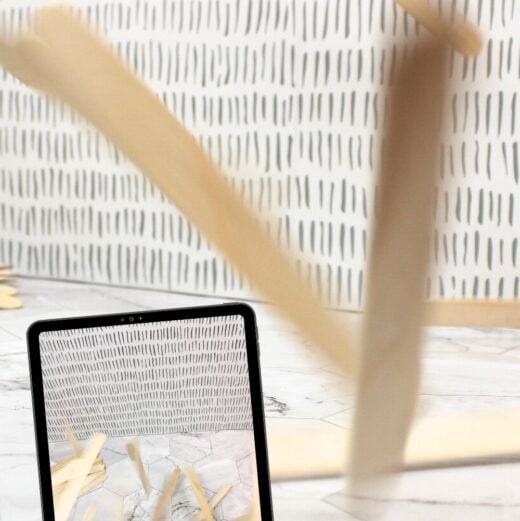
What happens when stored energy bursts into action? With popsicle sticks, patience, and a little science, you can create an exciting exploding popsicle stick chain reaction!
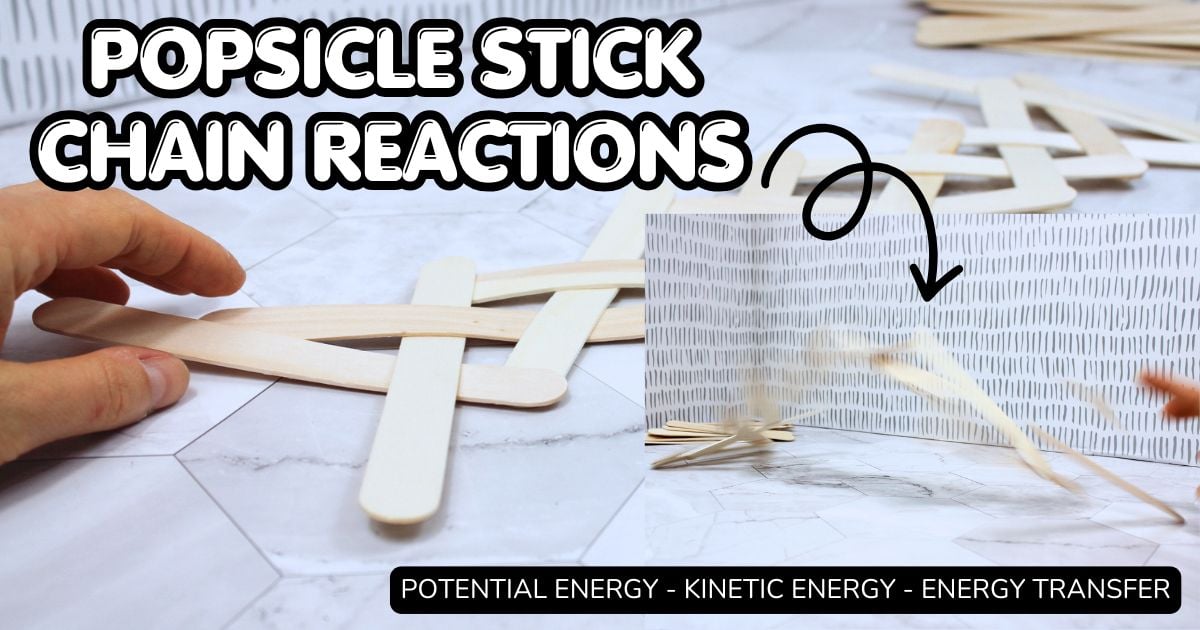
This hands-on STEM activity demonstrates potential energy, kinetic energy, and energy transfer in a dramatic and memorable way. As students build the woven chain, energy is stored in the bent sticks. When released, that energy travels through the chain, launching the sticks into the air in a rapid reaction.
Whether you’re studying force and motion, energy, or physics, this simple activity is a fantastic way to see science in action.
👉 Learn more about Potential and Kinetic Energy here
What Kids Learn
Create an exploding popsicle stick chain reaction and discover how potential energy changes into kinetic energy. This hands-on physics activity helps kids explore energy transfer, force, and motion through a fun STEM challenge.
- Field of Science: Physics
- Recommended Grade Level: Grades 3–6
- Concepts Explored: Potential energy, Kinetic energy, Energy transfer, Force and motion, Chain reactions, Observation skills
Set Up a Popsicle Stick Chain Reaction
The popsicle stick chain reaction is a simple yet engaging way to explore how energy is stored and released. Plus, it has a huge wow factor that kids love!
Supplies
- Wide craft sticks or popsicle sticks (at least 50)
- Safety goggles
- Flat surface, such as a table or hard floor
Chain Reaction Instructions
Step 1
Lay two popsicle sticks in a staggered X shape on a flat surface so the ends overlap.
Step 2
Place a third stick over one leg of the X and under the other. Press down gently to bend the sticks and create tension.


Step 3
Continue weaving additional sticks using the same over-under pattern.


Step 4
Keep building until you have a chain that is at least 20–30 sticks long.

Step 5
Gently release one end of the chain and watch the stored energy race through the weave.
Step 6
Observe the chain reaction and discuss what happened.

The Science Behind the Popsicle Stick Chain Reaction
This activity demonstrates how energy can be stored and released.
Potential Energy
As the popsicle sticks are bent and woven together, they store elastic potential energy. This is similar to the energy stored in a stretched rubber band or compressed spring.
The energy remains stored as long as the sticks stay woven together.
Kinetic Energy
When one end of the chain is released, the stored potential energy changes into kinetic energy, the energy of motion.
Each stick transfers energy to the next stick, creating a rapid chain reaction.
Energy Transfer
One of the most exciting parts of this activity is watching energy move through the system.
As each stick snaps upward, it transfers energy to the next stick in line. This continues until the entire chain has released its stored energy.
Force and Motion
Students can observe how forces create movement and how energy changes from one form to another. The activity provides a visual example of physics concepts that can sometimes be difficult to understand through reading alone.
👉 Explore more: Force and Motion Engineering Activities here
Think Like a Physicist
Physicists study energy, motion, and forces.
As you build and release the popsicle stick chain, observe how stored energy changes into motion.
Can you identify:
- Potential energy
- Kinetic energy
- Energy transfer
- Cause and effect
This activity provides a visual model of how energy can move through a system.
Everyday Examples of Potential and Kinetic Energy
Potential and kinetic energy are all around us.
Potential Energy Examples
- A stretched rubber band
- A drawn bow
- A ball at the top of a hill
- Water behind a dam
- A roller coaster at the top of a hill
Kinetic Energy Examples
- A rolling ball
- A moving bicycle
- A launched rocket
- A swinging pendulum
- Flowing water
Related Energy Activities
Continue exploring force, motion, and energy with these hands-on STEM projects:
- Potential and Kinetic Energy for Kids
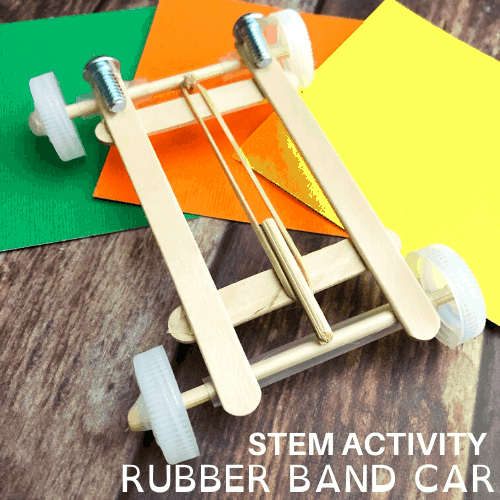
- Rubber Band Car
- Balloon Rocket
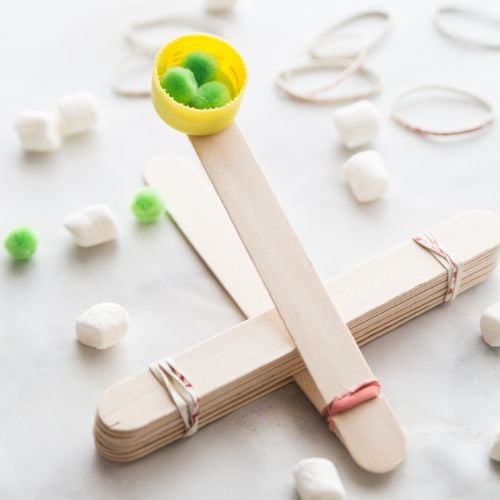
- Catapult Activity
- Domino Chain Reaction
- Marble Roller Coaster
- Force and Motion Activities
- Physics Experiments for Kids


Popsicle Chain Reaction FAQ
Why do the popsicle sticks explode?
The sticks store elastic potential energy when bent. Releasing one end causes that energy to transfer through the chain and create motion.
What type of energy is stored in the sticks?
The bent sticks store elastic potential energy.
What type of energy is released?
When the chain is released, the stored energy changes into kinetic energy.
What grade level is best for this activity?
This activity works well for grades 3–6, though younger students can participate with adult assistance.
How many popsicle sticks do I need?
A chain can be made with about 20–30 sticks, but longer chains usually create more dramatic reactions.
Is this a science experiment or engineering activity?
It can be both. Students can build the chain as a demonstration or test variables to turn it into an experiment.
Explore More Energy Activities
Want more ways to teach force, motion, and energy?
Explore our collection of hands-on physics activities, energy experiments, and STEM projects designed to help kids investigate how the world works through play and discovery.
👉 Force and Motion Engineering Activities for Kids
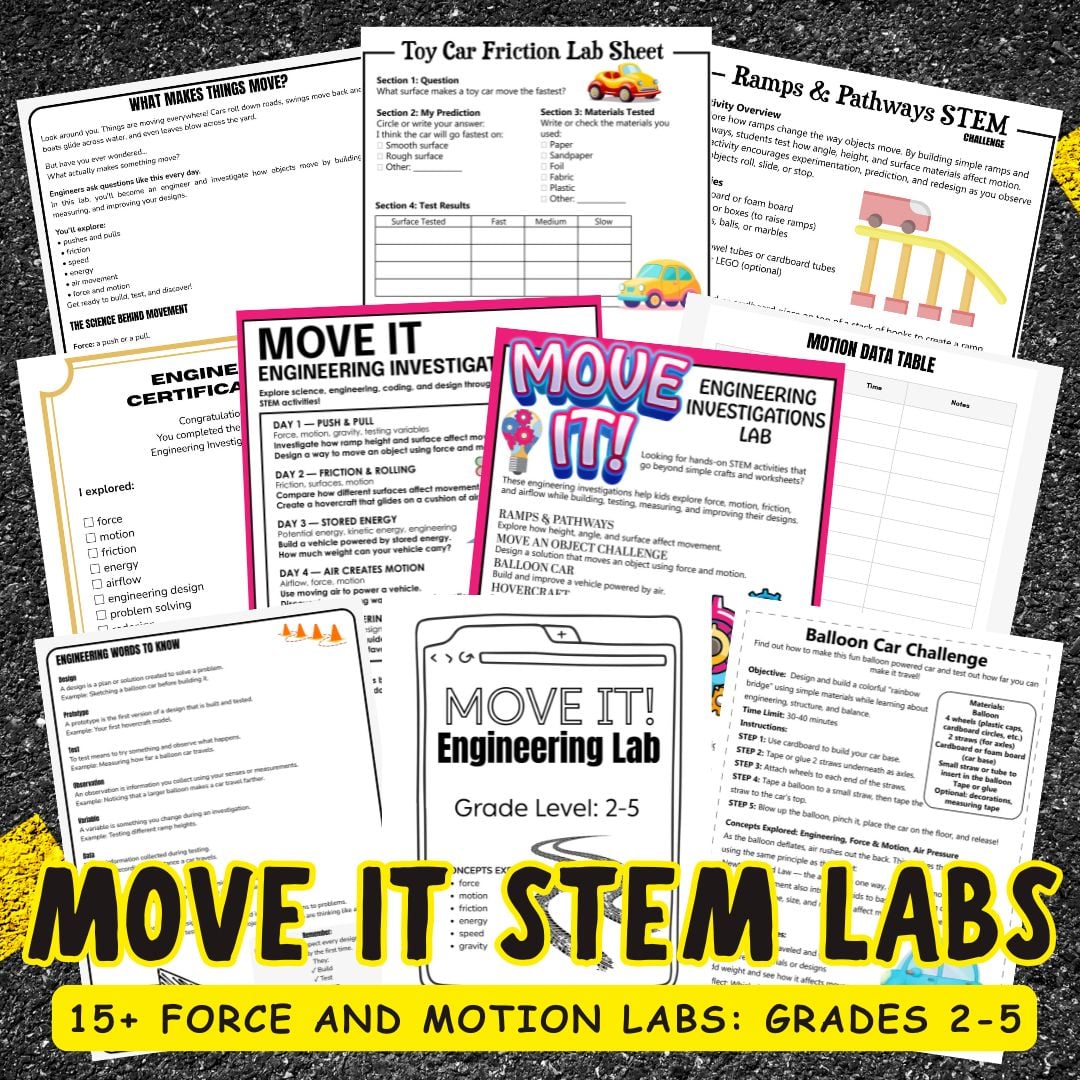
Move It! Engineering Investigations Lab
Help kids explore force, motion, friction, airflow, and energy through hands-on engineering challenges that encourage them to build, test, measure, and improve designs.
✔ Engineering investigations that go beyond worksheets
✔ 5-day STEM plan included
✔ Engineering notebook and planning pages
✔ Build, test, redesign, and improve challenges
✔ Grades 2–5
👉 Get the Complete Lab