
Did you know the winter water cycle is like nature’s puzzle, continuously connecting snowfall, melting snow, and groundwater flow? Perfect for winter weather science, try a free printable water cycle activity!

Winter Water Cycle
During winter, snowfall becomes one of the primary forms of precipitation. When temperatures rise in January or during warmer periods, melting snow contributes to streamflow, surface runoff, and groundwater flow.
Here’s a quick snow cycle overview:
- Evaporation: Water from oceans, lakes, and rivers becomes water vapor and rises into the air.
- Condensation: Water vapor cools down and forms clouds.
- Precipitation: In cold weather, water droplets freeze into snowflakes and fall as snow.
- Accumulation: Snow piles up on the ground, mountains, and glaciers.
- Sublimation: Some snow turns directly into water vapor without melting.
- Melting: When temperatures rise in spring, snow melts into water.
- Runoff: Melted snow flows into rivers, lakes, and streams.Infiltration: Some water soaks into the ground, filling underground water supplies.
- Repeat: The water evaporates again, and the cycle starts over!
Winter Water Cycle Activities
Grade Level Recommendation: Grades 3–6
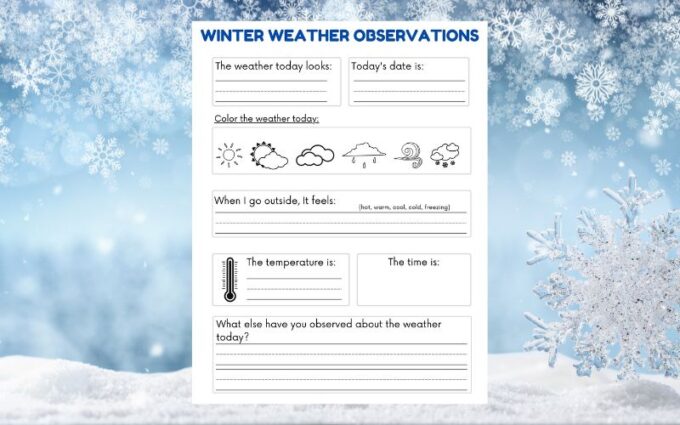
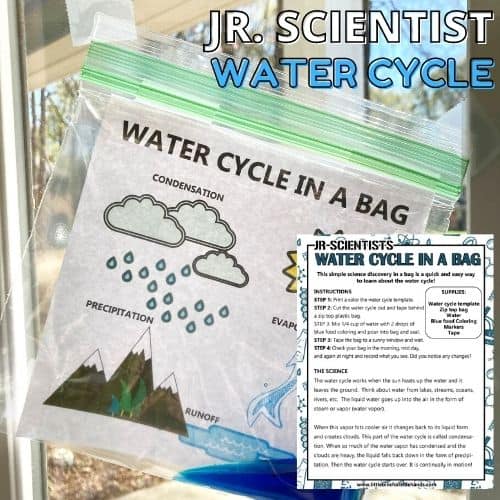
This printable winter water cycle activity is similar to our water cycle in a bag [here]. However, I gave it a wintery redesign! Additionally, you’ll find more resources for the winter water cycle in our Winter STEM Project Pack.

💡 Explore more Winter Weather Science here and prep for the season!

Earth’s Water Cycle
The Earth’s water cycle doesn’t take a break in winter—it simply looks a little different! From snowfall and melting snow to groundwater flow and surface runoff, every part of the water cycle continues to shape Earth’s climate.
💡Also, try a water cycle in a bag!
This process doesn’t just happen in Greenland or Antarctica—it’s active in Canada, the United States, and regions with high elevations and mountain glaciers. Winter offers a fantastic opportunity for kids to explore how precipitation, evaporation, and condensation shift during colder times.
💡Also explore this Water Evaporation Science Experiment here.
Why the Winter Water Cycle Matters!
The vast majority of Earth’s freshwater lakes rely on snowmelt and streamflow. Understanding the water cycle stages of evaporation and surface runoff helps scientists monitor human health, drought patterns, and extreme weather events. Plus, it’s a fun activity for kids to connect science with real-world weather!
More Weather Activities
- DIY Cloud Viewer
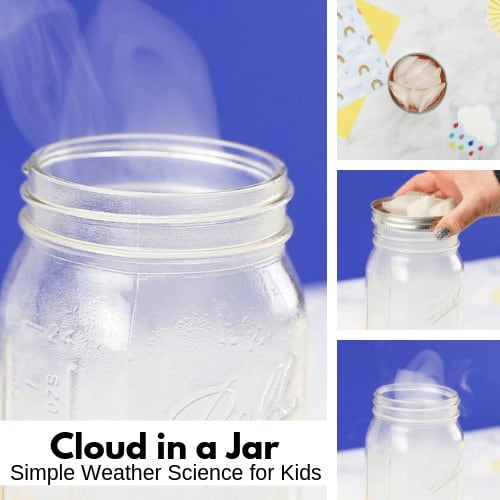
- Cloud in a Jar
- Water Evaporation Experiment
- Water Cycle in a Bag
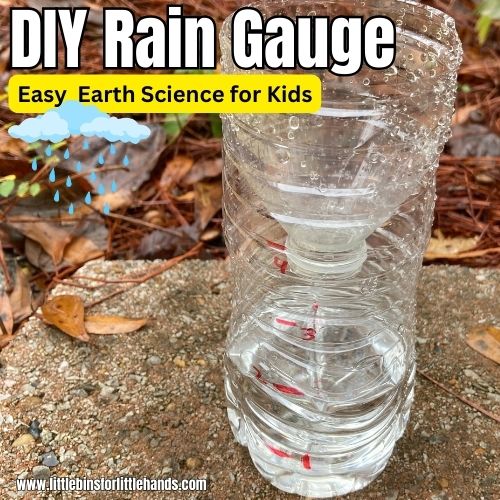
- DIY Rain Gauge
- Make a Rain Cloud (How Does Rain Form?)


Winter Science Project Pack
Explore the snow or winter water cycles even further with our Winter Science Project Pack. Plus, find more fantastic STEM projects for the entire season.