

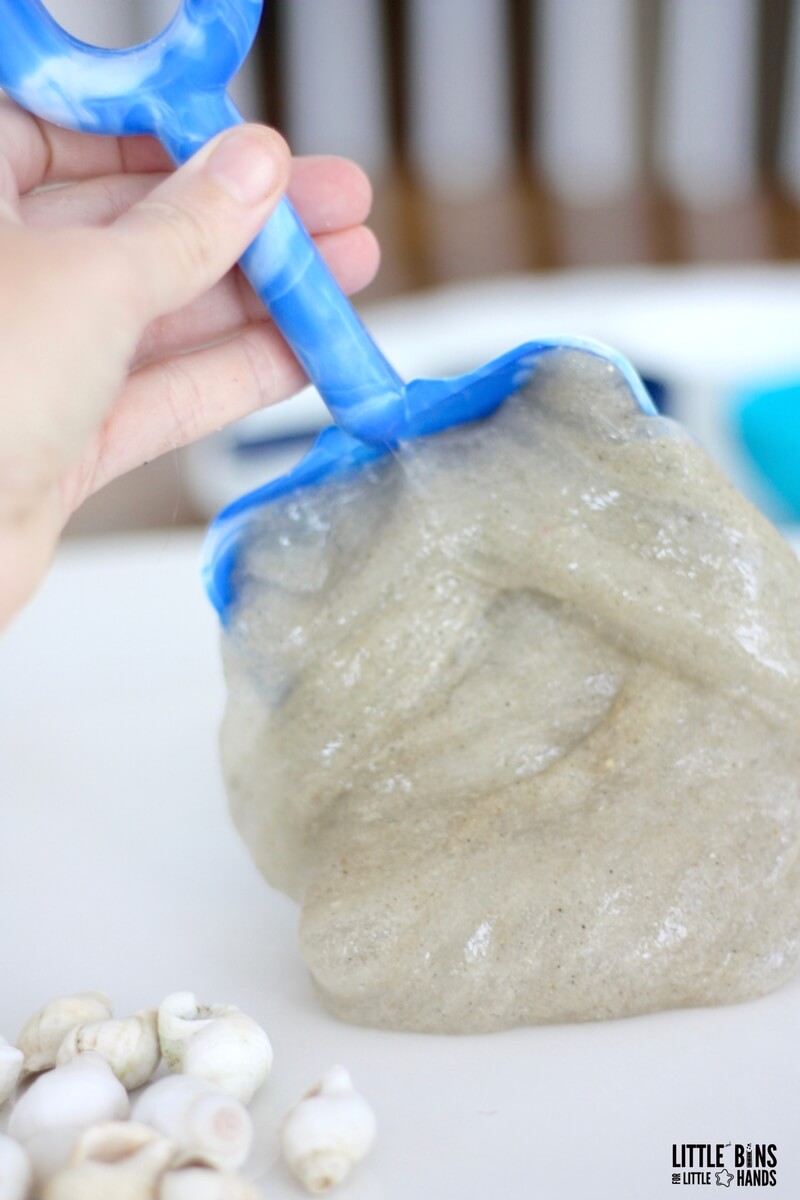
Bring the beach to your kitchen with our incredible homemade sand slime recipe! Find out what slimy sand is made of with one of our basic slime recipes to make the coolest beach or ocean slime ever.
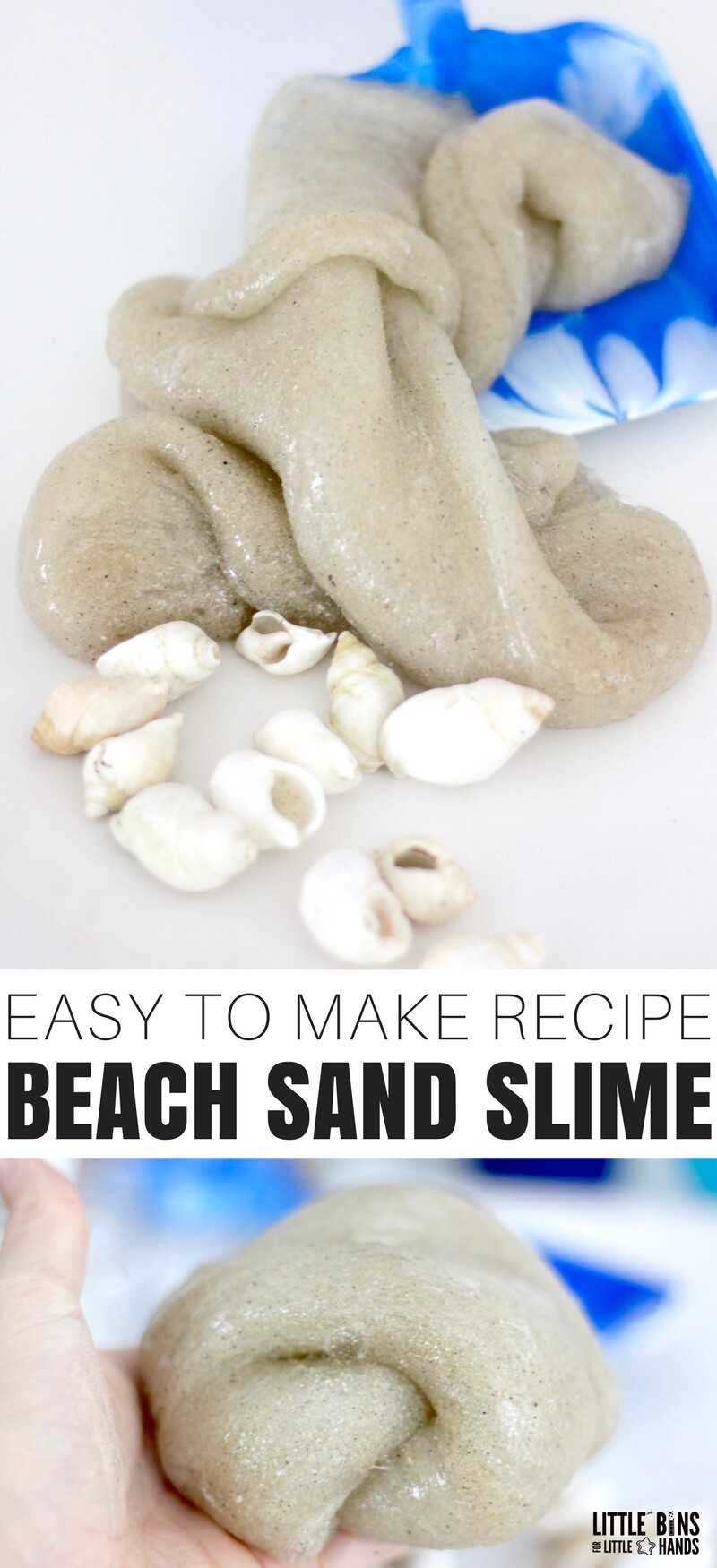
Make Sand Slime For Ocean Theme
If you are planning a trip to the beach or looking for ocean activities and lesson plans this year, making slime is always an excellent chemistry activity to include!
💡 Check out even more ocean activities this summer!
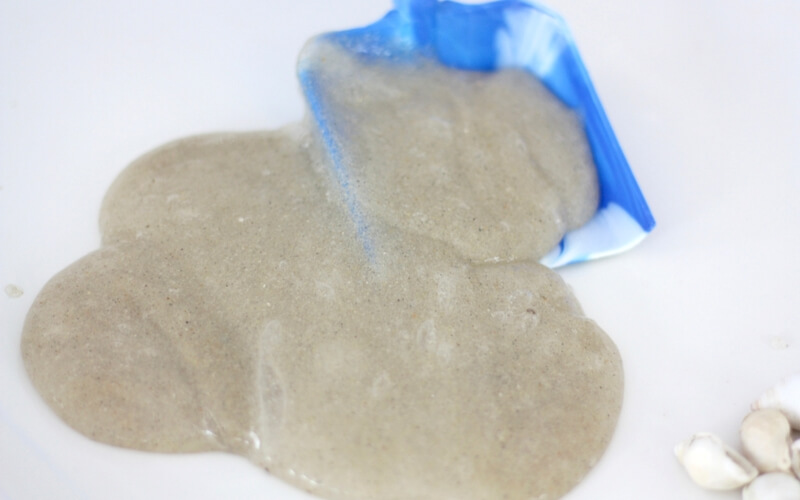
Sand Slime Recipe
💡 We also have an easy recipe for sand foam and Kinetic Sand!
SUPPLIES:
- 1/2 Cup of White PVA School Glue
- 1/4 Cup of Liquid Starch
- 1/2 Cup of Water
- Beach sand, play sand or craft sand
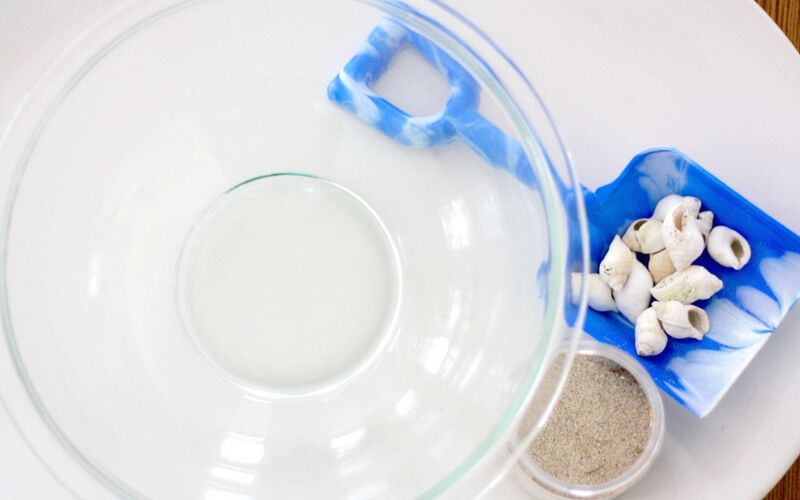
HOW TO MAKE SAND SLIME
STEP 1: Measure and add 1/2 cup of clear glue to a bowl.
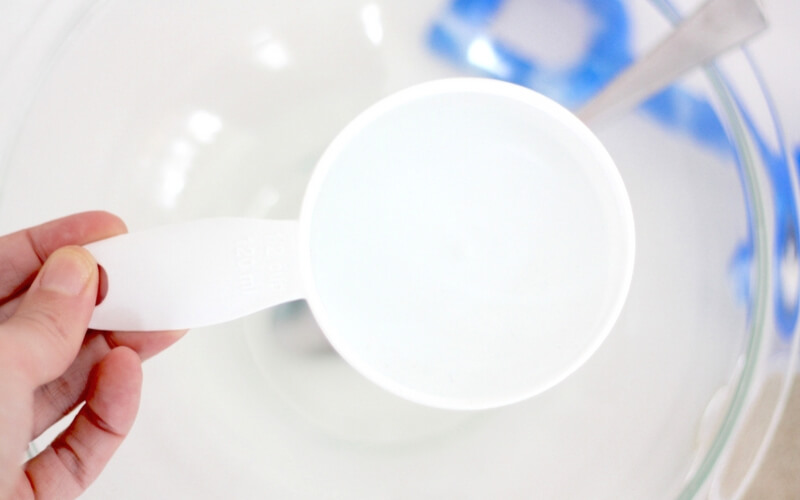
STEP 2: Add 1/2 cup of water to the glue and mix well.
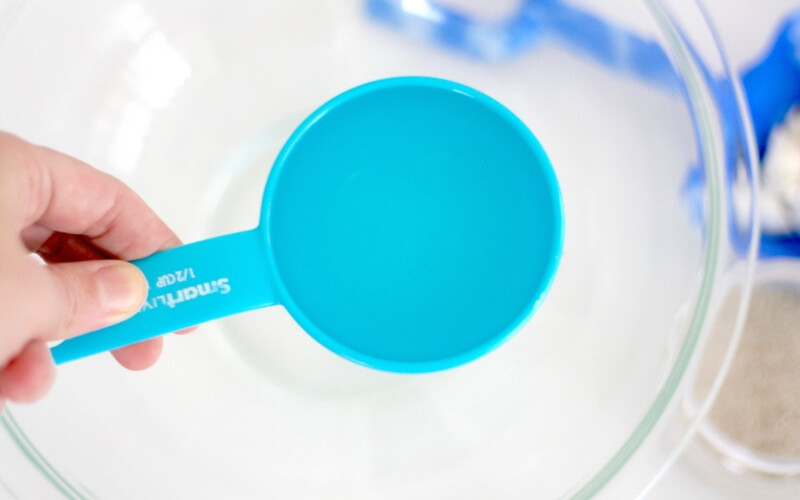
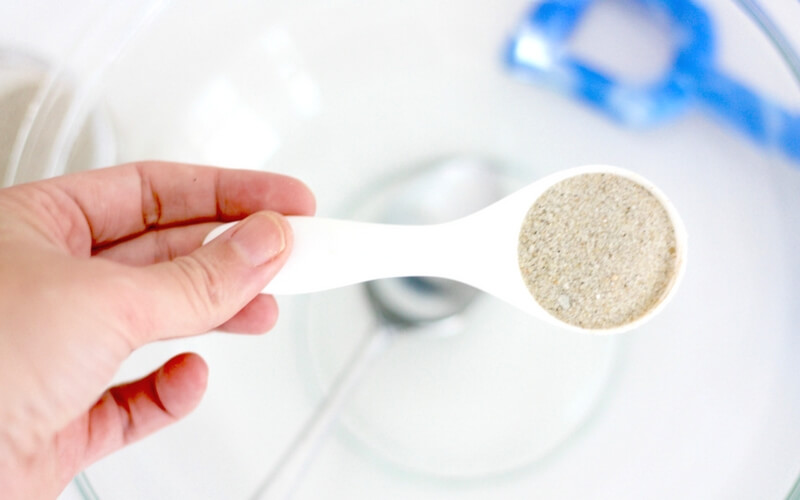
STEP 3: Add several tablespoons of your beach or play sand and mix into the glue/water mixture.
STEP 4: Measure and add 1/4 cup of liquid starch to your bowl and stir.
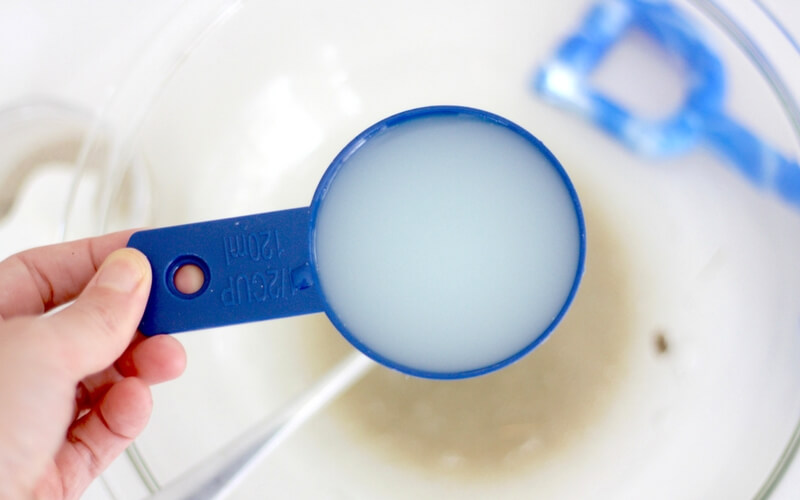
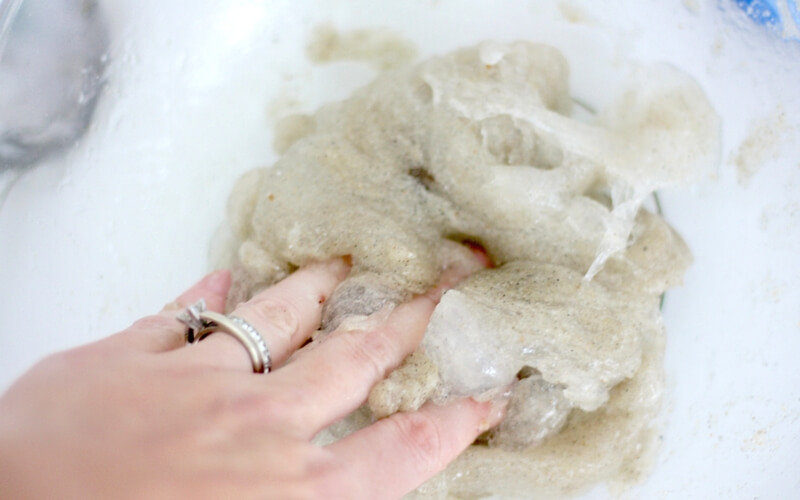
Slime will begin to form immediately. You should keep stirring until slime pulls away nicely from sides and bottom of bowl. You can then begin kneading with your hands until desired consistency is achieved!
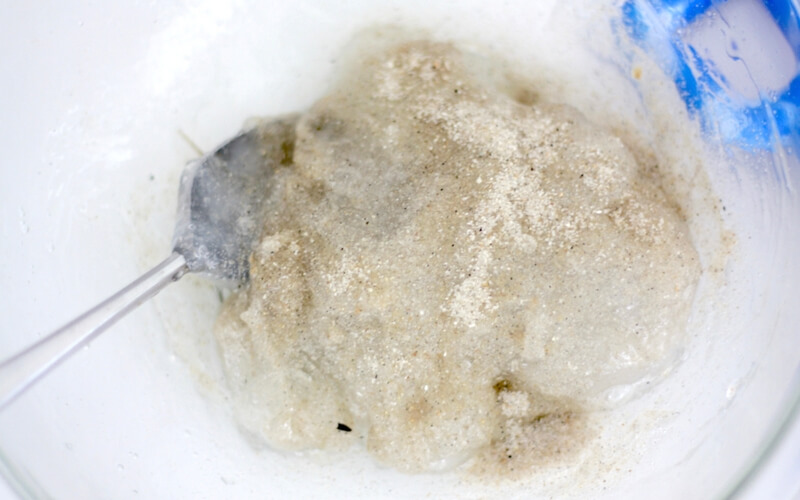
Knead your slime for a few minutes to achieve the desired consistency.
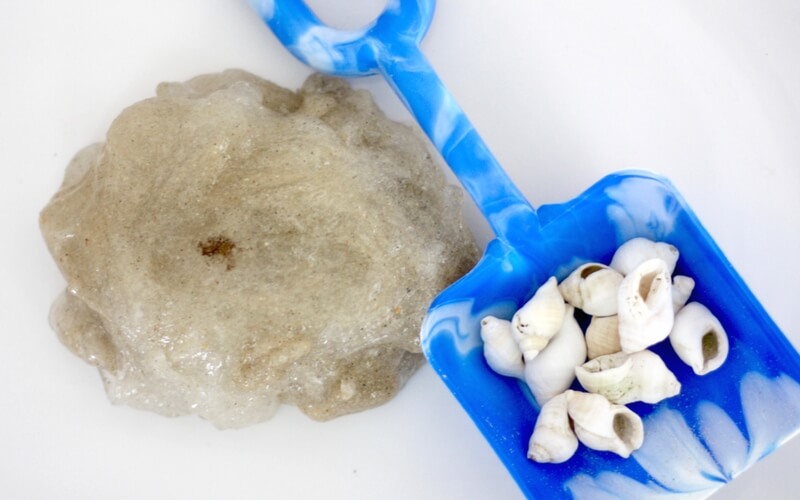
How do you use your sand slime? Add shells, a small pail, and a shovel for play! I think it would also be fun to add construction vehicles for a fun play experience.
Where do I buy liquid starch?
We pick up our liquid starch in the grocery store! Check the laundry detergent aisle and look for the bottles marked starch. Ours is Linit Starch (brand). You might also see Sta-Flo as a popular option. You can also find it on Amazon, Walmart, Target, and even craft stores.
But what if I don’t have liquid starch available to me?
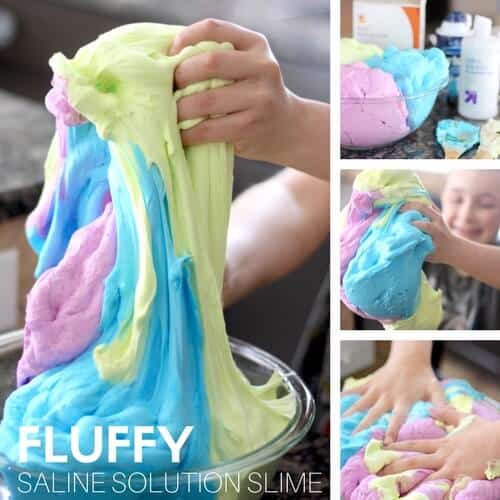
This is a pretty common question from those who live outside of the United States, and we do have some alternatives to share with you. Click on the link to see if any of these will work! Our saline solution slime recipe also works well for Australian, Canadian and UK readers.
Now if you don’t want to use liquid starch, you can absolutely test out one of our other basic recipes using saline solution or borax powder. We have tested all these recipes with equal success!
I always thought slime was too difficult to make, but then I tried it! Now we are hooked on it. Grab some liquid starch and PVA glue and get started!
NOTE: We have found that Elmer’s specialty glues tend to be a bit stickier than Elmer’s regular clear or white glue, and so for this type of glue we always prefer our 2 ingredients basic glitter slime recipe.
Storing Your Sand Slime
If you don’t want your sand slime to dry out, store it in a reusable container either plastic or glass. If you keep your slime clean it will last for several weeks. And…if you forget to store your slime in a container, it does actually last a few days uncovered.
If you want to send kids home with a bit of slime from a camp, party, or classroom project, I would suggest packages of reusable containers from the dollar store. For large groups we have used condiment containers as seen here.
The Science Of Sand Slime
We always like to include a bit of homemade slime science around here! Slime is an excellent chemistry demonstration and kids love it too! Mixtures, substances, polymers, cross linking, states of matter, elasticity, and viscosity are just a few of the science concepts that can be explored with homemade slime!
What’s slime science all about? The borate ions in the slime activators (sodium borate, borax powder, or boric acid) mix with the PVA (polyvinyl acetate) glue and forms this cool stretchy substance. This is called cross-linking!
The glue is a polymer and is made up of long, repeating, and identical strands or molecules. These molecules with flow past one another keeping the glue in a liquid state. Until…
You add the borate ions to the mixture, and it then starts to connect these long strands together. They begin to tangle and mix until the substance is less like the liquid you started with and thicker and rubbery like slime! Slime is a polymer.
Picture the difference between wet spaghetti and leftover spaghetti the next day. As the slime forms, the tangled molecule strands are much like the clump of spaghetti! Read more the science of slime.
Is slime a liquid or solid?
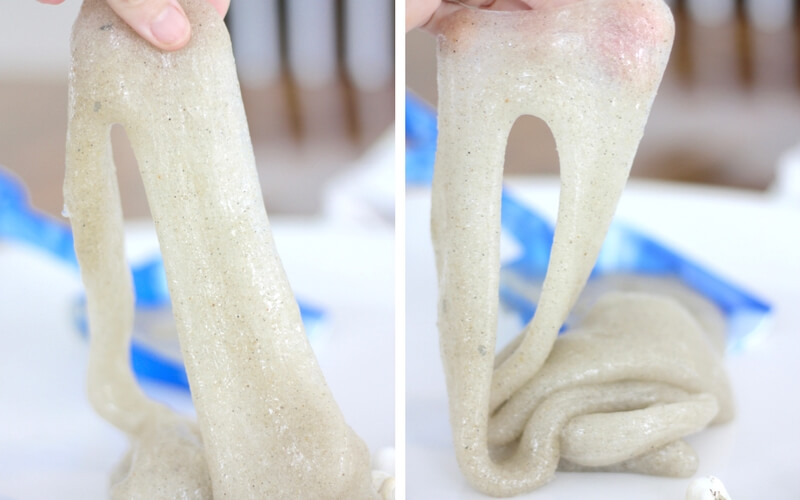
We call it a Non-Newtonian fluid because it’s a little bit of both! Experiment with making the slime more or less viscous with varying amounts of foam beads. Can you change the density?
Did you know that slime aligns with the Next Generation Science Standards (NGSS)?
It does and you can use slime making to explore states of matter and its interactions. Find out more below…
Helpful Slime Making Resources
These are the best resources to look through before, during, and after making your awesome fruit scented slime! We talk more about slime science below too.
- Slime Activator List
- What is slime?
- What You Need To Make Slime
- Amazing Benefits Of Playing With Slime
- Best Slime Ideas
- How To Make Slime Less Sticky
- How To Get Slime Out Of Clothes And Hair
More Fun Slime Recipes To Try
If your kids love playing with sand slime, why not try more favorite slime ideas…
Grab the Ultimate Slime Guide Bundle
All the best homemade slime recipes in one place with plenty of fantastic extras!

23 Comments
Comments are closed.