Learning about animal habitats is an important part of early science, and hands-on activities make it easier for kids to understand. This easy animal habitat diorama project lets kids build a real environment while learning how animals live and survive.
👉 You’ll also find more simple animal habitat ideas here to extend the learning at home or in the classroom.

What Is an Animal Habitat?
A habitat is where an animal lives. It provides everything an animal needs to survive, including food, water, shelter, and space.
Animals live in many different habitats, such as oceans, rainforests, deserts, forests, and polar regions. Each habitat has unique features, and animals have special traits that help them survive there.
👉 Animals that live in different habitats have special traits that help them survive, including camouflage and other adaptations. Learn more about these survival traits in our animal adaptations for kids activities.
Easy Animal Habitat Diorama Project
This animal habitat diorama project is a fun and creative way for kids to explore different environments using simple materials.
Materials Needed:
- Printable project guide (see below)
- Shoe box or small cardboard box
- Construction paper
- Scissors
- Glue
- Markers
- Small animal figures or printed cutouts
- Optional: twigs, leaves, sand, cotton balls (for snow), etc.
💡 Encourage creativity! Use what you already have.
How to Make an Animal Habitat Diorama
Step 1. Choose a habitat and research it. Look at pictures to learn about plant life, water sources, and land features.
Step 2. Decorate the inside of your box to match the habitat. Use paper, markers, and natural materials to build the environment.
Step 3. Add animals that live in that habitat. Include both vertebrates and invertebrates.
💡 For an extra challenge, have kids draw their own animals instead of using figures.
Habitat Diorama Examples
Ocean Habitat:
Jellyfish, sea stars, octopus (invertebrates) + dolphins, sharks, sea turtles
Rainforest Habitat:
Butterflies, ants, beetles + jaguars, monkeys, frogs
Desert Habitat:
Scorpions, beetles + fennec fox, rattlesnake, tortoise
Forest Habitat:
Earthworms, spiders + deer, owls, and foxes
Polar Habitat:
Krill, ice worms + polar bears, penguins, seals
More Animal Habitat Project Ideas
Try these additional animal habitat project ideas for kids to extend the learning:
- Habitat Poster Project: Draw and label a habitat. Include animals, food sources, and shelter.
- 3D Habitat Model (Beyond a Box): Use clay, paper plates, or recycled materials to create a habitat model without a shoebox.
- Build an Animal Shelter (STEM Challenge): Design and build a shelter that protects an animal from weather and predators. 👉 Try our building an animal shelter activity.
- LEGO Animal Habitat Challenge: Use bricks to design a habitat and test how well it supports animal
Explore Specific Habitat Dioramas
Take a closer look at individual environments:
- 👉 Try a savanna habitat diorama project
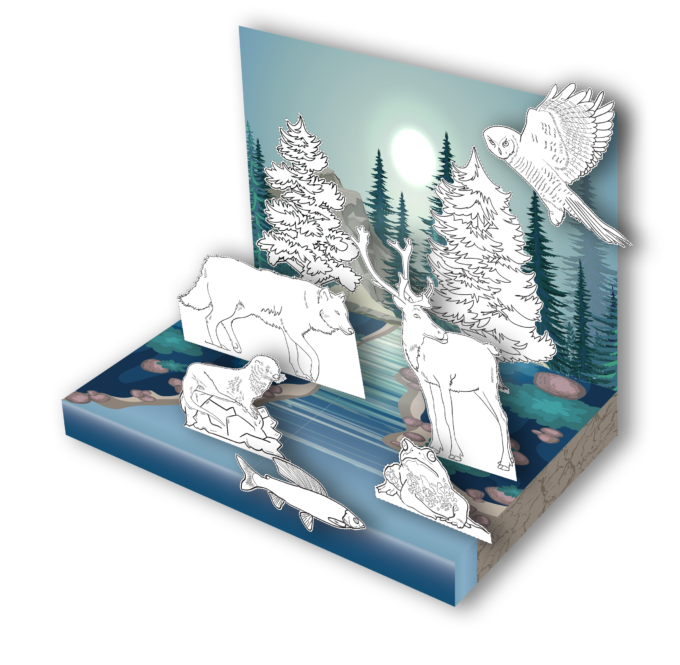
- 👉 Build a taiga habitat diorama project
- 👉 Learn more about arctic habitats for kids
How Animals Survive in Their Habitats
Animals don’t just live in habitats—they are adapted to survive there.
- They find food
- They stay safe from predators
- They adjust to the weather and climate
Some animals migrate to new habitats, others hibernate during colder months, and many depend on plants and pollinators within their ecosystem.
One important survival strategy is camouflage, which helps animals blend into their surroundings and avoid being seen.
👉 Try this hands-on animal camouflage activity to see how it works.
Animal Habitat Project Tips
- Encourage kids to research before building
- Use real photos for inspiration
- Work in pairs or small groups
- Connect this project to lessons on:
Grab the Free Printable Animal Habitat Project Guide
Use the free printable guide to help kids plan, research, and build their habitat project step by step.
Animal Habitat Project FAQ
What is an animal habitat project?
An animal habitat project is a hands-on activity where kids create a model or drawing of an environment where animals live. It helps them understand how habitats provide food, water, shelter, and space.
What is a habitat diorama?
A habitat diorama is a 3D model, usually made in a box, that shows a specific environment and the animals that live there.
What are some easy habitat projects for kids?
Easy ideas include a shoebox diorama, a labeled habitat poster, a LEGO habitat build, or a simple 3D model using craft materials.
What animals should be included in a habitat project?
Include animals that naturally live in that environment, both vertebrates (like mammals and birds) and invertebrates (like insects or sea creatures).
How does this connect to science learning?
Habitat projects teach kids about ecosystems, adaptations, food chains, and how animals survive in different environments.
Printable Animal Activities STEAM Bundle (Ecology)
Discover a full collection of hands-on animal science activities with the Animal STEAM Bundle!
This bundle includes engaging projects for:
- Animal habitats
- Life cycles
- Adaptations and Classification
- Food chains
- Vertebrates and invertebrates
Perfect for Kindergarten through 5th grade, this resource makes it easy to bring science, engineering, and creativity together.