

Have you ever wondered why the sky looks different during the day and night? Perfect for young learners, these day and night worksheets will help students understand the science behind the Earth’s rotation and how it creates day and night.

Day and Night for Earth Science
Understanding day and night is one of the basic concepts introduced in Earth Science. It helps students recognize patterns, observe natural changes, and understand how the Earth’s rotation affects their daily lives. Learn more about the four seasons here.
💡Also explore our diurnal and nocturnal animals activities.
Grade Level: Kindergarten- 2nd grade
Helpful Supplies:
- Printed day and night activity sheets
- Scissors
- Glue sticks
- Crayons or markers
- Printable word banks (included in the activity pack)
- Printable Venn diagrams and cut-and-paste images
- Blue and black paper squares (for visual contrast)
Inside the Day and Night Worksheets Pack
Day and Night Word Bank Activity
Using the word bank, students fill in what they see during the day (sun, clouds) and night (moon, stars). This helps them identify objects visible in both times of the day and reinforces vocabulary related to the topic.
Day or Night Cut and Paste
Students will cut out various images (e.g., sun, stars, owl, bed) and paste them in the correct column under “Day” or “Night.” This sorting activity strengthens their understanding of time-based visual cues.
Day and Night Matching
With images like the sun, clouds, moon, and stars, students color and match day or night images. This coloring exercise reinforces their comprehension and enhances fine motor skills.
Daily Routine Sorting
Students match daily activities (like waking up, eating breakfast, and going to bed) to the correct time of day. This helps students make real-world connections between their routine and the concept of day and night.
Day and Night Venn Diagram
In this activity, students use cutouts of day and night images and place them into a Venn diagram to explore what belongs in the daytime, nighttime, or both. This introduces the idea of comparing and contrasting.
Fill-in-the-Blanks Day and Night
Using a word bank, students complete sentences related to the Earth’s rotation, the sun, the moon, and their roles in day and night. This builds their understanding of how Earth’s movement affects what they observe in the sky.


Why Do We Have Day and Night?
During the day, the sun lights up the sky because the Earth is facing the sun. As the Earth rotates, different parts are exposed to the sun, creating day. At night, the side of the Earth that faces away from the sun experiences darkness, and we can see the moon and stars.
💡 The Earth’s rotation is responsible for this day and night cycle. This concept is essential to understanding Earth and space sciences in early elementary grades.
Earth Science Lesson
A great time to introduce these day and night worksheets is early in the school year, around September or October, when kids adjust to classroom routines. The simple topic of day and night aligns with their daily experiences and is a foundational lesson in Earth and space sciences.
💡Make sure to look through our what’s the reason for the season’s activities!
Another good time to revisit the concept is during winter when days are shorter and nights are longer. This allows students to connect seasonal changes with the length of daylight and darkness.
💡 Take a look at our Winter Solstice and Summer Solstice Activities.
These lessons tie into science standards focused on the Earth’s rotation and how it causes day and night. They also provide a perfect opportunity to explore diurnal and nocturnal animals, linking biology with Earth science.
Day and night activities encourage observation, prediction-making, and discussion, which help students develop STEM skills like collecting data and analyzing patterns.
💡Teaching about day and night early in the year and revisiting it during seasonal changes supports kids’ understanding of the world around them.
Extension Activities
- Observational Journals: Have students keep a simple journal where they draw what they see in the sky during the day and at night.
- Day and Night Art Project: Use blue and black construction paper to create a split picture of day and night. Students can decorate each side with cutouts of clouds, stars, the sun, and the moon.
- Story Time: Read books related to the theme, like What Makes Day and Night by Franklyn M. Branley.
Free Day and Night Worksheets
Easily add these to your science lesson plans anytime! Grab the free day and night worksheets here.

Related Day and Night Activities:
- Day and Night Sensory Bin: Create a sensory bin filled with day-related items (yellow pom-poms for the sun, dyed blue rice for the sky) and night (dyed black rice for the night sky, glow in the dark stars). Learn how to dye rice here.
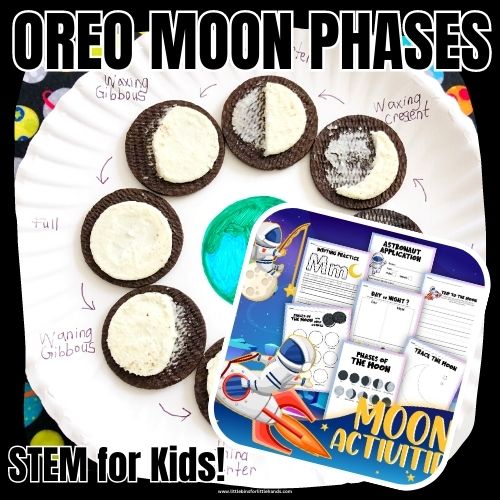
- Phases of the Moon Activity: Use Oreo cookies to create the moon’s phases. This is an excellent addition to the concept of day and night, as the moon’s visibility changes throughout the month.

Printable Space Projects Pack
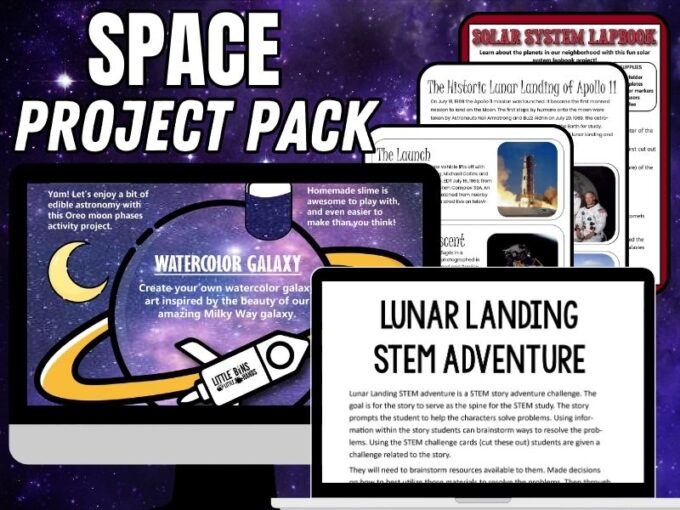
With 250+ pages of hands-on fun space themed fun, you can easily explore classic space themes with your kiddos including moon phases, constellations, the solar system, and of course the 1969 Apollo 11 lunar landing with Neil Armstrong.
⭐️ Activities include supply lists, instructions, and step-by-step pictures. Also Includes FULL Space Camp Week. ⭐️



I was trying to download the Free Day and Night worksheets but I’m getting the following error message…TypeError: Failed to fetch
Hi! Feel free to email me sarah@littlebinsforlittlehands.com and i can help. I think your address may be blocking it.