

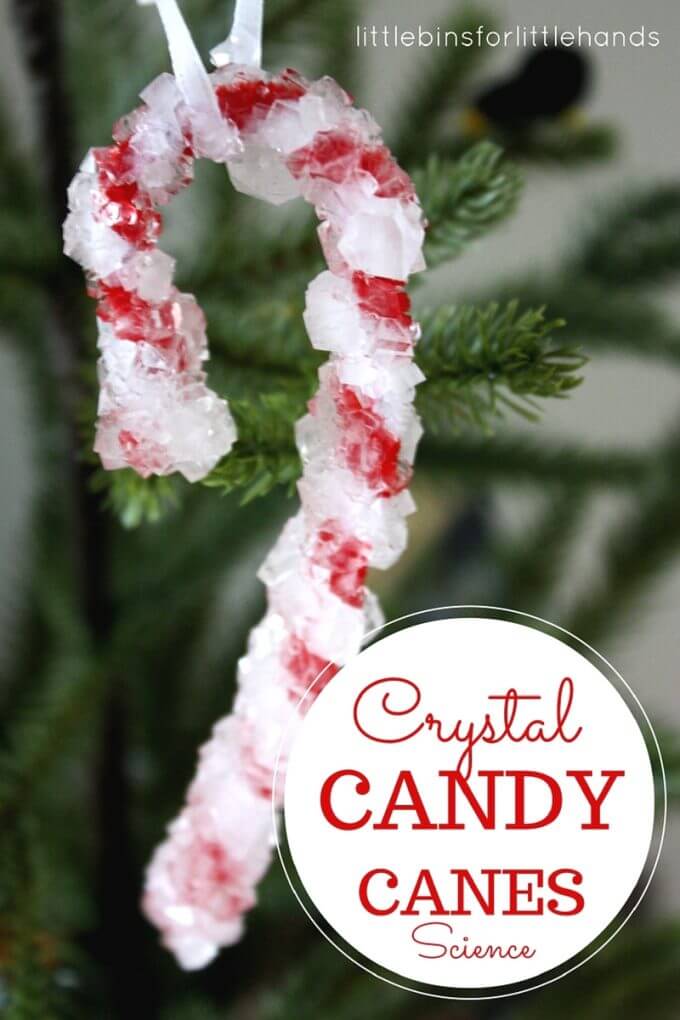
Ready to combine holiday fun with hands-on science? This engaging Christmas STEM activity lets kids explore how crystals grow while creating beautiful candy cane ornaments! You’ll learn about suspension science with simple supplies and patience and watch sparkling crystals form overnight.
Make Crystal Candy Canes
💡 Perfect for the holiday countdown, join us for 25 Days of Christmas STEM Activities!
SUPPLIES:
- Borax Powder (find it in the laundry aisle—also great for making borax slime!)
- Water
- Mason jars (wide mouth preferred)
- Pipe cleaners (red, green, white)
- Pan, spoon, measuring cup, and tablespoon
- Popsicle sticks or pencils
- Ribbon (for turning your creations into ornaments)

Instructions to Make Crystal Candy Canes
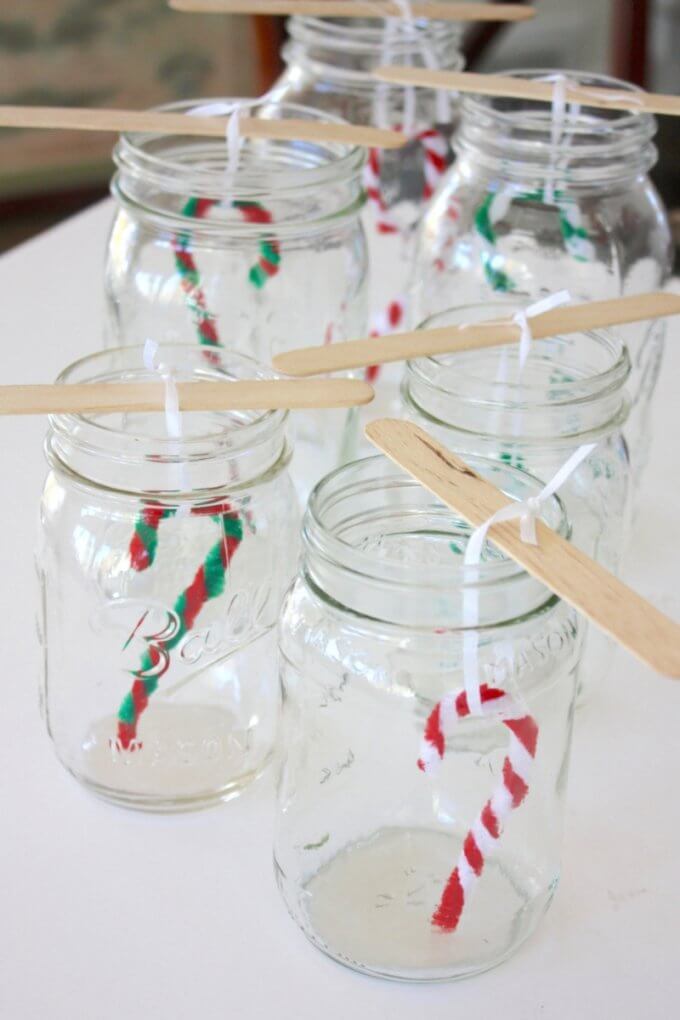
Step 1: Make Pipe Cleaner Candy Canes
- Cut pipe cleaners in half to make smaller candy canes.
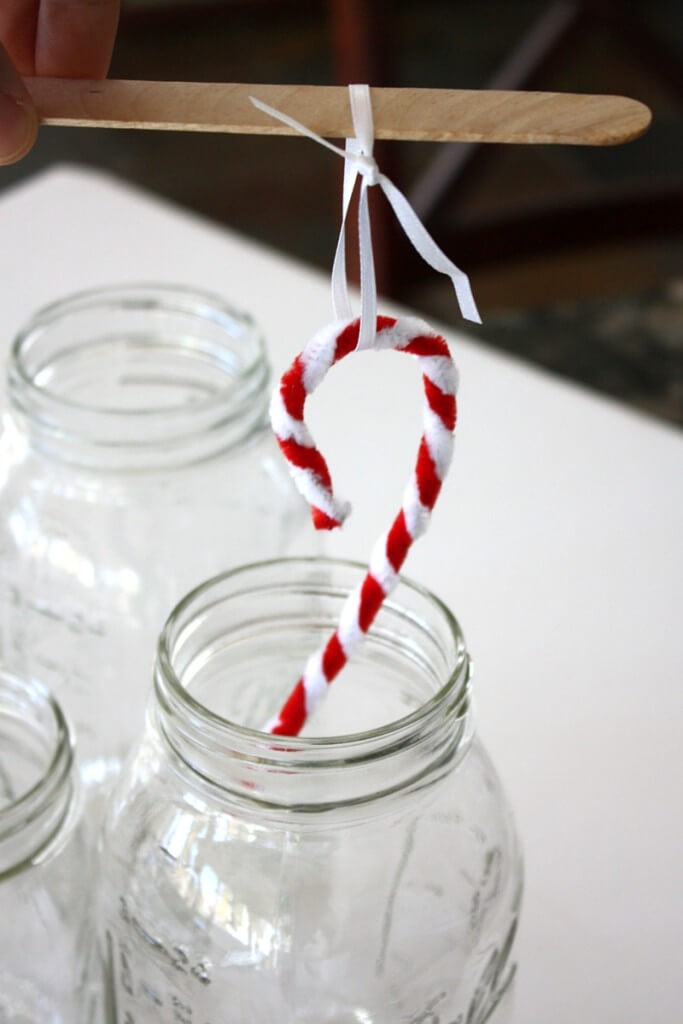
- Twist combinations of red, green, and white pipe cleaners into candy cane shapes.
- Attach your candy canes to popsicle sticks so they hang freely in the jar, avoiding contact with the sides or bottom of the jar.
Step 2: Create the Borax Solution
- Boil water in a pan and remove from heat.
- Add borax (3 tablespoons of borax per 1 cup of water) and stir until it dissolves completely.
- Pour the solution into mason jars, leaving space at the top.
- Place jars in a quiet area to avoid disturbances.
Step 3: Watch the Crystals Grow
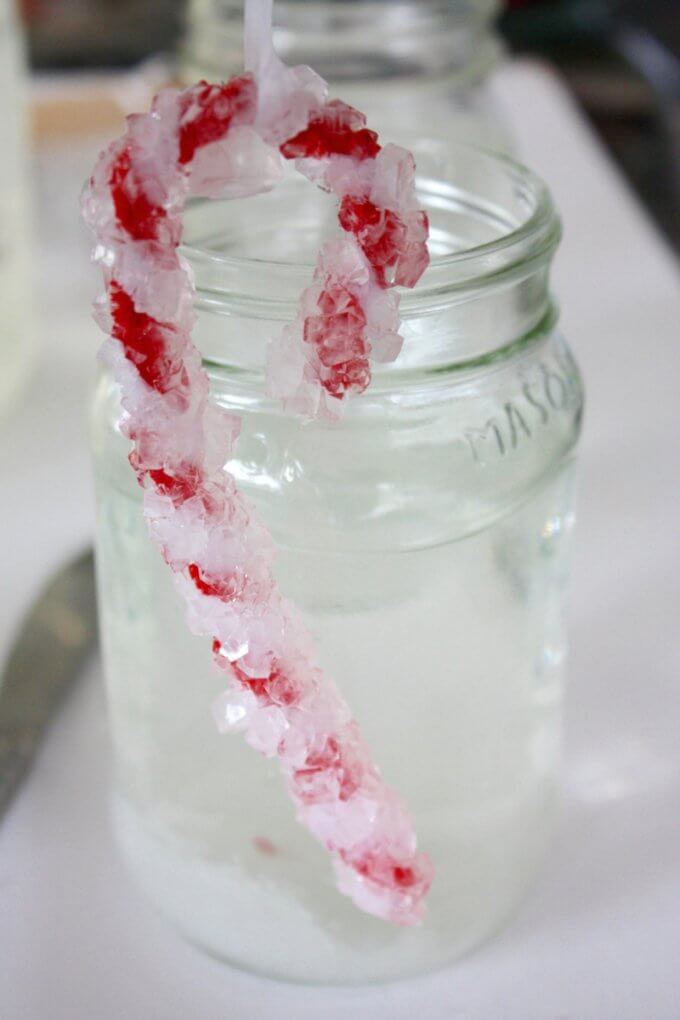
- Within a few hours, you’ll see crystals starting to form.
- In 18–24 hours, your candy canes will be covered in beautiful, sturdy crystals.
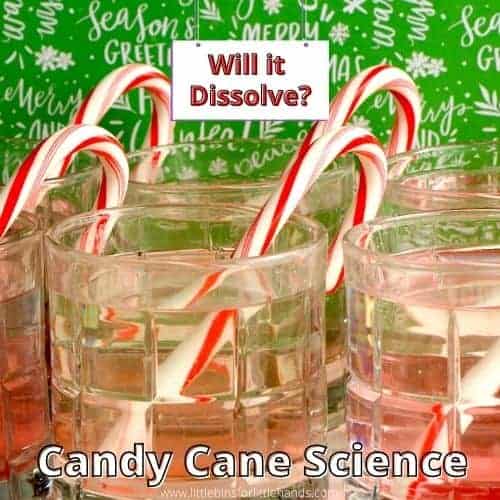
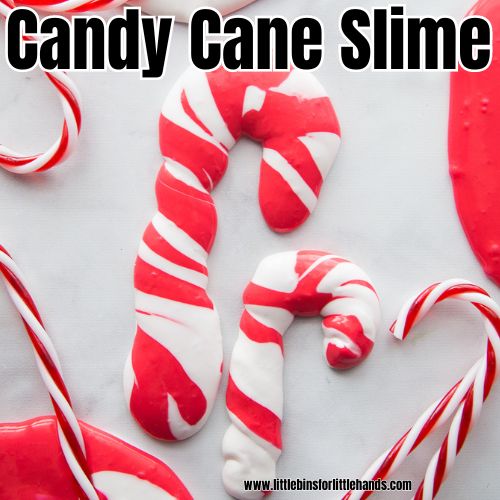
💡 While you’re waiting, try a Dissolving Candy Canes Experiment or try bending candy canes!
Step 4: Dry, Observe, and Decorate
- Remove candy canes from the jars and dry them on paper towels.
- Use a magnifying glass to examine the cube-like crystals and structure—so cool!
- Add ribbon and hang your ornaments on the tree or in a sunny window to catch the light.
What’s the Science Behind Crystal Candy Canes?
At the heart of this Christmas crystal ornament activity is a saturated solution. When borax dissolves in hot water, the heat causes water molecules to move faster and spread apart, allowing the liquid to hold more borax than it could at a cooler temperature. As the solution cools, the water molecules slow down and come closer together, leaving no room for the borax to dissolve.
The borax particles settle out of the solution and attach to the pipe cleaners, forming cube-shaped crystals. The process works best when cooling happens slowly, which allows fewer impurities to remain in the crystals and creates larger, sturdier structures.
Did you know? The type of container you use affects crystal formation!
- Glass jars: Retain heat longer, allowing slower cooling and the growth of larger, more durable crystals.
- Plastic cups: Cool faster, leading to smaller, more fragile crystals with more impurities.
💡 Did you know you can also grow salt crystals if you don’t want to use borax? Take a look at these beautiful salt crystal snowflakes, but you can make any shape, including candy canes.
Extension Activities
Christmas Science Ornaments
💡 Put science on the Christmas tree! Find more fun science ornaments here.
- Bioplastic Ornaments: Learn about sustainability by making biodegradable holiday decorations.
- Circuit Ornaments: Light up your tree with simple LED circuits embedded in handcrafted ornaments.
- Binary-Coded Candy Canes: Combine coding with creativity by designing ornaments that spell out holiday messages in binary.



Christmas Candy Cane Science Experiments

Printable Candy Cane STEAM Project Pack
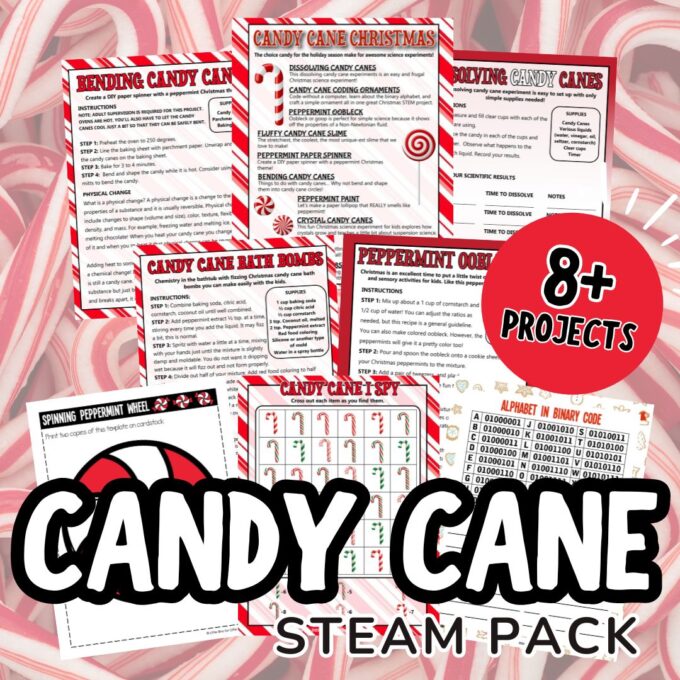
For a complete pack of instructions, templates, and extras, grab our Candy Cane Project Pack!


I am going to try this with my toddlers, can’t wait !! Thank you!
Absolutely!