
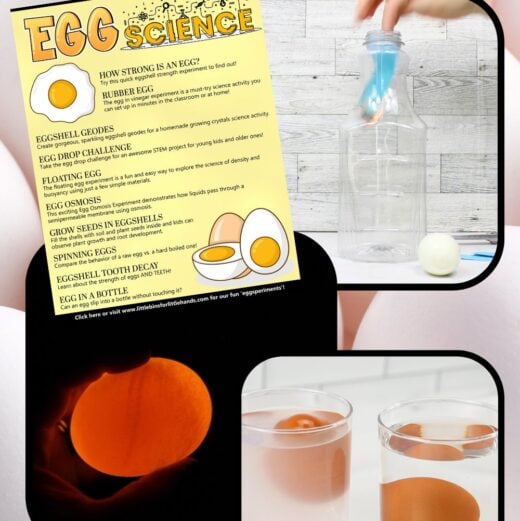
Eggs aren’t just for breakfast—they make incredible science experiments too! From testing the strength of eggshells to making a rubber egg or exploring density, eggs are perfect for hands-on science activities.
These egg science experiments for kids use simple materials and demonstrate real science concepts like chemistry, physics, and biology. While egg experiments are often popular around Easter, they work year-round in classrooms, homeschool lessons, or kitchen science investigations.
Grab a dozen eggs and explore these fun and fascinating egg experiments!
Quick Egg Science Experiment Ideas
Try these egg experiments to explore important science concepts:
• Density – make an egg float in saltwater
• Osmosis – observe a rubber egg shrink or swell
• Air pressure – pull an egg into a bottle
• Chemical reactions – dissolve an eggshell in vinegar
• Engineering – protect an egg in a drop challenge
• Physics – compare spinning raw and boiled eggs
These hands-on investigations help kids see science concepts in action with simple kitchen supplies.
👉 Looking for seasonal activities as well? See our full collection of Easter science experiments and STEM activities.
What Can Kids Learn From Egg Experiments?
Eggs are ideal for science experiments because they include several interesting structures:
• a hard calcium shell
• a semi-permeable membrane
• liquid inside the egg
• a naturally strong curved shape
These features allow kids to explore science topics such as:
• density and buoyancy
• osmosis and membranes
• air pressure
• chemical reactions
• structural engineering
• motion and inertia
Eggs make excellent STEM activities for home, classrooms, or science fairs.
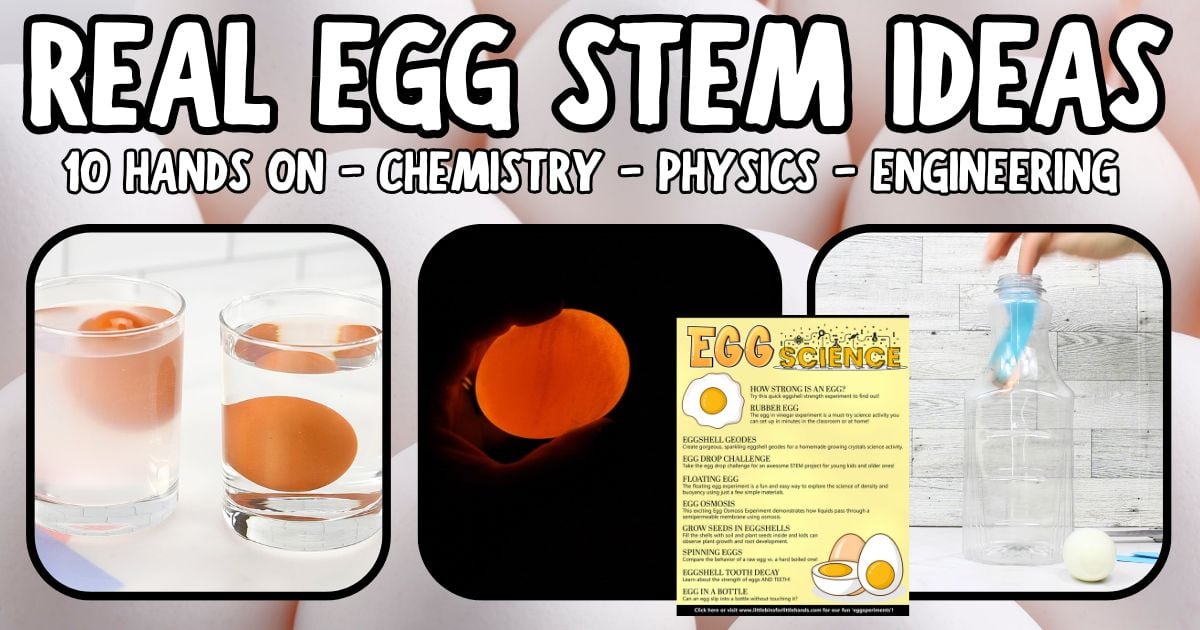
10 Egg Science Experiments for Kids
Eggs are surprisingly strong, flexible, and full of fascinating chemistry. Try these fun egg science activities to explore physics, chemistry, biology, and engineering concepts.
How Strong Is an Egg?
Eggshells may look fragile, but they are surprisingly strong when pressure is distributed evenly.
Place raw eggs upright in an egg carton and carefully stack books or other objects on top. Kids will be amazed to see how much weight the eggs can support before cracking.
Concepts explored
• structural strength
• compression forces
• engineering design
👉 Investigate the Strength of an Egg here
Rubber Egg Experiment (Naked Egg)
Can an egg really go naked?
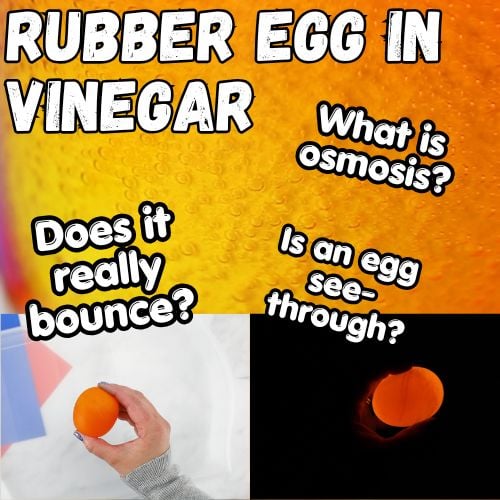
Place a raw egg in vinegar and leave it for 24–48 hours. The vinegar reacts with the eggshell, slowly dissolving it and leaving behind a soft, rubbery egg.
The shell disappears because vinegar reacts with the calcium carbonate in the shell.
Concepts explored
• chemical reactions
• calcium carbonate
• membranes
👉 Make a bouncing rubber egg here
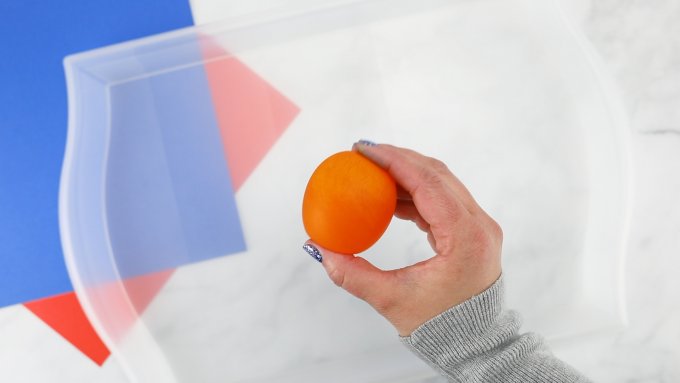
Crystal Eggshells
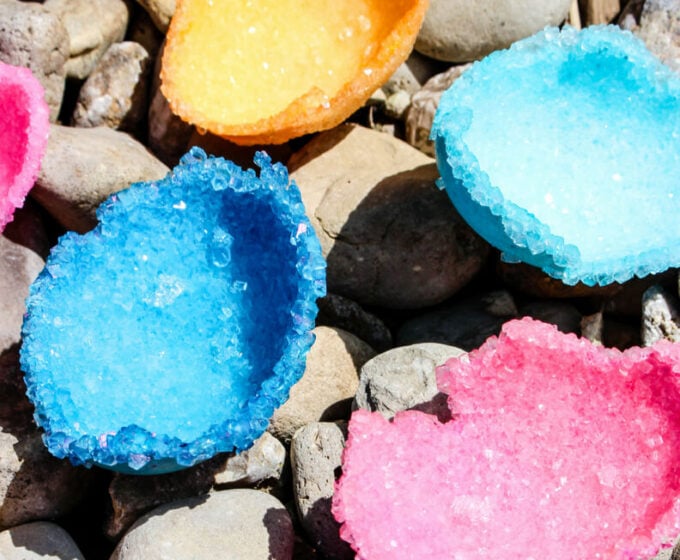
Use empty eggshell halves to grow sparkling crystals.
Place cleaned shells into a container of borax solution and allow crystals to form over time. Kids can observe how crystals grow as the solution cools.
You can also try creating eggshell geodes for another crystal experiment.
Concepts explored
• crystal formation
• solution chemistry
• mineral growth
👉 Grow crystal eggshell geodes here
Egg Drop Challenge
Can you design a structure that protects an egg from breaking?
Using materials such as paper, straws, tape, cotton balls, or cardboard, build a device that protects an egg when dropped from a height. Test different designs and improve them after each trial.
Concepts explored
• engineering design process
• force and impact
• structural protection
👉 Take the Egg Drop Challenge here
Grow Seeds in Eggshells
Reuse eggshell halves as tiny seed starters.
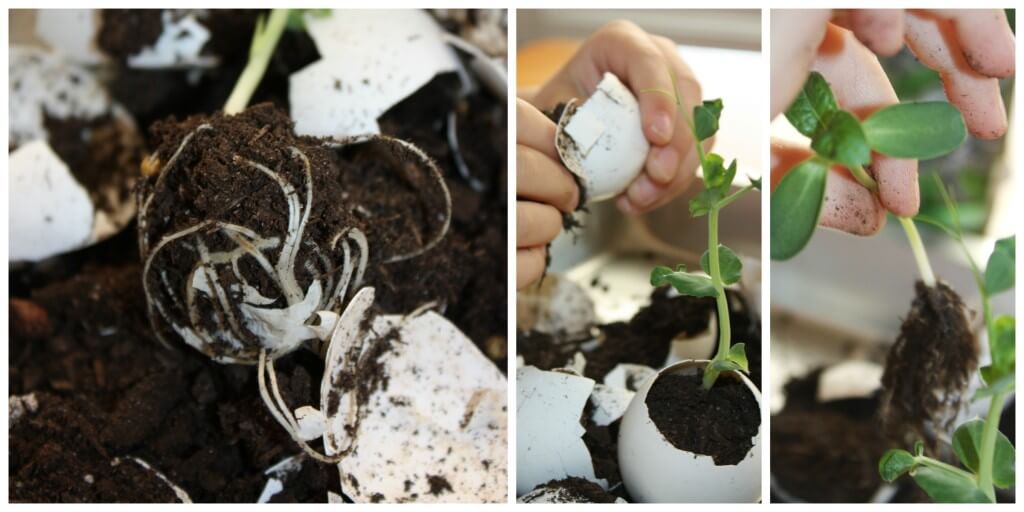
Fill the shells with soil and plant seeds inside. As the seeds sprout, kids can observe plant growth and root development.
This activity combines biology and gardening science while reusing natural materials.
Concepts explored
• seed germination
• plant life cycles
• sustainability
👉 Grow seeds in eggshells to observe parts of a plant over time
Floating Egg Density Experiment
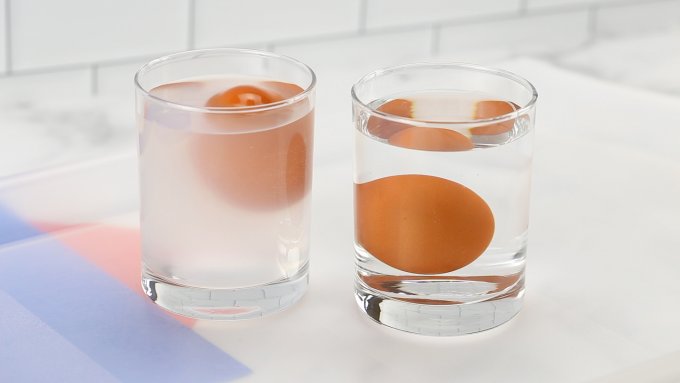
Do eggs float or sink?
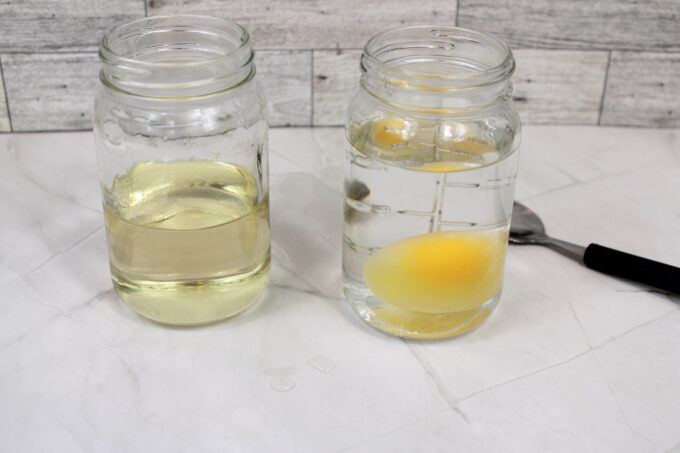
Place an egg in a glass of plain water and observe that it sinks. Now, slowly add salt and stir until it dissolves. Eventually, the egg will begin to float.
Salt increases the density of the water, allowing the egg to float.
Concepts explored
• density
• buoyancy
• solutions
👉 Investigate density with a floating egg
Egg Osmosis Experiment
Use the rubber egg from the vinegar experiment.
Place it in different liquids such as water or corn syrup. The egg may swell or shrink depending on the surrounding liquid.
Water moves through the egg membrane in a process called osmosis.
Concepts explored
• osmosis
• diffusion
• membranes
👉 Explore egg osmosis with a rubber egg
Egg in a Bottle Experiment
Can an egg slip into a bottle without touching it?
Place a small flame inside a bottle and set a peeled hard-boiled egg on the opening. As the air cools inside the bottle, the egg is pulled inside.
This dramatic demonstration shows the power of air pressure changes.
Concepts explored
• air pressure
• temperature and gases
• pressure differences
👉 Try the egg in a bottle experiment here

Eggshell Tooth Decay Experiment
Eggshells can be used as a model for teeth.
Place pieces of eggshell into liquids such as soda, vinegar, juice, or water. After several hours, observe how the shells change.
Acidic liquids slowly dissolve the calcium in the shell, modeling how acids can weaken tooth enamel.
Concepts explored
• acids and bases
• chemical reactions
• dental health science
Raw vs Hard Boiled Egg Experiment
Spin a raw egg and a hard-boiled egg on a table.
Which spins faster?
Briefly stop each egg with your finger, then release it again. The hard-boiled egg stops immediately, but the raw egg may start spinning again because the liquid inside keeps moving.
Concepts explored
• inertia
• motion
• physics
Turn an Egg Experiment Into a Science Fair Project
Any of these egg experiments can become a great science fair project. Use this free egg science process pack to get started.
Encourage kids to:
• ask a testable question
• make a prediction
• test different variables
• record observations
• analyze results
Examples of science fair questions:
• How much salt makes an egg float?
• Which liquid dissolves eggshells the fastest?
• Which egg drop design protects an egg best?
Helpful resources:
More Kitchen Science Experiments
If your kids enjoyed these egg experiments, try more hands-on science activities:
• kitchen science experiments
• density experiments
• simple chemistry experiments
• science experiments you can do at home
Frequently Asked Questions
Why are eggs used in science experiments?
Eggs are great for science experiments because their shells, membranes, and liquid interiors allow kids to explore concepts such as density, chemical reactions, air pressure, and structural strength.
What science concepts can egg experiments teach?
Egg experiments demonstrate concepts such as density, osmosis, air pressure, chemical reactions, and engineering design.
What age group are egg science experiments best for?
Many egg experiments work well for kindergarten through middle school. Younger kids enjoy simple observations, while older students can turn them into science fair investigations.
Printable Elementary Science!
Want to do meaningful science — but not start a full unit yet? This starter lab provides quick, hands-on investigations across multiple science topics, allowing students to explore how science works before diving deeper into any one subject.
Perfect for regularly trying science without extensive planning. Grades: K–5.