
The freezing point of water is easy to explore with a simple hands-on investigation. In this science experiment, kids compare plain water and saltwater to observe how adding salt changes the freezing process. By making observations and testing variables, kids investigate why saltwater freezes differently from fresh water.
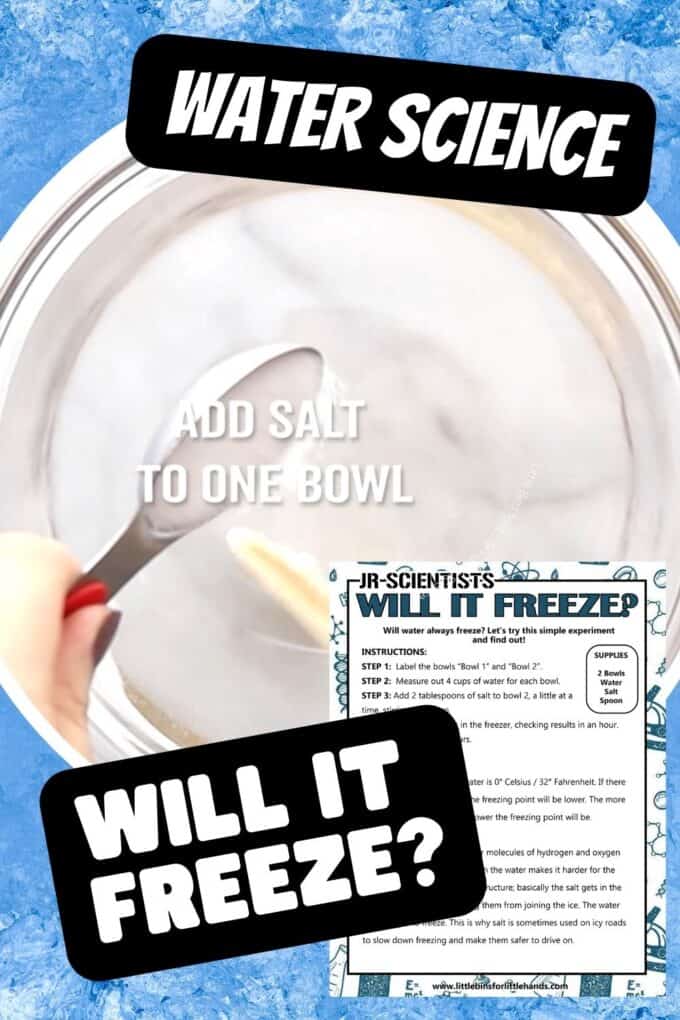
Freezing Water Experiment: Saltwater vs Fresh Water
This freezing water experiment is perfect for upper elementary students and works well as a science fair project, classroom lab, or homeschool investigation. Kids also learn how this relates to real-world applications, such as icy roads in winter.
Field: Physical Science — States of Matter
Grades: 3–5
Concepts Explored: Freezing point; phase changes; physical changes; solutions and mixtures
NGSS Guiding Questions:
- What happens to water when it freezes?
- How does adding salt change the freezing process?
- Why does saltwater freeze at a lower temperature than fresh water?
This activity supports students in observing how materials change state and how added substances can affect physical properties.
Supplies Needed
- 2 bowls
- Water
- Salt
- Spoon
- Freezer
- Optional: thermometer
Freezing Saltwater Experiment Instructions

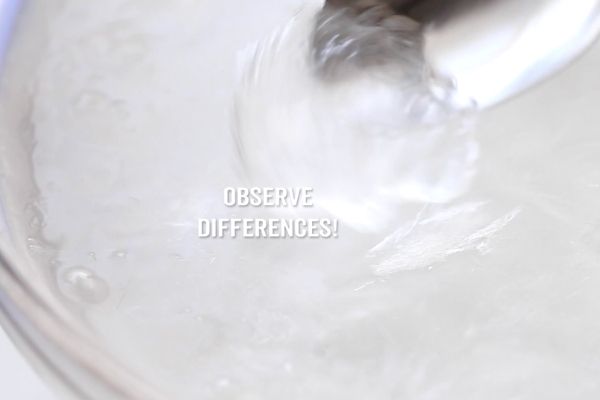
🔎 As you observe, note which bowl freezes first and how solid the ice appears in each bowl.
🔎 Optional: Use a thermometer to record the temperature of each bowl during observations.💡
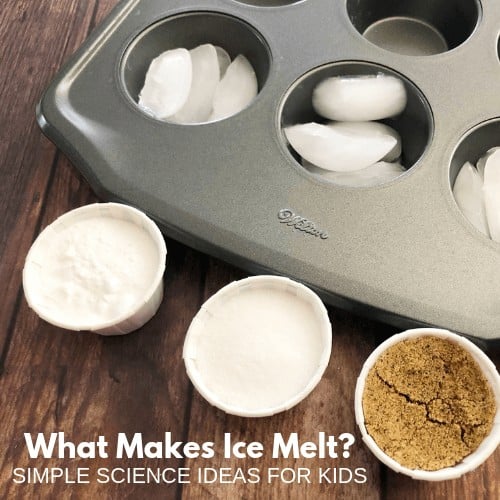
Suggestion: Follow up this experiment with our ice melting experiment and investigate how salt affects the melting point of ice!
What Is the Freezing Point of Water?
One of the guiding questions in this activity asks: What happens to water when it freezes?
The freezing point of pure water is 0°C (32°F). This is the temperature at which liquid water changes into solid ice.
When salt is added to water, the freezing point of the solution drops below 0°C. This means saltwater must reach a colder temperature before it can freeze. As more salt dissolves in the water, the freezing point becomes even lower, and the water takes longer to freeze.
This helps explain why plain water and saltwater do not freeze at the same time.
Why Does Saltwater Freeze More Slowly?
Another guiding question asks: How does adding salt change the freezing process?
When water freezes, its molecules arrange into a crystalline solid. Salt dissolves into charged particles that interfere with this process. These particles prevent water molecules from joining, making it harder for ice crystals to form.
Because ice forms more slowly, saltwater freezes at a lower temperature than pure water.
This change is considered a physical change because the water can melt and freeze again without forming a new substance.
💡 Real World Application: This same concept explains why salt is spread on icy roads. Salt lowers the freezing point of water, helping prevent ice from forming as quickly.
Using the Scientific Method
This experiment is a great way to practice the scientific method (free printable).
Question
What happens when plain water and saltwater are placed in the freezer under the same conditions?
Hypothesis
If salt is added to water, then the saltwater will take longer to freeze because salt lowers the freezing point of water.
Experiment
Students freeze plain water and saltwater under the same conditions and compare how quickly and completely each freezes.
- Independent Variable: Type of water (plain vs saltwater)
- Dependent Variable: Amount of freezing observed
- Controlled Variables: Amount of water, freezer temperature, bowl size
Students can record observations and draw conclusions based on their results.
Make This a Science Fair Project
To explore the guiding questions further, students can extend the investigation in these ways:
- Test different amounts of salt
- Measure freezing time at regular intervals
- Compare saltwater to sugar water
- Graph results using time and temperature
Free Printable: Freezing Saltwater Science Project
Download the free printable freezing saltwater experiment.
More States of Matter & Water Experiments
Looking for more hands-on science experiments?
👉 Explore our full science experiments collection for age-appropriate activities, printable resources, and key science concepts.
Continue exploring related topics with these activities:
Explore Phase Changes and Freezing:
Explore Water and Solutions:


Frequently Asked Questions
These questions help clarify what students observe during the freezing saltwater experiment.
What is the freezing point of water?
The freezing point of pure water is 0°C (32°F). This is the temperature at which liquid water turns into solid ice.
Does salt lower the freezing point of water?
Yes. Adding salt lowers the freezing point of water, meaning saltwater must reach a colder temperature than plain water before it freezes.
What is the freezing point of saltwater?
Saltwater freezes at a lower temperature than fresh water. The exact freezing point depends on how much salt is dissolved in the water.
Why does saltwater freeze more slowly than plain water?
Salt interferes with the formation of ice crystals, making it harder for water molecules to bond and freeze.
Is freezing saltwater a physical or chemical change?
Freezing saltwater is a physical change. The water changes state from liquid to solid, but no new substance is formed.
Extend Your Science Learning
If your kids enjoyed this experiment, explore our Classic Science Activities Pack—a collection of 90+ hands-on science experiments with printable instructions, recording pages, and extension ideas. It’s perfect for homeschool, classroom centers, or family science time.