
Matter is all around us—and kids can explore it through simple, hands-on science experiments. From melting ice and freezing water to fizzing reactions and gas-filled balloons, these states of matter activities help children understand solids, liquids, and gases in a meaningful way.
States of matter are one of the first chemistry concepts kids explore. By observing how matter changes and behaves, kids begin to understand key ideas in chemistry and physics.
What Is Matter?
💡 Matter is anything that has mass and takes up space.
If you can touch it, hold it, or see it—it’s made of matter.
Matter is made of tiny particles called molecules. These molecules are always moving, and how they move determines whether something is a solid, liquid, or gas.
In this guide, you’ll learn:
- easy states of matter experiments for kids
- what matter is
- the three states of matter
- how matter changes between states
👉 Read more about: What is Matter?
The Science Behind It
Field: Chemistry — Matter & Physical Changes
Grades: K–5
Concepts Explored: Solids, liquids, gases, particle movement, phase changes, physical properties of matter, heating and cooling, evaporation, condensation, melting, freezing.
What Are the Three States of Matter?
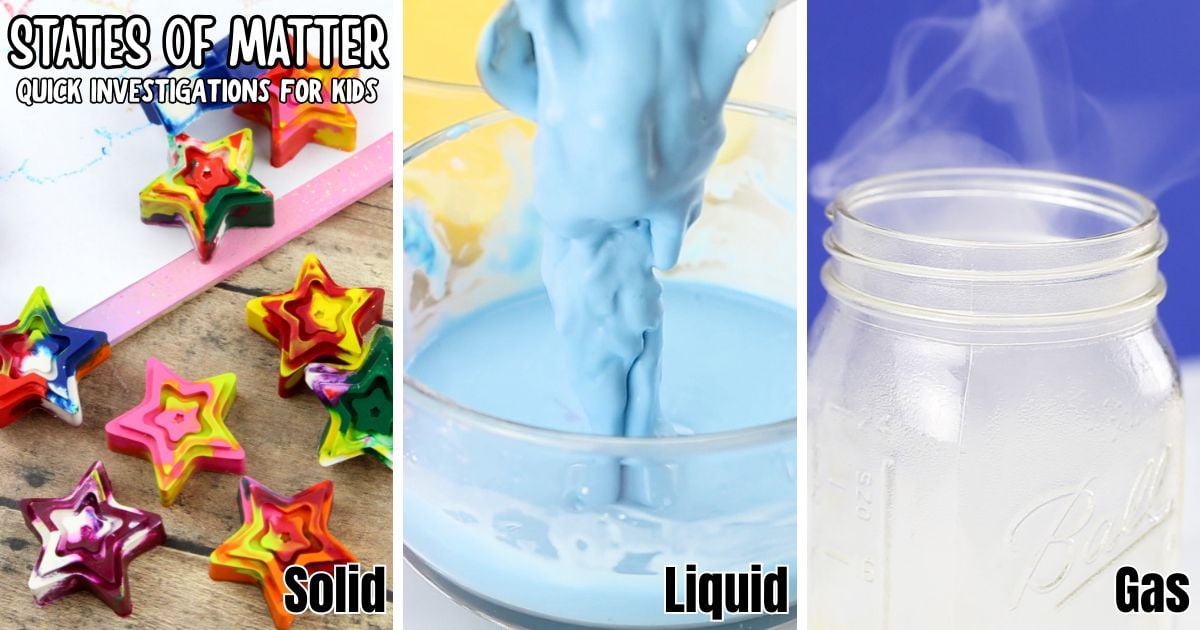
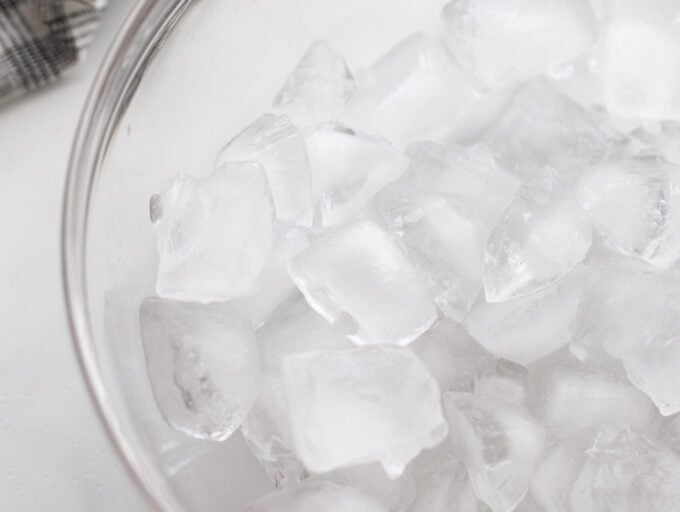
Solid
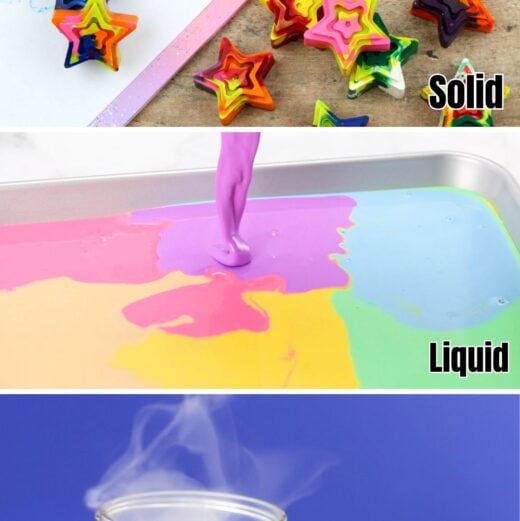
A solid has molecules packed tightly together in a fixed arrangement. Because the particles can only vibrate in place, solids keep their own shape.
💡 Example: Ice (frozen water)
Liquid
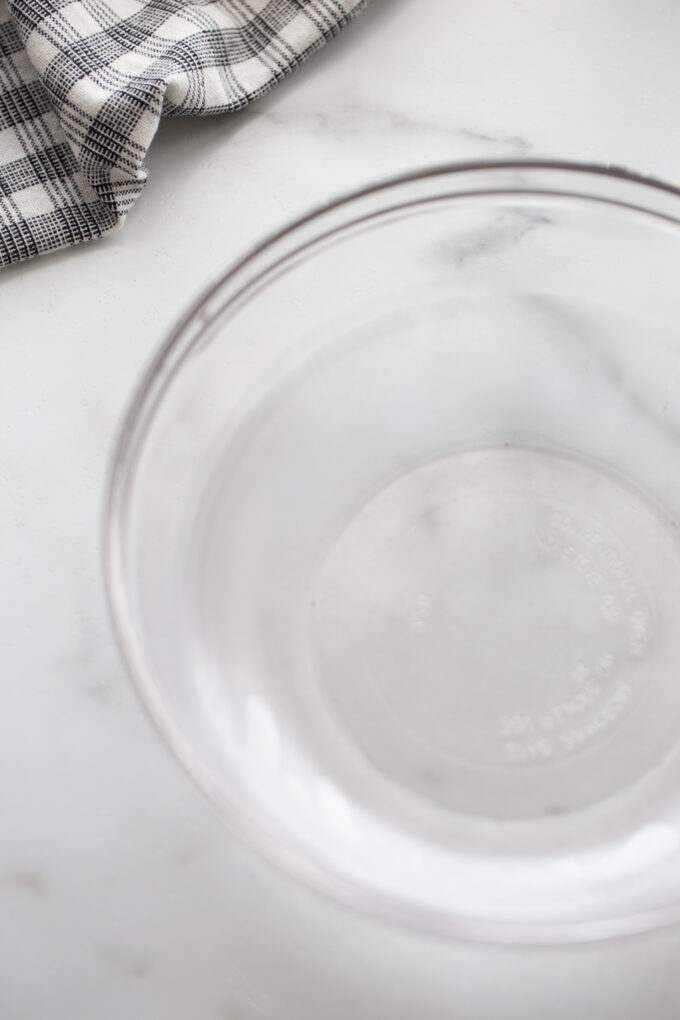
In a liquid, molecules are still close together but can slide past one another. Liquids do not have a fixed shape and take the shape of their container.
💡 Example: Water
Gas
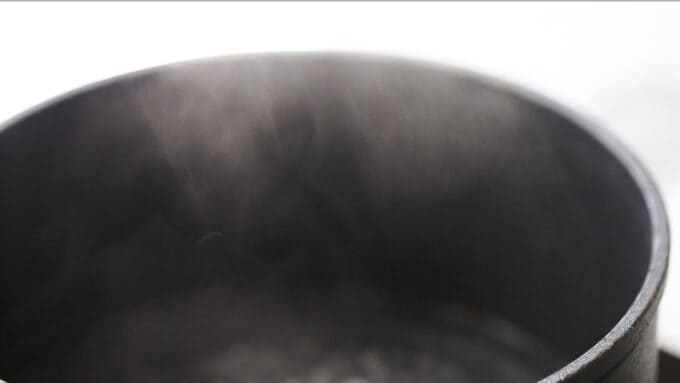
In a gas, molecules are far apart and move freely in all directions. Gases spread out to fill the space they are in.
💡 Example: Steam (water vapor)
Even when matter changes state, it is still made of the same molecules. The particles are simply moving differently or arranged differently.
How Particles Move in Matter
The way particles move determines the state of matter.
- In solids, particles vibrate in place.
- In liquids, particles move and slide past one another.
- In gases, particles move freely and spread out.
Heating matter increases the energy of its particles, causing them to move faster. Cooling matter removes energy and slows particle movement down.
This movement explains why matter can melt, freeze, evaporate, or condense.
👉 State of matter is a physical property. Explore more about how scientists describe matter in our Physical Properties of Matter for Kids post.
Watch the States of Matter Video
Changing States of Matter (Phase Changes)
When matter changes from one state to another, it’s called a phase change.
Phase changes are physical changes, not chemical changes, because no new substance is formed.
Common phase changes include:
- Melting: solid → liquid
- Freezing: liquid → solid
- Evaporation: liquid → gas
- Condensation: gas → liquid
💡 Changing from a liquid to a gas requires the most energy because the particles must spread farther apart.
👉 To explore how matter changes without forming a new substance, see our Physical Changes vs Chemical Changes for Kids post.
States of Matter Investigations
Start with this free states of matter investigation pack, designed to pair with the experiments below and support early elementary science lessons.
States of Matter Experiments for Kids
Below you’ll find hands-on experiments organized by how matter behaves and changes. Many activities demonstrate physical changes, while others introduce chemical reactions that produce gases.
Gas-Producing Chemical Reactions
Baking Soda and Vinegar Reaction
A classic chemical reaction that produces carbon dioxide gas—perfect for showing how gas takes up space.
Blow Up a Balloon (Chemical Reaction)
Watch a balloon inflate as gas forms inside a sealed container.
Soda Balloon Experiment
Salt triggers dissolved carbon dioxide in soda to escape from liquid to gas.

Heating and Cooling Gases
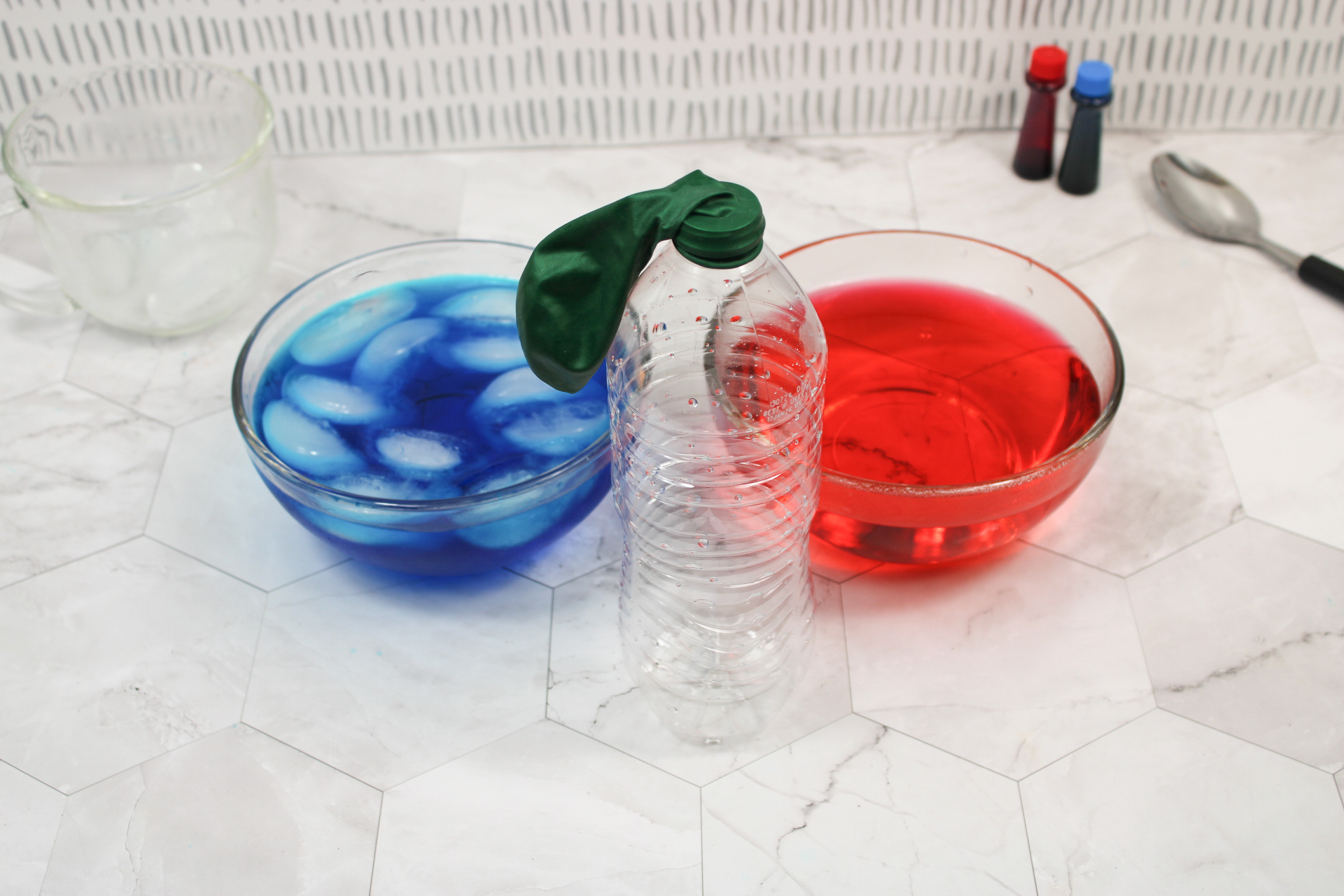
Blow Up a Balloon with Hot Air
Explore how heating and cooling affect gas molecules and air pressure.
Crushing a Soda Can
Condensation causes air pressure changes powerful enough to crush metal.
Melting, Freezing, and Solid–Liquid Changes
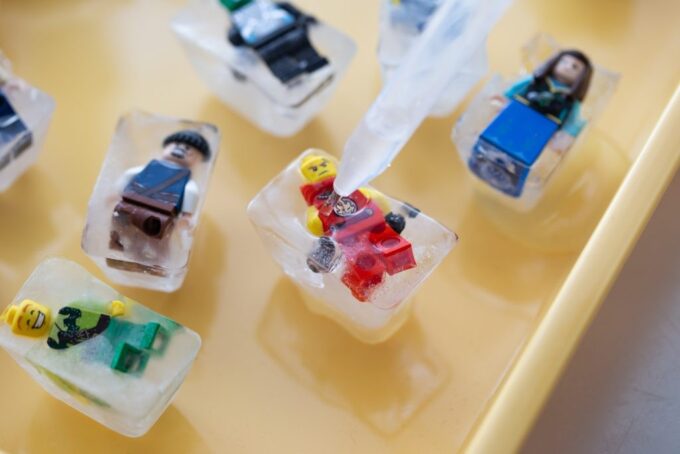
Ice Melt Activities
Explore how heat transfer causes solids to melt into liquids.
What Makes Ice Melt Faster?
Compare materials and surfaces to investigate heat absorption.
Freezing Water Experiment
Does salt change the freezing point of water?
Freezing Bubbles
Observe liquid bubbles turning solid in cold temperatures.
Liquid–Gas Changes
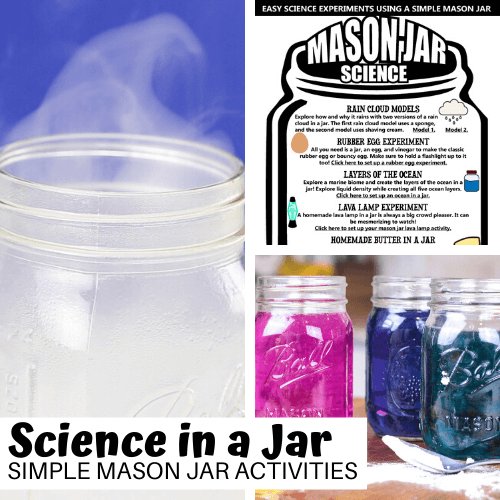
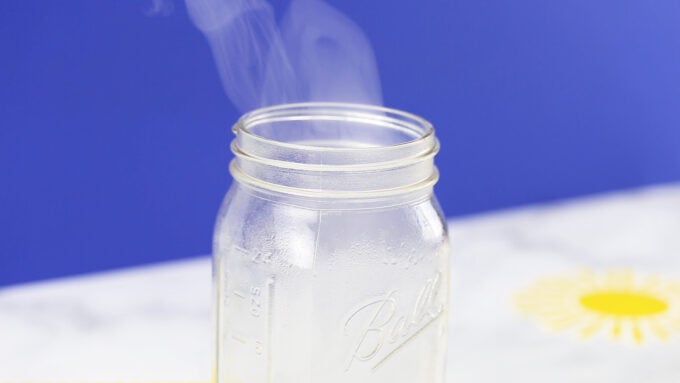
Cloud in a Jar
See condensation as water vapor cools into liquid droplets.
Evaporation of Water Investigation
Explore what affects the evaporation rate.
Make Frost on a Can
Turn invisible water vapor into visible ice crystals.
Reversible Changes (Solid ⇄ Liquid)
Butter in a Jar
Turn a liquid into a solid through physical agitation.
Ice Cream in a Bag
Freeze a liquid mixture into a solid treat.
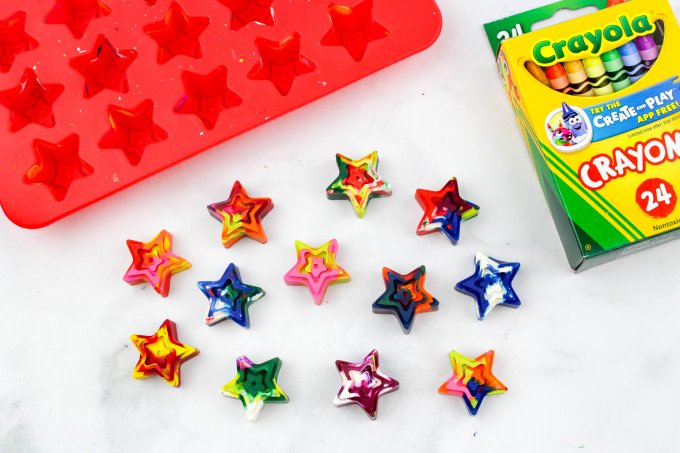
Melting Crayons
Recycle crayons through a reversible phase change.
Melting Chocolate (Edible States of Matter)
A simple and tasty way to observe melting.
Interesting Properties of Matter
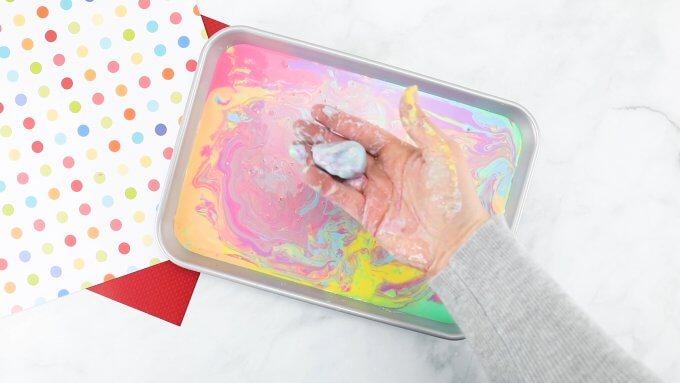
Oobleck (Non-Newtonian Fluid)
Is it a solid or a liquid? Oobleck behaves like both depending on the force.
💡 This activity pairs well with discussions about physical properties of matter.
Matter in Earth & Environmental Science
Water Cycle in a Bag
Evaporation and condensation in a closed system.
DIY Water Filtration
Separate solids from liquids using physical processes.

NGSS-Aligned Guiding Questions
- What happens to matter when it is heated or cooled?
- How can matter change without becoming a new substance?
- How do solids, liquids, and gases behave differently?
States of Matter – FAQ
Q: What are the states of matter?
A: The three states of matter are solid, liquid, and gas. Each state depends on how tightly particles are packed together and how much energy they have.
Q: Are changes in states of matter physical changes?
A: Yes. Changes between states of matter are physical changes because the substance stays the same.
Q: Why does heat affect states of matter?
A: Heat adds energy to particles, causing them to move faster and spread farther apart.
Q: Is gas considered matter?
A: Yes. Gas is a form of matter because it has mass and takes up space.
Kitchen Chemistry Connections
Many states of matter activities use simple kitchen ingredients, such as ice, water, baking soda, vinegar, chocolate, and butter. These materials make it easy for kids to explore chemistry concepts at home or in the classroom.
👉 Explore even more hands-on kitchen chemistry experiments for kids using everyday supplies.
Related Chemistry Concepts to Explore
- Chemistry experiments
- What is matter?
- States of matter
- Physical changes
- Phase Changes
- What is an Element?
👉 Want even more hands-on ideas? Browse our full collection of science experiments and activities for kids.
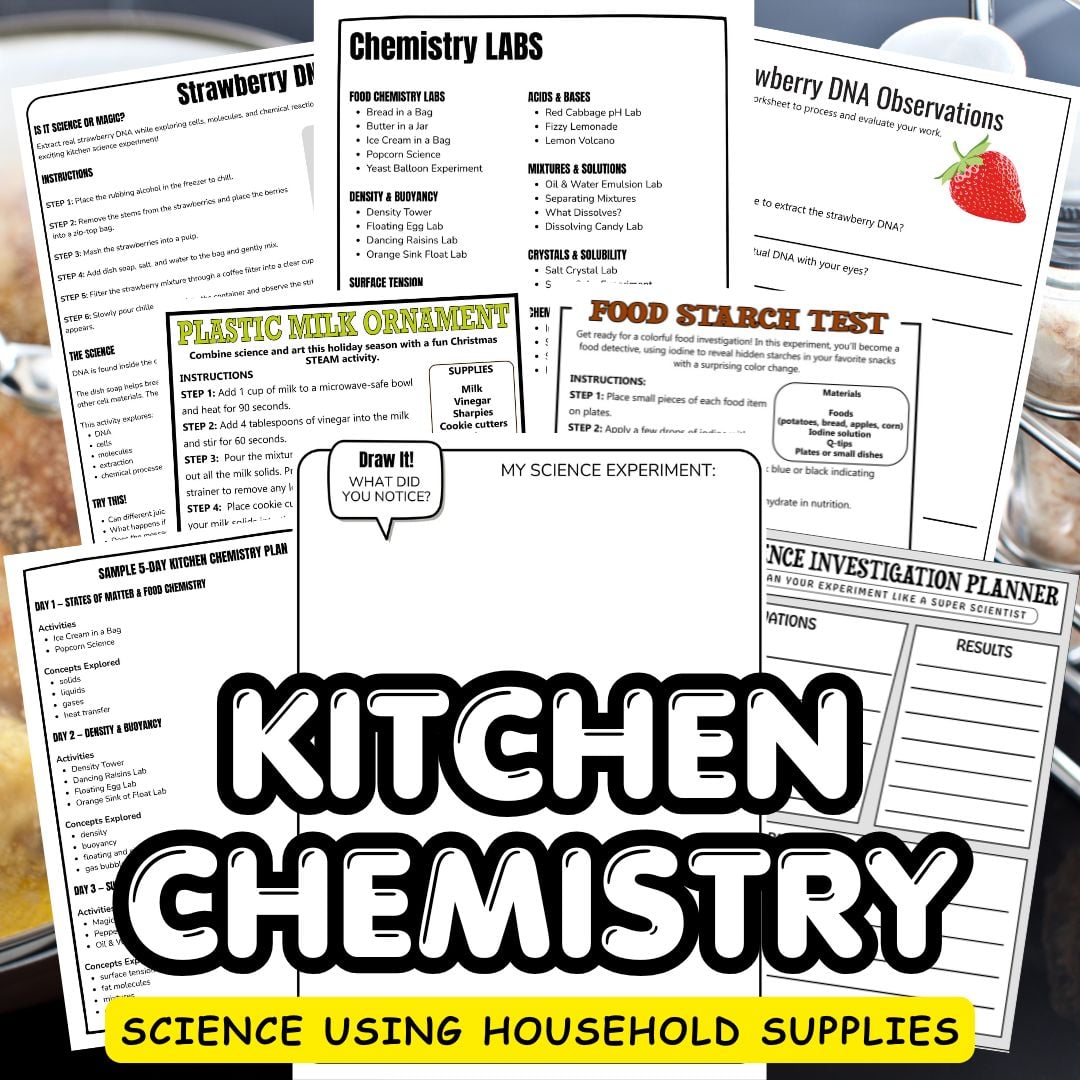
Explore More Kitchen Chemistry
Continue the fun with our Kitchen Chemistry Pack featuring printable experiments, reusable investigation pages, science explanations, and easy hands-on activities using everyday kitchen supplies.
Perfect for home or classroom science with activities focused on:
reactions, mixtures, crystals, surface tension, polymers, and color-changing chemistry.