

Slime-making is a fun, hands-on activity that’s perfect for kids! It’s also a fantastic way to teach kids about chemistry and sensory play. In this post, we’ll show you how to make the best saline solution slime with simple ingredients like white glue, baking soda, and saline solution. Follow our slime recipe and enjoy the transformation into a stretchy, non-Newtonian fluid!
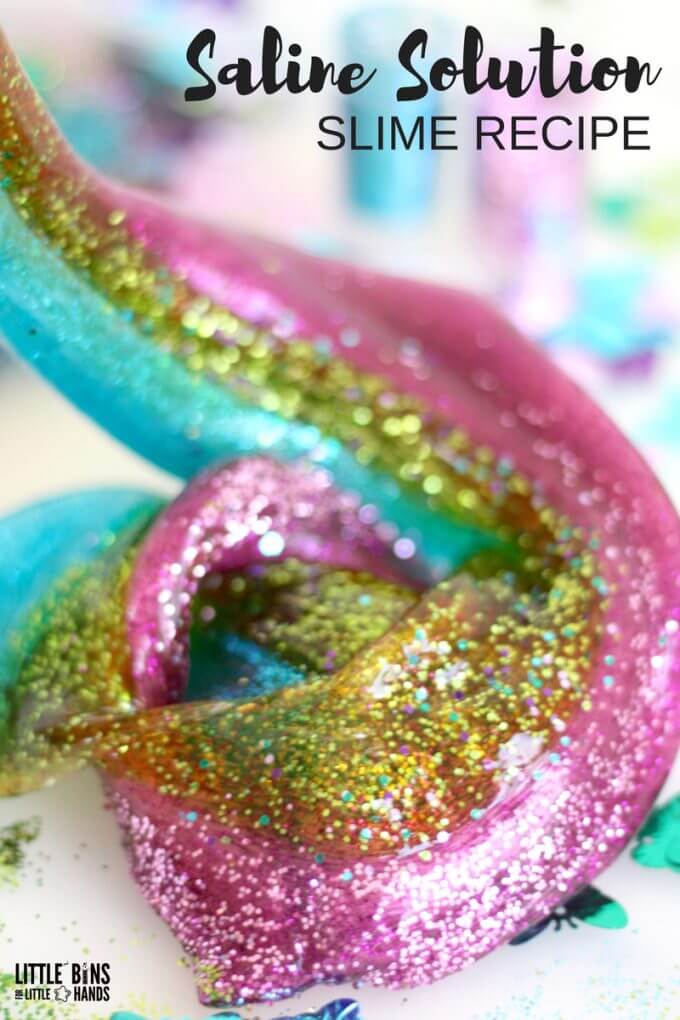
Why Use Saline Solution in Slime?
When you make slime with a saline solution, the borate ions (such as boric acid and sodium borate) act as a slime activator, helping the glue mixture transform into the stretchy texture we love. It’s the best way to make slime without using harsh chemicals or borax powder.
👉 Get the Printable Slime Recipe Below
Saline Solution Slime Recipe
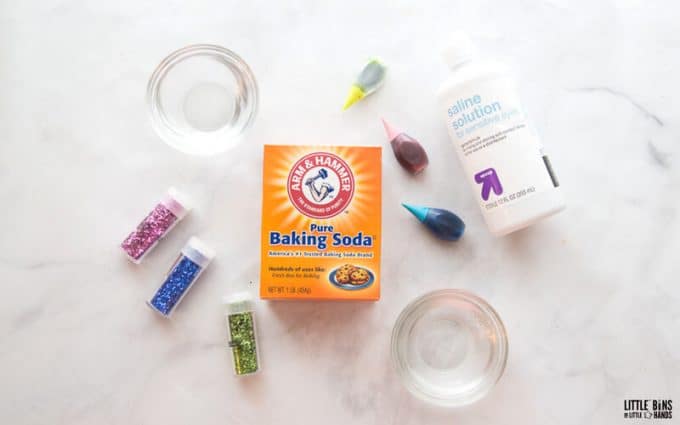
Ingredients:
- 1/2 cup Clear Glue (PVA or Elmers glue works great)
- 1 tablespoon Saline Solution (must contain boric acid and sodium borate)
- 1/2 cup Water
- 1/4-1/2 tsp Baking Soda
- Glitter, foam beads, glitter glue, or other fun mix-ins (optional)
- Liquid food coloring (for different colors)
💡 Note: You cannot use a homemade saline solution. Use a saline solution containing boric acid and sodium borate for optimal results. Avoid using contact lens solution as it is not interchangeable with saline solution in this recipe.
How to Make Saline Solution Slime: Step-by-Step Guide
Step 1: Mix the Glue and Water
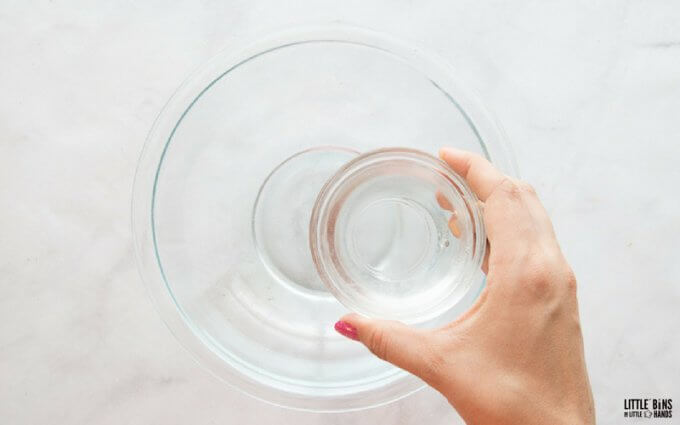
In a bowl, combine 1/2 cup clear glue with 1/2 cup of water. Stir well until completely mixed. This is your base slime mixture.
Step 2: Add Fun Colors and Glitter
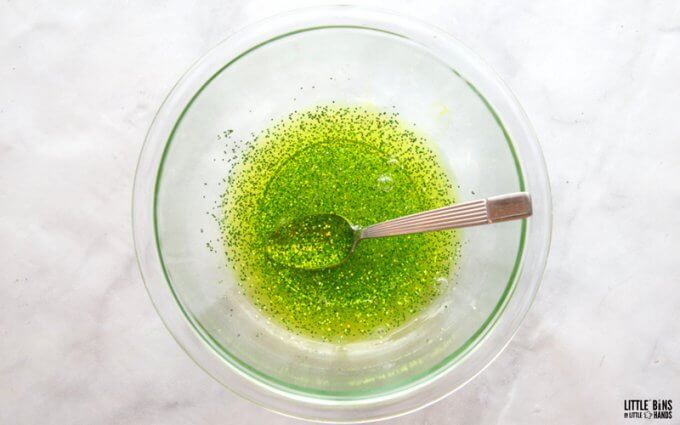
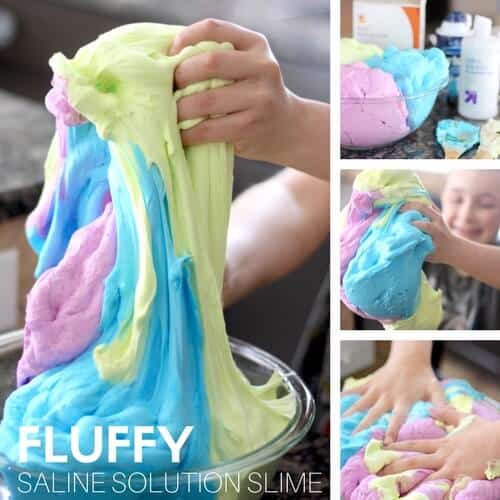
Get creative by adding glitter, liquid food coloring, or even foam beads to your mixture! Keep in mind that white glue will create lighter colors, while clear glue will give you richer, jewel-toned shades.
Step 3: Add Baking Soda
Stir in 1/4 to 1/2 teaspoon of baking soda. The baking soda helps to firm up the slime and adds to its stretchier texture. Experiment with the amount to reach your desired consistency.
💡 Baking Soda Tip: If you’re using clear glue, you won’t need as much baking soda as when using white glue.
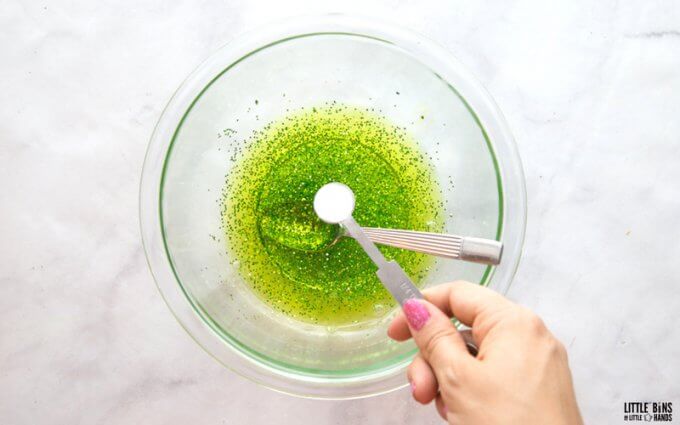
Step 4: Add the Saline Solution
Next, slowly pour in 1 tablespoon saline solution while stirring. As you mix, the slime will begin to form and pull away from the sides of the bowl. Be sure to use saline solution that contains boric acid and sodium borate for the best result.
💡 Tip for Stickiness: If your slime still feels sticky, add a few more drops of saline solution and knead it with your hands. Don’t add too much at one time or the slime will become hard and rubbery.
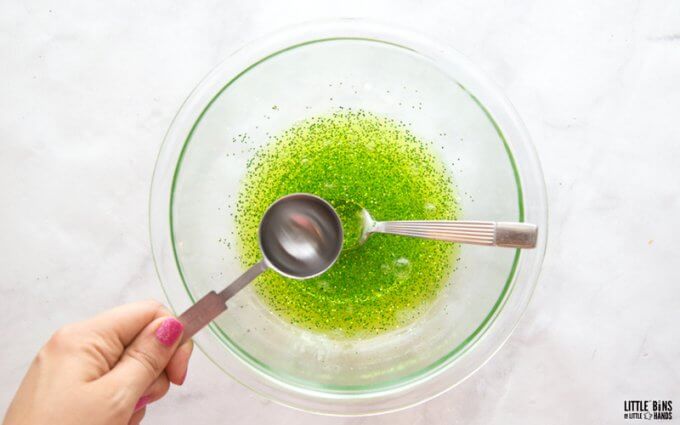
Step 5: Knead the Slime
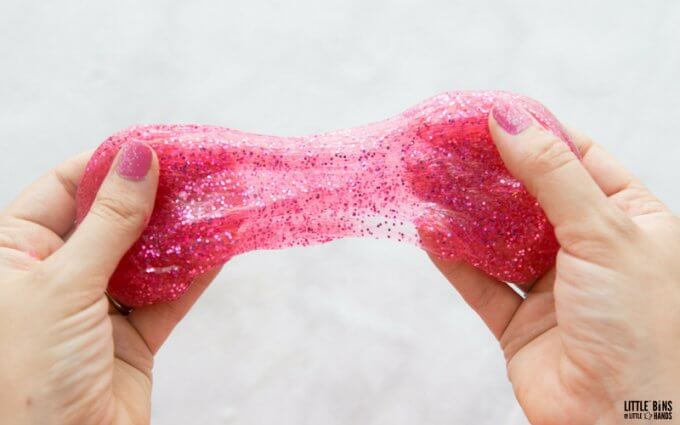
Once your slime starts to come together, knead it in your hands for 3-5 minutes. At first, it might look stringy, but as you work it, it will become more stretchy and smooth.
💡 Slime Tip: The more you knead your slime, the less sticky it will become. Kneading improves texture, but you can also make slime stretchy with these tips.
The Science Behind Saline Solution Slime
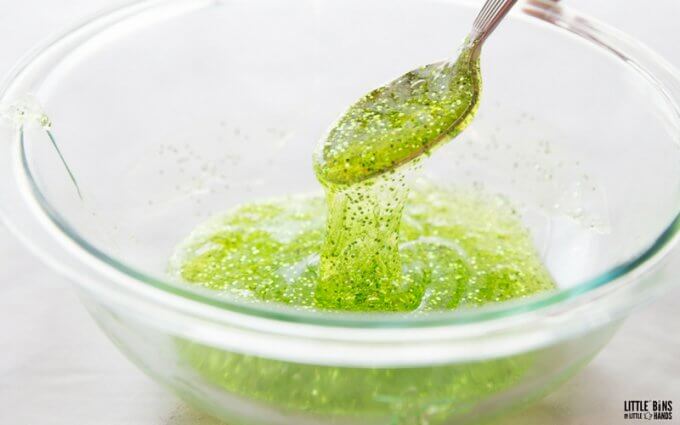
When making slime, you’re creating a non-Newtonian fluid! This means that slime acts like a liquid when poured slowly but behaves like a solid when pressure is applied quickly. The borate ions in saline solution bond with the long polymer chains in glue, causing the mixture to thicken and transform into a stretchy slime. The result is a fun, science-filled sensory play activity!
💡Learn more about slime science and setting up a slime science experiment here. Perfect for science fairs, too.
Explore Slime Science
Want to take slime-making further?
Grab our free Slime Science Starter Lab to explore polymers, slime activators, non-Newtonian fluids, and hands-on slime investigations.
Includes:
- STEM challenges
- Observation pages
- Slime science
- A 5-day slime chemistry lab
👉 Download the Free Starter Lab
Troubleshooting Slime:
- Sticky Slime:
If your slime is too sticky, slowly add a bit more saline solution or baking soda, and knead it well. - Too Hard or Rubber-like:
If your slime is too stiff, add a few more drops of water to soften it.
💡 Read more on how to fix slime here!
Fun Slime Variations to Try:
💡 You’ll find all of our homemade slime recipes here.
- Fluffy Slime
- Clear Slime
- Galaxy Slime
- Glow In The Dark Slime
- Cloud Slime
- Ultraviolet Slime
- Thermochromic Slime
- Crunchy Slime
FAQs About Saline Solution Slime:
- Can I Use Contact Lens Solution Instead of Saline Solution?
No, contact solution is not the same as saline solution and may not work the same way. For best results, always use saline solution with boric acid and sodium borate. - How Do I Store My Slime?
Store your slime in an airtight container to keep it fresh for weeks! Avoid leaving it exposed to air, as it can dry out.
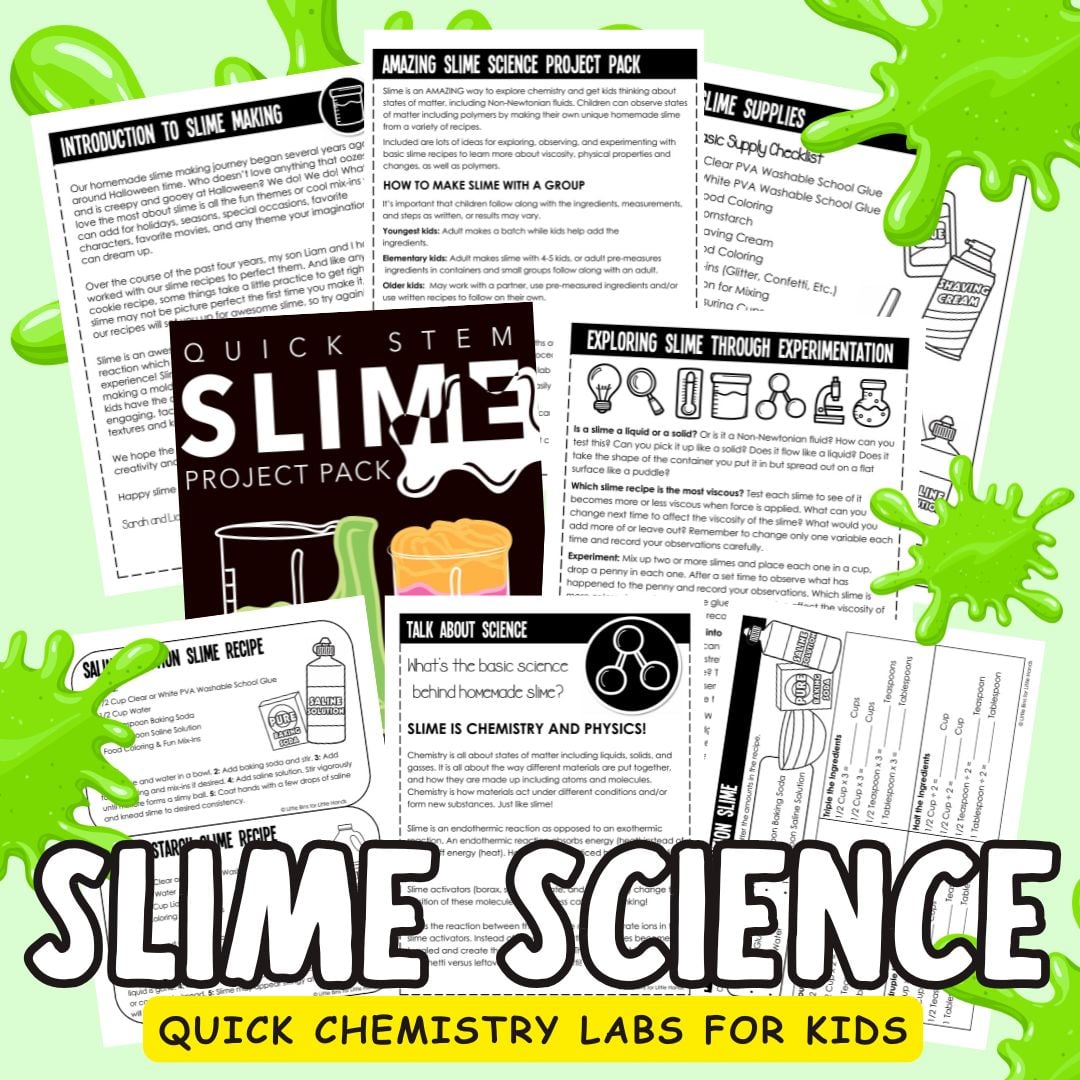
Extend the Learning with Slime
Our printable Slime Activity Pack includes step-by-step recipes, observations pages, challenges, and science extensions — perfect for home or classroom use.


Perfection! It’s the same consistency as the prepared slime I bought at Target… and now homemade for cheap. One batch is enough for 2 kids, in my opinion. We used super fine glitter and didn’t even bother with food coloring – works really well.
Thank you for the kind words! We love our slime recipe too!
Thanks for the all the awesome and detailed info, not only about the ingredients and steps for making this slime, but also for the science behind it, too! Can’t wait to give it a go! I might have missed this, but could you tell me approximately how much slime this recipe yields? I want to make it with my class but, but having all 25 of my kiddos making one recipe each is a whole lot of glue! XD I’m hoping that one batch could be shared between a couple children. Thoughts? TIA!
If you follow this recipe as written and use the right saline solution, this recipe works perfectly! I quadrupled the amounts and used a hand mixer with a whisk attachment to make a big batch – kids had so much fun coloring and adding glitter!